
When your Hotpoint dryer stops heating, laundry day can become stressful. Wet clothes pile up, and it’s hard to know what’s wrong. Many people think fixing a dryer must be expensive or difficult. But often, the problem is simple and can be solved at home. This article will help you understand why your Hotpoint dryer isn’t heating, how to diagnose the issue, and what steps you can take to fix it. You’ll also learn how to prevent future heating problems and when it’s best to call for professional help. Whether you’re a beginner or have some experience with appliances, you’ll find clear advice and practical tips below.
Common Reasons Your Hotpoint Dryer Is Not Heating
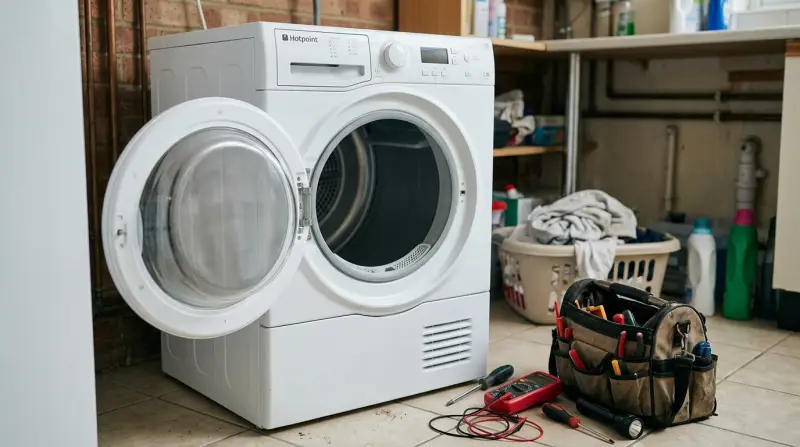
Understanding the main causes behind a dryer not heating can help you find the right solution quickly. Let’s look at the most frequent reasons:
- Power supply issues: Electric dryers need 240 volts to work properly. If one breaker trips or a fuse blows, the dryer might run but not heat. For gas dryers, check that the gas supply is turned on.
- Blown thermal fuse: The thermal fuse is a safety device. If it blows, usually due to overheating or blocked vents, the dryer stops heating. This is one of the most common problems.
- Broken heating element: The heating element creates heat. If it breaks, your dryer won’t get warm, even if it tumbles.
- Faulty high-limit thermostat: This thermostat keeps the dryer from getting too hot. If it fails, it can stop the heating element from working.
- Defective timer or control board: Electronic controls or timers may malfunction, preventing heat even if the dryer seems to run normally.
- Bad cycling thermostat: This controls the temperature. If it’s faulty, the dryer may not heat or may heat incorrectly.
- Blocked vent or lint filter: If airflow is restricted, the dryer may overheat, blowing the thermal fuse, or it may not heat efficiently.
- Gas valve problems (for gas dryers): If the valve doesn’t open, the dryer won’t heat.
- Igniter failure (for gas dryers): The igniter lights the gas. If it fails, the dryer won’t heat.
Sometimes, two or more of these problems happen together. For example, a blocked vent can cause overheating, which then blows the thermal fuse.
Diagnosing Heating Problems In Your Hotpoint Dryer
Finding the cause of your dryer’s heating problem is easier if you follow a step-by-step process. Here’s how to check the most common issues:
Step 1: Confirm Power Supply
- Check if the dryer runs but does not heat.
- For electric dryers, check the circuit breaker box. Electric dryers use two breakers—one for running, one for heating.
- Reset the breakers if needed. If you use fuses, replace any blown fuse.
Step 2: Inspect The Thermal Fuse
- Unplug the dryer and locate the thermal fuse, usually near the blower housing.
- Use a multimeter to check for continuity. If the fuse is blown, replace it. A blown fuse means the dryer overheated, so check vents and filters.
Step 3: Test The Heating Element
- Remove the back panel to find the heating element.
- Use a multimeter to test for continuity. If the heating element is broken, replace it.
Step 4: Examine Thermostats
- Find the high-limit thermostat and cycling thermostat. They are usually near the heating element.
- Check for continuity with a multimeter. If either is faulty, replace.
Step 5: Check Vents And Lint Filter
- Remove lint from the filter and inspect the vent hose for blockages.
- Clean the vent pipe leading outside. A blocked vent can cause repeated heating failures.
Step 6: Gas Dryer Checks
- Make sure the gas supply is turned on.
- Test the igniter and gas valve solenoids with a multimeter.
- If the igniter does not glow, or the valve doesn’t open, replace the faulty part.
Step 7: Control Board And Timer
- If all physical parts are working, the issue may be the control board or timer.
- These are harder to test without experience. Look for signs like the dryer not advancing cycles or stopping early.
Hotpoint Dryer Heating Components: Comparison Table
To better understand the parts involved in heating your Hotpoint dryer, here’s a comparison:
| Component | Function | Failure Signs | Replacement Cost (USD) |
|---|---|---|---|
| Heating Element | Produces heat | No heat, dryer runs | $25–$60 |
| Thermal Fuse | Safety shut-off | No heat, dryer runs | $10–$20 |
| High-Limit Thermostat | Prevents overheating | Intermittent/no heat | $15–$30 |
| Cycling Thermostat | Regulates temperature | Improper heating | $15–$30 |
| Igniter (Gas Dryer) | Lights gas flame | No heat, no flame | $20–$40 |
How To Fix A Hotpoint Dryer Not Heating
Once you’ve found the problem, fixing your Hotpoint dryer can be simple. Here’s a basic guide for common fixes:
Replacing The Thermal Fuse
- Unplug the dryer.
- Remove the back panel.
- Locate the thermal fuse near the blower housing.
- Disconnect wires and remove the fuse.
- Install the new fuse and reconnect wires.
- Close the panel and plug in the dryer.
Changing The Heating Element
- Unplug the dryer.
- Remove the back panel.
- Locate the heating element.
- Disconnect wires and mounting screws.
- Install the new element and reconnect wires.
- Reattach the panel and plug in.
Cleaning The Vent
- Disconnect the dryer from power.
- Remove lint filter and vent hose.
- Use a vacuum or brush to clean the hose and vent pipe.
- Clean the lint filter with soap and water.
- Reconnect everything and test the dryer.
Fixing Gas Dryer Igniter
- Disconnect power and turn off gas supply.
- Remove front panel.
- Find the igniter near the burner assembly.
- Remove the old igniter and install the new one.
- Reassemble and turn on gas and power.
Replacing Thermostats
- Unplug the dryer.
- Remove the back panel.
- Locate the faulty thermostat.
- Remove wires and screws.
- Install the new thermostat and reconnect.
- Reattach the panel and test.
Many repairs are simple, but if you are unsure, it’s safer to call a technician.

Credit: www.reddit.com
Hotpoint Vs. Other Dryer Brands: Heating Reliability
People often wonder if Hotpoint dryers have more heating issues than other brands. Here’s a quick comparison using data from appliance repair surveys:
| Brand | Heating Failure Rate | Average Repair Cost | Typical Lifespan |
|---|---|---|---|
| Hotpoint | 12% | $80 | 10 years |
| Whirlpool | 10% | $90 | 11 years |
| Samsung | 14% | $110 | 9 years |
| LG | 9% | $95 | 11 years |
| GE | 13% | $85 | 10 years |
Hotpoint’s heating failure rate is similar to other brands, meaning these dryers are generally reliable. Most heating issues are due to blocked vents or worn parts, not brand-specific defects.
Tips To Prevent Hotpoint Dryer Heating Problems
Regular maintenance can keep your dryer running smoothly and help you avoid costly repairs. Here’s how to prevent heating issues:
- Clean the lint filter after every load. A blocked filter reduces airflow and causes overheating.
- Check and clean the vent pipe every three months. Use a vent cleaning kit if possible.
- Don’t overload the dryer. Too many clothes block airflow and stress the heating system.
- Inspect the dryer regularly. Look for unusual sounds, long drying times, or burning smells.
- Use proper voltage and gas supply. Make sure your dryer is connected to the correct power source.
- Replace worn parts early. If you notice the dryer running but not heating, check fuses and elements before they fail completely.
- Schedule professional servicing once a year. A technician can spot early problems and keep your dryer safe.
A non-obvious tip: If your dryer heats but takes too long to dry, the issue may be with airflow, not the heating element. Cleaning the vent and filter often solves slow drying problems.
When To Call A Professional
Some repairs are easy, but others need expert help. Call a technician if:
- You smell gas or burning.
- The dryer makes loud noises or stops mid-cycle.
- You cannot find the faulty part.
- The control board or timer is damaged.
- You have tried basic fixes but the dryer still does not heat.
A professional can diagnose complex issues, especially with electronics or gas parts. The average cost for a heating repair is around $80–$120, depending on the problem.
Hotpoint Dryer Heating Issue: Troubleshooting Steps Table
Here’s a quick reference table for troubleshooting your Hotpoint dryer:
| Step | Action | Tools Needed | Estimated Time |
|---|---|---|---|
| 1 | Check power supply | None | 2 minutes |
| 2 | Inspect thermal fuse | Multimeter, screwdriver | 10 minutes |
| 3 | Test heating element | Multimeter, screwdriver | 15 minutes |
| 4 | Clean vents and filter | Vacuum, brush | 20 minutes |
| 5 | Check thermostats | Multimeter, screwdriver | 10 minutes |
| 6 | Inspect igniter/gas valve (gas dryer) | Multimeter, screwdriver | 15 minutes |
| 7 | Call professional | Phone | Varies |

Credit: appliances.wonderhowto.com
Frequently Asked Questions
Why Does My Hotpoint Dryer Run But Not Heat?
This usually means a blown thermal fuse, broken heating element, or a problem with the power supply. Check the fuse, element, and circuit breakers first.
How Often Should I Clean My Dryer Vent?
Clean the vent pipe and lint filter every three months. If you dry heavy loads often, clean monthly to prevent blockages and overheating.
Can I Fix A Heating Problem Myself?
Yes, many heating issues are simple to fix. Replacing the thermal fuse or heating element is easy if you follow instructions and use basic tools. For gas dryers or electrical issues, consider professional help.
Is It Dangerous To Use A Dryer That Isn’t Heating?
It’s not dangerous, but running a dryer with heating issues can cause overheating, damage to other parts, or even fire risk if vents are blocked. Always fix heating problems before use.
Where Can I Find Official Repair Guides For Hotpoint Dryers?
You can find repair guides and manuals from the official manufacturer. For detailed instructions, visit Hotpoint Support.
Solving a Hotpoint dryer not heating is often easier than it seems. With clear steps and regular maintenance, most people can fix and prevent heating problems. If repairs seem too complex or you notice warning signs, don’t hesitate to call a professional. Taking action quickly saves money and keeps your laundry routine smooth.