
Building a strong floor or deck starts with making the right decisions about how you support your joists. Two popular methods are using joist hangers or simply resting joists on a beam. Both methods have their benefits and risks, but they are not equal in every situation. Choosing wrong can lead to unsafe floors, costly repairs, or failed inspections. This guide will help you understand the differences, compare the strengths and weaknesses, and know when each method makes sense. Whether you’re a homeowner, contractor, or DIY enthusiast, you’ll learn how to make confident choices for safer, longer-lasting structures.
What Are Joist Hangers?
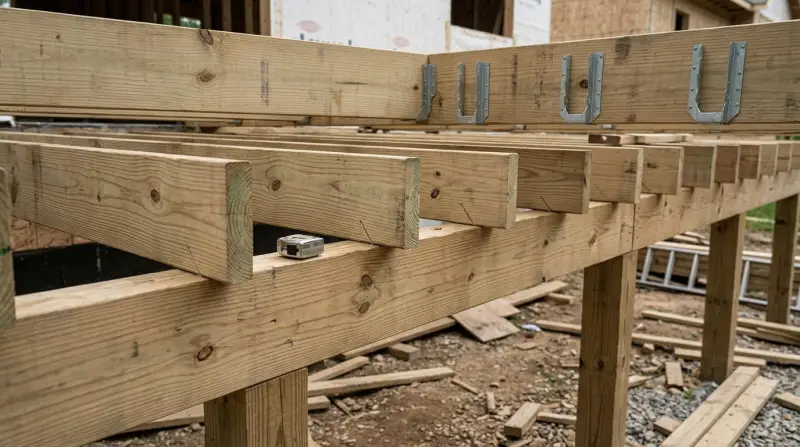
Joist hangers are metal brackets designed to hold joists in place. They attach to beams, ledger boards, or other framing members, supporting the ends of joists and distributing loads efficiently.
Joist hangers are usually made from galvanized steel, which resists rust. Some are made from stainless steel for high-moisture or coastal environments. The hanger wraps around the joist end and is fastened with special nails or screws.
Key Features
- Consistent support: Joist hangers give uniform strength at every connection.
- Multiple sizes: Available for different joist widths and depths.
- Corrosion resistance: Galvanized or stainless options for durability.
- Easy inspection: Inspectors can easily check if hangers are installed correctly.
Joist hangers are used in decks, floors, ceilings, and even roofs. They’re especially common where joists meet a ledger board or need to be attached to the side of a beam.
What Does Resting On Beam Mean?
Resting joists on a beam means placing the ends of joists directly on top of a beam. Gravity holds them in place, and sometimes nails or screws are used to prevent movement.
This traditional method is simple and has been used for centuries. The beam takes the load directly, and the joists are supported by their own weight plus any fasteners.
Typical Scenarios
- Decks: Joists span between beams, with ends sitting on top.
- Floor framing: Joists rest on foundation walls or beams.
- Ceilings: Sometimes used in garages or sheds.
Resting on beam works best when the beam is strong and wide enough to support the joist ends and when there is no risk of the joists shifting sideways.
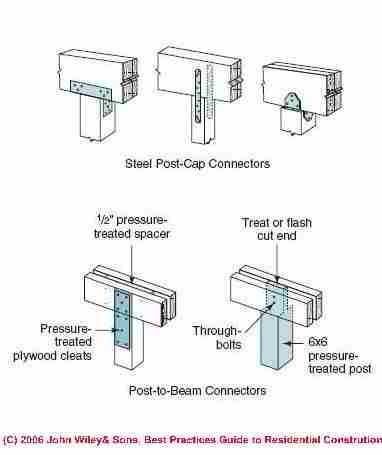
Credit: inspectapedia.com
Comparing Joist Hangers And Resting On Beam
Choosing between joist hangers and resting on beam depends on your project’s needs, budget, and local building codes. Let’s look at the most important differences.
Strength And Load Distribution
Joist hangers are engineered to distribute loads evenly at the connection. They prevent twisting, sagging, and separation. Resting on beam relies on gravity, which works well for vertical loads, but doesn’t always prevent lateral movement.
| Method | Vertical Load Capacity | Lateral Support |
|---|---|---|
| Joist Hangers | High (up to 600 lbs per hanger) | Excellent |
| Resting on Beam | Very high (depends on beam) | Poor to moderate |
Joist hangers are better for preventing joist movement and twisting. Resting on beam is excellent for handling heavy vertical loads, but may need extra fasteners to keep joists from shifting.
Installation Difficulty
Joist hangers require careful placement, correct fasteners, and sometimes specialized tools. Resting on beam is simpler — just lay the joists on top and fasten them.
| Method | Skill Level | Time Required |
|---|---|---|
| Joist Hangers | Intermediate | Moderate |
| Resting on Beam | Beginner | Fast |
For beginners, resting on beam is easier. However, improper installation can lead to problems. Joist hangers take more time but give professional results.
Cost And Materials
Joist hangers add to the material cost. Each hanger costs $1–$3, plus special nails or screws. Resting on beam requires only basic fasteners.
| Method | Material Cost | Extra Tools Needed |
|---|---|---|
| Joist Hangers | $1–$3 per hanger | Hammer, hanger nails |
| Resting on Beam | Minimal (nails/screws) | Hammer or drill |
For projects with many joists, costs can add up quickly. But joist hangers may save money in the long run by preventing repairs.
Inspection And Code Compliance
Building codes often require joist hangers, especially for decks and attached structures. Inspectors prefer them because they are easy to check and ensure safety.
Resting on beam may not meet code in all situations. If the joists could slip or twist, or if the beam is not wide enough, codes may require joist hangers.
Non-obvious insight: In many US states, deck failures are a leading cause of injury, and improper joist connections are often to blame. Using joist hangers reduces this risk.
Real-world Examples
Let’s look at two projects to see how each method works.
Deck Construction
A homeowner wants to build a 12×16 foot deck. The joists will span between two beams, with a ledger attached to the house.
- At the ledger: Building codes require joist hangers for safety.
- At the beams: Joists can rest on the beams, but must be secured with hurricane ties or toe-nails to prevent movement.
In this case, using joist hangers at the ledger and resting on beam at the supports is common. But if the beams are narrow or the joists can twist, hangers are safer.
Basement Floor Framing
A contractor is framing a basement floor. Joists rest on a steel beam in the center.
- Resting on beam: Works well because the steel beam is wide and stable.
- Joist hangers: May be needed at the ends, where joists meet the sill plate.
Here, resting on beam saves time and money. But securing joists with nails is important to prevent shifting.
Safety Considerations
Safety is the most important factor in choosing between joist hangers and resting on beam.
- Joist hangers prevent joist separation, twisting, and sagging. They’re designed for seismic and wind loads.
- Resting on beam is safe if the beam is wide, stable, and properly fastened.
Common mistake: Failing to secure joists resting on a beam can lead to movement over time, especially with heavy loads or strong winds.
Another overlooked issue: Moisture can cause beams and joists to shrink or swell, loosening connections. Joist hangers maintain stability even as wood changes.
Pros And Cons
Let’s sum up the advantages and disadvantages of each method.
Joist Hangers
Pros:
- Strong, consistent support
- Prevents twisting and separation
- Meets most building codes
- Easy to inspect
Cons:
- Higher material cost
- More installation time
- Requires correct fasteners
Resting On Beam
Pros:
- Simple, fast installation
- Minimal cost
- Excellent for heavy vertical loads
Cons:
- May not meet code
- Can allow joist movement
- Harder to inspect for safety

When To Use Each Method
Choosing the right method depends on your project, materials, and local regulations.
Joist hangers are best when:
- The joists attach to a ledger or side of a beam
- Building codes require it
- You want maximum safety and durability
Resting on beam works when:
- The beam is wide and stable
- Joists are secured with nails or ties
- Cost and speed are priorities
Non-obvious insight: Some projects use both methods. For example, joists may rest on a beam but be secured with a hanger or tie for extra safety.
Installation Tips
Whether you use joist hangers or resting on beam, follow these tips for best results:
- Always use the recommended fasteners for joist hangers. Standard nails or screws can fail.
- Ensure beams are level and stable before placing joists.
- Secure joists resting on a beam with toe-nails or ties to prevent shifting.
- Check for corrosion, especially in outdoor or damp areas.
- Inspect connections regularly, especially on decks and outdoor structures.
For more installation details, see the guidelines at Simpson Strong-Tie, a trusted source for framing hardware.
Frequently Asked Questions
What Happens If I Don’t Use Joist Hangers Where Required?
If you skip joist hangers where they’re needed, you risk joists twisting, sagging, or separating from the support. This can cause unsafe floors or decks and may lead to failed inspections or costly repairs.
Can I Use Joist Hangers For Steel Beams?
Yes, but you need hangers designed for steel. Standard wood joist hangers won’t fit steel beams properly. Look for specialty hardware that matches your beam and joist materials.
How Do I Know If My Project Needs Joist Hangers?
Check your local building codes. Decks, attached floors, and places where joists connect to ledgers or beams often require joist hangers. If in doubt, use hangers for extra safety.
Are Joist Hangers Better For Earthquake Or Wind Zones?
Absolutely. Joist hangers help keep the structure together during shaking or strong winds. They resist lateral forces much better than resting on beam alone.
What’s The Biggest Mistake People Make With Resting On Beam?
The most common error is failing to secure the joists with nails or ties. This allows joists to shift, twist, or even fall off the beam over time, especially with heavy loads or vibration.
Final Thoughts
Both joist hangers and resting on beam can create strong floors and decks when used correctly. Joist hangers offer consistent support, meet code in most cases, and are safer for complex projects. Resting on beam is fast and cost-effective, but needs careful attention to prevent movement and meet safety standards. For most homeowners and builders, combining both methods gives the best results — hangers where needed, resting where allowed, always secured with proper fasteners. By understanding the differences and using the right approach, you’ll build structures that last and keep everyone safe.