
If your Breville espresso machine is not heating up, you’re not alone. This problem is more common than you might think, and it can quickly ruin your morning routine. For many coffee lovers, that first hot cup is essential. When your machine suddenly delivers only lukewarm water or nothing at all, frustration sets in. But before you give up or rush to a repair shop, it’s helpful to understand what’s really going on. In this guide, I’ll help you find the cause, explain solutions, and offer tips to prevent the issue in the future.
How A Breville Espresso Machine Heats Water
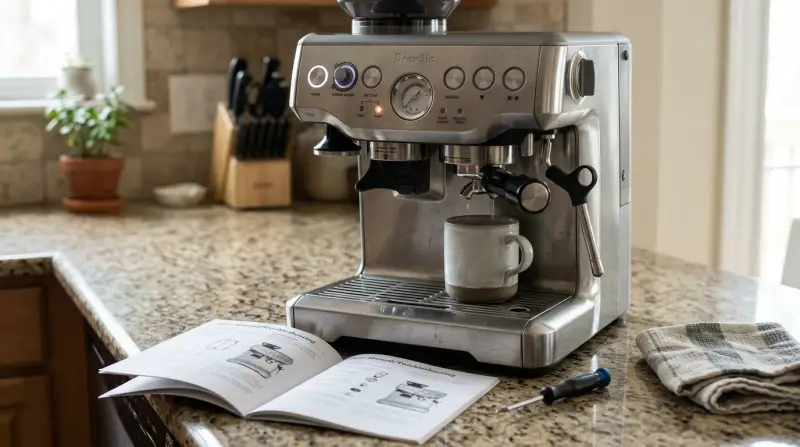
To solve the heating problem, you first need to know how your Breville machine warms up water. Most Breville models use either a thermoblock or a thermocoil system. These are metal blocks with tubes inside. Water passes through, and the block heats the water quickly to the right brewing temperature.
Key components involved:
- Heating element: The main part that gets hot and transfers heat to the water.
- Thermostat/temperature sensor: Controls and monitors the temperature to avoid overheating.
- Thermal fuse: A safety device that cuts power if things get too hot.
- Control board: The “brain” that sends signals to heat up and brew.
If any of these fail, your machine may stop heating. Some issues are easy to fix at home, while others may need a technician.
Common Reasons Your Breville Espresso Machine Is Not Heating Up
Many users assume the cause is always the heating element, but it’s not that simple. Let’s break down the most frequent reasons and what they mean.
1. Faulty Power Supply Or Connection
If the machine isn’t receiving power, nothing will work—including the heater. Check:
- Power outlet is working (test with another appliance)
- Power cord is not damaged or loose
- On/off switch is functioning properly
2. Burned-out Heating Element
The heating element can burn out over time, especially after years of use or if there’s limescale buildup. Signs include:
- Machine turns on, but water stays cold
- No sound of heating
Heating element failure is usually not fixable at home and often requires replacement.
3. Tripped Thermal Fuse
The thermal fuse is a one-time safety device. If it blows, the machine won’t heat up. Causes include power surges, overheating, or blocked water flow.
4. Defective Thermostat Or Sensor
A broken thermostat can’t tell the machine when to heat or stop heating. Sometimes the sensor gives wrong readings, so the control board never turns on the heater.
5. Internal Wiring Issues
Loose or broken wires inside the machine can break the heating circuit. This usually happens after moving or dropping the machine.
6. Control Board Failure
If the control board fails, it can’t send signals to the heater. This is less common but possible, especially after electrical storms or water damage.
7. Limescale And Mineral Buildup
Hard water leaves limescale deposits inside the heating system. Over time, these block water flow or cover the heating element, making it less effective.
8. User Error Or Incorrect Settings
Sometimes, the solution is simple. The machine may not be in brewing mode, or it’s set to a cleaning cycle instead of espresso. Double-check the settings.

Diagnosing The Problem: Step-by-step
You don’t need to be an engineer to do some basic checks. Here’s how you can safely diagnose your machine at home.
- Unplug and cool down the machine before opening or inspecting anything.
- Check if the power light comes on. If not, try another outlet.
- Listen for the heating sound (usually a low hum or click) after turning on.
- Run water-only mode. Does any warm water come out?
- Inspect the water tank for proper placement.
- Look for error messages or blinking lights on the display (if your model has one).
- If comfortable, remove the bottom panel and check for visible wire issues (only if the warranty has expired).
For most users, the first checks reveal the problem. If not, deeper investigation may need a technician.
How To Fix A Breville Espresso Machine That’s Not Heating Up
Let’s look at solutions based on the problem you discover. Some are easy, others need professional help.
Fixing Power Or Connection Issues
- Plug the machine into a different outlet.
- Replace a damaged power cord.
- If the power switch feels loose, it may need replacing.
Replacing The Heating Element
This is a job for a qualified technician. The heating element is often soldered or attached deep inside. Trying to fix it at home can be dangerous.
Resetting Or Replacing The Thermal Fuse
Some Breville models allow you to reset the thermal fuse by unplugging for 30 minutes. But if the fuse is blown, it must be replaced. This usually involves opening the machine and soldering a new fuse in place.
Fixing A Broken Thermostat
A faulty thermostat must be replaced. You’ll need to buy the exact part for your model. If you’re not experienced with electronics, call a service center.
Cleaning Limescale
Descale your machine regularly to prevent mineral buildup. Use a descaling solution made for espresso machines—not vinegar, as it can damage metal parts. Most Breville manuals recommend descaling every 1–2 months, depending on water hardness.
Quick Descaling Steps:
- Fill the water tank with descaling solution.
- Run a cleaning cycle as per your model’s instructions.
- Rinse with fresh water to remove all chemicals.
Fixing Control Board Problems
There is little you can do at home for a broken control board. Replacement is expensive and may cost nearly as much as a new machine.
Preventing Future Heating Problems
Prevention is always better than repair. Here’s how you can keep your Breville espresso machine in good working order:
- Descale regularly: Use filtered water and descale every month if you have hard water.
- Don’t leave the machine on for long periods: This can overwork the heating system.
- Check the power supply often, especially after storms.
- Read the user manual: Each model has unique maintenance tips.
- Service annually: Consider professional maintenance every year for heavy use.
Signs Your Machine Needs Professional Repair
Some problems are simply too complex or risky for home fixes. Here’s when to seek help:
- You smell burning or see smoke.
- The machine trips your home circuit breaker.
- Water leaks from the bottom during heating.
- You hear loud popping or electrical noises.
- The machine is under warranty (opening it voids coverage).
Comparing Breville Espresso Machine Models And Heating Issues
Different models use different heating systems. Here’s a quick look at common Breville models and their heating technology.
| Model | Heating System | Common Heating Issue |
|---|---|---|
| Barista Express (BES870XL) | Thermoblock | Limescale buildup |
| Bambino Plus (BES500) | Thermocoil | Thermal fuse failure |
| Duo-Temp Pro (BES810) | Thermoblock | Faulty thermostat |
| Oracle Touch (BES990) | Dual Boiler | Control board failure |
Knowing your model helps you find the right troubleshooting steps and parts.
Cost Comparison: Repair Vs. Replacement
Is it worth repairing, or should you buy a new machine? Here’s a simple cost comparison.
| Issue | Average Repair Cost | New Machine Cost |
|---|---|---|
| Heating element replacement | $120–$180 | $400–$700 |
| Thermal fuse/thermostat | $60–$100 | $400–$700 |
| Control board replacement | $250–$350 | $400–$700 |
| Descaling/cleaning | $20–$40 | $400–$700 |
In many cases, repairing a heating element or thermostat is cost-effective. For control board issues, replacement is sometimes the better choice, especially for older machines.

Credit: www.youtube.com
Two Insights Beginners Often Miss
- Limescale can stop heating even if everything else works: Many people believe only burned-out parts cause heating issues. In reality, mineral buildup can block water flow or insulate the heating element, making it much less effective. Regular descaling is the cheapest way to prevent this.
- Incorrect mode or settings can “fake” a heating problem: If your machine is set to steam or hot water mode, or is in a cleaning cycle, it may not deliver hot espresso as expected. Always check the mode before assuming something is broken.
When To Contact Breville Support
If your machine is still under warranty, do not open it or attempt repairs. Contact Breville support with your model number and serial. They may offer a free repair or replacement. You can find contact details and warranty information on the official Breville Support site.
Frequently Asked Questions
Why Does My Breville Espresso Machine Take Longer To Heat Up Now?
Over time, limescale and mineral deposits can build up inside the heating system. This insulation effect means the heater works harder and takes longer to reach the right temperature. Descaling your machine regularly helps restore normal heating time.
Is It Safe To Use My Machine If It’s Not Heating Water Properly?
No, it’s not safe. Using a machine that doesn’t heat water properly can lead to under-extracted espresso, bad taste, and may even damage the machine further. If you notice cold water or no heat, stop using it until the problem is fixed.
Can I Replace The Heating Element Myself?
While technically possible, replacing the heating element requires electrical knowledge and special tools. Most users risk damaging the machine or voiding the warranty. It’s better to have a certified technician do the job.
What’s The Best Way To Prevent Heating Problems?
The best prevention is regular descaling with an espresso machine-safe solution, using filtered water, and not leaving the machine on when not in use. Check and clean the water tank and filter often, and follow the maintenance schedule in your user manual.
Does Using Vinegar For Descaling Damage My Breville Machine?
Yes, using vinegar can harm the internal parts of Breville espresso machines. Vinegar is too acidic and can damage seals and metal components. Always use the descaling products recommended by Breville.
A Breville espresso machine that’s not heating up can be stressful, but most causes are easy to check and, in many cases, easy to fix. By understanding your machine, following regular maintenance, and knowing when to call for help, you can enjoy hot, delicious coffee every day.
With a little care, your Breville will keep working for years to come.