
If you’ve ever worked on a home improvement project, you know that waiting for glue to dry can test your patience. Liquid Nails is one of the most trusted construction adhesives, famous for its strength and versatility. But how long does Liquid Nails take to dry? The answer depends on several factors, especially the type of material you are bonding. Understanding drying times can save you from mistakes, wasted materials, and weak bonds.
Let’s explore how drying times vary with different materials, what influences these times, and how you can ensure a strong, long-lasting bond for your project.
What Is Liquid Nails And Why Does Drying Time Matter?
Liquid Nails is a brand of construction adhesive used for bonding wood, drywall, metal, concrete, glass, and more. It comes in tubes and is applied with a caulking gun or squeezed directly onto surfaces.
Drying time matters because:
- A rushed job can lead to weak bonds or shifting parts.
- Leaving clamps or supports too long wastes time.
- Removing supports too early can ruin your project.
Each type of Liquid Nails has its own formula, but most rely on solvent evaporation or polymerization (chemical curing) to reach full strength. Drying means the adhesive is set enough to hold materials in place. Curing means the adhesive has reached its full strength.
Factors That Affect Drying Time
Several key factors influence how quickly Liquid Nails dries:
- Material type – Porous materials (like wood) absorb moisture and may dry faster. Non-porous materials (like metal or glass) dry slower because the adhesive has nowhere to go.
- Temperature and humidity – Warm, dry air speeds up drying. Cold, humid air slows it down.
- Thickness of application – Thicker beads take longer to dry.
- Ventilation – Good airflow helps solvents evaporate.
- Product formula – Some Liquid Nails products are designed for fast drying, others for flexibility or strength.
Drying Times For Common Materials
Let’s look at how long Liquid Nails takes to dry on different materials. These times are based on average conditions (70°F, 50% humidity, standard bead thickness).
| Material | Initial Set Time | Full Cure Time |
|---|---|---|
| Wood | 15-30 minutes | 24 hours |
| Drywall | 30-60 minutes | 24-48 hours |
| Metal | 1-2 hours | 48-72 hours |
| Concrete | 1-2 hours | 48-72 hours |
| Glass | 2-4 hours | 72 hours |
| Plastic | 30-60 minutes | 24-48 hours |
These times are only guidelines. Always check the instructions on your specific Liquid Nails product.
Drying Time Details For Each Material
Wood
Liquid Nails dries quickly on wood because wood is porous and helps absorb water and solvents. You can usually remove clamps after 15–30 minutes, but the bond needs 24 hours to reach full strength.
Tips for wood:
- Use a thin, even bead.
- Clamp tightly for the first hour.
- Avoid disturbing the bond until cured.
Drywall
Drywall is also porous, but larger surfaces and higher humidity can slow drying. Expect initial set in 30–60 minutes and full cure in 24–48 hours.
Tips for drywall:
- Apply only as much as needed—excess can ooze out.
- Press firmly for a tight bond.
- Don’t paint or sand until fully cured.
Metal
Metal surfaces are non-porous. Drying is slower because the adhesive can’t absorb into the material. Liquid Nails needs 1–2 hours for initial set and 48–72 hours for full cure.
Tips for metal:
- Clean surfaces to remove oil or dust.
- Use clamps or weights.
- Allow extra time for heavy objects.
Concrete
Concrete is porous, but its rough surface can trap adhesive. Initial set in 1–2 hours, full cure in 48–72 hours.
Tips for concrete:
- Remove dust before applying.
- Apply a generous bead for rough surfaces.
- Avoid walking or placing weight until fully cured.
Glass
Glass is very smooth and non-porous. Liquid Nails can take 2–4 hours to set and up to 72 hours to cure fully.
Tips for glass:
- Clean with alcohol before gluing.
- Use tape to hold pieces in place.
- Do not move until cured.
Plastic
Plastic varies—some types are porous, others not. Most plastics set in 30–60 minutes, with full cure in 24–48 hours.
Tips for plastic:
- Test a small area first.
- Use clamps or tape.
- Avoid heavy loads until cured.

How Formula And Product Choice Affect Drying
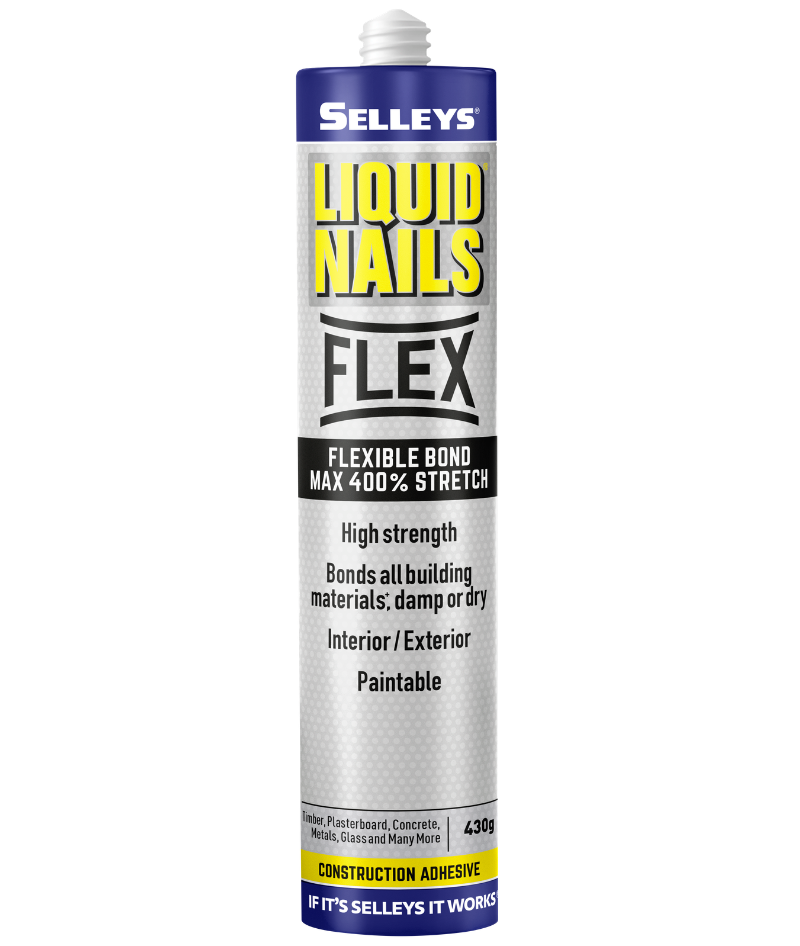
Liquid Nails offers many products. Some are “fast-bond,” others are “heavy duty. ” Choosing the right formula can shave hours off your drying time.
Here are some popular types and their drying times:
| Product | Initial Set | Full Cure | Best For |
|---|---|---|---|
| Liquid Nails Fast Grab | 15 minutes | 24 hours | Wood, drywall, light repairs |
| Liquid Nails Heavy Duty | 1 hour | 48 hours | Metal, concrete, outdoor jobs |
| Liquid Nails Clear | 30 minutes | 24 hours | Glass, plastic, visible areas |
Always read the label. Some formulas are better for quick jobs, others for tough materials.
Non-obvious Tips For Faster Drying
Even beginners often miss these advanced tips:
- Pre-warm materials: If possible, gently warm surfaces with a hair dryer before applying adhesive. This speeds up drying.
- Thin layers win: Applying a thick bead slows drying. Use just enough for coverage.
- Increase ventilation: Open windows or use a fan to help solvents evaporate faster.
- Avoid overclamping: Too much pressure can squeeze out adhesive, leading to weak bonds.
- Prime non-porous surfaces: Lightly sand metal or glass to create a rougher surface for better adhesion.
These tricks can shave hours off your drying time and help your bond last longer.
Common Mistakes When Using Liquid Nails
A few mistakes can ruin your project or waste time:
- Applying too much adhesive: Excess slows drying and weakens bonds.
- Ignoring material prep: Dust, oil, or moisture can prevent proper adhesion.
- Removing supports too early: Wait for the initial set before removing clamps or tape.
- Using the wrong product: Fast formulas for heavy jobs may fail; heavy duty for light jobs may waste time.
- Skipping cure time: The bond may seem strong after an hour, but it needs full cure for durability.
Real-world Examples
Let’s look at a few examples:
- Homeowner repairs loose wood trim: Uses Liquid Nails Fast Grab. Clamps for 20 minutes, then removes clamps. Trim stays in place, but full strength arrives after 24 hours.
- Builder installs metal brackets in a basement: Uses Heavy Duty formula. Waits 2 hours before removing supports, but leaves brackets untouched for 3 days before loading shelves.
- DIYer glues glass backsplash: Uses Liquid Nails Clear. Tapes glass for 3 hours, then lets it cure for 2 days before cleaning and finishing.
These cases show why patience and product choice matter.
Comparison Of Liquid Nails Vs. Other Construction Adhesives
How does Liquid Nails stack up against other adhesives? Here’s a simple comparison:
| Adhesive | Initial Set | Full Cure | Strength | Flexibility |
|---|---|---|---|---|
| Liquid Nails | 15 min–4 hrs | 24–72 hrs | High | Medium |
| Gorilla Construction Adhesive | 30 min–1 hr | 24 hrs | Very High | Low |
| Loctite Power Grab | 15 min | 24 hrs | Medium | High |
Liquid Nails offers a good balance for most projects, especially where flexibility is needed.
How To Ensure The Best Bond
For a strong, reliable bond:
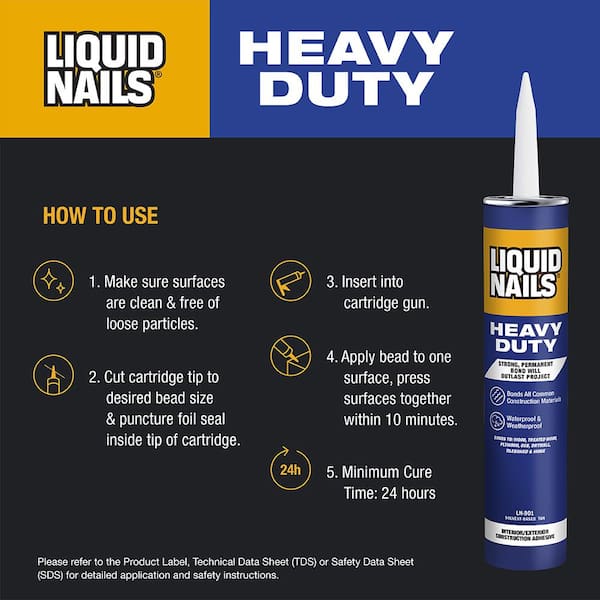
- Clean all surfaces before applying adhesive.
- Use the right formula for your material.
- Apply a thin, even bead.
- Hold or clamp materials for the recommended set time.
- Allow full cure before applying stress.
If you follow these steps, your project will last.
When Is Liquid Nails Fully Cured?
Don’t confuse dry with cured. Dry means you can touch or move the item. Cured means maximum strength.
For most Liquid Nails products:
- Initial set: 15 minutes to 4 hours (depending on material and formula)
- Full cure: 24 to 72 hours
If in doubt, wait longer. Climate and thickness matter—a cold, damp basement may need an extra day.
Useful Resources
For detailed product data and safety instructions, visit the official Liquid Nails site: Liquid Nails Official Website.
Frequently Asked Questions
How Long Does Liquid Nails Take To Dry On Wood?
On wood, Liquid Nails usually dries enough to remove clamps in 15–30 minutes. Full cure takes 24 hours. If the wood is damp or cold, add extra time.
Can I Speed Up Liquid Nails Drying With Heat?
Yes, gentle warmth (like a hair dryer or heat lamp) can speed up drying. But avoid high heat, which can damage the adhesive or materials.
Is Liquid Nails Waterproof After Curing?
Most Liquid Nails formulas are water-resistant after curing, but not all are fully waterproof. For wet areas, use a formula labeled for waterproof performance.
Will Liquid Nails Work On Glass?
Liquid Nails can bond glass, but drying takes longer—2–4 hours for set, up to 72 hours for full cure. Clean glass before applying and support pieces until cured.
What Happens If I Use Liquid Nails On Wet Surfaces?
Adhesive won’t stick well to wet surfaces. Dry surfaces thoroughly before applying Liquid Nails. Moisture slows drying and weakens the bond.
Liquid Nails is a reliable adhesive for many materials, but patience is key. Knowing the drying times for each material and following best practices will help your project turn out strong and lasting. If you need more details, visit the manufacturer’s site or check out Home Depot for product-specific guidance.
Understanding drying time is more than waiting it’s about giving your project the best chance for success. Make smart choices, and your repairs and builds will stand the test of time.