
If you’ve ever opened your dishwasher and found your clean dishes covered with a cloudy white film, you’re not alone. This white residue is a common problem in homes around the world. It can make glassware look dirty, feel gritty, and even leave dishes with a chalky taste. But what causes this annoying film, and how do you finally get rid of it?
Let’s dive into why dishwashers leave this white residue, how you can remove it, and—most importantly—how to keep your dishes sparkling clean every time.
Why Does The Dishwasher Leave A White Residue?
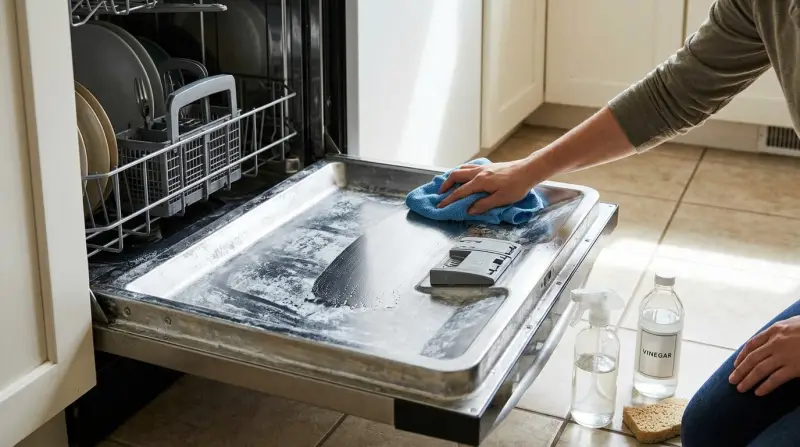
Understanding the cause is the first step. The white film or residue is usually due to either hard water or detergent problems.
Hard water contains high levels of minerals, mainly calcium and magnesium. When your dishwasher runs, these minerals can stick to your dishes, especially glass, creating a cloudy look. Sometimes, the residue is more like a powder and can be wiped away. Other times, it’s stubborn and almost “baked on” after drying.
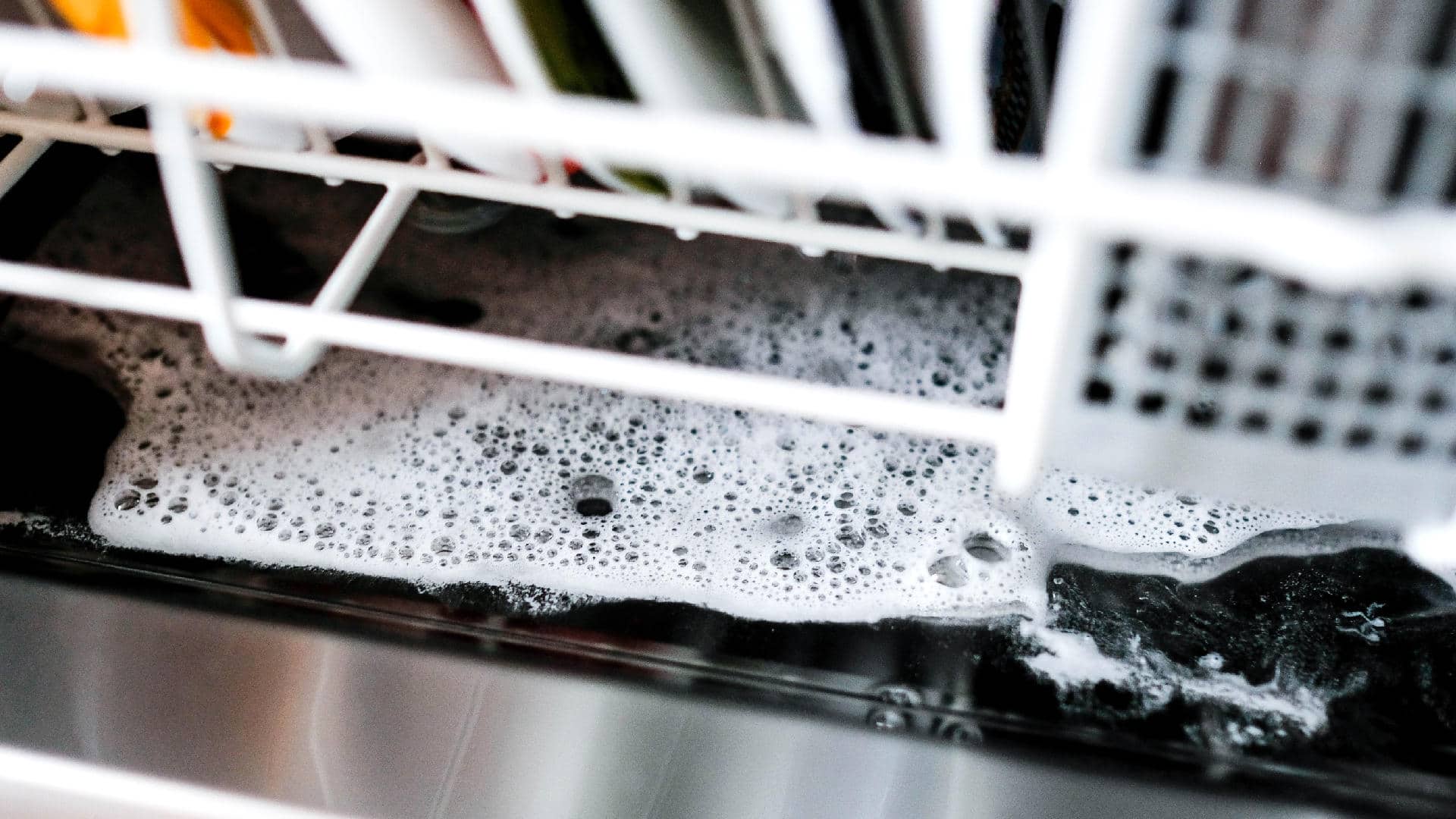
On the other hand, using too much detergent, or the wrong kind, can also leave a film. Some newer dishwashers use less water and require less soap. If you use the same amount as before, leftover detergent can dry on your dishes.
Not rinsing dishes well or using eco-cycles that don’t get hot enough can make it worse.
Let’s see how hard water and detergent choices compare:
| Cause | Main Sign | How to Confirm |
|---|---|---|
| Hard Water | Chalky, cloudy film (mainly glass) | Try wiping with vinegar; if it clears, minerals are the cause |
| Too Much Detergent | Powdery, gritty residue (often plates, plastic) | Decreases if you use less soap or rinse aid |
How To Remove White Residue From Your Dishwasher
If you’re dealing with a dishwasher full of white film, here’s a practical, step-by-step way to get rid of it.
1. Wash Dishes With Vinegar
White vinegar is one of the safest and most effective ways to break down mineral buildup.
- Empty your dishwasher.
- Place a cup of white vinegar in a dishwasher-safe bowl on the top rack.
- Run the dishwasher on the hottest cycle (no detergent needed).
Vinegar dissolves hard water minerals, and in most cases, you’ll see a huge improvement after one cycle.
2. Run A Baking Soda Rinse
Vinegar works best with a follow-up. Baking soda helps deodorize and gently scrubs away residue.
- Sprinkle about 1 cup of baking soda on the bottom of the dishwasher.
- Run a short, hot water cycle.
This step removes smells and helps clear any remaining film.
3. Deep-clean The Dishwasher
Sometimes, residue builds up not only on dishes but also inside the machine.
- Remove and clean the filter: Most dishwashers have a removable filter at the bottom. Rinse it under hot water and scrub off any gunk with a toothbrush.
- Check and wipe the spray arms: Mineral deposits can block spray holes. Use a toothpick or small brush to clear them.
- Clean the door seal and edges with a damp cloth and a bit of vinegar.
4. Rewash Cloudy Dishes
If you have glassware or plates with a stubborn film, soak them in a mixture of equal parts white vinegar and warm water for 10–15 minutes. Then scrub gently with a non-abrasive sponge and rinse well.
Credit: paradiseapplianceservice.com
Preventing White Residue: Simple Daily Habits
Fixing the current issue is important, but preventing it saves time and effort. Here’s what you can do to stop white residue from coming back.
Use The Right Amount Of Detergent
Dishwashers today use less water than older models. Too much detergent causes problems, especially if you have soft water or use a rinse aid. Always follow the detergent instructions and adjust based on your water’s hardness.
Add A Rinse Aid
A rinse aid helps water slide off dishes, preventing spots and film. Most modern machines have a compartment for this. If not, you can use a small cup of white vinegar as a natural rinse aid.
Test Your Water Hardness
Knowing your water hardness helps you make smarter choices. You can buy a simple test strip online or ask your local water supplier. Here’s a quick guide:
| Hardness (mg/L or ppm) | Category | What to Do |
|---|---|---|
| 0–60 | Soft | Use less detergent, add rinse aid |
| 61–120 | Moderately hard | Follow standard detergent instructions |
| 121–180 | Hard | Consider dishwasher salt or softener |
| 180+ | Very hard | Install a whole-home water softener |
Clean The Dishwasher Regularly
Once a month, run an empty cycle with a cup of vinegar on the top rack. This keeps buildup away. Also, wipe seals and clean the filter every few weeks.
Check Your Detergent Type
Not all detergents are the same. Some are made for hard water and contain additives to prevent film. If you switch detergents, run a test load and see if the results improve.
Advanced Solutions For Stubborn Residue
If you’ve tried the basic steps and still see a white film, don’t worry. There are more advanced solutions that can help.
Use Dishwasher Cleaner Products
There are special cleaning products made for dishwashers. They remove limescale, grease, and soap scum from the machine’s inside. Brands like Affresh, Finish, or Glisten are popular.
- Follow the package instructions—usually, you place the cleaner in the detergent area and run a hot cycle.
Install A Water Softener
In areas with very hard water, even the best dishwasher may struggle. A water softener removes minerals before the water enters your home. This is a bigger investment but can solve white residue issues for good.
Try Dishwasher Salt (for Compatible Models)
Some dishwashers, especially European models, have a special compartment for dishwasher salt. This salt helps soften water inside the machine and reduces film. Only use dishwasher salt—not table salt.
Adjust Water Temperature
Dishwashers clean best at temperatures between 120–150°F (49–66°C). If your water is too cool, detergent won’t dissolve well, and residue can stick. Check your water heater setting if problems continue.

Common Mistakes To Avoid
Many people accidentally make the problem worse. Here are common pitfalls:
- Overloading the dishwasher: Too many dishes block spray arms, causing poor rinsing and more film.
- Skipping rinse aid: This simple step prevents most spotting and film.
- Ignoring the filter: A clogged filter recycles dirty water over your dishes.
- Using regular salt: Only use dishwasher salt for machines that have a compartment for it.
- Not running hot cycles: “Eco” or short cycles may not dissolve detergent or rinse well.
When The Problem Is Not Hard Water Or Detergent
Sometimes, the white residue is not caused by minerals or soap but by other issues:
- Etching: This is permanent damage to glassware, making it look cloudy. It’s caused by soft water, too much detergent, or very high heat. If the surface feels smooth but looks milky, it’s likely etched.
- Plastic film: Some plastics get hazy from dishwasher heat. This can’t be fixed but doesn’t affect safety.
To check if your problem is etching, try cleaning a glass with vinegar. If it stays cloudy, it’s probably etched.
Comparing Dishwasher Cleaning Methods
Here’s a quick comparison of the most popular ways to clean dishwashers and remove residue:
| Method | Effectiveness | Best For | Cost |
|---|---|---|---|
| White Vinegar | Very good | Mineral buildup, odor | Low |
| Baking Soda | Good | Odor, light stains | Low |
| Dishwasher Cleaner | Excellent | Heavy buildup, grease | Medium |
| Manual Scrubbing | Varies | Edges, seals, filter | Low |
| Water Softener | Permanent solution | Very hard water | High |
Two Insights Most People Miss
Many guides miss these key points:
- Your water quality can change over time. Cities and towns sometimes change water sources. If you suddenly notice white residue, ask your water company if there’s been a change. Small shifts in hardness can affect dishwashing results.
- Detergent “cake” can build up inside the door. If you always use pods or powder, some can get stuck inside the dispenser or door. Every few months, open the dispenser and scrub out any soap build-up. This improves cleaning and reduces white film.
Credit: www.lcidiomas.com
Frequently Asked Questions
Why Do Only My Glasses Get A White Film?
Glass shows white residue more than other materials because it’s smooth and clear. Hard water minerals and detergent stick to the surface, making the cloudy film more obvious. Plastics and ceramics can also get residue, but it’s less noticeable.
Can I Use Lemon Juice Instead Of Vinegar To Clean The Dishwasher?
Yes, lemon juice has similar acidic properties to vinegar and can help dissolve mineral buildup. However, vinegar is usually stronger and cheaper. Both are safe for your dishwasher in small amounts.
How Often Should I Clean My Dishwasher To Prevent Residue?
A good habit is to clean your dishwasher with vinegar once a month. Also, clean the filter and door seals every few weeks. If you live in a hard water area, you may need to clean more often.
Is White Residue Harmful To My Health?
The white film is usually just minerals from hard water or leftover detergent. It’s not dangerous, but it can make dishes look dirty and taste odd. If you taste soap or feel grit, rinse dishes before using.
Will Using Less Detergent Really Help?
Yes! Most dishwashers need much less detergent than people think, especially if you use a rinse aid. Start with half the recommended amount and adjust based on your results.
For more on dishwasher maintenance and water hardness, see this helpful page from the U.S. Environmental Protection Agency.
Solving the mystery of the white residue on your dishwasher isn’t hard once you understand the causes and solutions. With the right habits, a little regular cleaning, and attention to your water quality, you can say goodbye to cloudy glasses and chalky plates for good.
Clean, sparkling dishes are possible—every single time.