
Looking for ways to save space in your home? Many people wonder if a stackable washer and dryer will fit inside a closet. If you live in an apartment, small house, or just want a laundry area that doesn’t take up much room, this is a common question. The answer depends on a few important details like closet size, appliance dimensions, hookups, and more. Let’s break down what you need to know, plus some tips that most people miss when planning for a stackable laundry setup.
Understanding Stackable Washer And Dryer Dimensions
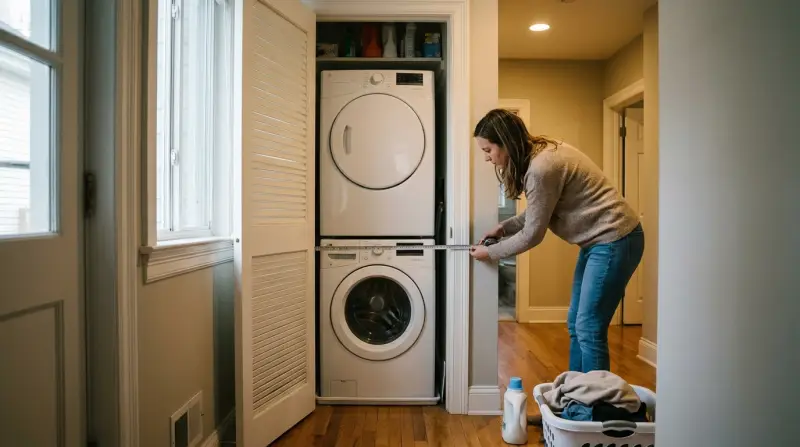
Before shopping, it’s critical to know the average size of stackable laundry units. Most stackable washers and dryers are designed to be compact, but there are still variations.
A typical stackable washer and dryer set has these dimensions:
- Width: 24–27 inches
- Height (stacked): 70–76 inches
- Depth: 27–34 inches
However, these numbers can change based on the brand, whether you choose a full-size or compact model, and if you use a stacking kit. Always check the specific product details before buying.
Common Closet And Appliance Size Comparison
To give you a clearer picture, here’s a comparison of average closet sizes versus stackable washer and dryer dimensions:
| Feature | Standard Closet | Stackable Washer/Dryer |
|---|---|---|
| Width | 36–48 in | 24–27 in |
| Depth | 24–30 in | 27–34 in |
| Height | 80 in+ | 70–76 in |
Most closets are wide enough, but depth is often the limiting factor. If your closet is less than 30 inches deep, fitting a full-size stackable unit could be difficult.
Key Factors For Fitting A Stackable Washer And Dryer In A Closet
Not every closet will work. Here are the most important things to check:
1. Closet Measurements
Measure the width, depth, and height of your closet. Don’t forget to account for baseboards, doors, and anything that could block the unit. Always leave a little extra space for airflow and vibration.
2. Appliance Clearance Requirements
Manufacturers recommend extra space around the unit for air circulation, safety, and maintenance. The usual guidelines are:
- 1 inch on the sides and top
- 4–6 inches behind the unit for hoses and vents
- Enough room to open the washer door fully
If you skip these clearances, your machines could overheat, get damaged, or be hard to use.
3. Hookups And Utilities
A closet must have the right connections:
- Water supply (hot and cold)
- Drain line
- Electrical outlet (usually 240V for electric dryers, 120V for gas)
- Dryer vent (unless you use a ventless model)
If your closet doesn’t already have these, you’ll need to hire a professional to install them. Some older homes or apartments may not allow such upgrades.
4. Venting And Airflow
A common beginner mistake is forgetting about dryer venting. Most dryers need to send hot, moist air outside. If your closet has no vent, you must use a ventless dryer, like a condenser or heat pump model.
Also, closet doors should have louvered (vented) panels or gaps for air flow. Solid doors can trap heat and humidity, causing problems.
5. Door And Accessibility
The closet door style matters. Sliding doors, bifold doors, or swinging doors can limit how far you can open the washer or dryer. Make sure you can open and close the appliances without hitting the closet door.
Types Of Stackable Washers And Dryers To Consider
Not all stackable units are the same. There are two main types:
Full-size Stackable Sets
These are regular front-load washers and dryers stacked using a kit. They give you a larger load capacity (typically 4. 5–5. 5 cu. Ft. for washers), which is good for families or heavy laundry users.
- Pros: More laundry per load, often more features
- Cons: Deeper and taller, harder to fit in small closets
Compact Stackable Sets
Smaller units, usually 24 inches wide, designed for tight spaces. Washer capacity is about 2. 0–2. 5 cu. Ft. , and dryers are often ventless.
- Pros: Fit in small closets, use less water and energy
- Cons: Smaller loads, longer drying times
Here’s a quick comparison:
| Type | Width | Washer Capacity | Dryer Type |
|---|---|---|---|
| Full-Size | 27 in | 4.5–5.5 cu. ft. | Vented |
| Compact | 24 in | 2.0–2.5 cu. ft. | Ventless/Condenser |
Most closets in condos, small homes, or apartments are better suited for compact stackable sets.
Steps To Check If A Stackable Washer And Dryer Will Fit
- Measure your closet carefully (width, depth, height). Write down each number.
- Research appliance sizes for the models you like. Get the exact product specs, not just “average” numbers.
- Factor in clearances (sides, back, top). Add these to the size of the appliances.
- Check door swing—make sure there’s room to open the washer and dryer doors fully.
- Confirm hookups—water, drain, power, and vent (or plan for ventless).
- Think about airflow—closet should have some way for air to move in and out.
- Compare everything—does your closet have enough space for the unit plus the extras? If not, consider a smaller model or changing the closet.
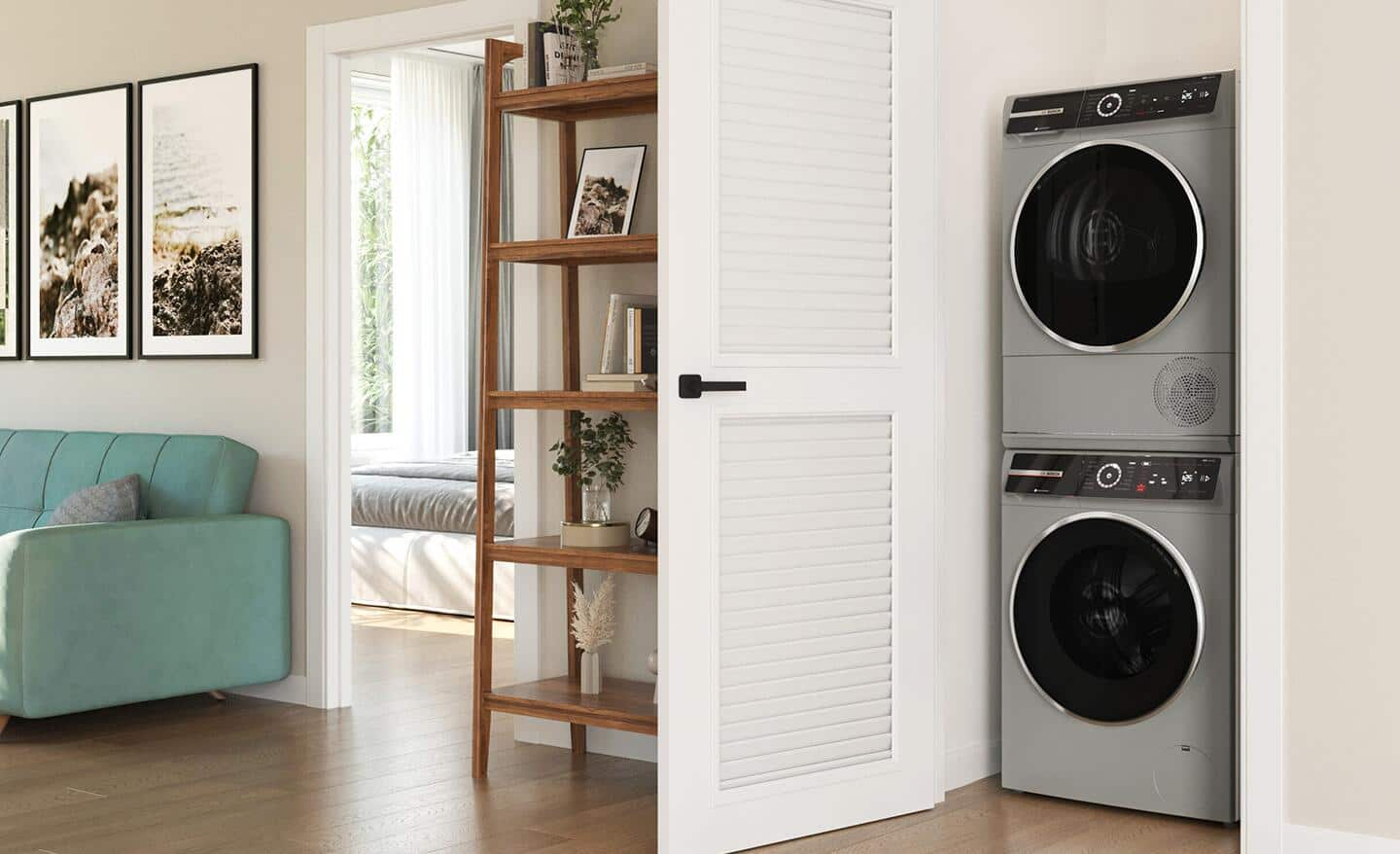
Credit: www.homedepot.com
Real-world Examples And Insights
Many people assume any closet will work, but small mistakes can cause big headaches. Here are some less obvious tips from real installations:
- Hoses and plugs take up space: The hoses and power cord behind the unit usually need more than 3–4 inches. If your closet is only 24–26 inches deep, a full-size machine will almost always stick out.
- Stacking kits add height: The kit that locks the dryer on top of the washer can add 1–2 inches. If your closet height is tight, this matters.
- Noise and vibration: Closets with thin walls or on upper floors can make laundry noise much louder in your home. Use anti-vibration pads under the feet to reduce sound.
- Moisture risk: Poor airflow can trap humidity in the closet, leading to mold or mildew. Consider a small vent or even a battery-powered fan if the closet is very tight.
- Louvered doors help: Replacing a solid closet door with a louvered one can make a big difference for airflow and heat.
Alternatives When A Stackable Set Won’t Fit
If your closet is simply too small or lacks the right hookups, consider these options:
- All-in-one washer dryer: These combo units wash and dry in the same drum. They’re usually 24 inches wide and ventless, so they can fit in very small spaces. Drying times are longer, and capacity is small, but they’re good for single people or couples.
- Portable washers or dryers: Some compact units can be rolled out and connected to a sink when needed, then stored away.
- Shared laundry: If you live in a building with a shared laundry room, sometimes it makes sense to skip the in-unit machines and use the common facilities.

Installation And Safety Considerations
Installing a stackable washer and dryer in a closet is not just about fitting the machines. Safety, function, and long-term use matter just as much.
- Professional installation: If you’re adding water, drain, or electrical lines, hire a licensed plumber or electrician. Mistakes here can cause leaks, shocks, or fire.
- Vent cleaning: Lint buildup in dryer vents is a fire hazard. If you use a vented dryer, make sure you can access the vent for cleaning every 6–12 months.
- Flood protection: Some people add a drain pan under the washer to catch leaks, especially in closets on upper floors.
- Building codes: Always check your local codes or homeowners’ association rules. Some places have strict rules about laundry hookups and venting.
Cost Breakdown
The cost to add a stackable washer and dryer in a closet depends on several factors:
- Appliance cost: $1,500–$2,500 for a good stackable set, but compact or ventless models can be a bit more.
- Installation: $500–$2,000 depending on how much plumbing/electrical work is needed.
- Closet modifications: New doors, added vents, or shelf removal could add $200–$500.
If you’re on a tight budget, shop sales or consider buying a gently used set from a trusted source.
Energy And Water Use
Compact stackable sets usually use less energy and water than full-size ones. Ventless dryers, common in small closets, use heat pump or condenser technology. They’re slower but more energy efficient.
Here’s a quick look at average usage:
| Appliance Type | Energy Use (kWh/cycle) | Water Use (gallons/load) |
|---|---|---|
| Full-Size Vented Dryer | 2.5–4.0 | 15–20 |
| Compact Ventless Dryer | 1.5–2.5 | 8–12 |
| All-in-One Combo | 1.2–2.0 | 8–10 |
If you want to save on utilities, look for ENERGY STAR rated appliances.
Frequently Asked Questions
Can Any Closet Fit A Stackable Washer And Dryer?
Not all closets are suitable. You need enough width, depth, and height, plus water, drain, and electrical hookups. Most reach-in bedroom closets are too shallow for full-size sets but may fit compact models.
Do I Need A Vent For The Dryer In A Closet?
Most dryers need to vent outside. If your closet has no vent, look for a ventless dryer (condenser or heat pump). These models don’t need outside venting but do require good airflow.
How Much Space Should I Leave Around The Appliances?
Leave at least 1 inch on the sides and top, and 4–6 inches at the back for hoses and cords. You also need space for the doors to open fully and for air to circulate.
Can I Install A Stackable Washer And Dryer Myself?
It’s possible if you have the skills, but most people should hire a professional—especially for water, drain, and electrical work. Mistakes can cause leaks, shocks, or code violations.
What’s The Best Stackable Washer And Dryer For Small Closets?
Look for a compact, ventless set (usually 24 inches wide) from trusted brands like Bosch, LG, or GE. These are designed for small spaces and don’t need outside venting, making them ideal for closet installations.
Final Thoughts
A stackable washer and dryer can fit in a closet, but only if you plan carefully. Measure everything, check for hookups, and remember the small details like airflow and door swing. Compact, ventless models are best for tight spaces, but even then, don’t skip the safety and installation needs.
With careful planning, you can have a functional laundry space—even in a closet.
For more technical details on appliance sizes and standards, visit the ENERGY STAR official site.