
A refrigerator is a must-have in almost every home. It keeps food fresh, drinks cold, and ice cream frozen. But sometimes, you may notice water pooling in the fridge compartment. This is a sign your freezer is leaking into the fridge. It’s not just annoying—it can spoil food, cause bad smells, and even damage the appliance. Understanding why this happens, how to fix it, and how to prevent it can save you money, time, and stress.
Why Does The Freezer Leak Into The Fridge?
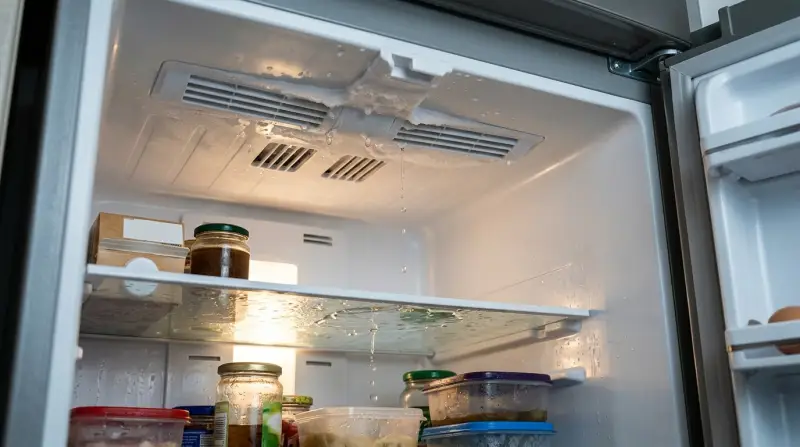
A freezer should keep its cold air separate from the fridge below. When water drips down, something is wrong with the system. Here are some of the main reasons:
- Clogged defrost drain: Most modern refrigerators have a defrost system. A small drain hole at the back of the freezer lets melted ice flow into a drain pan. If this hole gets blocked by ice or food debris, water can’t escape. Instead, it leaks down into the fridge.
- Broken or frozen drain tube: The drain tube carries water from the freezer to a tray underneath. If it’s frozen or cracked, water overflows into the fridge.
- Faulty door seals: If the freezer or fridge door seal is damaged, warm air sneaks in. This causes extra condensation and melting, which can leak down.
- Incorrect temperature settings: If the freezer is set too warm, ice melts faster and produces more water.
- Damaged or blocked evaporator fan: This fan moves cold air between the freezer and fridge. If it’s blocked, air doesn’t flow properly, causing ice to build up and melt into the fridge.
- Overfilled freezer: Too much food blocks air vents and drain holes, causing ice and water to collect.
Each cause has its own symptoms. For example, a clogged drain often leads to water pooling at the bottom of the fridge, while broken seals may cause frost buildup.
Signs Your Freezer Is Leaking
Sometimes the leak is obvious—a puddle of water at the bottom of the fridge. Other times, you may notice:
- Wet food packaging or soggy vegetables in the fridge
- Frost or ice buildup near the back wall of the freezer
- Musty odors from trapped water
- Water stains on fridge shelves or drawers
If ignored, the leak can worsen. Mold can grow, and the appliance may become less efficient.

Step-by-step Guide To Fixing A Freezer Leak
Fixing a freezer leaking into a fridge is usually a DIY job, but sometimes you’ll need a professional. Here’s how to tackle the most common issues:
1. Clear The Defrost Drain
- Unplug the fridge for safety.
- Find the defrost drain hole (usually at the back or bottom of the freezer).
- Use a turkey baster or squeeze bottle to flush warm water into the drain. This melts ice and clears debris.
- If the drain is still blocked, push a small flexible wire through the hole.
- Plug the fridge back in and check for leaks over the next day.
2. Inspect The Drain Tube
- Remove the back panel inside the freezer if possible.
- Look for the drain tube. If it’s frozen, gently warm it with a hair dryer (set to low).
- If the tube is cracked, order a replacement part.
- Reassemble the panels.
3. Check Door Seals
- Run your finger along the seal to look for cracks or tears.
- Clean seals with warm soapy water.
- If the seal is damaged, replace it. This is an inexpensive part, and easy to install.
4. Adjust Temperature Settings
- Set the freezer to 0°F (-18°C) and the fridge to 37°F (3°C).
- Allow 24 hours for the new settings to take effect.
5. Unblock Air Vents
- Rearrange food so vents are clear.
- Never pack the freezer too tight. Leave space for air to flow.
6. Examine The Evaporator Fan
- If you hear strange noises, the fan may be blocked.
- Remove panels and check for ice or debris.
- Clear obstructions and reassemble.
Practical Tips
- Regularly clean the freezer and fridge compartments.
- Don’t ignore small leaks—fix them early to avoid bigger problems.
- If you notice frequent leaks or can’t find the cause, call a qualified technician.
Comparison: Common Causes Vs. Frequency
Here’s a comparison of how often each cause leads to leaks, based on appliance repair surveys:
| Cause | Frequency (%) | Difficulty to Fix |
|---|---|---|
| Clogged defrost drain | 45 | Easy |
| Broken drain tube | 15 | Moderate |
| Faulty door seals | 20 | Easy |
| Incorrect temperature settings | 10 | Easy |
| Blocked evaporator fan | 5 | Moderate |
| Overfilled freezer | 5 | Easy |
Most leaks happen due to a clogged drain, which is simple to fix. Knowing this can help you act faster.
Data: How Much Water Can Leak?
The amount of water leaking into a fridge depends on the issue and the appliance size. Here’s a look at typical volumes:
| Leak Cause | Average Water Per Day (oz) | Potential Damage |
|---|---|---|
| Clogged drain | 16-32 | Spoiled food, mold |
| Broken drain tube | 8-16 | Wet shelves, odors |
| Door seal issue | 4-8 | Frost, higher energy use |
| Blocked fan | 2-4 | Minor, but can worsen |
Even small leaks can add up quickly. For example, a clogged drain can leak nearly a quart each day, enough to soak vegetables and ruin leftovers.
How To Prevent Freezer Leaks
Prevention is always better than repair. Here’s what you can do:
- Clean regularly: Wipe down freezer and fridge walls every month.
- Check drains: Pour warm water into the drain hole every few months.
- Inspect seals: Look for damage and clean seals often.
- Keep vents clear: Don’t block air vents with food.
- Set correct temperatures: Avoid frequent changes; stick to recommended settings.
- Avoid overfilling: Leave space for air and water to move.
- Watch for frost: If you see frost building up, defrost the freezer before it gets worse.
These steps take just a few minutes but can prevent costly repairs.
Real-life Example: Solving A Persistent Leak
A family in Ohio noticed water pooling under their fridge drawers every morning. At first, they thought it was spilled juice. But after wiping it up day after day, they realized something was wrong. They checked the drain hole, found it blocked with ice, and flushed it with warm water.
The leak stopped immediately.
The family learned two useful lessons: leaks often start small, and fixing them early is easy. Ignoring the problem could have led to mold, spoiled food, and an expensive repair.
When Should You Call A Professional?
Most leaks can be fixed without expert help. But you should call a technician if:
- The leak continues after cleaning and clearing drains
- There’s visible damage to pipes, wires, or panels
- The appliance makes loud noises or runs constantly
- You see electrical issues or water near wires
Professional repair costs range from $75 to $300, depending on the problem. For expensive fridges, it’s better to get expert help than risk further damage.
Comparing Diy Vs. Professional Repair
Here’s a quick side-by-side look at the pros and cons:
| Repair Method | Cost | Time Needed | Success Rate |
|---|---|---|---|
| DIY | $0-$30 | 30-90 min | 80% |
| Professional | $75-$300 | 1-2 hours | 98% |
Most leaks are solved with simple tools and a little patience. But if you’re unsure, hiring a pro is a smart choice.
Two Insights Most People Miss
- Minor leaks can signal bigger issues. If you notice water once, keep checking. Sometimes, a small leak can mean a failing part that needs attention.
- Blocked air vents can cause leaks, not just cooling problems. Many people think vents only affect temperature, but they also help control moisture. Keeping vents clear prevents both leaks and frost.

Credit: diy.stackexchange.com
Trusted Resources For Appliance Maintenance
Learning about appliance care can prevent future problems. For more details on fridge maintenance and troubleshooting, visit Consumer Reports.
Frequently Asked Questions
What Should I Do First If My Freezer Is Leaking Into My Fridge?
Start by unplugging the appliance. Check the defrost drain for blockages and flush it with warm water. This fixes most leaks.
Can A Leak Damage My Fridge Permanently?
Yes. Water can cause mold, rust, and electrical damage. Fix leaks early to avoid permanent harm.
How Often Should I Clean The Defrost Drain?
Clean the drain every three months. If your fridge is older or you notice leaks, check it more often.
Is It Safe To Use A Hair Dryer To Thaw Frozen Parts?
It’s safe if you use a low setting and keep the dryer away from wires and plastics. Never leave the dryer unattended.
Will Changing The Temperature Fix A Leak?
Sometimes. If the freezer is too warm, extra melting can cause leaks. Set the freezer to 0°F and fridge to 37°F for best results.
If your freezer is leaking into your fridge, don’t panic. Most problems are easy to find and fix. Regular maintenance and quick action can keep your food safe and your appliance running well for years.
2 thoughts on “Freezer Leaking into Fridge: Top Fixes to Stop Water Damage”