
Oak is one of the most popular hardwoods used in homes, furniture, and flooring. Its classic look and durability make it a favorite for designers and homeowners alike. However, nothing is more frustrating than discovering black stains on oak surfaces. These dark marks not only ruin the natural beauty of the wood but can also signal deeper problems. If you’ve ever wondered where these stains come from, how to remove them, and how to keep your oak looking its best, this guide offers clear, step-by-step answers.
Black stains on oak are common, but not all stains are the same. Some are easy to clean up, while others are stubborn and need special treatment. Understanding the causes and solutions will help you save both time and money.
This article explores what creates black stains, how to fix them, and ways to protect your oak surfaces for the long term. Whether you’re a homeowner, furniture restorer, or just curious, you’ll find practical advice and non-obvious tips that can make a real difference.
What Are Black Stains On Oak?
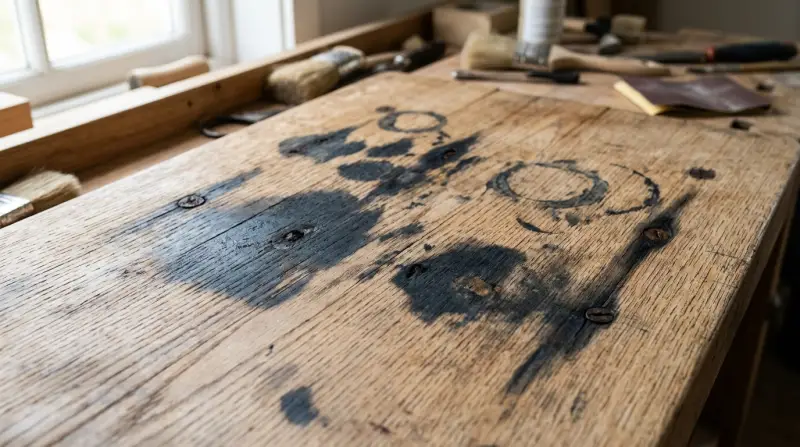
Black stains are dark discolorations that appear on oak wood surfaces, often looking like ink spots, rings, or irregular patches. They can range in size from small dots to large areas. These stains are usually deeper than simple dirt or water marks and often penetrate below the surface of the wood.
Common Places Where Black Stains Appear
- Oak floors near sinks or entryways
- Dining tables and countertops
- Cabinet doors and drawer fronts
- Stair treads and handrails
Often, black stains become more visible on light or natural-finish oak. They tend to stand out against the grain and can be hard to hide with regular cleaning.
Main Causes Of Black Stains On Oak
Understanding the root cause helps you treat and prevent black stains more effectively. Here are the most common reasons:
1. Water And Metal Reactions
Oak contains tannins, which are natural chemicals in the wood. When water and iron (like nails, screws, or metal pots) mix on the oak, a chemical reaction occurs. This creates iron tannate, which appears as a black or blue-black stain.
Real-world Examples
- Leaving a wet can or metal pot on an oak table overnight.
- Water dripping from a leaky pipe onto oak flooring with metal nails underneath.
- Old nails rusting inside oak furniture, causing black streaks to appear on the surface.
2. Mold And Mildew Growth
High humidity, poor ventilation, or standing water can cause mold or mildew to grow on oak. This type of stain is often patchy and may feel soft or fuzzy to the touch.
3. Pet Urine And Organic Spills
Pet accidents or spills from food and drinks can soak into oak. The acids and salts in urine react with the wood’s tannins, turning the area black over time.
4. Previous Repairs Or Old Finishes
Sometimes, old repairs or chemical treatments (like certain wood fillers or stains) react with moisture, leading to black spots long after the work is done.
5. Fire Or Smoke Damage
Although less common, smoke residue from a fire or even candles can settle into the grain and cause black marks.
How To Identify The Type Of Black Stain
Before treating a stain, it’s important to know what caused it. Each type of stain may need a different approach. Here’s how to tell them apart:
Visual Clues
- Metal-tannin stains: Usually have sharp edges, often near metal objects or fasteners.
- Mold stains: Look patchy, sometimes gray-black, and may have a musty smell.
- Pet/organic stains: Often irregular in shape, sometimes with a yellow or brown halo.
Simple Tests
- Wipe with a damp cloth: If the stain lightens, it may be surface mold.
- Smell test: A strong odor often means pet urine or organic matter.
- Location: Near plumbing? Likely water. Near metal? Likely iron-tannin reaction.
Why Oak Is Prone To Black Stains
Oak, especially red oak and white oak, contains higher tannin levels than many other woods. Tannins give oak its rich color and strength, but they also make it more reactive with water and metal. This is why black stains are more common on oak than on maple or pine.
A lesser-known fact is that white oak is less permeable than red oak, so stains may not penetrate as deeply. However, both types can develop stubborn black marks if not protected.
Comparison: Oak Vs. Other Woods For Stain Susceptibility
To see how oak compares to other popular woods, consider the following:
| Wood Type | Tannin Level | Prone to Black Stains | Notes |
|---|---|---|---|
| Red Oak | High | Very | Easily reacts with iron/water |
| White Oak | High | High | Less porous, stains less deep |
| Maple | Low | Low | Rarely gets black stains |
| Walnut | Medium | Medium | Dark color hides stains |
| Pine | Low | Low | Softer wood, more dents than stains |
Immediate Actions When You Spot Black Stains
If you notice a new black stain on your oak surface, quick action can sometimes limit the damage.
- Blot, don’t rub: Use a soft cloth to blot any liquid. Rubbing can push the stain deeper.
- Identify the source: Check for leaks, wet items, or pet accidents.
- Dry the area: Use a fan or hair dryer (on cool setting) to remove moisture.
- Remove metal objects: If metal is causing the stain, take it off the wood right away.
These steps can help prevent the stain from spreading or setting in further.
How To Remove Black Stains From Oak
The right method depends on the cause. Some stains can be cleaned from the surface, while others require deeper treatment.
Removing Iron-tannin Stains
The most common and stubborn black stains on oak come from iron and water reacting with tannins. Here’s how to treat them:
Materials Needed
- Oxalic acid crystals (available at hardware stores)
- Warm water
- Rubber gloves
- Soft brush
- Protective eyewear
- Clean rags
Steps
- Mix solution: Dissolve 2 tablespoons of oxalic acid in 1 cup of warm water.
- Apply: Brush the solution onto the stain. Do not soak the area.
- Wait: Let it sit until the stain lightens (usually 1–2 hours).
- Rinse: Wipe with a clean, damp rag to remove acid residue.
- Dry: Allow the wood to dry completely.
- Repeat if needed: For deep stains, a second application may help.
Safety Tips
- Wear gloves and goggles, as oxalic acid is strong.
- Work in a well-ventilated area.
Non-obvious Insight
Many people forget that the wood’s finish (varnish or polyurethane) can block the acid from reaching the stain. If the stain does not lighten, lightly sand off the finish before applying oxalic acid.
Treating Mold And Mildew Stains
Mold stains are usually on the surface and can be removed without strong chemicals.
Steps
- Mix equal parts white vinegar and water.
- Dampen a soft cloth and gently wipe the stained area.
- Dry with a clean towel.
- For stubborn mold, use a baking soda paste (1 tablespoon baking soda + 1 teaspoon water).
If the mold returns, improve room ventilation and check for hidden leaks.
Removing Pet Urine And Organic Stains
These stains may require a two-step process.
- Blot up any fresh liquid.
- Clean with an enzyme cleaner (available at pet stores).
- For stubborn stains, use a mix of hydrogen peroxide (3%) and a few drops of ammonia. Test in a hidden spot first.
- Let it sit for a few hours, then wipe clean.
Old Repairs Or Chemical Stains
If stains come from past repairs, sanding and refinishing may be needed. Start with 180-grit sandpaper, then move to a finer grit. Always sand with the grain.
When To Call A Professional
If stains cover a large area, go deep into the wood, or you’re unsure of the cause, it’s smart to consult a wood restoration professional. Attempting to treat large or valuable pieces yourself can sometimes make the problem worse.
Common Mistakes When Dealing With Black Stains
- Using bleach: Chlorine bleach often fails to remove iron-tannin stains and can damage oak.
- Ignoring the finish: Not removing the protective finish before treating means the cleaner won’t reach the stain.
- Over-sanding: Sanding too much can create uneven surfaces or remove too much material.
- Skipping safety gear: Oxalic acid and other chemicals can cause burns or respiratory issues.
Credit: chrislovesjulia.com
Comparison Of Stain Removal Methods
Different methods work for different stains. Here’s a quick look at the pros and cons:
| Method | Effective For | Pros | Cons |
|---|---|---|---|
| Oxalic Acid | Iron-tannin stains | Very effective, restores color | Requires care, may remove finish |
| Vinegar Solution | Mold/mildew | Safe, easy to use | Not for deep stains |
| Hydrogen Peroxide | Pet/organic stains | Breaks down organic material | May lighten surrounding wood |
| Sanding | Surface stains, old repairs | Works for light stains | Can damage if overdone |
How To Prevent Black Stains On Oak
Prevention is often easier than repair. Follow these steps to keep your oak surfaces free of black marks.
1. Seal All Surfaces
Apply a high-quality wood sealant or finish to all sides of oak furniture or flooring, not just the top. This blocks moisture and air from reaching the wood and starting chemical reactions.
2. Use Stainless Or Brass Hardware
Where possible, use stainless steel or brass screws and nails. These metals do not react with tannins in oak.
3. Control Moisture
Keep humidity between 40% and 60%. Use a dehumidifier in basements or bathrooms. Clean up spills immediately.
4. Avoid Direct Contact With Metal
Do not leave cans, metal vases, or tools on oak surfaces for long periods, especially if there’s any moisture.
5. Place Mats And Pads
Put coasters under drinks and mats under pet bowls. This simple habit prevents most stains.
6. Check For Leaks
Inspect plumbing, windows, and entryways regularly for leaks. Fixing water problems early can save your floors and furniture.
7. Clean Regularly
Dust and clean oak with a dry or slightly damp cloth. Avoid harsh cleaners that can strip the finish.
Non-obvious Insight
Many people seal only the visible side of oak boards or furniture. Moisture can still enter from the underside or edges, leading to hidden stains that appear months later. Always finish all surfaces, even those out of sight.
Repairing Damage After Stain Removal
Once you’ve removed a black stain, you may be left with an uneven color or a dull spot. Here’s how to restore your oak:
1. Sand Lightly
Gently sand the area with fine sandpaper (220 grit) to smooth the surface.
2. Blend The Color
Use a matching wood stain or touch-up pen to even out the color. Test in a hidden area first.
3. Refinish
Apply a thin coat of polyurethane, varnish, or oil to protect the area. Let it dry fully before using.
4. Polish
Buff with a soft cloth for a uniform shine.
Should You Refinish The Whole Surface?
If the stained area is large or in a highly visible spot, refinishing the entire surface may be the best way to get a consistent look. This process involves:
- Removing all finish with a chemical stripper or sanding.
- Treating stains as needed.
- Applying new stain and protective finish.
While this takes more time, it ensures the oak looks even and well cared for.
When Black Stains Are A Sign Of Bigger Problems
Sometimes, black stains are not just a cosmetic issue. They can point to:
- Hidden leaks in plumbing or roofing
- Structural damage in flooring or furniture
- Long-term mold growth
If you see stains spreading, feel soft or spongy wood, or notice a musty smell, investigate further. Fixing the source of moisture is as important as removing the stain itself.
How Black Stains Affect Oak’s Value
For antique furniture or valuable flooring, black stains can lower resale value. Buyers often see black marks as signs of neglect or water damage, even if the wood is otherwise sound.
Professional refinishing can restore much of the value, but some deep stains may never fully disappear. When restoring antiques, consult an expert before using strong chemicals or sanding, as these can harm the wood’s patina.
Eco-friendly Stain Removal Options
Concerned about chemicals? There are greener ways to treat some black stains:
- Lemon juice and baking soda: Works for light surface stains.
- Hydrogen peroxide: Biodegradable and less harsh than oxalic acid.
- Vinegar: Effective for mold, but avoid on unfinished wood as it can raise the grain.
While these may not be as powerful as commercial products, they are safer for children, pets, and the environment.
Professional Restoration Vs. Diy
How do you decide whether to tackle black stains yourself or call a pro?
- DIY: Good for small, shallow stains, or if you’re comfortable with basic tools.
- Professional: Best for large, deep, or old stains, antiques, or if the stain source is unknown.
A professional restorer will have access to advanced tools, finishing products, and experience with historic pieces. For valuable items, the cost is often justified.
Black Stains On Oak Floors: Special Considerations
Oak floors are especially prone to black stains due to:
- Water tracked in from outside
- Pet accidents
- Spills from plants or drinks
Always clean up spills right away. For recurring stains, check for leaks in appliances or pipes.
If stains are widespread, you may need to sand and refinish the entire floor. Make sure to use a floor finish that resists water and stains.
Case Study: Removing Black Stains From A 50-year-old Oak Table
A family heirloom oak dining table developed several black rings from wet coffee mugs and a rusty metal vase. The owner tried regular cleaners with no luck.
Solution:
- Finish was gently sanded away over the stains.
- Oxalic acid solution applied twice, with drying in between.
- Stains faded but did not fully disappear.
- Area was stained to match the rest of the table and resealed.
Result: The table looked much better, and the history of use added character. Not all stains vanished, but the overall appearance improved.
Lesson: Older stains are harder to remove fully. Patience, the right tools, and matching finish are key.
Myths About Black Stains On Oak
Many common beliefs about black stains are not true. Here are a few:
- Myth: “All black stains mean mold.”
Fact: Most are from iron-tannin reactions or pet urine.
- Myth: “You can remove any stain with enough sanding.”
Fact: Deep stains may go through the entire piece. Over-sanding can ruin the shape.
- Myth: “Bleach is the best for black stains.”
Fact: Chlorine bleach rarely helps with iron-based stains and can damage wood.
- Myth: “Once stained, oak is ruined forever.”
Fact: Many stains can be lightened or removed, especially with quick action.
How To Choose The Right Products
When buying cleaners or finishes for oak, look for:
- Wood-safe labels
- Products designed for tannin or iron stains
- Water-based finishes for easy cleanup
- Low-VOC options for healthier indoor air
Always test any product on a hidden area first.
Research And Expert Resources
For further reading, the U.S. Forest Service and woodworking forums provide detailed guides on wood care. For technical details on tannins, see Wikipedia: Tannin.
Frequently Asked Questions
What Causes Black Stains On Oak The Most?
The most common cause is iron-tannin reactions. When water and metal mix on oak, the wood’s natural tannins react with iron, creating black or blue-black stains. Pet urine and mold are other frequent causes.
Can Black Stains Be Removed Without Damaging The Finish?
Sometimes, yes—especially if the stain is new or on the surface. For deeper stains, you may need to remove the finish first so that cleaning solutions can reach the wood.
Is Oxalic Acid Safe For Home Use?
Oxalic acid is effective for iron-tannin stains but should be handled with care. Wear gloves and goggles, and keep it away from children and pets. Always follow the product instructions for safe use.
Will Sealing Oak Prevent All Stains?
Sealing helps a lot but is not foolproof. If water sits for a long time or seeps in from unsealed edges, stains can still happen. Always clean up spills quickly and maintain your finish regularly.
Are Black Stains A Sign Of Serious Damage?
Not always. Many black stains are just on the surface and can be treated. However, if the wood feels soft, smells musty, or the stain keeps spreading, check for hidden leaks or rot, which may need professional repair.
Black stains on oak can be frustrating, but with the right information and a careful approach, most can be treated or prevented. Quick action, regular maintenance, and understanding the real cause are your best tools for keeping oak surfaces beautiful for years to come.