
When you need to drill a big hole in wood, two tools come up again and again: spade bit and hole saw. Both look a little strange to beginners, and both promise to cut circles. But which is better for your job? The answer depends on what you’re building, the materials you’re using, and even how clean you want the finished hole to look.
If you’ve ever wondered why professionals have both in their toolboxes, this guide will clear things up. We’ll look at what each tool does best, where each one struggles, and how to pick the right bit for your next project.
By the end, you’ll know exactly which tool to reach for—saving time, money, and frustration.
What Is A Spade Bit?
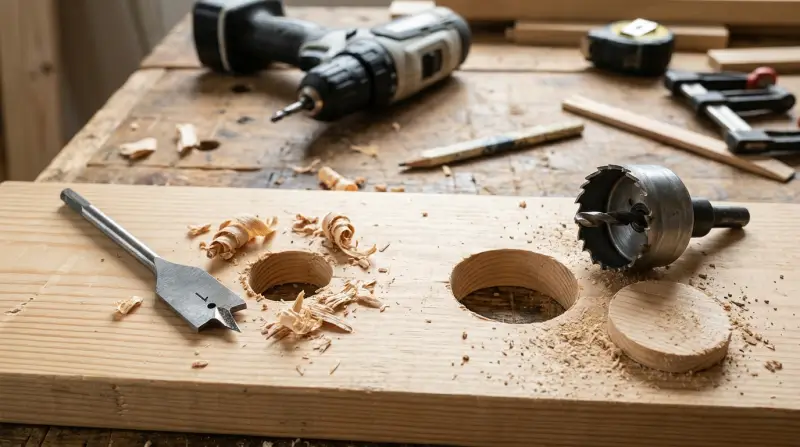
A spade bit is a simple, flat drill bit with a sharp point in the center and two wide, cutting edges on both sides. The design looks like a paddle or a spade, which is where it gets its name. Spade bits are made for drilling medium to large holes in wood and sometimes plastic.
Most spade bits range from 1/4 inch up to 1-1/2 inches in diameter. The bit is held by a standard drill, and its sharp point helps keep it centered as you start drilling. As you push, the flat edges shave away the wood, creating a fast but sometimes rough hole.
Key Features Of Spade Bits
- Speed: Cuts quickly through soft and hardwood
- Simplicity: One-piece design, easy to sharpen
- Cost: Inexpensive compared to other large bits
- Sizes: Usually available in 1/8-inch steps up to 1-1/2 inches
Typical Uses
- Running wires through wall studs
- Making holes for door hardware
- Rough carpentry projects
When Not To Use
Spade bits struggle with metal or masonry. They also tend to splinter the back side of the wood (tear-out) if you’re not careful.
What Is A Hole Saw?
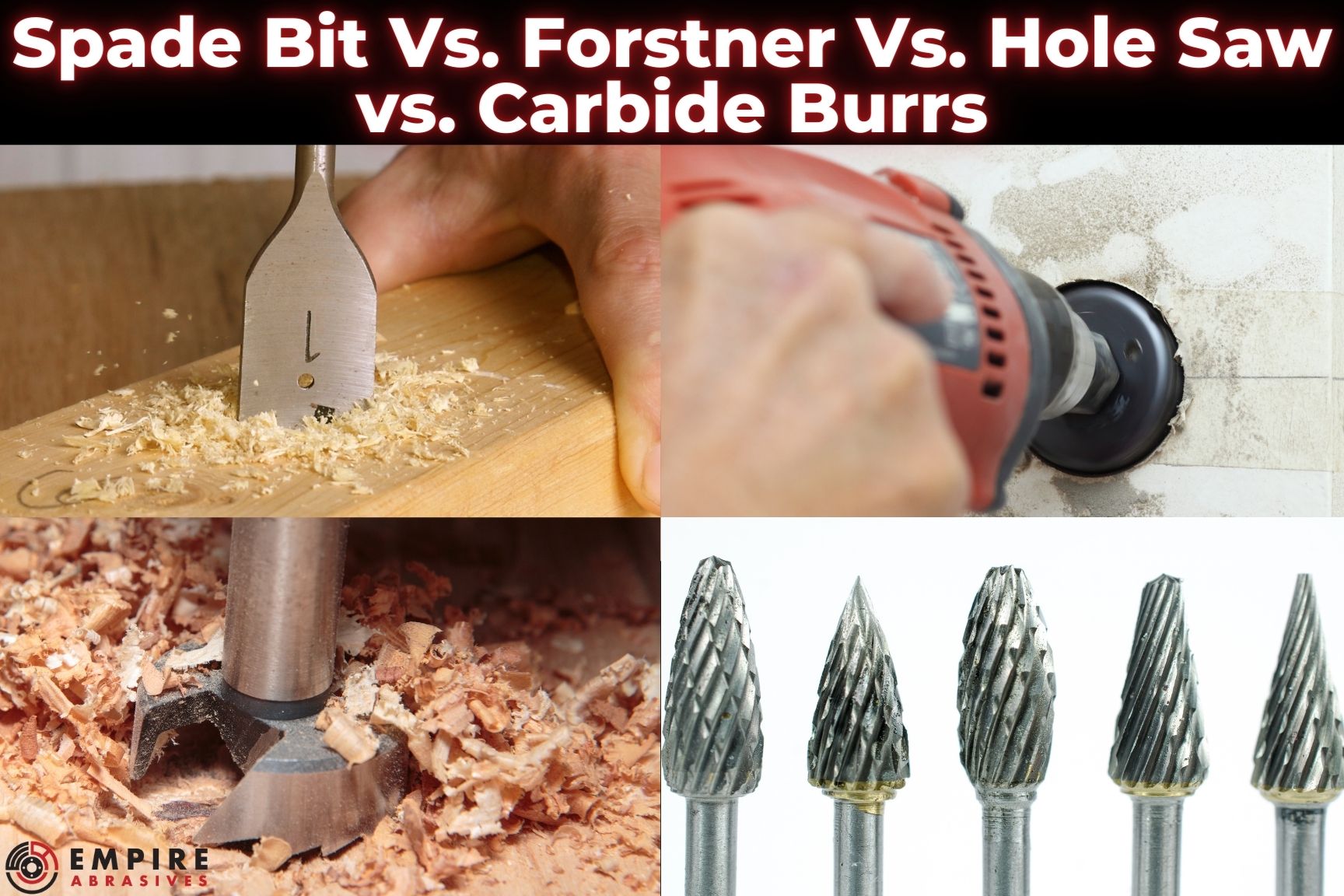
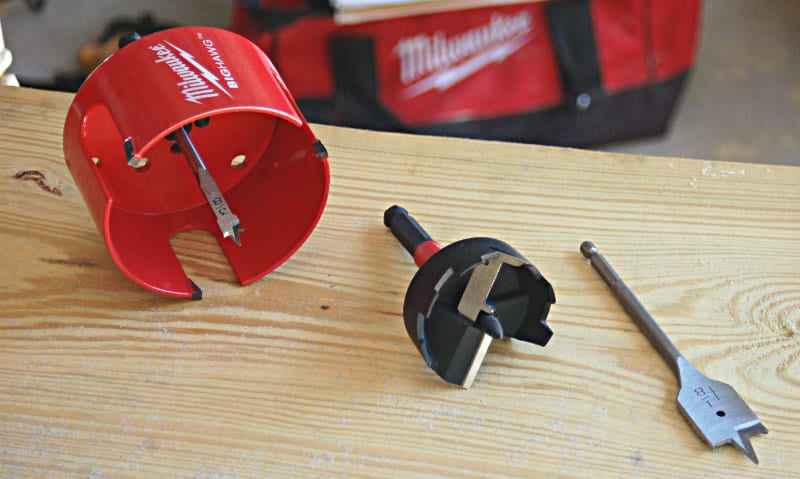
A hole saw is a circular saw blade shaped like a cup, with teeth on its edge. It attaches to a drill through a central bit called a pilot bit, which helps guide the saw as it starts cutting. The hole saw cuts only the outer edge of the hole, leaving a wooden “plug” behind.
Hole saws come in many diameters, from about 3/4 inch to over 6 inches. You can buy them in single sizes or as kits. The teeth are designed for wood, plastic, drywall, or even metal—if you choose the right type.
Key Features Of Hole Saws
- Cleaner holes: Less tear-out, smoother edges
- Larger sizes: Makes very big holes not possible with spade bits
- Versatility: Can cut through wood, metal, and plastic (with the right teeth)
- Replaceable: The saw part and pilot bit can be replaced separately
Typical Uses
- Installing door hardware or locks
- Making holes for recessed lights
- Cutting pipe openings in cabinets or walls
When Not To Use
Hole saws are not good for deep holes (over 2 inches) or for quickly drilling many holes in a row. They can also get clogged with wood chips if you don’t clear them out.
Credit: www.empireabrasives.com
Spade Bit Vs Hole Saw: Side-by-side Comparison
To make things clear, here’s a table comparing the main features of spade bits and hole saws:
| Feature | Spade Bit | Hole Saw |
|---|---|---|
| Best Material | Wood, soft plastic | Wood, plastic, metal (with right saw) |
| Hole Quality | Rough, splintered edges | Smooth, clean edges |
| Speed | Very fast | Slower |
| Common Sizes | 1/4″ – 1-1/2″ | 3/4″ – 6″+ |
| Price | Low | Higher |
| Depth of Cut | Deep holes possible | Usually 1-2 inches |
| Durability | Long-lasting, easy to sharpen | Teeth wear with metal use |
How To Choose: Key Factors To Consider
Selecting between a spade bit and a hole saw is not always obvious. Here are the main things to think about:
1. Material
- For wood and soft plastic, both tools work, but spade bits are faster.
- For metal or ceramic, only a hole saw with the right teeth will work.
2. Hole Quality
If you need a clean, smooth edge, choose a hole saw. Spade bits often leave splinters, especially on the exit side of the hole.
3. Hole Size
- For small to medium holes (up to 1-1/2 inches), spade bits are simple and cheap.
- For large holes (over 1-1/2 inches), use a hole saw.
4. Speed
Need to drill many holes quickly? Spade bits are faster and less likely to overheat.
5. Tool Power
Hole saws need more torque (rotational force). If you’re using a small cordless drill, a spade bit may be the safer choice.
6. Cost
Spade bits are budget-friendly, especially if you need many sizes. Hole saws are more expensive, but also more versatile.
7. Depth
For deep holes (over 2 inches), spade bits are better. Most hole saws are limited by their cup height.
Credit: www.protoolreviews.com
Real-world Examples
Let’s look at a few common situations to see which tool works best.
Running Electrical Wires Through Studs
Electricians often need to make 3/4-inch holes through wall studs to run wires. Here, a spade bit is preferred. It’s fast, cheap, and splinters don’t matter since the hole will be hidden.
Installing A Door Lock
For a new door lock, you need a large, clean hole—usually 2-1/8 inches. A hole saw is the clear winner. It creates a smooth edge that fits the lock perfectly.
Cutting Holes In Metal
Suppose you need a 1-1/4 inch hole in a metal electrical box. Only a bi-metal hole saw will work. Spade bits can’t cut metal at all.
Making Many Holes In Plywood
If you’re building a project that needs many holes, like a pegboard, spade bits can save you time and money. But if appearance matters, you might want a hole saw for the final, visible holes.
Performance: Speed, Cleanliness, And Ease Of Use
How do these tools compare in daily use? Here are some practical insights you won’t find in most guides:
Speed
Spade bits can make a 1-inch hole in wood in just 2–3 seconds with a powerful drill. Hole saws take longer, especially in hard materials.
Cleanliness
If you drill through a door with a spade bit, you’ll often see tear-out on the back side. To avoid this, stop drilling when the tip just pokes through, then finish from the other side.
Hole saws almost always leave a neat edge, but can burn wood if used too slowly.
Ease Of Use
Spade bits can catch or jerk suddenly if you tilt the drill, especially in knots or hardwood. Hole saws can bind if you push too hard, or if the saw teeth get clogged.
One trick: If you need a perfectly centered hole, use a smaller spade bit first as a pilot, then follow with the hole saw.
Credit: www.empireabrasives.com
Durability And Maintenance
Both tools can last a long time, but how you care for them matters.
Spade Bits
- Can be sharpened with a small file
- Not easily damaged unless used on metal or nails
- Inexpensive, so many pros treat them as disposable
Hole Saws
- Teeth can dull quickly, especially on metal
- Pilot bit may break if you’re rough
- Replace just the saw or pilot, not the whole tool
If you notice slow cutting or burning, it’s time to sharpen or replace the tool.
Cost And Value
Let’s compare the typical cost for each tool:
| Tool | Single Bit/Saw | Starter Kit |
|---|---|---|
| Spade Bit | $2 – $6 | $10 – $25 (6-10 bits) |
| Hole Saw | $8 – $25 | $20 – $80 (multi-size kit) |
As you see, spade bits are more affordable, but hole saws offer more flexibility for the price.
Common Mistakes To Avoid
Even experienced DIYers sometimes make these errors:
- Using a spade bit on metal: It won’t work and will damage the bit.
- Drilling too fast with a hole saw: Causes burning, dull teeth, and rough holes.
- Not clearing chips: Both tools can clog if you don’t lift the drill occasionally.
- Drilling straight through with a spade bit: Leads to tear-out on the exit side.
- Forcing the tool: Let the saw or bit do the work; too much pressure bends bits or breaks teeth.
Tips For Best Results
- For clean holes with a spade bit, clamp a scrap piece of wood on the back side.
- Use low speed for hole saws, especially in metal.
- Lubricate hole saw teeth with a little oil when cutting metal.
- For deep holes, back out the bit or saw regularly to clear chips.
- Use a powerful drill with a side handle for large hole saws.
Environmental And Safety Considerations
Both tools produce wood chips and dust. Always wear eye protection and a dust mask, especially with treated wood or metal. Spade bits can catch and twist the drill, so keep both hands on the tool.
Used bits and saws can be recycled with metal scrap. Choosing a higher-quality tool can reduce waste over time.
Frequently Asked Questions
What Size Holes Can Each Tool Make?
Spade bits usually range from 1/4 inch up to 1-1/2 inches. Hole saws start at about 3/4 inch and can go over 6 inches in diameter, making them ideal for large holes.
Can I Use A Hole Saw In A Regular Hand Drill?
Yes, but for large hole saws (over 2 inches), you should use a powerful drill with a side handle. Small cordless drills may struggle or stall.
How Can I Avoid Splintering With A Spade Bit?
To prevent splintering, drill until the point just breaks through the back side. Then, finish the hole from the opposite side. Clamping a piece of scrap wood behind your work can also help.
Can I Sharpen A Spade Bit Or Hole Saw?
Spade bits can be sharpened with a small file. Hole saws are harder to sharpen, but you can touch up the teeth with a diamond file. For best results, replace dull hole saws.
Which Tool Is Better For Beginners?
For most woodworking, a spade bit is easier and cheaper for small to medium holes. For large, clean holes, or for cutting through metal, a hole saw is better. Start with a basic set of each if possible.
If you want to read more about drill bit types and their uses, check out this page on Wikipedia.
Choosing between a spade bit and a hole saw doesn’t have to be complicated. Think about your material, the hole size, and the finish you need. With the right tool, your project will look professional and go smoothly. Keep these tips in mind, and you’ll drill with confidence every time.