
When your Whirlpool washer suddenly starts making a loud noise and stops spinning, it’s easy to feel frustrated. Laundry day gets interrupted, clothes stay soaked, and you wonder if you need to call for costly repairs. The good news is, many of these problems have clear causes and solutions. Understanding the reasons behind the noise and spin issues can help you fix them, save money, and avoid future trouble.
This guide explains why Whirlpool washers stop spinning and make loud noises, how to diagnose the most common problems, and what you can do about them. Whether you’re a homeowner, a renter, or just want to know more, you’ll find practical advice, expert tips, and clear steps to get your washer running smoothly again.
Common Reasons A Whirlpool Washer Is Not Spinning And Making Loud Noise
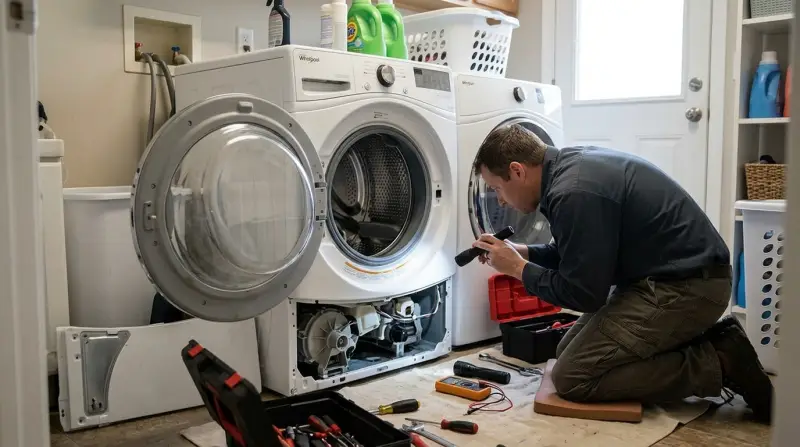
Many people assume a broken washer means a major part has failed, but often it’s a small, fixable issue. Here are the most common reasons your Whirlpool washer might not spin and makes loud noises:
1. Worn-out Drum Bearings
Bearings allow the drum to spin. When they wear out, you’ll hear a grinding or rumbling noise, especially during the spin cycle.
2. Broken Drive Belt
The belt connects the motor to the drum. If it breaks or slips, the drum can’t spin and may make a thumping or slapping noise.
3. Faulty Motor Coupling
This part connects the motor to the transmission. If it fails, you’ll often hear a loud, clicking noise and the washer won’t spin.
4. Objects Stuck In The Drum Or Pump
Coins, buttons, or other items can get caught, causing loud banging or rattling sounds.
5. Damaged Suspension Rods Or Springs
These keep the drum balanced. If they break, the washer shakes and knocks loudly.
6. Worn-out Clutch Assembly
The clutch helps the drum reach full speed. If worn, you may hear scraping sounds, and the spin cycle is weak.
7. Malfunctioning Lid Switch
If the lid switch fails, the washer thinks the door is open and won’t spin. Some washers beep or click loudly.
8. Loose Or Damaged Tub Bolts
Loose bolts can cause the tub to wobble, making a loud noise during spin.
Knowing these causes can help you focus your troubleshooting and repairs.
How To Diagnose The Problem
Before you start taking your washer apart, do some simple checks. This can save you time and prevent unnecessary repairs.
Step 1: Listen To The Noise
Pay attention to when the noise happens:
- During spin cycle only: Likely a bearing, belt, or clutch problem.
- All cycles: Could be a motor, suspension, or loose part.
- Rattling or banging: Often something stuck or unbalanced.
Step 2: Check For Error Codes
Many newer Whirlpool washers show an error code on the control panel. Look up the code in your user manual or on the Whirlpool website. Codes like “F7 E1” (motor drive error) or “F0 E5” (off-balance load) give you a clue.
Step 3: Inspect Visible Parts
Open the washer lid or door. Look for:
- Loose items in the drum
- Water under the washer (possible leak)
- Visible damage to the rubber door seal
Step 4: Try A Test Run
Run a short cycle with a small load. Watch and listen:
- Does the drum move at all?
- Is there shaking, squealing, or grinding?
- Does the cycle stop with wet clothes inside?
Take notes on what you see and hear. This information helps you or a technician pinpoint the issue.
Credit: www.youtube.com
Diy Fixes For Common Whirlpool Washer Problems
If you’re comfortable with basic tools, many washer issues can be fixed at home. Here’s how to address the most common causes:
Replacing Worn Drum Bearings
If your washer makes a rumbling noise that gets louder during the spin cycle, the bearings may be worn. Replacing bearings is complex—often requiring drum removal. It’s doable if you’re handy, but many people prefer to hire a pro. Replacement kits cost between $50 and $120, while professional repair can be $200–$400.
Installing A New Drive Belt
A broken belt means the drum won’t spin. To check:
- Unplug the washer and access the back panel.
- Look for the drive belt—usually a black rubber band around the motor and drum pulleys.
- If the belt is off, cracked, or broken, replace it. Belts cost $15–$30.
Fixing The Motor Coupling
In direct-drive washers, a motor coupling can break. This part is between the motor and transmission.
- Unplug the washer and tip it back.
- Remove the cabinet and pump (check your manual).
- Replace the coupling—parts cost $10–$20.
Removing Stuck Objects
If you hear rattling or banging, an item may be stuck in the drum or pump.
- Check around the drum edge for coins or buttons.
- Remove the drain pump cover to look for trapped objects.
- Clear any debris and reassemble.
Replacing Suspension Rods Or Springs
A washer that shakes loudly may need new suspension rods. Kits cost $30–$50.
- Unplug and open the washer cabinet.
- Carefully replace each rod or spring.
- Make sure all are attached securely.
Checking The Lid Switch
If the washer won’t spin but everything else works, test the lid switch:
- Use a multimeter to check for continuity.
- If faulty, replace the switch ($20–$50).
Tightening Tub Bolts
Loose tub bolts cause a thumping noise. To fix:
- Unplug the washer.
- Open the back panel.
- Tighten all visible bolts with a wrench.
When To Call A Professional
Some washer repairs are better left to experts:
- Bearing replacement (labor-intensive)
- Motor or control board failure (electrical skills needed)
- Major leaks or drum damage
If your washer is under warranty, contact Whirlpool or an authorized service provider. Attempting repairs yourself could void the warranty.
Real-world Data: Repair Cost Comparison
Here’s a look at average repair costs for typical Whirlpool washer problems:
| Problem | DIY Part Cost | Professional Repair |
|---|---|---|
| Drum Bearings | $50–$120 | $200–$400 |
| Drive Belt | $15–$30 | $80–$150 |
| Motor Coupling | $10–$20 | $90–$180 |
| Suspension Rods | $30–$50 | $120–$250 |
This data shows that DIY repairs can save a lot, but only if you’re confident in your skills.
Preventing Washer Spin And Noise Problems
Prevention is better than repair. Here’s how to keep your Whirlpool washer spinning quietly for years:
- Don’t overload the drum. Too many clothes stress the motor and suspension.
- Check pockets before washing. Small objects can damage the drum or pump.
- Level your washer. Use a spirit level and adjust the feet so the machine sits flat.
- Clean the drain pump filter every few months.
- Use high-efficiency (HE) detergent if your washer requires it.
A surprising fact: Over 30% of washer breakdowns are caused by foreign objects, not worn parts. Simply checking pockets can prevent many noisy problems.

Credit: www.servicecare.net
What Beginners Often Miss
Many people focus only on the drum and motor, but other parts matter too:
- Shock absorbers (in front-load models) dampen movement. If worn, the washer shakes and thumps.
- Water inlet valves can make a humming or buzzing noise if clogged.
- Incorrect installation (like failing to remove shipping bolts on new washers) causes severe noise and vibration.
Another common mistake is ignoring small noises. Early intervention usually means a cheaper, easier fix. If your washer starts making new sounds, don’t wait until it stops spinning.
Whirlpool Washer Models: Feature Comparison
Not all Whirlpool washers are built the same. Here’s a quick look at how common models compare on noise and spin reliability:
| Model | Spin Speed (RPM) | Noise Level (dB) | Known Issues |
|---|---|---|---|
| WFW9620HC | 1160 | 50–60 | Suspension rods wear |
| WTW5000DW | 660 | 60–70 | Drive belt, lid switch |
| WFW75HEFW | 1200 | 50–62 | Shock absorbers |
Spin speed and noise level can affect how loud and reliable your washer is. Higher spin speeds remove more water but can also stress parts.
Troubleshooting Tips For Whirlpool Washers
If you’re not sure what’s wrong, try these steps:
- Unplug the washer for a full minute, then restart. This resets the control board.
- Run a cleaning cycle (no laundry) to clear out residue.
- Watch the spin cycle: If the drum moves but doesn’t speed up, suspect the clutch or belt.
- Listen for changes: If the noise gets worse over time, the problem is likely mechanical, not just a stray object.
Document what you try and the results. This helps if you need to call a technician later.
How Long Should A Whirlpool Washer Last?
With good care, most Whirlpool washers last 10–13 years. Front-load models often last longer than top-loaders. Regular cleaning, not overloading, and quick repairs when problems start can help you reach the upper end of this range.

Credit: sloanappliance.com
Where To Find Parts And Help
For genuine Whirlpool parts, use the official Whirlpool website or a trusted appliance parts retailer. Avoid generic parts that may not fit or last as long. For step-by-step repair videos, YouTube channels like “AppliancePartsPros” and “RepairClinic” are helpful.
If you want to read more about common washer repair mistakes, visit this guide from Family Handyman.
Frequently Asked Questions
Why Does My Whirlpool Washer Make A Loud Noise And Not Spin?
The most common causes are a broken drive belt, worn drum bearings, or objects stuck in the drum or pump. Other issues include a faulty lid switch, damaged suspension rods, or a bad motor coupling.
Can I Keep Using My Washer If It’s Noisy But Still Spins?
It’s best to stop using the washer until you find the cause. Continuing to use a noisy washer can make the problem worse and lead to more expensive repairs.
How Do I Know If The Problem Is With The Motor Or The Belt?
If the motor runs but the drum doesn’t spin, it’s likely the belt or coupling. If the washer is silent or makes humming noises, the motor or control board could be the issue.
Is It Safe To Repair A Washer Myself?
Many repairs, like replacing belts or lid switches, are safe if you unplug the washer and follow instructions. For electrical or drum repairs, consider hiring a professional.
How Can I Prevent These Problems In The Future?
Avoid overloading, check pockets before washing, and level your washer. Clean the filter regularly and don’t ignore new noises.
A noisy, non-spinning Whirlpool washer is stressful, but you don’t have to panic. With the right knowledge, many problems are easy to identify and fix. Regular maintenance, quick action when you hear new noises, and knowing when to call a pro will keep your washer running for years. Taking care now means fewer surprises and more peace of mind on laundry day.