
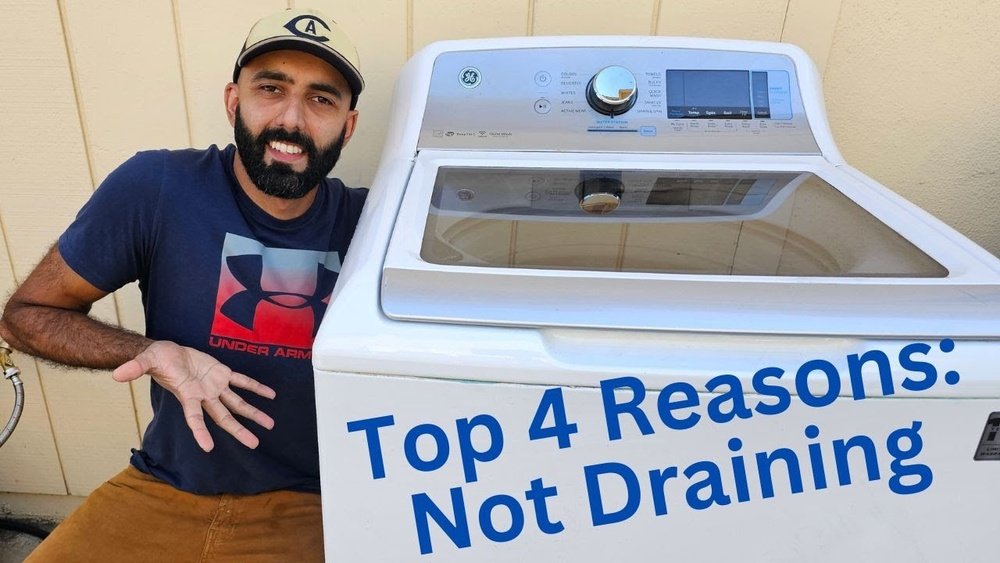
A washing machine that won’t drain is more than just a hassle—it can turn laundry day into a headache. If you own a GE washer and discover standing water inside after a cycle, you’re not alone. Many GE washer owners face this problem at some point. The good news is, most draining issues have clear causes and solutions. This guide will help you understand why your GE washer is not draining, how to troubleshoot, and what you can do to fix it.
Why Is Your Ge Washer Not Draining?
A GE washer relies on several parts to remove water after washing. If your washer is not draining, it means water is stuck inside the drum, and your clothes come out soggy. Here are the most common reasons:
- Clogged drain pump or filter
- Blocked drain hose
- Faulty lid switch
- Defective pump
- Electrical or control board issues
Let’s look at each cause in detail, with practical steps to find the source.
Common Reasons For A Ge Washer Not Draining
1. Clogged Drain Pump Or Filter
The drain pump pushes water out of the washer. Small objects, lint, or fabric can block the pump or its filter. If blocked, water cannot escape.
Symptoms:
- Washer stops mid-cycle with water inside
- Loud noises or humming from the machine
- Burning smell (rare, but possible)
How to Check:
- Unplug the washer for safety.
- Locate the drain pump (usually at the bottom front or back).
- Open the pump cover and remove debris or obstructions.
Tip: Not all GE washers have an accessible filter. Check your manual.
2. Blocked Drain Hose
The drain hose carries water from the pump to your home’s drain. If it kinks, bends, or clogs, water gets trapped.
Symptoms:
- Water drains slowly or not at all
- Visible kinks or bends in the hose
How to Check:
- Unplug the machine.
- Pull the washer away from the wall.
- Inspect the hose for bends, kinks, or clogs.
- Detach and rinse it with water if needed.
3. Faulty Lid Switch
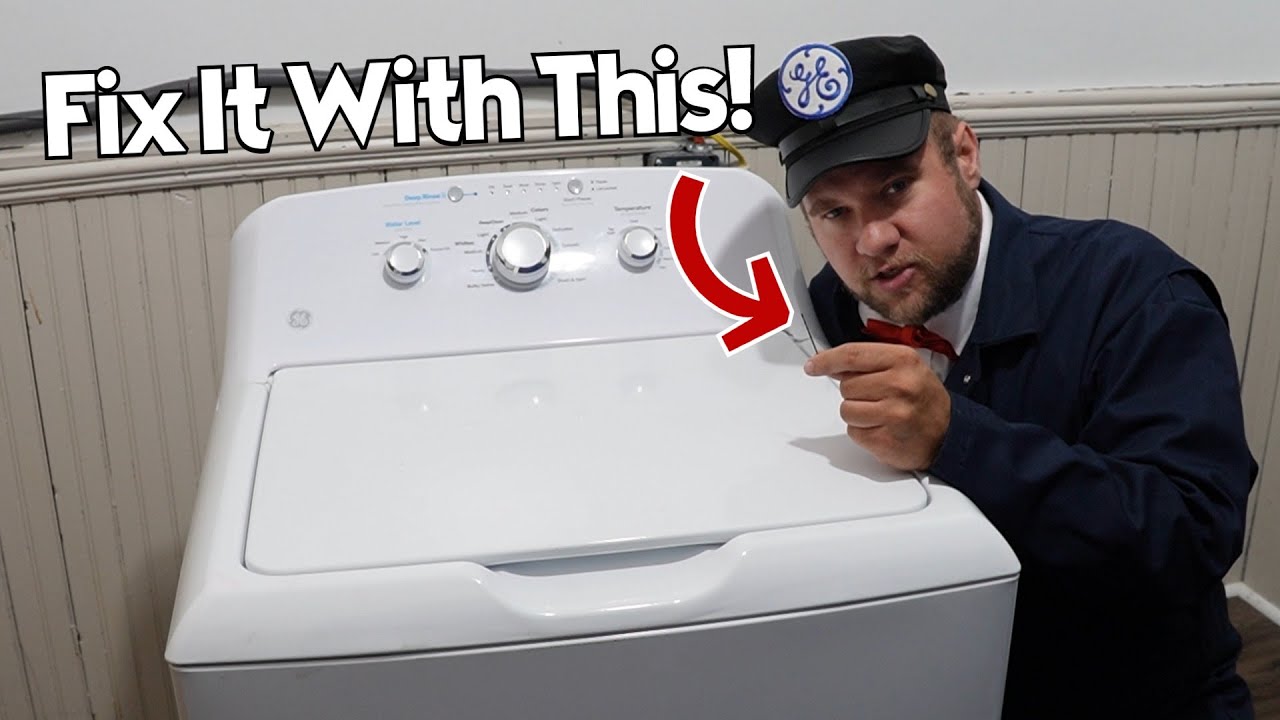
GE top-load washers have a lid switch that tells the machine the lid is closed. If this switch fails, the washer may stop draining for safety.
Symptoms:
- Washer does not spin or drain
- No “click” sound when you close the lid
How to Check:
- Press the lid switch with a pen. If you don’t hear a click or the washer doesn’t respond, the switch may need replacement.
4. Defective Drain Pump
If the drain pump motor fails, water will remain in the drum.
Symptoms:
- Pump runs but no water drains
- Pump makes noise but no action
- No sound from pump at all
How to Check:
- Listen for the pump during the drain cycle.
- If silent or struggling, the pump may be defective.
5. Electrical Or Control Board Issues
Modern GE washers use a control board to manage cycles. Electrical faults or a failed board can stop the drain cycle.
Symptoms:
- Washer is unresponsive
- Cycle stops at random points
- Error codes on the display
How to Check:
- Try unplugging the washer for five minutes, then restart.
- If errors persist, professional help is needed.
Step-by-step Troubleshooting Guide
When your GE washer doesn’t drain, follow these steps to pinpoint the problem:
Safety First
- Always unplug your washer before inspecting or repairing.
- Keep towels handy—removing hoses or filters can release trapped water.
Step 1: Check For Error Codes
Many GE washers display error codes. Consult your manual or GE’s website to see what the code means. Common codes for drainage problems include E03 or E04.
Step 2: Inspect The Drain Hose
- Remove the hose and look for clogs.
- Flush it out with water.
- Make sure the hose is not more than 8 feet above the floor (for proper gravity drainage).
Step 3: Clean The Drain Pump And Filter
- Open the access panel.
- Use gloves to remove debris.
- Check for coins, socks, or buildup.
Step 4: Test The Lid Switch
- Close the lid and listen for a click.
- Use a multimeter to test continuity, if you have one.
- Replace if faulty.
Step 5: Examine The Drain Pump
- Listen for unusual noises.
- If the pump is not running, it may need replacement.
- Pumps usually last 5-10 years, but can fail earlier.
Step 6: Look For Control Board Issues
- Reset the washer by unplugging for 5 minutes.
- If the problem returns, a technician should check the board.
Comparison Of Common Causes
Here’s a quick overview to help you compare common causes for a GE washer not draining:
| Cause | Difficulty to Check | DIY Fix? | Part Cost (Approx.) |
|---|---|---|---|
| Drain Pump Clog | Easy | Yes | $0 (cleaning) |
| Drain Hose Blockage | Easy | Yes | $10-$25 |
| Lid Switch Failure | Medium | Sometimes | $20-$50 |
| Defective Pump | Medium | Sometimes | $40-$100 |
| Control Board Issue | Hard | No | $120-$250 |
Credit: www.youtube.com
How To Fix A Ge Washer That Won’t Drain
What You’ll Need
- Towels and a bucket (for water spills)
- Screwdriver (usually Phillips)
- Needle-nose pliers
- Flashlight
- Replacement parts (if needed)
Step-by-step Instructions
1. Unplug And Prepare
Always unplug your washer before doing any work. Place towels around the machine to catch water.
2. Check And Clean The Drain Hose
- Pull out the washer.
- Detach the drain hose from both the washer and the wall drain.
- Shake or run water through the hose to clear debris.
- Reattach and test.
3. Clean The Pump Filter
- Open the lower front panel (usually with a screwdriver).
- Unscrew the filter cap slowly—water may flow out.
- Remove debris and rinse the filter.
- Replace the filter and cap.
4. Test The Lid Switch
- Open and close the lid, listening for a click.
- If missing, remove the switch (with the washer unplugged) and test it.
- Replace if it fails.
5. Replace A Defective Pump
- Disconnect hoses from the pump.
- Remove mounting screws.
- Install the new pump and reconnect hoses.
- Secure and test the washer.
6. Reset The Washer
- Plug the washer back in.
- Run a short cycle to check if draining works.
Important Tips
- Always use genuine GE parts for replacements.
- If water leaks, double-check hose connections.
- Do not overload the washer; this can cause drainage issues.
Signs You Need Professional Help
Some problems are best left to a qualified technician. If you notice these signs, call for service:
- Burning smells, sparks, or smoke
- Repeated control board errors
- Leaking from the washer base
- Drum will not turn or spin at all
How To Prevent Draining Problems In Your Ge Washer
Prevention saves time and money. Here’s what you can do:
- Clean the drain filter every three months.
- Use high-efficiency (HE) detergent to avoid buildup.
- Check pockets for coins and small objects.
- Inspect the hose yearly for kinks or cracks.
- Avoid overloading the washer.
Cost Comparison: Diy Vs. Professional Repair
How much will you spend fixing a GE washer that won’t drain? Here’s a quick cost breakdown:
| Repair Type | DIY Cost | Professional Cost |
|---|---|---|
| Clean Drain Pump/Filter | $0 | $75-$150 |
| Replace Drain Hose | $10-$25 | $90-$180 |
| Replace Pump | $40-$100 | $150-$300 |
| Replace Lid Switch | $20-$50 | $120-$200 |
| Control Board Replacement | Not Recommended | $250-$400 |
Non-obvious insight: Some users miss that using too much detergent can clog the pump and hoses, not just cause extra suds. Also, running regular cleaning cycles (most GE washers have this option) helps prevent buildup and drainage issues.

Credit: www.callahansappliance.com
Avoiding Common Mistakes
Many people make these errors when trying to fix a draining washer:
- Forcing the washer door open with water inside (can damage the lock)
- Using non-GE parts (may not fit or last)
- Ignoring small leaks (“just a little water” usually means a bigger problem soon)
- Skipping regular cleaning
Confident guidance: If you are unsure about electrical parts, it’s safer to call a technician. DIY is great for hoses and filters, but the control board and internal wiring should be handled by experts.
When To Replace Your Ge Washer
If your GE washer is over 10 years old and repairs cost more than half the price of a new machine, consider replacement. New models are more energy-efficient and have better self-cleaning features. According to the U.S. Department of Energy, modern washers use up to 25% less energy and 33% less water than older machines.

Credit: justintimeappliance.com
Frequently Asked Questions
Why Does My Ge Washer Fill But Not Drain?
This usually means the drain pump or hose is blocked, or the lid switch is faulty. Follow the steps above to check these first.
Can I Manually Drain My Ge Washer?
Yes. Unplug the washer, detach the drain hose, and lower it into a bucket. Gravity will let water out. Be ready for spills.
How Often Should I Clean The Drain Filter?
Every 3-4 months is recommended. If you wash pet bedding or heavily soiled items, clean it more often.
Is It Safe To Use Drain Cleaner In My Washing Machine?
No. Chemical drain cleaners can damage your washer’s seals and hoses. Always remove clogs by hand.
Where Can I Find Ge Washer Replacement Parts?
Order directly from the GE Appliances official parts store for genuine parts.
A GE washer that won’t drain is frustrating, but most problems can be fixed with a little time and the right steps. Regular cleaning, careful use, and quick attention to warning signs will help your washer last longer and keep your laundry routine smooth.