
A stuck bathtub drain stopper can turn a relaxing bath into a frustrating experience. When the stopper is stuck in the closed position, water won’t drain, leaving you with a tub full of water and no easy way to empty it.
This problem is common in many homes, especially as bathtubs age or when debris builds up in the drain. The good news is that most stuck stoppers can be fixed without calling a plumber. With some patience and the right approach, you can often solve the issue yourself and get your bathtub working smoothly again.
Understanding Bathtub Drain Stoppers
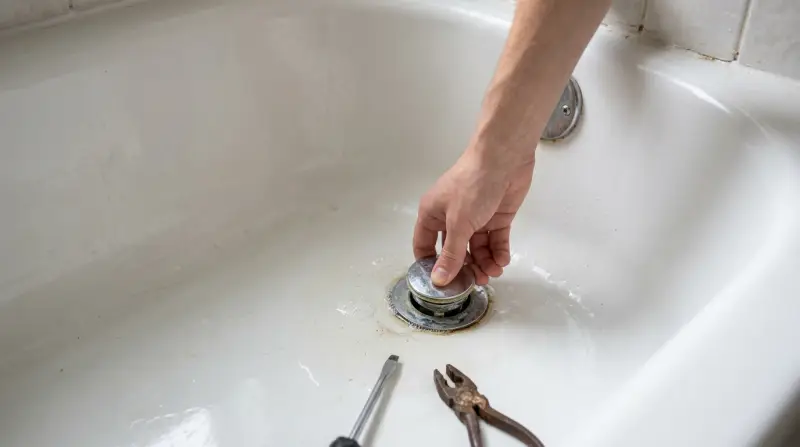
Before fixing a stuck stopper, it helps to know what type you have. Bathtub drain stoppers come in several designs, each with a different mechanism:
- Lift-and-turn: You twist the knob to open or close the drain.
- Push-and-pull: You push the stopper down to close and pull up to open.
- Toe-touch: Operates with a push of your toe; push once to close, again to open.
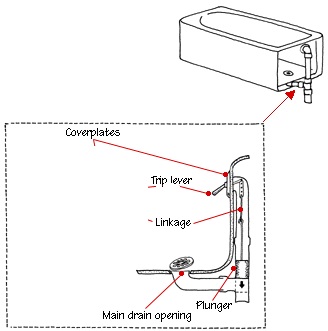
- Trip lever (plunger): Uses a lever on the tub wall to operate an internal plunger.
- Flip-it or PresFlo: Simple stoppers you flip or press to seal or open.
Each type has unique parts and failure points. For example, lift-and-turn stoppers often get jammed by hair or soap scum, while trip lever models may stick if the internal plunger becomes misaligned.
Here’s a quick reference table to identify your drain stopper:
| Stopper Type | How It Works | Common Problems |
|---|---|---|
| Lift-and-turn | Twist knob to open/close | Jams, stripped threads |
| Push-and-pull | Push down to close, pull up to open | Stuck post, dirt buildup |
| Toe-touch | Press with toe to open/close | Spring failure, debris blockage |
| Trip lever | Lever lifts internal plunger | Plunger misalignment, rust |
| Flip-it/PresFlo | Flip or press to seal/open | Wear out, loose seal |
Knowing your stopper type helps you choose the right fix and avoid causing more damage.
Why Bathtub Drain Stoppers Get Stuck
Several factors can lead to a stuck bathtub drain stopper:
- Hair and soap buildup: Over time, hair, soap, and debris collect around the stopper, making movement difficult.
- Corrosion: Metal parts may rust, especially in older tubs, causing them to seize.
- Misalignment: The stopper mechanism can shift out of place.
- Worn parts: Springs, threads, or seals may wear out and fail.
- Improper installation: If the stopper was not installed correctly, it may jam easily.
It’s worth noting that even high-quality stoppers can get stuck if not cleaned regularly. Ignoring early signs, like slow draining or stiffness, makes the problem worse.

Step-by-step Solutions For A Stuck Bathtub Drain Stopper
Let’s walk through how to free a stopper stuck in the closed position. You’ll need a few basic tools: screwdriver (flathead or Phillips), pliers, rubber gloves, and possibly some lubricant like WD-40. Always start gently to avoid breaking parts.
1. Remove Surface Debris
The first step is always to check for visible hair, soap, or debris around the stopper. Use gloved hands or a small brush to clear away anything you can reach. Sometimes, removing this blockage solves the problem.
2. Identify And Loosen The Stopper
Different stoppers require different removal methods:
Lift-and-turn
- Hold the stopper body and twist the knob counterclockwise.
- If it doesn’t unscrew, look for a set screw under the knob. Use a screwdriver to loosen it.
- Gently pull the stopper up.
Push-and-pull
- Unscrew the knob (usually counterclockwise).
- If needed, use pliers with a cloth (to avoid scratching) for extra grip.
- Lift the stopper straight out.
Toe-touch
- Unscrew the cap by turning counterclockwise.
- Remove the spring assembly beneath it.
- Pull out any debris.
Trip Lever
- Unscrew the two screws on the overflow plate (the cover near the faucet).
- Carefully pull the plate, lever, and linkage out.
- The plunger may be stuck; wiggle gently to free it.
Flip-it Or Presflo
- Pull up or unscrew the stopper, depending on model.
- If stuck, gently rock back and forth while pulling.
3. Clean And Inspect
With the stopper out, clean all parts with warm water and mild detergent. Remove any hair, soap scum, or mineral deposits from the stopper and drain opening.
Check for damage:
- Bent rods
- Rusty springs
- Worn seals
If parts are damaged, you may need a replacement. Most hardware stores sell universal bathtub stopper kits.
4. Lubricate Moving Parts
Apply a small amount of plumber’s grease or silicone-based lubricant to threads, springs, and moving parts. Avoid using petroleum jelly, as it can degrade some rubber seals.
5. Reinstall And Test
Reassemble the stopper, making sure all parts fit snugly but not too tight. Test the stopper by opening and closing it several times before filling the tub. If it moves smoothly and seals properly, you’ve fixed the problem.
6. When Simple Fixes Don’t Work
If the stopper is still stuck after cleaning and lubricating, it may be due to more serious issues:
- Corroded parts: Try soaking metal parts in vinegar to break up rust.
- Broken mechanism: Some stoppers, especially trip lever types, can have broken linkages that must be replaced.
- Jammed plunger: For trip lever stoppers, use a long screwdriver or coat hanger to gently push the plunger down the overflow tube.
If you encounter resistance or hear metal scraping, stop and consider calling a plumber to avoid damaging the drain.
Preventing Future Stuck Stoppers
Once your bathtub drain stopper works again, regular maintenance helps prevent future problems. Here are some tips:
- Clean the drain and stopper every month.
- Use a drain cover to catch hair and debris.
- Run hot water down the drain weekly to wash away soap scum.
- Check stopper mechanisms for signs of wear or corrosion.
- Avoid pouring harsh chemicals down the drain, as they can damage seals.
A little attention every few weeks can save you from future headaches.
When To Call A Professional
Most stuck stoppers can be fixed with simple tools and patience. But there are times when it’s better to call a plumber:
- The stopper is completely jammed and cannot be removed.
- The drain or tub is damaged during removal.
- There’s a persistent leak after reassembling the stopper.
- You notice water stains or mold around the tub, which may signal a hidden leak.
Professional plumbers have specialized tools for stubborn drains and can spot problems that aren’t obvious.
Common Mistakes To Avoid
Many homeowners make simple errors when dealing with a stuck stopper. Here’s what to watch out for:
- Forcing parts: Applying too much force can break the stopper or strip threads.
- Using the wrong tools: Always use the correct screwdriver or pliers; makeshift tools cause damage.
- Skipping cleaning: Failing to clean the parts thoroughly means the problem will return quickly.
- Not checking for damage: Reinstalling worn or broken parts won’t solve the issue.
- Over-tightening: Tightening screws or knobs too much can cause binding or breakage.
Taking your time and working carefully is the best way to avoid extra repairs.
Credit: diy.stackexchange.com
Cost Comparison: Diy Vs. Professional Repair
Is it worth fixing a stuck bathtub drain stopper yourself? Here’s a quick cost comparison:
| Solution | Estimated Cost | Time Required |
|---|---|---|
| DIY (cleaning, lubrication) | $0–$15 | 30–60 minutes |
| DIY (replacement kit) | $10–$30 | 1–2 hours |
| Professional plumber | $100–$250 | 1–2 hours |
For most people, DIY repair is fast and affordable. Only call a pro if you hit a roadblock or risk damaging the tub.
Real-life Example
Consider this scenario: A homeowner notices their lift-and-turn stopper won’t open after months of slow draining. Instead of forcing it, they unscrew the knob, remove the stopper, and find a large clump of hair and soap scum. After cleaning and lubricating the threads, the stopper works perfectly again. This simple fix cost less than $10 and took under an hour.
A less obvious insight: Sometimes, a stuck stopper signals a deeper clog further down the drain. If cleaning the stopper doesn’t restore normal drainage, you may need to snake the drain.
Another tip: If your stopper becomes stuck often, consider replacing it with a newer, simpler model. Many modern stoppers resist clogging and are easier to clean.
Environmental Considerations
Avoid using harsh chemical drain openers, as these can harm the environment and damage your plumbing. Mechanical cleaning and regular maintenance are safer and more effective. If you must use a chemical solution, choose one labeled biodegradable and follow instructions carefully.
Maintenance Schedule For Smooth Operation
To keep your bathtub drain stopper from getting stuck in the future, follow this simple maintenance schedule:
| Task | Frequency |
|---|---|
| Remove and clean stopper | Monthly |
| Check for corrosion or wear | Every 3 months |
| Lubricate moving parts | Every 6 months |
| Flush drain with hot water | Weekly |
Setting a reminder on your phone or calendar helps you stay on track.
:max_bytes(150000):strip_icc()/stuck-trip-lever-drain-stopper-3973581-FINAL-5bd9d746c9e77c0026753188.png)
Credit: www.thespruce.com
Frequently Asked Questions
How Do I Know Which Type Of Bathtub Stopper I Have?
Most stoppers can be identified by how they open and close. If you twist the knob, it’s likely a lift-and-turn. If you push it down, it’s a push-and-pull or toe-touch. Levers on the tub wall usually mean a trip lever type. If unsure, search for images online or consult your bathtub’s manual.
Can I Use Wd-40 To Loosen A Stuck Stopper?
Yes, but use it sparingly. Spray a small amount on the threads or moving parts and wait a few minutes. Wipe off any excess before reinstalling to avoid slipping. For rubber parts, use plumber’s grease instead to prevent damage.
What Should I Do If My Stopper Is Rusted And Won’t Budge?
Try soaking the area with white vinegar to dissolve rust. Gently tap the stopper with a rubber mallet to loosen it. If it still won’t move, you may need to replace the entire assembly or call a plumber.
Is It Safe To Use Chemical Drain Cleaners To Free A Stuck Stopper?
Chemical cleaners can sometimes break down hair and soap, but they may also damage seals, gaskets, or pipes. Mechanical removal and cleaning are safer and more effective. Use chemicals only as a last resort and always follow safety instructions.
Where Can I Find Replacement Parts For My Bathtub Drain Stopper?
Most hardware stores and online retailers sell universal bathtub stopper kits. Make sure to match the type and size to your existing drain. Manufacturer websites and Home Depot are good sources for parts and installation guides.
Fixing a stuck bathtub drain stopper is a manageable task for most homeowners. With the right tools, a little patience, and regular maintenance, you can keep your tub draining properly and avoid costly plumbing bills. Remember, the key is to act quickly at the first sign of trouble and to take care of your drain before problems arise.