
Mold is more than just an unpleasant sight on your dishes. It can cause bad odors, make food taste strange, and even pose health risks if you eat from dishes with mold. Sometimes, you may find mold on plates, cups, or utensils left damp for too long.
This often happens when dishes sit in sinks or dishwashers, or when storage containers are closed while still wet. Cleaning mold from dishes is not just about making them look good—it’s about keeping your kitchen safe and healthy. Whether you’ve discovered a single mug with mold or a stack of plates, knowing the right way to clean them is essential.
In this guide, you’ll learn how to safely remove mold, prevent it from coming back, and understand why it grows in the first place. The process is simple, but there are key steps you must follow to avoid spreading mold or making the problem worse.
Let’s get started.
Why Mold Grows On Dishes
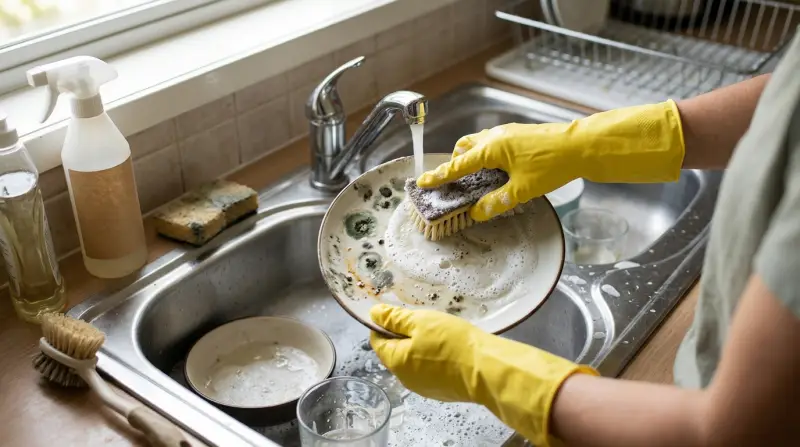
Mold is a type of fungus that thrives in damp environments. It grows quickly when there is moisture, warmth, and organic material to feed on. Food residues, oils, and even tiny crumbs left on dishes can provide enough nutrients for mold. Here’s why dishes are at risk:
- Moisture: Mold needs water to grow. Wet dishes in a closed space create the perfect conditions.
- Food particles: Even invisible leftovers from meals can support mold growth.
- Warmth: Kitchens are often warm, especially near sinks and dishwashers.
- Poor ventilation: Cupboards and drawers without airflow trap moisture.
According to the Centers for Disease Control and Prevention (CDC), mold can start growing within 24–48 hours in the right conditions. This means a forgotten plate or mug can become moldy overnight if left damp and dirty.
Health Risks Of Mold On Dishes
Eating from or using moldy dishes can be dangerous. Mold spores can cause:
- Allergic reactions: Sneezing, coughing, itchy eyes, and skin irritation.
- Respiratory issues: Asthma attacks or breathing problems, especially in sensitive individuals.
- Digestive problems: Stomach upset, nausea, or diarrhea if mold is ingested.
- Toxins: Some molds produce mycotoxins, which can be harmful even in small amounts.
Children, elderly people, and those with weakened immune systems are at greater risk. While most kitchen molds are not highly toxic, it’s never safe to ignore mold on dishes.
Identifying Mold On Dishes
Mold is not always easy to spot. It can appear as:
- Black, green, or white spots: Often fuzzy or powdery.
- Slimy patches: Sometimes with a bad smell.
- Hidden growth: Under rims, inside mugs, or on the bottom of plates.
If you see or smell something strange, inspect the dish closely. Sometimes, mold is mixed with old food or stains, so look for signs like unusual colors or textures.
Preparing To Clean Moldy Dishes
Before you start cleaning, gather the right supplies. Safety is important because mold can release spores that affect your health.
Supplies Needed
- Gloves: Protect your hands from mold and cleaning chemicals.
- Mask: Prevent breathing in mold spores, especially if cleaning many dishes.
- Scrub brush or sponge: For scrubbing moldy spots.
- Dish soap: Removes mold, grease, and food particles.
- White vinegar: Natural disinfectant that kills mold.
- Baking soda: Helps remove stains and odors.
- Bleach (optional): For stubborn mold, but use with care.
- Paper towels or clean cloths: For drying dishes.
- Plastic bags: To dispose of heavily contaminated items.
Safety Precautions
- Open windows or use a fan to keep air moving.
- Wear old clothes that you can wash after cleaning.
- Avoid touching your face while working.
- Wash your hands thoroughly after finishing.
If you have asthma or allergies, try to let someone else handle the cleaning or wear a mask with a filter.
Step-by-step Guide To Cleaning Mold On Dishes
Follow these steps to remove mold safely and effectively.
Remove Moldy Dishes From Storage
Take all affected dishes out of cupboards, drawers, or dishwashers. If some dishes are stacked, separate them to prevent spreading mold to clean items. Place heavily contaminated dishes on a surface you can clean later, like a countertop lined with paper towels.
Pre-rinse With Hot Water
Rinse each dish under hot running water. This helps remove loose mold and food particles. Hot water also kills some surface mold spores. Do not use cold water, as it can make mold harder to remove.
Scrub With Soap And Water
Apply dish soap to a sponge or brush. Scrub every surface, paying extra attention to rims, bottoms, and handles. Mold can hide in small cracks or crevices. For cups or bowls, scrub inside and outside.
- If mold is stubborn, let the dish soak in hot soapy water for 10–15 minutes.
- Use a brush for textured surfaces or grooves.
Use Vinegar For Extra Cleaning
Vinegar is a natural mold killer. After scrubbing, pour white vinegar directly onto the moldy areas. Let it sit for 5–10 minutes.
- For strong odors, mix vinegar and baking soda to make a paste. Apply to the affected areas and let it bubble for a few minutes.
- Rinse thoroughly with hot water.
Apply Bleach For Severe Mold (optional)
If mold remains after washing and vinegar, use bleach. Bleach is powerful but must be handled carefully.
- Mix 1 tablespoon of bleach with 1 gallon of water.
- Soak dishes for 5 minutes. Never soak metal or colored dishes in bleach, as it can damage them.
- Rinse very well with hot water to remove all bleach.
Dry Completely
Mold grows on damp surfaces, so drying is crucial. Use clean cloths or paper towels to dry each dish. Air-dry if possible, but avoid stacking dishes until they are fully dry.
Clean Storage Areas
Wipe down cupboards, drawers, or shelves where moldy dishes were kept. Use vinegar or a mild bleach solution. Allow the area to dry fully before returning dishes.
Mold Removal Methods Compared
Different cleaning agents work against mold in various ways. Here’s a comparison of common options:
| Cleaning Agent | Effectiveness | Safety | Best Use |
|---|---|---|---|
| Dish Soap | Moderate | Safe for all dishes | Routine cleaning |
| White Vinegar | High | Safe for most dishes | Removing stains & odors |
| Baking Soda | Moderate | Safe for all dishes | Scrubbing tough spots |
| Bleach | Very High | Use with caution | Severe mold cases |
Vinegar is often the best option for most homes. It’s safe, cheap, and effective. Bleach should be reserved for tough cases or when mold keeps coming back.
Cleaning Mold On Different Types Of Dishes
Not all dishes are made the same. Some materials need special care.
Ceramic And Porcelain
These are common for plates and mugs. They handle hot water and vinegar well. Avoid bleach unless the dish is plain white.
Glass
Glass dishes can be cleaned with soap, vinegar, or bleach. They rarely absorb mold, but check rims and bottoms carefully.
Plastic
Plastic can hold mold in scratches. Use vinegar and baking soda to scrub. Bleach can damage colored plastics.
Metal
Metal dishes, like stainless steel, should not be soaked in bleach. Soap and vinegar work well. Dry immediately to prevent rust.
Wood And Bamboo
These absorb moisture and mold easily. Use vinegar and baking soda. Avoid soaking for long periods. If mold is deep, it’s better to discard the item.
Common Mistakes When Cleaning Moldy Dishes
Many people make errors that can spread mold or damage dishes. Avoid these mistakes:
- Using cold water, which doesn’t remove mold well.
- Forgetting to dry dishes completely.
- Skipping the cleaning of storage areas.
- Mixing bleach and vinegar—this creates dangerous fumes.
- Using harsh chemicals on delicate dishes.
- Reusing the same sponge for mold and regular cleaning.
:max_bytes(150000):strip_icc()/easy-washing-dishes-4174811-hero-617c4e3694d1417b82b2eaaf2db70f5b.jpg)
How To Prevent Mold On Dishes
Prevention is always easier than cleaning. Here are simple strategies:
- Wash dishes quickly: Don’t leave dirty plates or cups overnight.
- Dry dishes thoroughly: Use towels or air-drying racks.
- Store dishes in dry places: Avoid closed cupboards if dishes are still damp.
- Clean storage areas monthly: Wipe shelves with vinegar.
- Check for leaks: Fix any plumbing leaks near storage areas.
- Keep kitchen air moving: Use fans or open windows.
Many people overlook the importance of drying dishes before stacking. Even a small amount of moisture can lead to mold in a few days.
When To Throw Away Moldy Dishes
Sometimes, cleaning is not enough. If mold has deeply penetrated the material, or if the dish has cracks, chips, or strong odors, it’s safer to discard it.
- Plastic containers with deep stains or smells.
- Wooden utensils with soft, moldy patches.
- Dishes that remain stained after multiple cleanings.
Don’t risk your health for a cheap plate or mug. Replacing a dish is less expensive than dealing with illness.
Dealing With Mold In Dishwashers
Dishwashers can help clean mold, but they can also be a source of mold. Mold grows in filters, seals, and hidden parts if not cleaned often.
Cleaning Your Dishwasher
- Remove and wash filters monthly.
- Run an empty cycle with vinegar or dishwasher cleaner.
- Wipe seals and edges with a cloth dipped in vinegar.
- Leave the door open after use to dry inside.
If you find mold inside, clean it before using the dishwasher for dishes. Mold spores can spread during washing.
Mold Growth Data And Statistics
Mold is a common problem in homes worldwide. Studies show:
- 20–30% of homes have some mold in kitchens, mainly due to moisture.
- Mold can grow on dishes in less than 48 hours if left dirty and damp.
- Kitchens with poor ventilation are twice as likely to have mold issues.
According to a report from the Environmental Protection Agency (EPA), the best way to control mold is to control moisture. Most cases of mold on dishes start because of forgotten, wet items or leaks.
Quick Checklist For Cleaning Moldy Dishes
Here’s a handy guide you can follow:
- Wear gloves and a mask.
- Remove moldy dishes from storage.
- Rinse with hot water.
- Scrub with soap and water.
- Use vinegar (and baking soda if needed).
- Apply bleach for severe mold.
- Rinse thoroughly.
- Dry completely.
- Clean storage areas.
This checklist can help you avoid missing steps and keep your kitchen safe.
Mold Growth Conditions Compared
To understand how mold grows, compare key factors:
| Condition | Impact on Mold Growth | How to Control |
|---|---|---|
| Moisture | Essential for growth | Dry dishes and storage areas |
| Food Residues | Feeds mold | Wash dishes thoroughly |
| Warmth | Speeds up growth | Keep kitchen cool and ventilated |
| Poor Ventilation | Allows moisture buildup | Use fans, open windows |
Understanding these factors helps you stop mold before it starts.
Practical Tips And Non-obvious Insights
Many people think dish soap alone is enough. However, mold can survive in tiny scratches or grooves. Use vinegar and baking soda for a deeper clean. Another tip: always wash your cleaning tools (sponges, brushes) after cleaning mold, or throw them away. Mold spores stick to these items and can spread to other dishes.
If you use plastic storage containers, let them air out after washing. Storing them with the lid slightly open prevents moisture buildup. For mugs or cups, check under handles and inside rims—these spots are often missed.
What To Do If Mold Keeps Coming Back
If you clean dishes but mold returns, there may be a bigger problem. Check for:
- Leaks under sinks or near dish storage.
- High humidity in the kitchen.
- Old dishwashers with mold in seals or filters.
You may need to improve ventilation or fix plumbing. Sometimes, moving dish storage to a drier area solves the problem. If mold is a constant issue, consider using a dehumidifier in the kitchen.

How To Clean Mold On Dishes In Bulk
If you find many dishes with mold, like after a long vacation or in a rental property, clean them in batches.
- Fill a large sink or tub with hot water and soap.
- Soak dishes for 15–20 minutes.
- Scrub each item and rinse.
- Apply vinegar and let sit for 10 minutes.
- Rinse again and dry completely.
For large numbers, use gloves and a mask. Work in a well-ventilated area. If mold is severe, consider discarding the worst items.
The Science Behind Mold Removal
Mold is made of tiny cells called hyphae. These cells stick to surfaces and grow into colonies. Cleaning removes visible mold, but spores can remain in cracks. Vinegar and bleach kill mold by breaking down cell walls. Baking soda scrubs away mold and absorbs odors.
Research shows that vinegar kills up to 82% of mold species found in homes. Bleach is effective, but only on hard, non-porous surfaces. It does not reach mold hidden in porous materials, like wood or cracked plastic.
For more scientific details, you can read about mold and health at CDC Mold and Dampness Effects.

Emergency Cleaning: What To Do If You Accidentally Use A Moldy Dish
If you realize you ate or drank from a moldy dish, don’t panic. Most kitchen molds are not highly toxic. However, watch for symptoms like stomach upset or allergic reactions.
- Wash the dish thoroughly before using it again.
- Drink plenty of water to flush your system.
- If you feel sick, contact your doctor, especially if you have allergies.
It’s rare to get seriously ill from a single exposure, but repeated use of moldy dishes can build up health risks.
Frequently Asked Questions
What Causes Mold On Dishes?
Mold grows on dishes because of moisture, leftover food particles, and poor ventilation. If dishes are stacked while still damp or not cleaned properly, mold can develop in less than 48 hours.
Is It Safe To Use Bleach On Dishes?
Yes, bleach is safe if used properly. Mix 1 tablespoon of bleach with 1 gallon of water and soak dishes for 5 minutes. Rinse thoroughly with hot water. Avoid using bleach on metal or colored dishes.
Can I Clean Moldy Dishes In The Dishwasher?
You can use a dishwasher, but pre-clean heavily moldy dishes first. Scrub off visible mold, then wash in a hot cycle. Clean the dishwasher’s filter and seals to prevent mold spread.
Should I Throw Away Dishes With Mold?
Throw away dishes if mold has penetrated deeply, or if the dish is cracked, stained, or has a strong odor after cleaning. Wood and plastic are harder to clean, so replace them if mold persists.
How Do I Keep Dishes Mold-free?
Wash dishes soon after use, dry them completely, and store in dry, ventilated areas. Clean storage spaces monthly with vinegar. Fix leaks and use fans to keep air moving.
Cleaning mold on dishes is a task nobody enjoys, but it’s important for your health and kitchen hygiene. With the steps and tips above, you can handle mold safely, prevent it from returning, and keep your dishes clean and fresh.
Remember, mold grows quickly—so act as soon as you spot it. Your kitchen will thank you.