
A mini fridge is a handy appliance for dorm rooms, offices, bedrooms, and small apartments. But when your mini fridge stops cooling, it can quickly turn from a convenience into a headache. Warm drinks, spoiled snacks, and wasted groceries are all frustrating results. Instead of panicking or immediately calling a repair service, it helps to know why mini fridges stop cooling and what you can do about it. Whether you own a basic dorm fridge or a high-end compact model, this guide explains the top causes of cooling problems, steps to diagnose the issue, and practical solutions you can try at home.
How A Mini Fridge Works
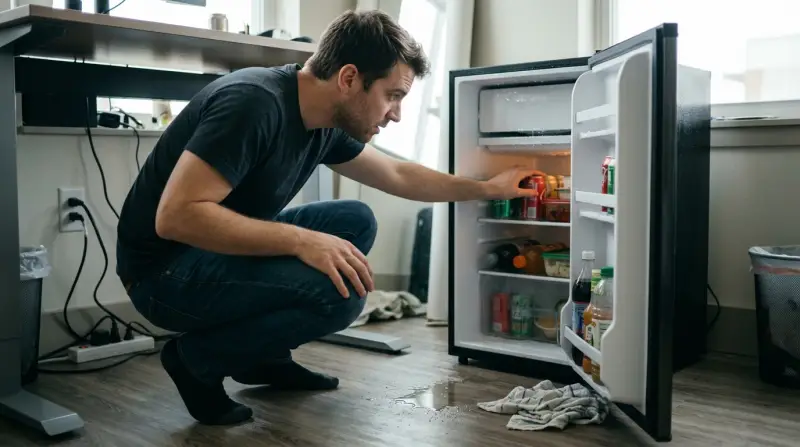
Understanding the basics of how a mini fridge operates can make it easier to spot problems. Most mini fridges use a compressor-based cooling system, similar to standard refrigerators. Here’s a simple overview:
- The compressor pumps refrigerant through coils.
- The condenser coils release heat outside the fridge.
- The evaporator coils absorb heat inside, making the interior cold.
- A thermostat senses the temperature and controls the compressor.
Some cheaper mini fridges use thermoelectric cooling instead of a compressor. These are quieter but generally less powerful and can be more sensitive to room temperature.
Common Reasons A Mini Fridge Is Not Cooling
When a mini fridge is not cooling, several causes are possible. Here are the most frequent issues, along with signs to help you identify them.
Power Problems
If the fridge isn’t running at all (no sound, no light), it may not be getting power.
- Check if the power cord is plugged in securely.
- Test the outlet with another device.
- Inspect for tripped circuit breakers or blown fuses.
Thermostat Issues
A faulty thermostat can prevent the fridge from turning on the cooling system.
- Make sure the temperature dial is not set to “off” or the warmest setting.
- If turning the dial causes a “click” or the compressor to start, the thermostat is working.
Dirty Or Blocked Coils
Dust-covered condenser coils can’t release heat efficiently, making it hard for the fridge to cool.
- Locate the coils (often at the back or underneath).
- Use a vacuum or brush to clean them.
- Keep at least 2 inches of space between the fridge and the wall.
Overstuffed Interior
Overloading your mini fridge blocks airflow, causing uneven or poor cooling.
- Avoid cramming food against the back wall.
- Leave space for air to circulate inside.
Door Seal Problems
A damaged or dirty gasket (the rubber seal around the door) lets cold air escape.
- Check for cracks, tears, or dirt on the seal.
- Close the door on a piece of paper; if it pulls out easily, the seal is weak.
- Clean with mild soap and warm water.
Faulty Compressor
The compressor is the heart of the fridge. If it’s broken, the fridge won’t get cold.
- Listen for a humming or clicking sound from the back.
- If it’s silent or makes a clicking noise every few minutes, there may be a compressor issue.
Defrost Problems
Ice build-up on the evaporator coils can block airflow.
- Check for frost on the back wall or inside vents.
- Manually defrost by unplugging the fridge for several hours.
Room Temperature
Mini fridges struggle in very hot or cold rooms.
- Most models work best in rooms between 60°F and 85°F (15°C and 29°C).
- In extreme heat, the compressor may run constantly but still not cool well.
Faulty Fans
Some mini fridges have fans to move air across coils. If a fan stops, cooling drops.
- Listen for fan noise when the fridge runs.
- Blocked or broken fans need repair or replacement.
Quick Troubleshooting Steps
Before calling a technician, try these steps to diagnose and possibly fix your mini fridge not cooling:
- Unplug the fridge for 5 minutes, then plug it back in.
- Check the power cord, outlet, and circuit breaker.
- Adjust the thermostat to the coldest setting.
- Clean the coils and vents.
- Remove excess items for better airflow.
- Inspect and clean the door seal.
- Move the fridge to a cooler location if needed.
- Defrost the fridge if ice is present.
If the fridge is still not cooling after these checks, the problem may be more serious.
Compressor Vs Thermoelectric: How Cooling Types Affect Problems
The way a mini fridge cools impacts what can go wrong. Here’s a simple comparison:
| Cooling System | Common Problems | Best Solution |
|---|---|---|
| Compressor | Dirty coils, broken compressor, faulty thermostat | Clean coils, check power, call technician for compressor issues |
| Thermoelectric (Peltier) | Poor room ventilation, power supply problems | Improve airflow, ensure stable power, avoid hot rooms |
Compressor fridges are more powerful and reliable, but repairs are often more expensive. Thermoelectric models are quieter but can’t cool well in hot climates.
Diagnosing Mini Fridge Problems: Step-by-step
When your mini fridge stops cooling, a step-by-step approach can help you pinpoint the cause:
Step 1: Is It Plugged In And Powered?
Check for any signs of life. If there’s no interior light or sound, the issue is likely electrical. Test the outlet with a lamp or phone charger. If the outlet works, inspect the power cord for damage.
Step 2: Is The Thermostat Set Correctly?
Turn the control knob to the coldest setting and listen for the compressor or fan. No response could mean a faulty thermostat or deeper issue.
Step 3: Is There Enough Airflow?
Both inside and outside airflow matter. Inside, make sure nothing blocks the vents. Outside, check that the coils have space and aren’t covered in dust.
Step 4: Is The Door Sealing Properly?
A poor seal allows cold air to escape, making the compressor work harder. Try the paper test described earlier. Replace worn gaskets if needed.
Step 5: Is There Ice Build-up?
If you see frost or ice, unplug the fridge and let it fully defrost. Built-up ice can stop air from moving over the cooling coils.
Step 6: Does The Compressor Run?
If the compressor is hot and buzzing, it’s working—but possibly under stress. If it’s silent or clicks on and off, it may have failed.
When To Repair And When To Replace
Not every mini fridge problem is worth fixing. Compare the cost of repair with the price of a new mini fridge before deciding. Use this table as a guide:
| Problem | DIY Fix? | Repair Cost Estimate | Replacement Cost |
|---|---|---|---|
| Dirty coils | Yes | $0 (just cleaning tools) | – |
| Broken thermostat | Sometimes | $40–$100 | $100–$300 |
| Compressor failure | No | $100–$250 | $100–$300 |
| Damaged door seal | Yes | $10–$30 | – |
If the repair costs more than half the price of a new fridge, replacement is usually a better deal.

Preventing Mini Fridge Cooling Problems
Keeping your mini fridge working well is easier than fixing it later. Here are key tips:
- Clean coils and vents every 3–6 months.
- Don’t block internal vents with food or drinks.
- Keep the fridge at least 2 inches from walls for airflow.
- Defrost the fridge if ice builds up.
- Regularly check and clean the door seal.
- Avoid running the fridge in very hot or cold rooms.
Most people forget to clean the coils or check the door seal until there’s a problem. Regular maintenance can extend the life of your mini fridge by several years.
Mini Fridge Cooling Problems: Real-world Examples
Sometimes, the cause is not obvious. Here are two examples:
Example 1: A student’s mini fridge in a dorm stopped cooling during summer. The fridge was packed tightly against a wall, and the coils were thick with dust. After vacuuming the coils and moving the fridge 3 inches from the wall, it cooled properly again.
Example 2: An office mini fridge worked poorly after a move. The room temperature was over 90°F (32°C), and the fridge was a thermoelectric model. Moving it to an air-conditioned room restored normal cooling.
Common Mistakes To Avoid
- Forgetting to check the thermostat – Many people assume the fridge is broken when the dial is simply set too warm.
- Ignoring airflow – Pushing the fridge into a corner or overstuffing it blocks cooling.
- Delaying defrosting – Ice build-up is often ignored until cooling stops entirely.
- Not checking the door seal – A small tear can ruin cooling, but is cheap to fix.
- Attempting complex repairs without experience – Replacing compressors or working with refrigerant is dangerous and best left to professionals.
When To Call A Professional
If you’ve tried all basic fixes and the mini fridge is still not cooling, it’s time to call an expert. Seek help if:
- The compressor is silent or clicking but the fridge stays warm.
- There’s a burning smell or visible electrical damage.
- The fridge trips the circuit breaker.
- You’re uncomfortable handling electrical parts.
Professional repair may cost more than a replacement for many models. Always compare repair costs first.

Frequently Asked Questions
Why Does My Mini Fridge Run But Not Get Cold?
If your mini fridge runs (you hear noise), but it isn’t cold, the most common causes are blocked coils, faulty thermostat, or door seal problems. Make sure the coils are clean and the seal is tight. If the compressor runs constantly with no cooling, it may be failing.
How Long Does It Take For A Mini Fridge To Get Cold After Plugging In?
Most mini fridges take 2 to 4 hours to reach a cool temperature, but it can take up to 24 hours for full cooling, especially if the fridge was moved or defrosted. Keep the door closed during this time to help it cool faster.
Can I Fix A Mini Fridge Compressor Myself?
Replacing or repairing a compressor is complex and requires special tools and refrigerant handling. It’s not recommended for DIY unless you have experience and proper certification. For most people, replacing the fridge is more practical.
Does Room Temperature Affect Mini Fridge Cooling?
Yes, room temperature has a big effect, especially for thermoelectric models. Most mini fridges work best between 60°F and 85°F (15°C to 29°C). In very hot rooms, cooling performance drops significantly.
Where Can I Find More Guidance On Fridge Repairs?
For more detailed repair guides, maintenance tips, and safety advice, you can visit the Consumer Reports mini fridge guide.
A mini fridge is a great way to keep snacks and drinks cold without taking up much space. By understanding the most common cooling problems, trying simple fixes, and performing regular maintenance, you can keep your mini fridge running smoothly for years.
If all else fails, don’t hesitate to replace it—sometimes, a new model is the simplest solution.