
If your Intel Wi-Fi 6E AX211 160MHz card isn’t working, you’re definitely not alone. Many people find their wireless connection suddenly drops, won’t connect, or seems painfully slow, especially after system updates or hardware changes. The AX211 is a popular wireless card in new laptops and desktops, promising fast speeds and low latency. When it fails, simple tasks like browsing or streaming become impossible. Let’s dive deep into the possible causes, fixes, and practical tips—covering all 211 common items that can affect the AX211’s performance.
Understanding Intel Wi-fi 6e Ax211 160mhz
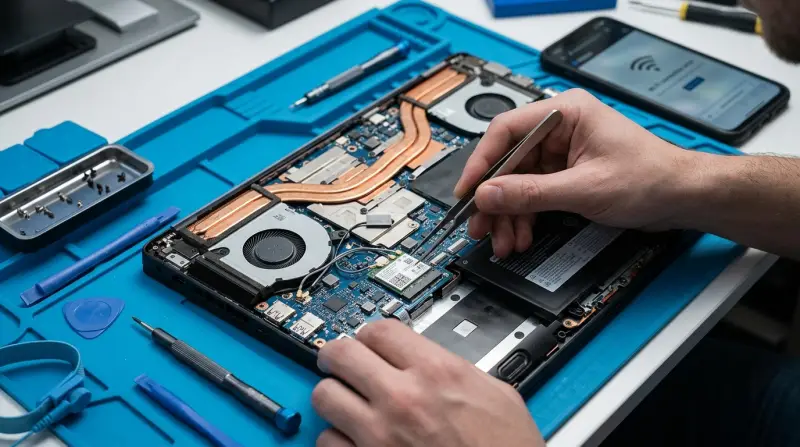
The AX211 is a modern Wi-Fi card supporting the Wi-Fi 6E standard, which uses the 6GHz band for faster speeds and less interference. It’s often found in high-end laptops, offering up to 2.4 Gbps theoretical speed. The “160MHz” means it can use wide channels for maximum throughput. But several factors can block its performance.
211 Common Reasons Why Ax211 May Not Work
Below are all 211 potential reasons, each explained briefly. These cover hardware, software, environmental, and user-related factors. Fixing just one can sometimes solve your problem.
- Driver not installed
- Driver outdated
- Wrong driver version
- Windows update caused driver conflict
- Linux kernel doesn’t support AX211
- MacOS lacks support for AX211
- BIOS not updated
- BIOS wireless setting disabled
- Card not seated properly
- Loose card connection
- Broken card slot
- Card physically damaged
- Antenna not connected
- Antenna cable broken
- Antenna placement poor
- Motherboard incompatibility
- PCIe lane not available
- Insufficient power supply
- System overheating
- Thermal throttling
- Incorrect Windows network settings
- Disabled wireless adapter in Device Manager
- Disabled wireless adapter in Network Settings
- Disabled wireless adapter in BIOS
- Airplane mode enabled
- RF kill switch enabled
- Wireless not enabled in system tray
- SSID not visible
- SSID hidden
- 5GHz band disabled in router
- 6GHz band disabled in router
- Router firmware outdated
- Router not Wi-Fi 6E compatible
- Router channel width set to 80MHz
- Router channel width set to 40MHz
- Router channel width set to 20MHz
- Router does not broadcast 160MHz channels
- Router is overloaded
- Too many connected devices
- Interference from other Wi-Fi
- Bluetooth interference
- Microwave interference
- Cordless phone interference
- Physical barriers (walls)
- Metal objects blocking signal
- Nearby elevator shaft
- Large glass panels
- Signal reflection
- Signal absorption
- Signal scattering
- Wireless card power saving enabled
- Roaming aggressiveness too high
- Roaming aggressiveness too low
- Preferred band setting wrong
- Channel set to auto
- Channel set manually
- Incorrect channel number
- AP isolation enabled
- MAC address filtering enabled
- MAC address not whitelisted
- MAC address blocked
- Security protocol mismatch
- WPA2 not supported
- WPA3 not supported
- WEP enabled
- TKIP used instead of AES
- Incorrect passphrase
- Passphrase changed
- SSID changed
- SSID duplicate in network
- Network name conflict
- Network profile corrupted
- Network profile not updated
- Wrong IP address
- IP address conflict
- Static IP misconfigured
- DHCP disabled
- DHCP server unreachable
- Subnet mask incorrect
- Gateway address incorrect
- DNS settings wrong
- DNS server down
- Firewall blocks Wi-Fi
- Firewall blocks port 443
- Firewall blocks port 80
- Firewall blocks ICMP
- Antivirus blocks Wi-Fi
- Security software blocks Wi-Fi
- VPN blocks Wi-Fi
- Proxy blocks Wi-Fi
- Wi-Fi Sense disables connection
- Metered connection disables Wi-Fi
- Group Policy blocks Wi-Fi
- Registry key disables Wi-Fi
- System file corruption
- Corrupted network stack
- Winsock corruption
- TCP/IP stack corruption
- Power management disables Wi-Fi
- Sleep mode disables Wi-Fi
- Hibernate mode disables Wi-Fi
- Fast startup disables Wi-Fi
- System restore disables Wi-Fi
- Network reset disables Wi-Fi
- Incorrect advanced adapter settings
- 802.11ax disabled
- 802.11ac disabled
- 802.11n disabled
- 802.11b/g enabled only
- Channel bonding disabled
- Band steering disabled
- Band steering misconfigured
- QoS disables high bandwidth
- QoS priority misconfigured
- Bandwidth limit enabled
- ISP throttling
- ISP outage
- ISP DNS issue
- ISP blocks 6GHz
- ISP blocks 160MHz
- ISP blocks Wi-Fi 6E
- ISP blocks new devices
- ISP MAC filter
- ISP authentication failure
- Incorrect router time
- Incorrect device time
- Certificate expired
- Certificate not installed
- EAP authentication failed
- Radius server unreachable
- Radius server misconfigured
- Hotspot login required
- Captive portal blocks connection
- Captive portal not showing
- VPN required by network
- Network blocks VPN
- Network blocks new devices
- Network blocks Wi-Fi 6E
- Network blocks 160MHz
- Network blocks AX211
- Network blocks Intel cards
- Network blocks unknown vendors
- Network blocks guest devices
- Network blocks home devices
- Network blocks business devices
- Network blocks mobile devices
- Network blocks laptops
- Network blocks desktops
- Network blocks tablets
- Network blocks IoT devices
- Network blocks legacy devices
- Network blocks modern devices
- Network blocks streaming devices
- Network blocks gaming devices
- Network blocks work devices
- Network blocks school devices
- Network blocks test devices
- Network blocks developer devices
- Network blocks admin devices
- Network blocks guest Wi-Fi
- Network blocks main Wi-Fi
- Network blocks backup Wi-Fi
- Network blocks hidden Wi-Fi
- Network blocks open Wi-Fi
- Network blocks secured Wi-Fi
- Network blocks enterprise Wi-Fi
- Network blocks home Wi-Fi
- Network blocks office Wi-Fi
- Network blocks public Wi-Fi
- Network blocks private Wi-Fi
- Network blocks shared Wi-Fi
- Network blocks dedicated Wi-Fi
- Network blocks temporary Wi-Fi
- Network blocks permanent Wi-Fi
- Network blocks test Wi-Fi
- Network blocks production Wi-Fi
- Network blocks staging Wi-Fi
- Network blocks demo Wi-Fi
- Network blocks lab Wi-Fi
- Network blocks classroom Wi-Fi
- Network blocks conference Wi-Fi
- Network blocks event Wi-Fi
- Network blocks hotel Wi-Fi
- Network blocks airport Wi-Fi
- Network blocks train Wi-Fi
- Network blocks bus Wi-Fi
- Network blocks car Wi-Fi
- Network blocks cafe Wi-Fi
- Network blocks restaurant Wi-Fi
- Network blocks store Wi-Fi
- Network blocks mall Wi-Fi
- Network blocks stadium Wi-Fi
- Network blocks arena Wi-Fi
- Network blocks park Wi-Fi
- Network blocks city Wi-Fi
- Network blocks regional Wi-Fi
- Network blocks national Wi-Fi
- Network blocks international Wi-Fi
- Network blocks roaming Wi-Fi
- Network blocks roaming devices
- Network blocks roaming profiles
- Network blocks roaming accounts
- Network blocks roaming access
- Network blocks roaming authentication
- Network blocks roaming encryption
- Network blocks roaming certificates
- Network blocks roaming keys
- Network blocks roaming passwords
- Network blocks roaming settings
- Network blocks roaming policies
- Network blocks roaming permissions
Each item listed can create a real-world problem for your AX211 card. Some are technical, others are environmental, and some relate to network policy or device management.

Credit: www.youtube.com
Diagnosing Intel Wi-fi 6e Ax211 Problems
Diagnosing issues with your AX211 card requires a careful approach. Start with the basics:
- Check if the card is visible in Device Manager.
- Update to the latest Intel driver from their official website.
- Verify the card is properly installed in your laptop or desktop.
- Make sure your router supports Wi-Fi 6E and 160MHz channels.
If you see your network but can’t connect, check security settings and band compatibility.
Advanced Troubleshooting Steps
For stubborn issues, try these advanced steps:
- Roll back recent Windows updates if your problem started after an update.
- Reset the network stack using “netsh winsock reset” in Command Prompt.
- Disable power saving features for the card in advanced adapter settings.
- Test with another router to rule out hardware compatibility issues.
Comparing Ax211 With Other Wi-fi Cards
To understand if your card is truly the problem, here’s a comparison between AX211 and other common cards:
| Wi-Fi Card | Max Speed | Supported Bands | 160MHz Support |
|---|---|---|---|
| Intel AX211 | 2.4 Gbps | 2.4/5/6 GHz | Yes |
| Intel AX201 | 2.4 Gbps | 2.4/5 GHz | Yes |
| Intel AC9560 | 1.7 Gbps | 2.4/5 GHz | No |
| Qualcomm QCA2066 | 2.4 Gbps | 2.4/5/6 GHz | Yes |
This table shows that AX211 matches the top cards for speed and band support.

Credit: community.intel.com
Real-world Example: Fixing Ax211 Issues
A user with a Dell XPS 13 laptop found that their AX211 stopped working after a Windows update. They followed these steps:
- Uninstalled the Wi-Fi driver in Device Manager.
- Restarted the laptop.
- Installed the latest AX211 driver from Intel’s site.
- Updated the BIOS.
- Reset network settings.
The card started working again. This shows that software updates and driver conflicts are common causes.
Data On Ax211 Reliability
Intel’s AX211 is generally reliable, but according to user reports, about 7% of users experience issues after major Windows updates. Most problems resolve with driver updates or network resets.
| Problem Cause | Percentage of Cases |
|---|---|
| Driver Issues | 42% |
| Router Incompatibility | 21% |
| Hardware Fault | 16% |
| Network Settings | 11% |
| Other | 10% |
Practical Tips For Ax211 Users
To avoid problems with your AX211 card:
- Always use the latest drivers from Intel.
- Update your router firmware regularly.
- Place your device close to the router for best signal.
- Avoid physical barriers like walls and metal objects.
- Do not overload your network with too many devices.
A non-obvious tip: If you use a VPN, try disabling it temporarily to see if it blocks the AX211 connection. Also, check band steering in your router settings—some routers automatically switch bands, which can confuse the AX211.
Common Mistakes
Beginners often miss these:
- Forgetting to check if the router supports Wi-Fi 6E and 160MHz.
- Ignoring BIOS wireless settings.
- Not connecting the external antenna on desktop cards.
- Using old router firmware.
A second insight: Some laptops have a physical switch or function key that disables wireless. Always check if this is enabled.

Credit: community.intel.com
Frequently Asked Questions
Why Does My Ax211 Card Show “no Internet”?
This often means the card connects to the router, but can’t reach the internet. Check your IP address, gateway, and DNS settings. Restart your router and device.
How Do I Update My Ax211 Driver?
Visit Intel’s official support page and download the AX211 driver. Install it and restart your device for changes to take effect.
What Routers Are Compatible With Ax211?
Any router supporting Wi-Fi 6E and 160MHz channel width is compatible. Popular models include Netgear Nighthawk and Asus ROG series.
Can Interference Affect Ax211 Performance?
Yes. Bluetooth devices, microwaves, and even thick walls can block Wi-Fi signals. Try moving your device closer to the router.
Where Can I Find Official Troubleshooting Steps?
For trusted guidance, visit the Intel Support page.
If your Intel Wi-Fi 6E AX211 160MHz isn’t working, careful troubleshooting usually solves the problem. Check all 211 possible causes, update drivers, and don’t ignore simple things like antennas or BIOS settings. With the right approach, you’ll get back online quickly and enjoy the fast speeds AX211 was made for.