
When your GE washer gets stuck on sensing, laundry day can quickly turn frustrating. Instead of moving to the wash cycle, the machine sits and waits, sometimes for many minutes, sometimes forever. If you’re facing this problem, you’re not alone—it’s a common issue for many GE washing machine owners. This article will help you understand why it happens, how to fix it, and what steps you can take to prevent it in the future.
What Does “sensing” Mean On A Ge Washer?
Before diving into solutions, it helps to know what the sensing cycle actually does. In most modern GE washers, the sensing stage checks the weight of your laundry and detects water levels. The washer uses this information to decide how much water is needed and which wash cycle to use.
During this phase, you might hear the drum slowly turning or a soft humming sound. Usually, the sensing stage only lasts a few minutes. If your GE washer stays stuck here, it means something is preventing it from moving forward.
Common Reasons Your Ge Washer Is Stuck On Sensing
Several issues can cause your washer to freeze at the sensing stage. Let’s break down the most common reasons.
1. Faulty Lid Switch
The lid switch is a safety feature. If the washer thinks the lid is open, it won’t move past sensing. Over time, the switch can wear out or become misaligned.
2. Water Supply Problems
The washer can’t sense properly if there’s not enough water. Low water pressure, closed water valves, or kinked hoses are frequent culprits.
3. Clogged Inlet Filters
Small filters in the water hoses can get blocked by debris. This limits water flow and confuses the washer during sensing.
4. Faulty Shift Actuator
The shift actuator tells the washer when to change from sensing to washing. If this part fails, the machine won’t move forward.
5. Control Board Issues
The brain of your GE washer is the control board. Power surges, moisture, or age can damage it. A faulty board may freeze the washer at any cycle.
6. Unbalanced Load
Sometimes, the washer senses an unbalanced load and tries to adjust. If clothes are bunched on one side, the sensing can repeat indefinitely.
7. Sensor Malfunctions
Modern washers have sensors for water level, temperature, and load size. If a sensor is dirty or broken, it might give the wrong signals.

Credit: www.youtube.com
How To Troubleshoot A Ge Washer Stuck On Sensing
You don’t always need to call a repair service. Here’s how you can check and often fix the problem yourself.
Step 1: Power Reset
Unplug the washer from the wall outlet. Wait for one full minute. Plug it back in. This simple reset can clear minor glitches in the control board.
Step 2: Check The Lid Switch
Open and close the washer lid firmly. Listen for a click. If you don’t hear one, the switch might be defective. Try pressing the lid switch by hand (usually found at the edge where the lid meets the body). If the washer moves past sensing, the lid switch is the problem.
Step 3: Inspect Water Supply
- Make sure both hot and cold water valves are fully open.
- Check hoses for kinks or bends.
- Remove hoses and check inlet filters for dirt.
- Clean filters under running water and reattach.
Step 4: Balance The Load
Pause the washer and redistribute clothes evenly around the drum. Avoid washing a single heavy item, like a blanket, as this often causes sensing to repeat.
Step 5: Check For Error Codes
Many GE washers display an error code if something goes wrong. Look for blinking lights or alphanumeric codes on the display. Refer to your washer’s manual to interpret these codes.
Step 6: Shift Actuator And Sensors
Accessing internal parts like the shift actuator or sensors usually requires removing panels. If you’re comfortable, unplug the washer and look for loose wires or visible damage. Otherwise, consider calling a technician.
Data Comparison: Common Causes And Average Repair Costs
Here’s a quick look at the most common causes for a GE washer stuck on sensing and what repairs might cost:
| Problem | DIY Fix Difficulty | Average Repair Cost |
|---|---|---|
| Lid Switch Failure | Easy | $50 – $120 |
| Clogged Inlet Filter | Very Easy | $0 (DIY) |
| Water Supply Issue | Easy | $0 – $50 |
| Shift Actuator Fault | Medium | $100 – $200 |
| Control Board Failure | Hard | $250 – $450 |
Insight: Most sensor and water issues can be fixed at home for little or no cost. Control board problems are the most expensive and may justify replacing the washer if it’s old.

Credit: www.reddit.com
When To Call A Professional
Sometimes, DIY isn’t enough. Call a repair technician if:
- You see error codes you can’t clear.
- The washer makes loud noises or smells like burning.
- You find broken wires or water leaks inside.
- The machine is still under warranty.
Professional help is best for electrical repairs and control board replacement. Attempting these fixes without proper training can be dangerous.
Preventing Future Sensing Problems
A little maintenance can save you time and money. Here’s how to keep your washer running smoothly:
Keep Inlet Filters Clean
Every few months, disconnect the hoses and rinse the filters. This prevents buildup that can block water.
Use The Right Detergent
High-efficiency (HE) washers need HE detergent. Regular detergent can cause residue and sensor issues.
Avoid Overloading
Fill the washer only up to 3/4 full. Overloading strains the motor and confuses the sensor system.
Check For Updates
Some newer GE washers can receive firmware updates. Check your manual or the GE website to see if updates are available for your model.
Address Issues Early
Don’t ignore repeated sensing problems. Early attention can prevent larger, costlier breakdowns.
Example: Real-world Troubleshooting
Maria from Dallas noticed her GE top-load washer stuck on sensing for over 15 minutes. She unplugged the machine and checked the hoses—one was kinked behind the washer. After straightening the hose and resetting the machine, her washer worked normally again. This simple fix saved her a service call.
Not all problems are this easy, but starting with basic checks often solves the issue.
Comparing Ge Washer Sensing Features
Different GE washer models use the sensing phase in different ways. Here’s a quick comparison:
| Model | Sensing Duration | Special Features |
|---|---|---|
| GE GTW335ASNWW | 2-4 min | Dual-action agitator |
| GE GTW720BSNWS | 2-6 min | WiFi updates, SmartDispense |
| GE GFW850SPNRS | 3-5 min | Adaptive fill, UltraFresh vent |
If your washer is consistently sensing for much longer than these ranges, there’s likely a problem.
Hidden Traps: What Beginners Often Miss
- Hard Water Build-up: In areas with hard water, minerals can clog inlet filters much faster. Using a filter or cleaning more often can prevent this.
- Detergent Drawer Residue: If your washer has a detergent drawer, clean it regularly. Build-up here can affect sensors and water flow.
- Incorrect Cycle Selection: Choosing the wrong cycle for the load type can keep the washer sensing longer. Always check the cycle guide in your manual.
- Electrical Surges: Sudden power cuts or surges can scramble the washer’s control board memory. Surge protectors help prevent this.
What If Resetting Doesn’t Work?
Sometimes, a full reset doesn’t solve the issue. Here’s what to try next:
- Run a diagnostic cycle if your model supports it (instructions are usually in the manual).
- Test the washer with a different power outlet.
- Try a small load with just a few towels to rule out load balance issues.
If none of these work, the issue is likely mechanical or electronic, and you may need professional help.
How Sensing Issues Affect Other Washer Brands
GE washers aren’t alone in having sensing problems. Other brands like Whirlpool, Maytag, and LG also use similar sensing technology. The main causes—water supply, sensors, control boards—are almost always the same.
Here’s a quick look at how GE compares with Whirlpool and LG regarding sensing issues:
| Brand | Sensing Problem Frequency | Ease of DIY Repair |
|---|---|---|
| GE | Moderate | Easy to Medium |
| Whirlpool | High | Medium |
| LG | Low | Medium to Hard |
Insight: GE washers are generally easier to troubleshoot at home compared to some other brands.
When A New Washer Makes Sense
If your GE washer is over 8 years old and repair costs are high, replacing it can be a better investment. Newer models are more energy-efficient and less likely to get stuck on sensing.
Look for these features in a replacement:
- Automatic load balancing
- Direct drive motors (fewer parts, less maintenance)
- App connectivity for updates and troubleshooting
For official guidance and model lists, you can check the GE Appliances website.
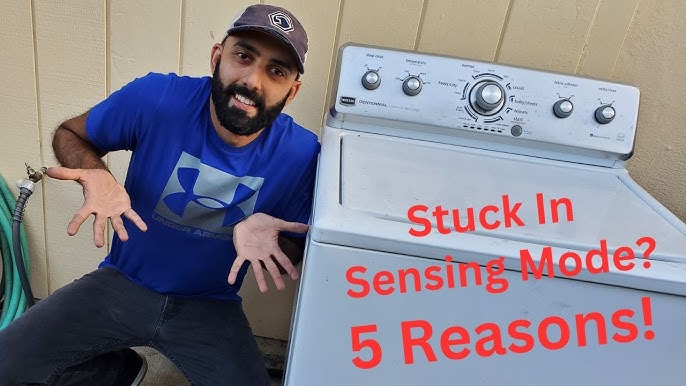
Credit: www.youtube.com
Frequently Asked Questions
Why Does My Ge Washer Keep Repeating The Sensing Cycle?
This usually happens due to an unbalanced load, a faulty lid switch, or water supply problems. Try redistributing clothes, checking the lid switch, and ensuring water flow.
Can I Fix A Ge Washer Stuck On Sensing Myself?
Yes, many issues like clogged filters, hose kinks, or load balance can be fixed without a technician. More complex problems, like control board faults, often need professional help.
How Long Should The Sensing Cycle Last On A Ge Washer?
Most GE washers spend 2 to 6 minutes in the sensing phase. If your machine stays here much longer, something is wrong.
Will Unplugging My Washer Reset It?
Yes, unplugging for one minute can reset the control board and clear minor glitches. For deeper problems, more troubleshooting is needed.
Is It Safe To Keep Using My Washer If It’s Stuck On Sensing?
No, it’s best to stop using the washer until the problem is fixed. Running the machine with a fault can cause further damage or unsafe conditions.
A washer stuck on sensing doesn’t have to ruin your week. With a little patience and the right steps, most problems can be solved at home. Regular maintenance and early attention can keep your GE washer running smoothly for years to come.