
Cleaning calcium buildup in the shower can feel frustrating. White, chalky stains appear on your glass, tiles, and fixtures. Even after scrubbing, they often come back. But with the right methods, you can remove these stubborn deposits and keep your shower sparkling clean.
This guide explains why calcium buildup happens, how to clean it safely, and how to prevent future problems. You’ll also find practical tips, comparisons of cleaners, and answers to common questions.
Why Does Calcium Buildup In Showers?
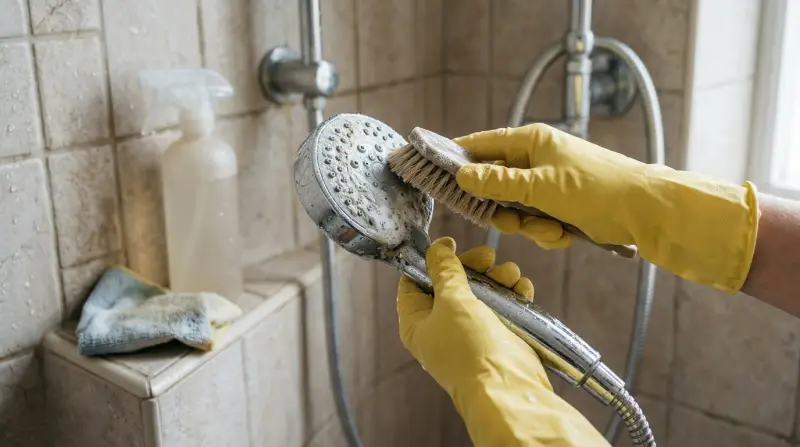
Calcium buildup is caused by hard water. Hard water has high levels of minerals, mainly calcium and magnesium. When water dries on surfaces, these minerals stay behind and form deposits. Over time, they turn into tough stains and can even clog your showerhead or damage tiles.
According to the U.S. Geological Survey, about 85% of homes in the United States have hard water. This means most showers are at risk for calcium buildup. You may notice:
- White spots or streaks on glass and tiles
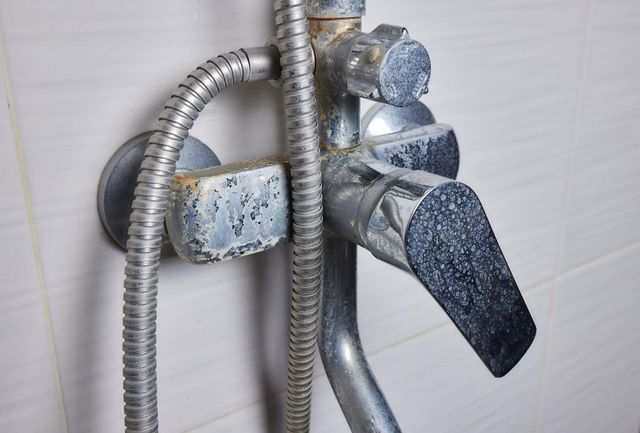
- Rough, chalky residue on metal fixtures
- Reduced water flow from showerheads
Understanding these signs is the first step. Now let’s see how to tackle them.
Tools And Materials For Cleaning
Before you start, gather the right tools and products. Having everything ready will save time and make cleaning easier.
- Protective gloves – for safety when handling chemicals
- Spray bottle – to apply cleaning solutions
- Soft scrub brush or sponge – avoids scratching surfaces
- Plastic bag – for soaking showerheads
- White vinegar – a gentle, effective cleaner
- Baking soda – helps with scrubbing
- Lemon juice – natural acid for stains
- Commercial descaler – for tough buildup (choose based on surface type)
- Microfiber cloth – for polishing and drying
Having these items ready lets you choose the best cleaning method for your shower.

Credit: www.youtube.com
Step-by-step Cleaning Methods
Cleaning Shower Glass
Shower glass shows calcium stains easily. Here’s a simple method:
- Mix equal parts white vinegar and water in a spray bottle.
- Spray the mixture on the glass and let it sit for 10–15 minutes.
- Scrub gently with a sponge or soft brush.
- Rinse thoroughly with warm water.
- Dry with a microfiber cloth to prevent new spots.
For stubborn spots, add a little baking soda to the vinegar. This creates a mild abrasive that lifts tough stains.
Cleaning Tiles And Grout
Tiles and grout can trap minerals. To clean them:
- Apply undiluted white vinegar directly to the stains.
- Let it sit for 15–20 minutes.
- Use a soft brush to scrub the area, focusing on grout lines.
- Rinse with warm water.
- Dry with a cloth.
If vinegar doesn’t work, try lemon juice or a commercial descaler. Always test new products on a small area first.
Cleaning Showerheads
Calcium buildup can block water flow. To fix this:
- Fill a plastic bag with white vinegar.
- Place the bag over the showerhead and secure it with a rubber band.
- Let it soak for 1–2 hours.
- Remove the bag and run hot water to rinse.
- Use a toothbrush to scrub any remaining deposits.
This method dissolves mineral buildup inside and outside the showerhead.
Cleaning Metal Fixtures
Metal fixtures need gentle care to avoid scratches:
- Soak a cloth in white vinegar and wrap it around the fixture.
- Leave for 15–30 minutes.
- Wipe clean and rinse.
- Dry with a microfiber cloth.
Avoid harsh abrasives on chrome or stainless steel. For heavy stains, a commercial descaler designed for metal can help.
Comparing Cleaning Products
Many cleaning products claim to remove calcium buildup. But which one works best? Here’s a comparison of common options:
| Product | Effectiveness | Safety | Cost |
|---|---|---|---|
| White Vinegar | Good for light buildup | Safe, non-toxic | Low |
| Baking Soda | Good for scrubbing | Safe, non-toxic | Low |
| Lemon Juice | Moderate | Safe, natural | Moderate |
| Commercial Descaler | Best for heavy buildup | May be harsh | Higher |
For most showers, white vinegar is the best starting point. It’s safe, cheap, and effective for mild to moderate stains. For severe buildup, a commercial descaler may be needed.
Credit: www.2getadvanced.com
Safety Tips When Cleaning Calcium Buildup
Cleaning can expose you to chemicals and slippery surfaces. Keep these safety tips in mind:
- Always wear gloves when using cleaners.
- Keep the bathroom well-ventilated.
- Avoid mixing chemicals, especially vinegar and bleach.
- Test cleaners on a small area first.
- Rinse surfaces well to remove residue.
If you use a commercial descaler, follow the instructions carefully. Some products are not safe for certain materials.
Preventing Calcium Buildup
Once your shower is clean, you’ll want to keep it that way. Here are practical ways to prevent future buildup:
- Dry surfaces after each shower – Use a squeegee or microfiber cloth.
- Install a water softener – This removes minerals from your water.
- Use a shower filter – A filter can reduce calcium, but not as much as a softener.
- Clean regularly – Weekly cleaning prevents buildup.
- Choose proper cleaners – Avoid soap bars with extra minerals.
Many people forget that regular drying is the simplest prevention. It stops minerals from sticking before they become stains.
Water Softener Vs. Shower Filter
If you want long-term protection, you might consider a water softener or shower filter. Here’s how they compare:
| Feature | Water Softener | Shower Filter |
|---|---|---|
| Effectiveness | Removes most minerals | Reduces some minerals |
| Installation | Whole house system | Easy, attaches to shower |
| Cost | Higher upfront | Lower, needs replacement |
| Maintenance | Regular salt refills | Change filter cartridge |
| Impact | Protects all plumbing | Only shower |
A water softener is best for serious hard water problems. It helps the whole house. A shower filter is easier and cheaper, but only protects your shower.
Non-obvious Insights For Better Cleaning
Many beginners miss these points:
- Temperature matters: Cleaning with warm water helps dissolve minerals faster. Always rinse with warm, not cold, water.
- Timing is key: Letting the cleaner sit for at least 15 minutes gives acids time to break down calcium. Rushing leads to poor results.
- Surface sensitivity: Some materials, like natural stone, can be damaged by vinegar or lemon juice. Always check your shower’s surface type before applying acidic cleaners.
These tips can make your cleaning more effective and help avoid damage.
Mistakes To Avoid
Many people make mistakes when cleaning calcium buildup. Here are common ones:
- Using metal scrubbers on glass or metal, which causes scratches.
- Mixing different chemicals, which can create harmful fumes.
- Not rinsing cleaners off, leaving sticky residue.
- Ignoring regular cleaning, which lets buildup become worse.
Avoiding these mistakes saves time and money.
When To Call A Professional
Sometimes, calcium buildup is too heavy or widespread to clean yourself. Signs you may need help include:
- Thick deposits that don’t come off with home methods
- Damaged tiles or fixtures
- Water flow problems even after cleaning
- Mold or mildew along with mineral stains
Professional cleaners have stronger products and tools. They can restore your shower without risk of damage.
:max_bytes(150000):strip_icc()/how-to-remove-calcium-deposits-from-a-showerhead-1388730-ADD-FINAL-c256921402fd4413b7d1c05102e5737a.jpg)
Credit: www.thespruce.com
Environmental Impact Of Cleaning Products
It’s important to think about the environment. Many commercial descalers contain chemicals that can harm water systems. White vinegar and baking soda are safer choices. They break down easily and are non-toxic. If you use a commercial product, look for those labeled biodegradable or eco-friendly.
According to the Environmental Protection Agency, cleaning products are a major source of indoor air pollution. Using natural cleaners and good ventilation helps protect your health and the environment.
Frequently Asked Questions
How Often Should I Clean Calcium Buildup In My Shower?
It’s best to clean calcium buildup once a week if you have hard water. Regular cleaning prevents tough stains and keeps your shower looking good. If you dry surfaces after each use, you may only need to deep clean every month.
Can Vinegar Damage My Shower?
White vinegar is safe for most surfaces like glass, tile, and chrome. However, it can harm natural stone (like marble or granite). Always check your shower’s material and test vinegar on a small area first.
What Is The Fastest Way To Remove Calcium From A Showerhead?
Soaking the showerhead in white vinegar for 1–2 hours is the fastest method. After soaking, scrub with a toothbrush and rinse with hot water. For heavy buildup, repeat the process or use a commercial descaler.
Is A Water Softener Worth The Cost?
A water softener can be expensive to install, but it solves the hard water problem for your whole house. It protects plumbing, appliances, and makes cleaning easier. If you have serious calcium buildup everywhere, it’s worth considering. For mild problems, a shower filter may be enough.
Are There Eco-friendly Ways To Clean Calcium Buildup?
Yes, using white vinegar, lemon juice, and baking soda are eco-friendly methods. They work well for light to moderate stains and are safe for the environment. Always rinse surfaces well and avoid harsh chemicals when possible. For more information on sustainable cleaning, visit EPA Safer Choice.
Keeping your shower free of calcium buildup isn’t just about cleaning. It’s about understanding your water, choosing the right products, and regular care. With these tips, you can enjoy a clean, bright shower and avoid the frustration of stubborn stains.