
If your KitchenAid refrigerator light is not working, it can be more than just a minor inconvenience. Good lighting helps you find food quickly, spot spills, and keep your refrigerator organized. Many people feel frustrated when their fridge light suddenly goes out especially if the rest of the appliance seems to work fine. The truth is, this problem is usually simple to fix, but sometimes it hints at deeper electrical or mechanical issues.
This article will guide you through common causes and solutions for a KitchenAid refrigerator light that is not working. Whether you want to troubleshoot yourself or decide if you need a professional, you’ll find clear steps, practical advice, and some insights that even long-time homeowners sometimes miss.
Why Does Refrigerator Lighting Matter?
A working refrigerator light does more than just illuminate your groceries. It helps you:
- Spot spoiled food quickly
- Clean up spills before they spread
- Save energy by letting you find items faster, meaning the door stays open less time
When the light fails, it’s easy to overlook these small but important benefits. That’s why fixing it is worth your time—even if the rest of your fridge seems fine.
Quick Check: Is It Really The Light?
Before you start troubleshooting, confirm that the problem is really the refrigerator light and not something else. Sometimes, what looks like a lighting issue is caused by a power problem or a door that isn’t closing properly.
Ask yourself:
- Does the refrigerator cool and run as usual?
- Do the freezer and control panel lights work?
If everything else works, the problem is likely with the light itself or its switch. If other features don’t work, it could be a larger electrical problem.
Common Causes Of Kitchenaid Refrigerator Light Not Working
KitchenAid refrigerators are built to last, but lights can stop working for several reasons. Here are the most common causes:
- Burned Out Bulb – The most obvious reason, but often overlooked.
- Faulty Door Switch – The switch controls the light when you open and close the door.
- Loose or Damaged Wiring – Wires can come loose or wear out over time.
- Defective Light Socket – The socket itself can fail, preventing power from reaching the bulb.
- Control Board Issues – On modern KitchenAid models, a control board manages the lights.
- Power Supply Problems – Sometimes, a loose plug or tripped breaker is the culprit.
Each of these causes requires a different approach. Below, you’ll find guidance for each one.
How To Troubleshoot And Fix The Problem
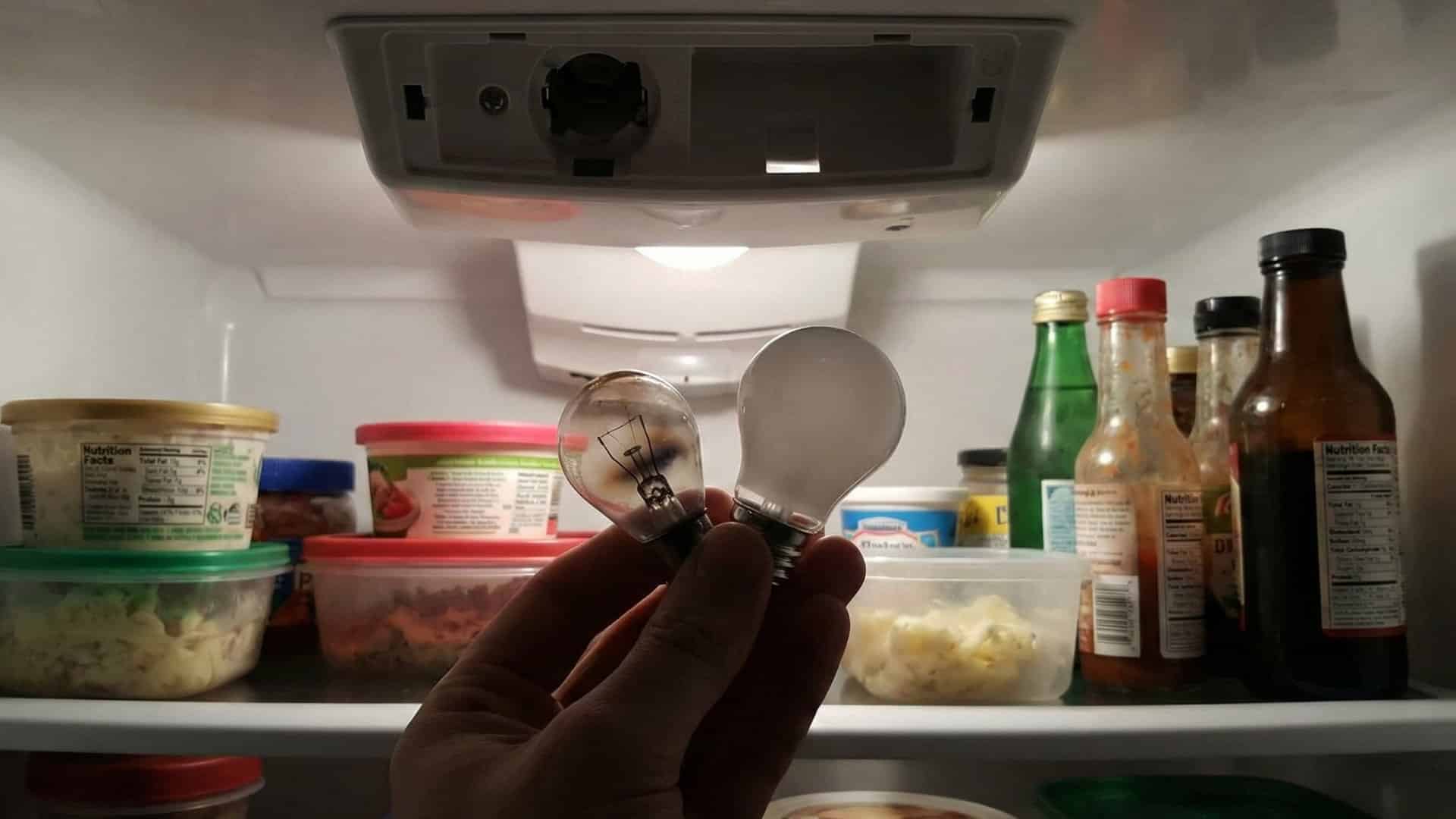
Check And Replace The Bulb
Start with the light bulb it’s simple, and most often, it’s the problem.
- Unplug the fridge to stay safe.
- Remove the light cover (usually snaps or unscrews).
- Take out the bulb and inspect it. If it looks dark or the filament is broken, it’s burned out.
- Replace it with a bulb of the same size and wattage (usually 40W or less, but check your manual).
- Plug the fridge back in and open the door.
If the light works now, you’re done. If not, move to the next step.
Inspect The Door Switch
The door switch tells the fridge when to turn the light on or off. If it fails, the light stays off all the time.
- Find the switch. It’s usually a small button where the door closes.
- Press and release the switch with the door open. If the light flickers or turns on, the switch is likely stuck or dirty.
- Clean the switch with a soft cloth and a little rubbing alcohol.
- If cleaning doesn’t help, test it with a multimeter (for those comfortable using one). If you get no reading, the switch is faulty and needs replacing.
Check Wiring And Connections
Loose or damaged wires can interrupt power to the bulb.
- Unplug the fridge.
- Remove the light cover and inspect the wiring around the bulb and switch.
- Look for loose connections, frayed wires, or signs of burning.
- If you find damage, you may need to call a technician. Electrical repairs inside appliances can be risky.
Test Or Replace The Light Socket
Sometimes, the socket that holds the bulb is the problem.
- With the power off, check if the socket is loose or corroded.
- Gently wiggle it—if it moves, it may need tightening or replacing.
- Advanced users can test the socket for voltage (carefully, with the fridge plugged in). No voltage means the socket or wiring is bad.
Control Board Problems
Modern KitchenAid refrigerators use a control board to manage lights and other features. If the board fails, the light may stop working even if the bulb and socket are fine.
- If your fridge has other odd behaviors (error codes, strange noises), the control board could be the issue.
- Reset the fridge by unplugging it for five minutes, then plugging back in.
- If the problem continues, professional service is usually required.
Power Supply Issues
- Make sure the fridge is fully plugged in.
- Check your home’s circuit breaker box for tripped breakers.
- Test the outlet with another appliance to be sure it has power.
Table: Troubleshooting Steps And Difficulty
Here’s a quick comparison of common fixes and how easy or hard they are:
| Step | Difficulty | Tools Needed | DIY-Friendly? |
|---|---|---|---|
| Replace Bulb | Easy | None | Yes |
| Clean/Replace Door Switch | Medium | Screwdriver, Multimeter (optional) | Yes |
| Check Wiring | Medium | Screwdriver | Yes, with caution |
| Replace Light Socket | Hard | Screwdriver, Multimeter | Sometimes |
| Control Board Issue | Hard | None | No |
When To Call A Professional
Some issues need an expert. Call a repair technician if:
- You smell burning, see smoke, or notice melted wires.
- The light switch or wiring looks complicated or hard to reach.
- The control board is likely at fault.
- You’re not comfortable working with electricity.
Professional repairs can prevent further damage and keep your warranty valid.
Practical Tips Most People Miss
Many people overlook these details:
- Install LED bulbs if your model allows. They last longer and use less energy than regular bulbs.
- Check for condensation inside the light cover. Water can short the bulb or socket.
- Test the light with both doors open and closed on French door models. Sometimes, a second switch controls the light.
Table: Common Bulb Types For Kitchenaid Refrigerators
KitchenAid uses several bulb types. Here’s a quick guide:
| Bulb Type | Wattage | Base | Notes |
|---|---|---|---|
| Incandescent | 15-40W | E26/E27 | Most common, easy to find |
| LED | 2-5W | E26/E27 or custom | Lasts longer, some models require special LED |
| Appliance-Specific | Varies | Custom | Order from KitchenAid or parts dealer |
Always check your user manual for the exact bulb type.
Common Mistakes To Avoid
- Forcing the Light Cover – Many people crack the plastic by prying too hard. Check for screws first.
- Using the Wrong Bulb – Too much wattage can cause overheating or even melt the socket.
- Ignoring Flickering Lights – A flickering bulb often means a loose connection, not just a dying bulb.
- Skipping the Power Test – Always check if the fridge is getting power before replacing parts.
- Trying to Repair a Live Fridge – Always unplug your refrigerator before doing any work inside.
Table: Cost Comparison – Diy Vs Professional Repair
Wondering whether to fix it yourself or call for help? Here’s what you might expect to pay:
| Repair Type | DIY Cost | Pro Cost (Estimate) |
|---|---|---|
| Replace Bulb | $5–$15 | $50–$100 |
| Replace Door Switch | $10–$30 | $80–$150 |
| Replace Light Socket | $15–$40 | $100–$180 |
| Control Board Repair | N/A | $200–$400 |
DIY is usually much cheaper for simple fixes. Complex repairs, especially involving the control board, are best left to professionals.
How To Prevent Future Light Problems
Keep your KitchenAid refrigerator light working with these easy habits:
- Replace bulbs as soon as they flicker or dim.
- Keep the door seals clean to ensure the switch works properly.
- Wipe moisture away from the light area during regular cleaning.
- Use the right bulbs never guess on wattage or type.
These small steps can save you time, money, and frustration.
A Real-world Example
Sarah, a busy mom, noticed her KitchenAid refrigerator light wasn’t working. She replaced the bulb, but the light stayed off. She discovered a sticky spill had gummed up the door switch. After cleaning the switch, the light turned on instantly.
This simple fix saved her a service call—and reminded her to clean the fridge more often.
Where To Find Replacement Parts
You can buy KitchenAid replacement bulbs and switches at most hardware stores, online retailers, or through KitchenAid’s own website. For specialty LED or control board parts, it’s best to use official sources to ensure compatibility.
For detailed part numbers and diagrams, the KitchenAid support website is a helpful resource: KitchenAid Owners Center.
Frequently Asked Questions
Why Did My Kitchenaid Refrigerator Light Stop Working Suddenly?
A sudden light failure usually means a burned-out bulb or a stuck door switch. Less often, it could be a loose wire or control board issue. Start with the bulb and switch—they’re the easiest to check.
Can I Use Any Led Bulb In My Kitchenaid Refrigerator?
No. Some models require appliance-rated LED bulbs. Using the wrong bulb can cause flickering or damage. Check your manual for the correct type before buying a replacement.
Is It Safe To Replace The Refrigerator Bulb Myself?
Yes, as long as you unplug the refrigerator first. Replacing a bulb is easy and safe if you follow basic safety steps. For wiring or socket problems, consider calling a professional.
What If The Light Works But Is Very Dim?
A dim light may mean the bulb is old, the socket is corroded, or the wrong type of bulb is installed. Try cleaning the socket and replacing the bulb with a new, correct one.
How Long Should A Refrigerator Light Bulb Last?
Most appliance bulbs last 1–3 years, depending on use. LED bulbs can last much longer up to 10 years in some cases. If bulbs fail often, check for electrical problems.
A KitchenAid refrigerator light that is not working is usually easy to fix with a little know-how. By following the steps above, you can quickly identify and solve the problem, keeping your fridge bright and your food easy to find.
If the issue is complex, don’t hesitate to contact a professional for safe and reliable repair. Keeping your refrigerator in good shape ensures you enjoy all the benefits of a well-lit, well-organized kitchen.