
When your furnace refuses to start even though the pilot light is lit, it can feel confusing and stressful. You might wonder if the problem is simple or something serious. Many homeowners face this issue, especially during cold months when a working furnace is essential. If you’re not an expert, the technical terms and troubleshooting steps can seem complicated. But don’t worry—this article will guide you step-by-step, using clear language and practical advice. You’ll learn why the furnace won’t kick on, common causes, how to fix it, and when you need professional help. By the end, you’ll feel confident to tackle the problem or ask the right questions if you need a technician.
Understanding Furnace Basics
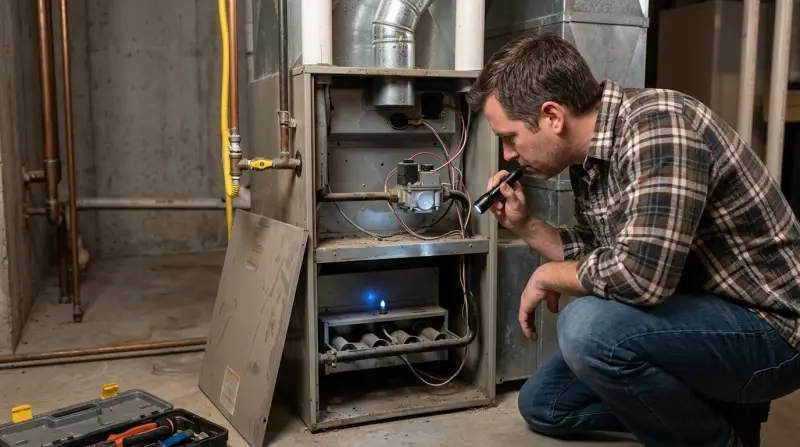
To solve the problem, it helps to know how a gas furnace works. The pilot light is a small flame that stays on inside the furnace. Its main job is to ignite the burners when the thermostat calls for heat. If the pilot light is burning but the furnace doesn’t start, something else is stopping the system.
Most furnaces have a simple sequence:
- The thermostat senses room temperature.
- If it’s too cold, the thermostat sends a signal.
- The furnace receives the signal and tries to start.
- The pilot light ignites the burners.
- The blower sends warm air through your home.
If any part of this chain breaks, the furnace stays off.
Types Of Pilot Lights
There are two main types:
- Standing pilot: Always burning.
- Electronic ignition: Only lights when needed.
This article focuses on the standing pilot, since electronic ignitions have different issues.
Common Symptoms
If your pilot light is lit but the furnace won’t start, you might notice:
- The thermostat clicks, but nothing happens.
- The blower doesn’t turn on.
- There’s no heat, even though the pilot is visible.
Sometimes, the furnace tries to start, but stops quickly.
Why Does The Furnace Refuse To Start?
Several parts must work together for the furnace to run. If the pilot light is lit but the furnace won’t kick on, the trouble is usually with:
- Thermostat
- Gas supply
- Safety switches
- Electrical components
- Burners
- Blower motor
Let’s look at each area in detail.
Thermostat Issues
The thermostat is the brain of your heating system. It tells the furnace when to turn on and off. If there’s a problem with the thermostat, the furnace might not get the signal to start.
Wrong Settings
Sometimes, the thermostat is set to “off” or “cool. ” Make sure it’s set to “heat,” and the temperature is higher than the room.
Dead Batteries
Many thermostats use batteries. If the batteries are dead, the thermostat can’t send a signal. Change the batteries and see if the furnace starts.
Faulty Wiring
Wires inside or behind the thermostat can get loose or damaged. If the wires aren’t connected, the furnace won’t know when to turn on.
Thermostat Comparison
Here’s a quick comparison of common thermostat types:
| Type | Power Source | Common Issues | Ease of Fix |
|---|---|---|---|
| Manual | Wired/Battery | Wrong settings, dead batteries | Easy |
| Digital | Battery | Software errors, dead batteries | Moderate |
| Smart | Wired/Battery | Wi-Fi issues, app glitches | Moderate |
Non-obvious tip: Some smart thermostats need a “C” wire for power. If your furnace suddenly stops working after installing a new thermostat, check this wire.
Gas Supply Problems
Even if the pilot light is burning, the furnace needs more gas to run the burners. If gas isn’t reaching the main burners, the furnace stays off.
Gas Valve Shutoff
Check the gas valve near the furnace. It should be fully open. Sometimes, during repairs, the valve gets closed and forgotten.
Low Gas Pressure
If the gas pressure is too low, the pilot can stay lit but there’s not enough gas for the burners. This can happen after gas company repairs or in older homes.
Gas Line Blockages
Dust, debris, or corrosion can block the gas line. Even a small blockage can cause the furnace to fail.
Gas Supply Table
Here’s a comparison of gas supply problems:
| Problem | Symptoms | Solution | Safety Risk |
|---|---|---|---|
| Valve Closed | Pilot lit, no heat | Open valve | Low |
| Low Pressure | Weak pilot, no burner ignition | Call gas company | Moderate |
| Line Blockage | Pilot lit, no burner | Professional cleaning | High |
Non-obvious tip: If you smell gas, leave the house immediately. Gas leaks are dangerous and need urgent attention.

Credit: www.youtube.com
Safety Switches And Sensors
Modern furnaces have several safety switches. These switches stop the furnace if there’s a problem. Even with the pilot lit, a safety switch can keep the furnace off.
Flame Sensor
The flame sensor detects if the burners are lit. If the sensor is dirty or broken, it won’t sense the flame, and the furnace stays off. Cleaning the sensor often solves the problem.
Limit Switch
The limit switch measures temperature inside the furnace. If the furnace overheats, this switch turns it off for safety. A broken switch can stop the furnace from starting.
Pressure Switch
This switch checks the air pressure in the furnace. If there’s a blockage in the vent or chimney, the pressure switch won’t allow the furnace to start.
Comparison Of Safety Switches
| Switch | What it Detects | Common Problems | DIY Fix? |
|---|---|---|---|
| Flame Sensor | Burner flame | Dirty, corroded | Yes, clean |
| Limit Switch | Heat | Broken, stuck | No, replace |
| Pressure Switch | Air flow | Blocked vent | Yes, clear vent |
Non-obvious tip: Many flame sensors stop working because of a thin layer of dust. A gentle rub with a fine sandpaper can restore them.
Electrical System Failures
Your furnace uses electricity to run controls, motors, and sensors. Even with the pilot lit, if the electrical parts fail, the furnace won’t start.
Blown Fuse Or Tripped Breaker
Check the circuit breaker for the furnace. If it’s tripped, reset it. Sometimes, a fuse inside the furnace blows and needs replacing.
Loose Or Damaged Wires
Wire connections can come loose over time, especially after repairs or vibrations. Inspect wires for breaks, burns, or loose connections.
Faulty Control Board
Modern furnaces have a control board—like a small computer. If it fails, the furnace won’t get the right signals.
Electrical Issue Symptoms
- No sound from the furnace
- No blower activity
- Thermostat seems normal, but furnace is dead
If you’re not comfortable with electricity, call a professional. Some repairs can be dangerous.

Burner Or Ignition Problems
Even if the pilot is burning, the main burners must ignite to produce heat. If the burners are dirty or damaged, they won’t light.
Dirty Burners
Dust and rust can block the gas flow in the burners. Clean burners work better and use less gas.
Cracked Or Faulty Burners
Burners can crack over time. Cracks change the way gas flows and prevent ignition.
Ignition Sequence Failure
Sometimes, the ignition sequence doesn’t complete. This can happen if a sensor or relay is broken.
If you see a strong blue pilot but weak or yellow burner flames, the burners may need cleaning.
Blower Motor And Fan Issues
The blower motor pushes warm air through your house. If the motor is broken, the furnace might start but you won’t feel heat.
Motor Failure
Motors wear out after years of use. If the blower doesn’t turn on, listen for humming or grinding sounds.
Fan Belt Problems
Older furnaces use a fan belt. If the belt snaps or slips, the motor spins but the fan doesn’t move air.
Blocked Air Filter
A clogged air filter makes the blower work harder. Sometimes, the furnace shuts down to protect itself.
Change your air filter every 1-3 months. Dirty filters cause many furnace problems.
Step-by-step Troubleshooting
Let’s go through a practical troubleshooting process. If your pilot light is lit but furnace won’t kick on, follow these steps:
- Check thermostat settings: Make sure it’s set to “heat” and the temperature is higher than the room.
- Replace thermostat batteries: If needed.
- Inspect gas valve: Confirm it’s open.
- Listen for furnace sounds: Clicking, humming, or nothing.
- Reset circuit breaker: If tripped.
- Check air filter: Replace if dirty.
- Look at safety switches: Clean flame sensor if accessible.
- Test blower motor: If you hear humming but no air, the motor may be stuck.
- Clean burners: If you’re comfortable, carefully remove dust and debris.
If the furnace still won’t start, it’s time to call a technician.
When To Call A Professional
Some repairs are safe for homeowners, but others need special tools and training.
- Gas leaks: If you smell gas, leave immediately and call emergency services.
- Electrical problems: If you see burnt wires or smell burning, call a pro.
- Control board issues: Only technicians should fix these.
- Pressure switch or limit switch replacement: Requires skill.
Many furnace warranties require professional repair. Don’t risk voiding your warranty.
Preventive Maintenance Tips
Keeping your furnace in good shape prevents many problems. Here are practical tips:
- Change air filter regularly: Every 1-3 months.
- Clean flame sensor yearly: Use fine sandpaper.
- Vacuum burners and pilot area: Remove dust each season.
- Check thermostat batteries: At least once a year.
- Inspect gas valve: Make sure it’s always open during heating season.
- Lubricate blower motor: If your model allows, oil the motor once a year.
- Schedule professional tune-up: Every fall.
Real-life Example
Consider Mark, a homeowner in Chicago. His pilot light was burning, but the furnace refused to start. He checked the thermostat—it was set to “heat” and batteries were fine. Next, he inspected the gas valve; it was open. After replacing the air filter, the furnace still wouldn’t kick on.
Mark cleaned the flame sensor with sandpaper, and the furnace started immediately.
Lesson: Sometimes, a simple cleaning can fix the problem. Many homeowners overlook the flame sensor.
Common Mistakes Homeowners Make
- Ignoring regular maintenance: Dust and dirt cause most issues.
- Changing settings without understanding: Accidentally switching thermostat modes.
- Forgetting to open gas valve: After repairs or cleaning.
- Overlooking batteries: Even “wired” thermostats may need batteries.
- Trying risky repairs: Fixing electrical parts without proper skill.
Always check simple things first before calling for help.
How Furnace Age Affects Problems
Older furnaces (15+ years) are more likely to have failures. Parts wear out, wires corrode, and sensors get dirty. Upgrading to a new furnace can save money in the long run.
Furnace Lifespan Data
Most furnaces last 15–20 years. After 10 years, regular repairs increase. Newer models are more efficient and safer.
Cost Of Repairs
Repair costs depend on the problem:
- Thermostat replacement: $75–$250
- Flame sensor cleaning: $50–$150
- Blower motor repair: $200–$500
- Gas valve replacement: $150–$400
- Control board replacement: $350–$700
Annual maintenance costs less than emergency repairs.
Diy Vs Professional Repair
Some fixes are safe for homeowners:
- Changing thermostat batteries
- Cleaning air filter
- Cleaning flame sensor
Others require professionals:
- Electrical repairs
- Gas line work
- Control board replacement
If you’re unsure, always call a technician. Safety comes first.
Safety Reminders
Working with furnaces can be risky. Always follow these safety rules:
- Turn off power before opening the furnace.
- Never work on gas lines unless trained.
- Keep flammable materials away.
- If you smell gas, leave the house and call for help.
Benefits Of Regular Furnace Maintenance
Regular maintenance:
- Reduces breakdowns
- Saves money
- Improves safety
- Makes your furnace last longer
- Keeps your home warmer
Most breakdowns happen during the coldest days. Maintenance prevents emergency repairs.
How To Find A Reliable Technician
Look for technicians who:
- Are licensed and insured
- Have good reviews online
- Offer clear pricing
- Explain problems in simple words
- Guarantee their work
Ask friends or neighbors for recommendations.
Comparing Furnace Brands And Models
Some brands are more reliable than others. Here’s a simple comparison:
| Brand | Average Lifespan | Efficiency (%) | Repair Frequency |
|---|---|---|---|
| Trane | 20 years | 97 | Low |
| Carrier | 18 years | 96 | Moderate |
| Lennox | 17 years | 98 | Low |
| Goodman | 15 years | 92 | High |
Efficiency means less gas used for the same heat, saving money.

Upgrading Your Furnace
If your furnace is old and keeps breaking, consider upgrading. New furnaces use less gas, are safer, and need fewer repairs. You can find rebates from energy companies for efficient models.
Upgrading can reduce heating bills by 20–40%.
Environmental Impact
Modern furnaces are better for the environment. They use less gas and produce fewer emissions. If you care about the planet, upgrading makes a difference.
Frequently Asked Questions
Why Does My Furnace’s Pilot Light Stay On But The Burners Won’t Ignite?
Usually, this means a safety switch, dirty flame sensor, or gas supply problem. Clean the flame sensor first and check the gas valve. If that doesn’t work, call a technician.
Can I Fix A Furnace That Won’t Start Myself?
You can safely check and change thermostat batteries, clean filters, and clean the flame sensor. For electrical, gas, or control board repairs, call a professional.
How Often Should I Clean My Furnace’s Flame Sensor?
Clean the flame sensor once a year, before heating season. Use fine sandpaper and be gentle to avoid damage.
Is It Dangerous To Try To Fix Furnace Electrical Problems Myself?
Yes. Electrical repairs can be risky and may void your warranty. If you see burnt wires or smell burning, call a licensed technician.
What Should I Do If I Smell Gas Near My Furnace?
Leave your house immediately and call emergency services. Gas leaks are dangerous and need urgent attention.
Final Thoughts
A furnace that won’t start—even with the pilot light lit—can be frustrating, but most problems are fixable. Start with simple checks: thermostat, gas valve, air filter, and flame sensor. Regular maintenance prevents breakdowns and keeps your home warm. If you’re unsure, call a licensed technician. Safety always comes first. Remember, small actions like cleaning sensors or changing filters can make a big difference. Understanding your furnace helps you stay comfortable and save money.
For more detailed technical information, visit U.S. Department of Energy.