
Most people use electrical outlets every day, but few understand how these outlets are connected behind the walls. If you are planning home improvements, installing new outlets, or just want to ensure your home is safe, knowing the difference between series wiring and parallel wiring is essential. This knowledge not only helps you make better decisions but also keeps you safe from common electrical mistakes.
Many homeowners believe wiring outlets in series or parallel is a matter of preference, but there are real safety, functionality, and code implications. In this article, you’ll get a clear, practical explanation of both methods, see how they work, and learn why one is almost always the right choice for outlets in your home.
We’ll also share insights that even some DIY enthusiasts miss, practical tips for wiring, and a side-by-side comparison to help you understand the benefits and risks of each approach.
What Does “wiring In Series” Mean?
Wiring in series means each device is connected one after another, forming a single path for electricity. Imagine a string of old Christmas lights—if one bulb burns out, the entire string goes dark. That’s series wiring in action.
When outlets are wired in series:
- The hot wire brings power to the first outlet.
- The neutral wire returns electricity back to the panel.
- The next outlet is connected to the first, and so on, forming a chain.
If any outlet or connection breaks, all outlets downstream lose power. This design is rare for outlets in modern homes, but still seen in some older or non-standard installations.
Key Characteristics Of Series Wiring
- Current flow: The same electrical current passes through each outlet.
- Voltage drop: The voltage is divided among all outlets, so the more devices you plug in, the less voltage each gets.
- Failure risk: If one outlet fails, all the outlets after it stop working.
Where Is Series Wiring Used?
Series wiring is almost never used for household outlets. Instead, it’s common in:
- Low-voltage devices (e.g., some landscape lights)
- Old holiday light strings
- Simple circuits where the failure of one part should shut down the rest
For most homes and buildings, this method is not recommended for power outlets.
What Does “wiring In Parallel” Mean?
In parallel wiring, every outlet is connected directly to the main power source. Each outlet has its own path for electricity, independent from the others.
Think of parallel wiring like lanes on a highway. If one lane closes, cars can still use the others. If one outlet fails, the rest continue to work.
Key Characteristics Of Parallel Wiring
- Voltage consistency: Each outlet receives the full voltage supplied by the circuit (typically 120V in the US).
- Independent operation: If one outlet fails, others keep working.
- Current distribution: The current divides among devices, but the voltage remains the same.
Where Is Parallel Wiring Used?
Parallel wiring is the standard for all household power outlets and most appliances. It’s also used for:
- Lighting circuits in homes
- Most commercial and industrial electrical systems
- Any place where reliable, independent operation is needed
How Series And Parallel Wiring Look In Practice
Let’s break down the wiring diagrams to clarify the difference.
Series Wiring Diagram
- Power source connects to the first outlet.
- Wire continues from the first outlet’s terminals to the second outlet.
- Continues to the third, fourth, etc.
- Break at any point stops all outlets after the break.
Parallel Wiring Diagram
- Power source connects to all outlets individually.
- Each outlet is wired directly to the incoming hot and neutral wires.
- If one outlet breaks or is removed, others still work.
Here’s a comparison table showing the basic structure:
| Feature | Series Wiring | Parallel Wiring |
|---|---|---|
| Voltage at Each Outlet | Divided among outlets | Full circuit voltage (120V) |
| Effect of Outlet Failure | Downstream outlets lose power | Other outlets unaffected |
| Common Use in Homes | Rarely used | Standard practice |
| Safety | Lower (risk of overload/failure) | Higher (circuits are isolated) |
Why Are Outlets Almost Always Wired In Parallel?
Most building codes and best practices require outlets to be wired in parallel. Here’s why:
- Consistent voltage: Every device gets the voltage it needs (120V in the US). This prevents appliances from underperforming or being damaged.
- Reliability: If one outlet fails, the rest keep working. You don’t lose power to an entire room because of one bad outlet.
- Safety: Parallel wiring helps prevent overheating, fire risks, and circuit overloads.
- Code compliance: The National Electrical Code (NEC) in the US and similar codes globally require parallel wiring for outlets.
Wiring outlets in series can cause problems. For example, plugging in a high-power device in a series-wired outlet can cause a voltage drop, making other devices malfunction. In worst cases, series wiring can lead to overheating and electrical fires.
Step-by-step: How To Wire Outlets In Parallel
For those interested in safe DIY work or understanding how electricians do the job, here’s a simple overview of wiring outlets in parallel.
If you are not trained or certified, always hire a qualified electrician for any electrical work. Mistakes can cause fire, injury, or death.
Tools And Materials Needed
- Screwdriver (flat and Phillips)
- Wire stripper
- Voltage tester
- Electrical tape
- Wire nuts
- 12- or 14-gauge electrical wire (depending on circuit)
- Standard electrical outlets (receptacles)
- Outlet boxes
Step-by-step Process
- Turn off Power: Shut off the circuit breaker for the area you’ll be working in. Test to confirm power is off.
- Run the Main Cable: Bring the main cable (hot, neutral, ground) to the first outlet box.
- Strip and Prepare Wires: Use a wire stripper to remove about 3/4 inch of insulation from each wire end.
- Connect Wires to the First Outlet:
- Attach the black (hot) wire to the brass screw.
- Attach the white (neutral) wire to the silver screw.
- Attach the bare or green (ground) wire to the green screw.
- Continue to the Next Outlet:
- Run another cable from the first box to the second.
- Connect the incoming and outgoing hot wires together, then to the brass screw.
- Do the same for neutral and ground wires.
- Use wire nuts to tie together wires of the same color.
- Repeat for Additional Outlets: Continue this process for all outlets on the circuit.
- Test the Outlets: After restoring power, use a tester to check each outlet.
Practical Tips
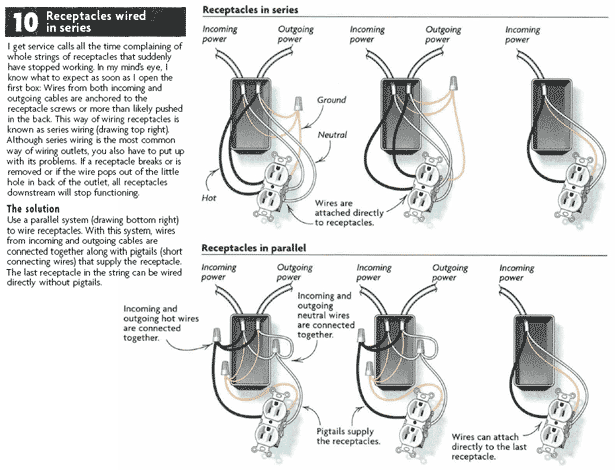
- Use pigtails: Instead of connecting all wires directly to the outlet screws, use short “pigtail” wires connected with wire nuts. This makes it easier to replace outlets later and improves safety.
- Label your circuits: Mark the breaker and outlets for future troubleshooting.
- Check local code: Some areas require specific wire types, box sizes, or outlet ratings.
What Really Happens If You Wire Outlets In Series?
While it’s rare, some people mistakenly wire outlets in series, especially in older homes or DIY projects. Here’s what can go wrong:
- Voltage loss: Plug in a vacuum cleaner at one outlet, and your lamp in the next may flicker or dim because there’s not enough voltage left.
- Device malfunction: Sensitive electronics may not work at all, or may be damaged.
- Overheating: Wires and outlets may get hot, increasing fire risk.
- Hard to troubleshoot: If you lose power, you’ll need to check every outlet in the chain.
- Code violation: Series wiring for outlets usually violates electrical codes and can fail home inspections.
A real-world example: If you plug a hairdryer (which draws a lot of power) into a series-wired outlet, the next outlet may not have enough power for even a small phone charger. This is not just inconvenient—it’s dangerous.
:max_bytes(150000):strip_icc()/Series-and-parallel-circuits-the-basics-1152850-055e134b2b5847a5ae5b28843bbc3c39.png)
Common Myths About Outlet Wiring
Many myths circulate about series and parallel wiring, especially on DIY forums and in old instruction books. Let’s clear up the most common ones.
- Myth: Series wiring saves wire and money.
- Reality: It’s not safer or cheaper for outlets. The risk of failure and code violation is not worth any small cost savings.
- Myth: Series wiring is “old school” but acceptable.
- Reality: It may have been used decades ago, but modern codes ban it for outlets.
- Myth: Wiring in series is okay for lights and outlets.
- Reality: Some low-voltage lights use series wiring, but power outlets always require parallel wiring.
- Myth: You can tell by looking at the outlet.
- Reality: Visually, both wiring methods may look similar. You need to check the circuit design to be sure.
- Myth: Series wiring makes it easier to control outlets with one switch.
- Reality: This is a different wiring method (called a switched outlet), not series wiring.
Series Vs Parallel: Technical And Safety Comparison
For a deeper understanding, let’s compare series and parallel wiring using technical and safety factors.
| Aspect | Series Wiring | Parallel Wiring |
|---|---|---|
| Voltage at Each Outlet | Divided (e.g., 120V split among outlets) | Full voltage (120V each) |
| Current Path | Single path; all outlets share | Multiple paths; each outlet independent |
| Failure Impact | Outlets after the break lose power | Other outlets stay live |
| Appliance Performance | Poor, risk of malfunction | Good, as designed |
| Safety | Lower, higher fire risk | Higher, safer for homes |
| Code Compliance | Not allowed for outlets | Required by code |
How To Identify If Your Outlets Are Wired In Series Or Parallel
Most homes use parallel wiring, but if you suspect an older or DIY-wired circuit, here’s how to tell:
- Test with a device: Unplug all devices, then plug a lamp into the first outlet. Plug a second lamp into the next outlet. If both work independently, outlets are likely in parallel.
- Check for voltage drop: If one lamp dims or goes out when you plug in another device, you may have series wiring.
- Visual inspection: Open the outlet cover (with power off). In parallel wiring, you’ll see hot and neutral wires pigtailed together and attached to each outlet. Series wiring usually has wires running straight from one outlet to the next, without pigtails.
- Use a circuit tester: A professional can trace the current path to confirm wiring type.
Non-obvious tip: Sometimes, an outlet will appear dead, but the fault is actually a poor connection in a different outlet upstream. This is common in “backstab” (push-in) wired outlets, even with parallel circuits. If you find an outlet not working, always check the one before it in the chain.
Real-world Examples And Scenarios
Scenario 1: Home Renovation
You add two new outlets in your living room. If you wire them in parallel, each will work independently. If you accidentally wire them in series, plugging in a high-wattage heater in one could make the other useless—or even cause a fire.
Scenario 2: Workshop Or Garage
Power tools need reliable voltage. If outlets are series-wired, tools might stall, overheat, or trip the breaker. Parallel wiring ensures each tool gets full power.
Scenario 3: Rental Property
If a tenant complains outlets are “acting weird,” with some devices not working, check for improper series wiring. Fixing the wiring can prevent property damage and liability.
Scenario 4: Code Inspection
During inspection, improper wiring will fail. Fixing a code violation after construction is finished is more expensive than doing it right the first time.
Series And Parallel In Other Electrical Systems
While series wiring is wrong for outlets, it has valid uses elsewhere:
- Battery packs: Sometimes batteries are wired in series to increase voltage, or in parallel to increase capacity.
- LED lighting strips: Some designs use series wiring to balance light output.
- Some industrial sensors: Series-wired sensors can signal a problem by shutting down the whole line.
But for home and office outlets, parallel wiring is the only safe and legal method.
Common Mistakes When Wiring Outlets
Even experienced DIYers can make mistakes. Here are the most frequent:
- Loose connections: Wires not tightened securely can cause arcing and fires.
- Wrong wire gauge: Using wire that’s too thin for the circuit can overheat.
- Mixing series and parallel: Accidentally wiring outlets in series, especially when adding to existing circuits.
- Ignoring ground wires: Not connecting the ground can result in shock hazards.
- Overloading the circuit: Too many outlets on one breaker can trip the circuit or cause overheating.
- Using “backstab” connections: Push-in connections are less reliable than screw terminals.
- Not checking local codes: Some areas have unique requirements for GFCI outlets, tamper-resistant outlets, or arc fault protection.
Electrical Codes And Wiring Best Practices
The National Electrical Code (NEC) governs outlet wiring in the United States. Key requirements include:
- Parallel wiring for all outlets
- Proper wire gauge (usually 14-gauge for 15A circuits, 12-gauge for 20A circuits)
- Ground fault circuit interrupter (GFCI) outlets in kitchens, bathrooms, and outdoors
- Tamper-resistant outlets in homes with children
- Arc fault circuit interrupter (AFCI) protection in bedrooms and living areas
Always check your local building codes, as they may be stricter than national standards.
For a reliable source, the National Fire Protection Association (NFPA) publishes the full NEC codebook.
Series Vs Parallel: Cost, Complexity, And Longevity
Let’s compare series and parallel wiring on cost, installation complexity, and long-term reliability.
| Factor | Series Wiring | Parallel Wiring |
|---|---|---|
| Material Cost | Slightly lower (less wire) | Slightly higher |
| Labor/Time | Similar or less | Standard practice for electricians |
| Reliability | Poor | Excellent |
| Maintenance | Difficult (tracing faults) | Easy to troubleshoot |
| Lifespan | Shorter (due to overheating/failures) | Long (with proper installation) |
| Legal Compliance | No | Yes |
Insight: Even if series wiring saves a few feet of wire, the long-term risks and code violations far outweigh any possible savings.

Upgrading Or Rewiring Outlets: What To Do
If you suspect your home has outlets wired in series, or if you’re renovating, here’s how to upgrade:
- Hire a licensed electrician: They can inspect your circuits, identify improper wiring, and make corrections.
- Plan for new circuits: If you’re adding high-power devices (like in a kitchen or workshop), run dedicated circuits.
- Upgrade to GFCI/AFCI protection: Modern outlets with built-in safety features are now required in many rooms.
- Label breakers and outlets: This helps with maintenance and troubleshooting.
- Consider smart outlets: These can add convenience and energy monitoring, but must be wired in parallel.
Non-obvious tip: If you upgrade outlets, also check your main electrical panel’s capacity. Adding too many outlets without considering panel load can cause nuisance tripping or overheating.
Key Takeaways For Homeowners And Diyers
- Always wire outlets in parallel for safe, reliable, and code-compliant circuits.
- Series wiring should never be used for power outlets.
- If you notice dimming, flickering, or total power loss at multiple outlets, check for wiring issues.
- Hire a professional for any major electrical work.
- Check and follow the latest electrical codes for your area.
Frequently Asked Questions
Why Is Parallel Wiring Safer For Outlets?
Parallel wiring ensures each outlet gets the full voltage and can operate independently. If one outlet fails, the others keep working. This greatly reduces the risk of electrical fires or equipment damage and meets all modern electrical codes.
Can I Wire Lights In Series But Outlets In Parallel?
Some low-voltage lighting systems use series wiring, but for standard household circuits, both lights and outlets should be wired in parallel. This provides consistent voltage and safety. Always check manufacturer instructions for lighting systems.
What Happens If I Accidentally Wire Outlets In Series?
If you wire outlets in series, devices will share voltage, which can make them underperform or not work at all. The outlets may overheat, wires can become damaged, and you risk failing inspection and creating a fire hazard. Series wiring should be corrected as soon as possible.
How Can I Tell If My Outlets Are Wired In Parallel?
Turn off power and open the outlet box. In parallel wiring, you’ll see hot and neutral wires joined together with wire nuts and short “pigtail” leads to each outlet screw. In series wiring, the wires usually pass directly from one outlet to the next without pigtails.
Is It Legal To Wire Outlets In Series In Any Situation?
No, modern building codes require outlets to be wired in parallel for safety and reliability. Series wiring violates code and is not allowed for power outlets in homes or businesses.
Wiring outlets correctly is not just about following rules—it’s about protecting your home, family, and devices. Understanding the difference between series and parallel wiring helps you spot problems early, ask the right questions, and make smarter decisions when updating or adding electrical outlets.
If in doubt, always consult a licensed electrician and follow the best practices for a safe and reliable electrical system.