
A dishwasher is one of the most useful appliances in modern kitchens, saving time and water with each use. But if you notice water pooling under your dishwasher—even when it hasn’t run recently—it’s not just an annoyance. A leaking dishwasher when not running can signal deeper problems that need attention. Ignoring these leaks could lead to expensive floor damage, mold growth, or even electrical risks. If you’re facing this issue, don’t panic. This guide will help you understand the causes, how to diagnose the problem, and what you can do to fix it.
Why Does A Dishwasher Leak When Not Running?
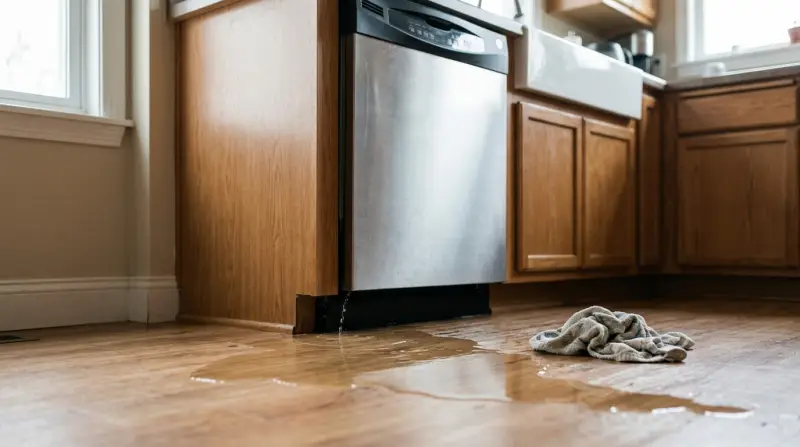
It seems strange: how can water leak from a machine that’s turned off? The answer is that a dishwasher is always connected to both the water supply and the drain system. Even if it’s not actively washing, water can move through these connections. Below are the most common reasons why a dishwasher might leak when not in use.
1. Faulty Water Inlet Valve
The water inlet valve controls the flow of water into your dishwasher. If this valve is stuck open or damaged, water may slowly seep in even when the dishwasher is off. Over time, this can cause puddles or even flooding under the machine.
2. Leaking Drain Hose
A drain hose carries wastewater away from the dishwasher. If there’s a crack, loose connection, or clog, water from the sink or garbage disposal can back up into the dishwasher and leak out.
3. Broken Door Gasket
The door gasket (the rubber seal around the door) is designed to keep water inside during a wash cycle. If it’s torn or worn out, even a small amount of water from leftover moisture or a faulty valve can escape.
4. Cracked Tub
Over time, the dishwasher tub can develop cracks, especially if it’s made from plastic. These cracks may let water leak onto the floor, even if the leak is slow and only appears when the appliance is not running.
5. Faulty Float Switch
The float switch helps control water level. If it’s stuck or broken, the dishwasher may overfill slightly, even when not running, causing leaks.
6. Plumbing Issues
Sometimes, the problem isn’t the dishwasher itself but the plumbing. A backed-up drain, high water pressure, or a faulty shut-off valve can all send unwanted water to your dishwasher.
How To Diagnose The Problem
Finding the real cause of a dishwasher leak when not running can save time and money. Here’s how you can check for each issue.
Visual Inspection
Start with a simple look. Remove the kick plate (the panel at the bottom front of your dishwasher) and check for visible water, rust, or mineral deposits. These can help you spot where the leak starts.
Checking The Inlet Valve
The water inlet valve is usually at the bottom of the dishwasher, behind the kick plate. Look for any dripping water or corrosion. If you suspect the valve, shut off the water supply to the dishwasher and see if the leak stops.
Examining The Drain Hose
Check the drain hose for cracks or loose fittings. If you see water around the hose or under the sink, this could be the source.
Inspecting The Door Gasket
Look for cracks, splits, or mold on the door gasket. If it feels brittle or damaged, it may not seal properly.
Testing The Float Switch
Gently lift the float inside the dishwasher (it looks like a small plastic dome or cylinder on the floor of the tub). If it moves freely and clicks, it’s likely working. If it’s stuck or doesn’t click, it may need cleaning or replacement.
Checking For Tub Cracks
Shine a flashlight inside the dishwasher tub. Look for hairline cracks or discoloration where water could escape. Sometimes, cracks are easier to see when the tub is dry.

Credit: diy.stackexchange.com
Key Differences: Leaks When Running Vs. Not Running
Understanding when your dishwasher leaks can help pinpoint the problem. Here’s a simple comparison:
| Leak Timing | Common Causes | Typical Fixes |
|---|---|---|
| While Running | Door gasket, spray arm, detergent use, overfilling | Replace gasket, check spray arm, use proper detergent |
| When Not Running | Inlet valve, drain hose, plumbing, tub cracks | Replace valve, fix hose, check plumbing, repair tub |
Solutions For A Dishwasher That Leaks When Not Running
Once you know the cause, you can move to the right solution. Some problems are simple DIY fixes, while others may need a professional.
1. Replace Or Repair The Water Inlet Valve
If the valve is stuck open, turn off the water supply, unplug the dishwasher, and remove the valve for inspection. Replacement valves are usually inexpensive and available at hardware stores. If you’re unsure, a plumber can help.
2. Fix Or Replace The Drain Hose
Tighten any loose clamps and replace cracked hoses. Make sure the hose is positioned with a “high loop” (arched upward under the sink) to prevent backflow from the sink into the dishwasher.
3. Install A New Door Gasket
Remove the old gasket and clean the channel before installing a new one. A good seal is crucial for keeping water in.
4. Repair A Cracked Tub
Small cracks in a plastic tub can sometimes be fixed with a dishwasher-safe epoxy. For larger cracks, especially in older machines, replacement might be more cost-effective.
5. Clean Or Replace The Float Switch
Remove debris from around the float. If it’s not working, a new float switch is usually easy to install.
6. Address Plumbing Issues
Check the shut-off valve, supply lines, and drain connections. Make sure there’s no clog in the sink’s drain line, as this can cause water to back up into the dishwasher. If your home has high water pressure, a pressure regulator may help.

Credit: www.youtube.com
Comparing Diy And Professional Repair
Not sure if you should fix it yourself or call a pro? This table can help you decide:
| Repair Type | DIY Difficulty | When to Call a Professional |
|---|---|---|
| Replace Inlet Valve | Medium | If you lack plumbing tools or experience |
| Fix Drain Hose | Easy | If leak persists after tightening/replacing |
| Change Door Gasket | Easy | If new gasket does not stop leak |
| Repair Tub Crack | Difficult | For large cracks or metal tubs |
| Plumbing Issues | Medium to Difficult | If you suspect water pressure or major plumbing faults |
Preventing Dishwasher Leaks In The Future
Taking care of your dishwasher can reduce the risk of leaks. Here are some practical steps:
- Inspect hoses and valves every 6–12 months for wear or leaks.
- Clean the door gasket regularly with warm, soapy water to prevent mold and cracking.
- Avoid overloading the dishwasher, as extra weight can damage seals.
- Check the float and remove debris.
- Run the dishwasher at least once a week to keep seals moist and prevent drying out.
Two Non-obvious Tips Most Beginners Miss
- Check water pressure in your home. High water pressure (over 80 psi) can force water past valves and seals, causing leaks even when the dishwasher is off.
- Look for slow leaks at the wall connection. Sometimes, leaks start where the water supply connects to the wall, not at the dishwasher itself. Place a paper towel under the valve overnight to spot slow drips.
The Cost Of Ignoring Dishwasher Leaks
Letting a dishwasher leak continue can be costly. The average cost to repair water damage from a leaking appliance is between $1,000 and $4,000, depending on the extent. Mold remediation can add hundreds to thousands more. Insurance may not cover damage from “neglect,” so early action is important.
When To Replace Vs. Repair
If your dishwasher is more than 10 years old and leaks from multiple areas, replacement may be the better option. Newer dishwashers are more efficient and use less water. Compare the cost of repairs to the price of a new model.

Environmental And Safety Considerations
A leaking dishwasher wastes water and can damage flooring and cabinets. In the worst cases, leaks can reach electrical components, increasing the risk of short circuits or fire. If you see water near electrical outlets or wiring, unplug the dishwasher immediately and call a professional.
External Help And Resources
If you’re unsure about tackling a repair, many manufacturers offer online guides. For major issues, a certified appliance repair technician can diagnose and fix the leak safely. For more on home appliance safety, visit the Consumer Product Safety Commission.
Frequently Asked Questions
Why Does My Dishwasher Leak Water Even When I Haven’t Used It?
Water can leak from a dishwasher when not in use due to a faulty inlet valve, a cracked drain hose, or plumbing problems that allow water to enter the machine even when it’s off.
How Can I Tell If The Water Inlet Valve Is The Problem?
Look for water dripping from the valve when the dishwasher is off. If shutting off the water supply stops the leak, the inlet valve is likely faulty.
Is It Safe To Keep Using My Dishwasher If It’s Leaking?
No. Continued use can lead to floor damage, mold, or electrical risks. It’s best to stop using the dishwasher until you’ve fixed the leak.
Can A Blocked Sink Drain Cause My Dishwasher To Leak?
Yes. A clogged sink drain can cause water to back up into the dishwasher and leak out, even if the dishwasher is not running.
How Much Does It Cost To Fix A Leaking Dishwasher?
Simple fixes like replacing a gasket or hose can cost under $50. More complex repairs, like a new inlet valve or tub replacement, may cost $100–$400. If water damage has occurred, repair bills can be much higher.
A leaking dishwasher when not running isn’t just a minor annoyance—it’s a warning sign. Catching and fixing the problem early can save you money and protect your home. With regular checks and quick action, you can keep your kitchen dry and your dishwasher running efficiently for years to come.