
Sometimes, an ice maker can sound like a small machine factory in your kitchen. You might hear buzzing, clicking, knocking, or even loud rattling. These noises can be annoying, especially at night or when you’re trying to relax. If your ice maker keeps making noise, you’re not alone.
Many people face this problem, and it can have many causes—from simple issues to bigger problems. Learning how to stop your ice maker from making noise can bring peace back to your home and help your appliance work better.
Let’s explore why ice makers make noise, how to fix it, and what you can do to prevent the problem in the future. This guide covers practical steps, common mistakes, and expert tips. You’ll also see clear tables comparing noise types and fixes.
By the end, you’ll know how to quiet your ice maker and spot when it’s time to call a professional.
Why Ice Makers Make Noise
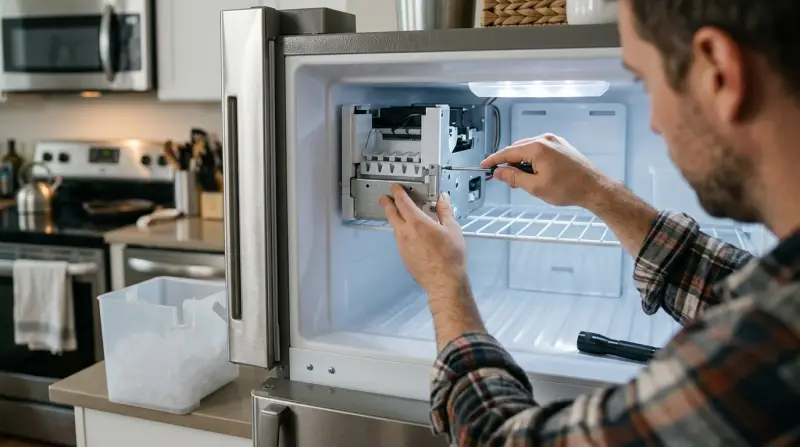
Ice makers are complex machines with moving parts, water lines, and electrical connections. Most noises come from one of these parts working—or failing. Some sounds are normal, but others signal trouble.
Common noises include:
- Buzzing or humming
- Clicking
- Grinding
- Rattling
- Loud knocking
Here’s a quick comparison of normal and abnormal noises:
| Noise Type | Normal? | Possible Cause |
|---|---|---|
| Low hum | Yes | Motor running |
| Sharp click | Yes | Ice dropping |
| Grinding | No | Jammed ice or broken part |
| Rattling | No | Loose water line |
| Loud buzzing | No | Water valve problem |
Non-obvious insight: Sometimes, a noisy ice maker is caused by the refrigerator itself vibrating against the floor or wall, not just the ice maker parts.
Identifying The Source Of Ice Maker Noise
Before you can fix the problem, you need to know where the noise comes from. This step is often skipped, but it’s critical for solving the issue.
How to check:
- Listen closely. Try to notice when the noise happens—during ice production, when ice drops, or when water fills.
- Feel for vibration. Gently touch the refrigerator sides and the area around the ice maker. If you feel shaking, the noise might come from loose panels or the floor.
- Watch the ice maker. Open the freezer and observe the ice maker as it runs. Look for stuck ice, moving parts, or water leaks.
- Check the water line. Inspect the tube or hose bringing water to the ice maker. A loose or kinked line can vibrate and cause rattling.
Many people forget to check the water line, even though it’s a common source of noise.

Credit: www.reddit.com
Step-by-step Guide To Reduce Ice Maker Noise
Let’s move to practical ways to stop the noise. Most fixes are simple, but some may require tools or help.
1. Level The Refrigerator
If your refrigerator isn’t level, it can vibrate and make noise.
How to do it:
- Use a bubble level tool.
- Adjust the front and back feet of the refrigerator until it’s flat.
- Make sure it doesn’t touch the wall.
2. Secure Loose Parts
Loose parts inside or outside the ice maker can shake and create noise.
- Check screws and panels around the ice maker.
- Tighten any loose parts with a screwdriver.
- Make sure the ice bin fits snugly.
3. Clean The Ice Maker
Ice buildup or debris can jam the ice maker and cause grinding or knocking.
- Turn off the ice maker.
- Remove ice and clean the tray and bin.
- Use warm water and a soft cloth to wipe away dirt.
4. Inspect The Water Line
A bent, loose, or vibrating water line is a common cause of rattling.
- Check the water line behind the fridge.
- Make sure it’s not pressed against the wall or floor.
- Secure it with clips or foam padding if needed.
5. Adjust Water Pressure
High water pressure can make the ice maker noisy.
- Locate the water shut-off valve.
- Turn it slightly to reduce pressure.
- If unsure, ask a plumber to check the pressure (ideal range: 20–120 psi).
Example: If your ice maker makes a loud buzz when filling, it’s often due to high water pressure or a faulty valve.
6. Replace Worn Parts
Over time, parts like motors, gears, or valves wear out.
- If cleaning and tightening don’t help, check for damaged parts.
- Order replacements from the manufacturer.
- Follow the manual or call a technician for installation.
Non-obvious insight: Many people replace the whole ice maker, but often only a small part (like a motor or sensor) needs changing.
7. Check For Ice Jams
Ice can get stuck in the tray or chute, causing loud grinding.
- Turn off the ice maker.
- Remove jammed ice carefully.
- Avoid using sharp objects that can break plastic parts.
8. Insulate The Area
If noise is still a problem, try insulating the area.
- Place foam or rubber mats under the fridge.
- Use soundproofing pads behind the refrigerator.
- Make sure there’s space for air flow.
When To Call A Professional
Some problems are too complex for home fixes. If you notice these signs, it’s time to call an expert:
- Persistent loud noises after cleaning and tightening
- Water leaking from the ice maker
- Electrical burning smell
- Ice maker stops working completely
Professionals can diagnose deeper issues like faulty wiring, broken motors, or hidden leaks. According to a survey by HomeAdvisor, the average cost for ice maker repair is $150–$350, depending on the problem.
Comparing Common Causes And Solutions
To make things clearer, here’s a comparison of causes and their matching solutions:
| Cause | Noise | Fix | Easy to DIY? |
|---|---|---|---|
| Loose water line | Rattling | Secure or insulate | Yes |
| Unlevel fridge | Vibration | Adjust feet | Yes |
| Ice buildup | Grinding/knocking | Clean tray | Yes |
| Worn motor | Buzzing | Replace motor | No |
| High water pressure | Loud buzz | Adjust valve | Maybe |
| Electrical issue | Burning smell | Call technician | No |
Preventing Ice Maker Noise In The Future
Prevention saves time and money. Here are ways to keep your ice maker quiet:
- Regular cleaning. Clean the ice bin and tray every month.
- Inspect water line. Check and secure the water line every 6 months.
- Level the fridge. Make sure it stays flat after moving or cleaning.
- Avoid overloading. Don’t pack the freezer too full; it blocks air flow.
- Replace filters. Change water filters as recommended (usually every 6 months).
- Schedule maintenance. Have a professional check the ice maker once a year.
Example: Regular cleaning prevents ice buildup, which is the main reason for knocking and grinding sounds.

Common Mistakes To Avoid
Beginners often make these errors:
- Ignoring minor noises, thinking they’ll go away
- Using sharp tools to clear ice jams (risk breaking parts)
- Forgetting to check the water line behind the fridge
- Over-tightening parts, which can crack plastic
- Not reading the refrigerator manual for proper care
Non-obvious insight: Many people don’t realize that ice makers are sensitive to temperature changes. Keeping your freezer too cold or too warm can cause more noise.
Real-life Example: Quieting A Noisy Ice Maker
Sarah, a homeowner in Texas, noticed her refrigerator’s ice maker was making loud knocking sounds every hour. She tried cleaning the tray but the noise continued. After checking the water line, she saw it was pressed against the wall. She moved the fridge slightly and used foam padding.
The noise stopped. Sarah learned that simple fixes can solve big problems if you look beyond the obvious.

Credit: www.youtube.com
Comparing Ice Maker Noise Levels By Brand
If you’re thinking about buying a new refrigerator, some brands are quieter than others. Here’s a quick comparison:
| Brand | Average Noise Level (dB) | Known for Quiet Operation? |
|---|---|---|
| Samsung | 40 | Yes |
| LG | 42 | Yes |
| Whirlpool | 45 | Moderate |
| Frigidaire | 47 | No |
| GE | 44 | Moderate |
Noise levels are measured in decibels (dB). Lower numbers mean quieter operation. Most modern refrigerators are below 50 dB, but older models can be noisier.
For more details on refrigerator noise and maintenance, you can visit Consumer Reports.
Frequently Asked Questions
What Is The Most Common Cause Of Ice Maker Noise?
The most common cause is a loose water line or ice buildup in the tray. Both can be fixed with simple cleaning and securing steps.
Is It Normal For Ice Makers To Make Some Noise?
Yes, a low hum or soft clicking is normal. Loud buzzing, grinding, or rattling usually means something is wrong.
Can High Water Pressure Damage My Ice Maker?
Yes, high water pressure can cause leaks and loud buzzing. It’s best to keep the pressure between 20–120 psi. If unsure, ask a plumber to check.
How Often Should I Clean My Ice Maker?
You should clean your ice bin and tray once a month. Replace water filters every 6 months for best performance.
When Should I Call A Professional For Ice Maker Noise?
If the noise is persistent, comes with water leaks, or smells like burning, call a technician. These signs mean deeper mechanical or electrical problems.
Noisy ice makers don’t have to ruin your peace. With the right steps, you can fix most problems yourself and keep your kitchen quiet. Regular care and quick fixes prevent bigger issues, saving you money and stress. Remember to listen, check, and clean often—your ice maker will thank you with quiet, reliable service.