
Many people living in apartments or small homes need to save space. For this reason, stacking a washer and dryer has become a popular solution. These units fit into closets, corners, or even bathrooms, making them attractive for anyone with limited room. But while stacking can free up precious floor space, it comes with several important disadvantages that homeowners often overlook. Before you decide to stack your laundry machines, it’s important to understand the challenges, risks, and long-term effects. This article will help you see the full picture, including issues with safety, maintenance, convenience, and costs.
Space Savings Come With Hidden Trade-offs
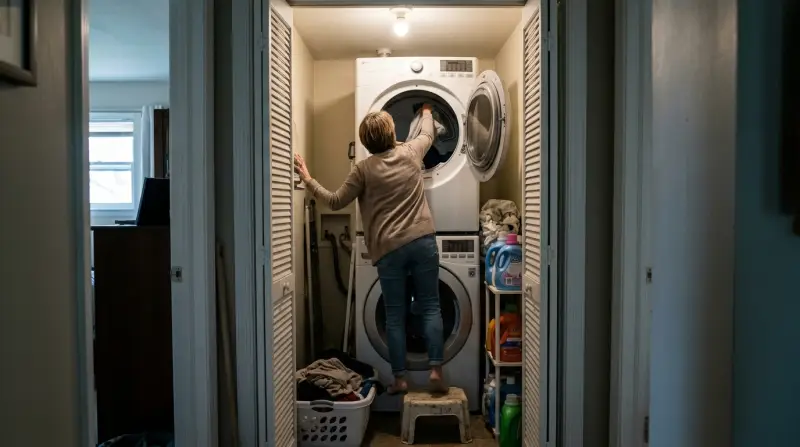
Choosing a stacked washer and dryer often means giving up certain benefits. While these systems seem perfect for small spaces, they can create problems that aren’t always obvious at first.
Limited Placement Options
Stacked washers and dryers need specific conditions for safe installation. You need:
- A strong, level floor that can hold the weight of two machines
- Enough ceiling height (usually at least 80 inches)
- Proper venting and electrical outlets
If your home doesn’t meet these requirements, you might need expensive upgrades or have to find another spot. For example, older buildings may not have the right electrical setup or venting, which adds to installation costs. Unlike side-by-side machines, you can’t just move a stacked unit to another room easily.
Less Flexibility With Layout
When you stack, you give up the chance to use your machines as a folding surface or to add cabinets above your laundry area. This can actually reduce your overall storage or workspace, especially in tight apartments.
Safety And Stability Concerns
Stacking one heavy machine on top of another is not as simple as it seems. Safety is a key issue that often gets overlooked.
Increased Risk Of Tipping
Stacked units must be anchored securely. If not, they can tip during the spin cycle, especially if the washer gets unbalanced. This risk is higher in homes with children or pets, who might accidentally push or climb on the machines. In rare cases, an unanchored unit can fall and cause injury or damage.
Vibration And Noise Problems
Stacked washers and dryers often vibrate more than side-by-side units. This is because the weight is distributed vertically, which can make the whole structure shake during high-speed spins. If you live in an apartment, this extra noise can bother neighbors or family members. In older homes with wooden floors, vibration can even cause the machines to move slightly over time.
Maintenance And Repairs Are More Difficult
One of the biggest disadvantages of stacking is the challenge of maintenance and repairs. Many people don’t realize how much harder it is to service stacked units until there’s a problem.
Harder Access For Repairs
Most dryers are stacked on top of washers. If your dryer breaks, a technician usually needs to unstack the machines to access the problem. This process:
- Takes more time (and costs more in labor fees)
- Can risk damaging the machines or surrounding walls during moving
- Often requires two people, especially with heavy, full-size units
For example, if the heating element fails in a stacked dryer, you might pay double the repair cost compared to a side-by-side setup.
Cleaning And Routine Maintenance
Simple jobs like cleaning the lint trap or checking for leaks are more complicated. Reaching the dryer’s vent or the washer’s hoses means stretching or using a step stool. For older adults or people with limited mobility, this can be a real issue.
Ergonomics: Harder To Load And Unload
Stacked laundry machines are not always comfortable to use, especially for short people or those with back problems.
Dryer Is Too High, Washer Is Too Low
The dryer is usually at eye or head level. If you’re under 5’5”, you might struggle to reach the lint filter, controls, or even the drum. Dropping wet clothes into the dryer can mean lifting above your shoulders, which is tiring and unsafe.
On the other hand, the washer sits at floor level, forcing you to bend down further than with a front-loader on a pedestal. This can strain your back, especially if you do several loads a week.
Safety Risks For Children And Seniors
If children help with laundry, they may find it hard to reach the dryer safely. Seniors or people with mobility issues also have a harder time bending or reaching high controls, which increases the chance of falls or injuries.
Performance And Capacity Limits
Many stacked systems are smaller than standard side-by-side machines. This affects both how much laundry you can do and how well the machines work.
Smaller Drum Size
Stacked units often have a smaller drum capacity. While a full-size washer might handle 4.5 cubic feet, some stacked models only hold 2–3 cubic feet. This means:
- More loads to wash the same amount of clothes
- Bigger items, like comforters, might not fit
Here’s a quick comparison:
| Feature | Stacked Washer/Dryer | Side-by-Side Units |
|---|---|---|
| Average drum size | 2.5–3.5 cu ft | 4.0–5.5 cu ft |
| Load frequency | More frequent | Less frequent |
| Fits large items? | Rarely | Usually |
Longer Wash And Dry Times
Smaller loads may not save time. Compact washers often take longer to clean because they use less water and have gentler cycles. Some users report that stacked dryers need extra time to dry towels or bedding, especially in ventless models.
Upfront And Long-term Costs
While stacking may seem cost-effective, there are financial drawbacks.
Higher Upfront Costs
Stackable machines often cost more than standard models. You may need to buy a stacking kit (usually $50–$100), and professional installation can add $100–$300 more. If your laundry area needs electrical or vent upgrades, costs rise further.
| Cost Type | Stacked Setup | Side-by-Side Setup |
|---|---|---|
| Machine price | $1,000–$2,500 | $800–$2,000 |
| Stacking kit + labor | $150–$400 | $0–$100 |
| Space modifications | Sometimes needed | Rarely needed |
More Expensive Repairs
Because repairs are harder, you pay more for service calls. Some brands even void the warranty if the units aren’t stacked according to their instructions.
Lower Resale Value
If you sell your home, some buyers may see stacked laundry as a negative, especially families who need larger machines. This can affect your property value or make your home harder to sell.

Credit: diy.stackexchange.com
Limited Machine Choices
Not all washers and dryers can be stacked. This means fewer choices in style, features, and performance.
- Only front-loaders can be stacked. Top-load washers can’t.
- Some brands don’t offer stackable models at all.
- High-end features (like steam cleaning or Wi-Fi) are rarer in compact models.
If you want to upgrade, you might be stuck with a limited list of options compared to side-by-side units.
Venting And Moisture Problems
Proper venting is critical for dryers. Stacked setups can make ventilation harder to install and maintain.
Harder To Clean Dryer Vents
Lint buildup in the dryer vent is a fire hazard. In stacked units, the vent often runs behind both machines and is harder to reach. This makes cleaning less frequent and increases safety risks.
Moisture And Mold Issues
Stacked units in small, closed spaces can trap moisture. If the area isn’t well-ventilated, you may notice mold or mildew growing behind or underneath the machines. This is especially true if the washer leaks or if you don’t leave the washer door open to dry.
Credit: www.whirlpool.com
Installation And Relocation Challenges
Stacked washers and dryers are harder to move. If you plan to relocate or remodel, you may have to unstack and reinstall the units, which can cost time and money.
Difficult To Move During Renovations
If you want to redo your laundry area, stacked units are heavy and awkward. This can slow down projects and increase the risk of damage.
May Not Fit Future Spaces
If you move to a new home, your stacked setup may not fit. You might have to buy new machines if the space is only set up for side-by-side units.
Some Issues Are Overlooked By Beginners
Many first-time buyers miss a few important points:
- Stacked machines can’t run at the same time if your electrical system is weak. Some older homes can’t handle the combined power draw.
- You lose the ability to replace just one machine. If your washer fails, you may need to buy a new dryer too, so they still fit together.
- Not all repair companies service stacked units, which limits your choices if something goes wrong.
Credit: www.ajmadison.com
When Is Stacking Still A Good Choice?
Despite these disadvantages, stacking can be the best option in some cases:
- You live in a studio or one-bedroom apartment with no extra space.
- You do small loads more often, not large family laundry.
- You value floor space over laundry speed or comfort.
But if you have the room, consider side-by-side units for better performance and easier maintenance.
Frequently Asked Questions
Is It Safe To Stack A Washer And Dryer?
If stacked correctly with a manufacturer-approved kit on a level floor, stacking can be safe. However, improper stacking increases the risk of tipping or damaging the machines. Always follow the instructions and have a professional do the installation.
Do Stacked Washer And Dryer Units Last As Long As Regular Ones?
Stacked units can last just as long if used and maintained properly. But, because they are often smaller and used more frequently in apartments, they might wear out faster. Also, harder access can mean some repairs are delayed, which shortens lifespan.
Can I Stack Any Washer And Dryer?
No. Only certain front-loading washers and dryers are designed to be stacked. Both machines must be from the same manufacturer and model line. Top-load washers cannot be stacked, and mixing brands is usually not recommended.
How Do I Clean The Lint Trap In A Stacked Dryer?
Cleaning the lint trap is the same as with a regular dryer, but you may need a small step stool to reach it if the dryer is high. Make sure to clean it after every load to avoid fire risks. For more tips, visit the National Fire Protection Association.
What’s The Main Reason People Regret Stacking Their Washer And Dryer?
Most people regret stacking when they find out how hard it is to do maintenance, reach controls, or fit large loads. Many wish they had chosen side-by-side units for more comfort and options.
Stacked washer and dryer systems offer space-saving benefits, but their disadvantages are real and often inconvenient. From harder repairs to smaller loads and safety risks, these downsides matter—especially if you have a family or plan to stay in your home for years.
Consider your needs, physical ability, and future plans before making a decision. If you have enough space for side-by-side units, they usually offer more comfort, flexibility, and value.