
Cleaning your GE Profile ice maker is more important than many people think. A clean ice maker keeps your ice fresh, prevents strange tastes, and helps your machine last longer. If you notice cloudy ice, odd smells, or a slower production rate, it could be time for a deep clean. Many users wait until there’s a problem, but regular cleaning stops issues before they start. This guide will show you everything you need to know, from the tools you need, step-by-step instructions, and tips that even some experts overlook.
Why Cleaning Your Ge Profile Ice Maker Matters
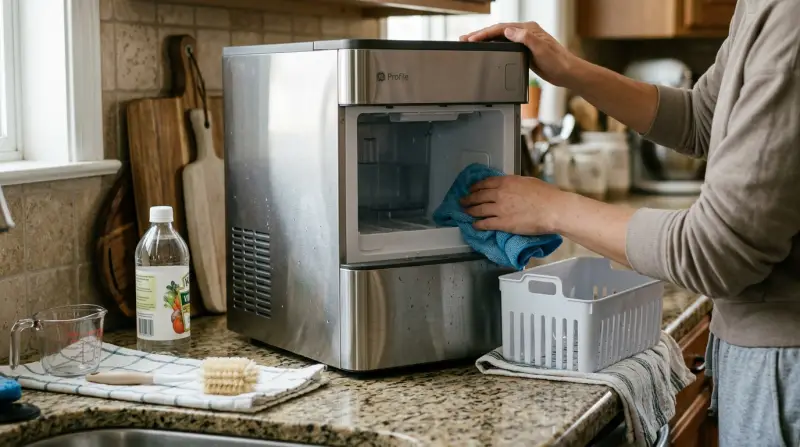
Ice makers are often ignored in kitchen cleaning routines. But over time, minerals, mold, and bacteria can build up inside. This doesn’t just affect taste and smell—it can cause health concerns. A dirty ice maker may also use more energy, run less efficiently, or even break down. Cleaning prevents blockages, keeps ice clear, and ensures your machine runs smoothly.
How Often Should You Clean?
Most experts recommend cleaning your GE Profile ice maker every 3 to 6 months. If you live in a place with hard water, clean it more often to avoid mineral buildup. If you notice any of the following, clean your ice maker immediately:
- Ice smells or tastes bad
- Ice is cloudy or soft
- Machine is noisy or slow
- You see mold or slime inside

Credit: www.wikihow.com
What You’ll Need
Before you start, gather the following items:
- Soft cloths or sponges
- Mild dish soap
- Warm water
- White vinegar or a GE-approved ice machine cleaner
- A bucket or large bowl
- A toothbrush or small soft brush
- Gloves (optional)
- Towel for drying
Never use harsh chemicals, bleach, or abrasive pads. These can damage the ice maker and leave dangerous residues.
Preparing To Clean: Safety First
Unplug your GE Profile ice maker before cleaning. This protects you from electric shock and prevents the machine from making ice during the process. If your ice maker is connected to a water line, turn off the water supply as well.
Remove all ice from the bin and throw away any cubes made before cleaning.
Step-by-step: How To Clean A Ge Profile Ice Maker
Follow these steps for a thorough, safe clean. The process may vary depending on your exact model, so check your user manual if you’re unsure.
1. Remove And Wash Parts
Take out any removable parts, such as the ice bin, scoop, and water filter (if your model has one). Wash these parts with warm, soapy water. Rinse well and let them air dry.
2. Clean The Interior
Mix equal parts white vinegar and warm water, or use a GE-approved cleaner as directed on the label. Dip a soft cloth or brush into the solution and gently scrub the inside walls, the ice-making tray, and any surfaces that touch water or ice.
Be sure to reach corners and crevices where mold can hide.
3. Clean The Water Reservoir
Some models have a removable water reservoir. Take it out, clean with your solution, rinse thoroughly, and dry. If the reservoir is not removable, use a sponge or cloth to wipe it out carefully.
4. Rinse Everything
Wipe down all surfaces with a clean, damp cloth to remove any cleaner or vinegar. This step is critical, as leftover cleaner can affect ice taste and safety.
5. Reassemble And Run A Cleaning Cycle
Put all parts back in place. Plug the ice maker back in, turn on the water supply, and run at least one full ice-making cycle. Discard the first batch of ice—this removes any remaining cleaner or vinegar from the system.
Tips For Better Results
- Use filtered water if possible. It reduces mineral deposits and extends cleaning intervals.
- If you have hard water, descale with a GE-approved descaler every few months.
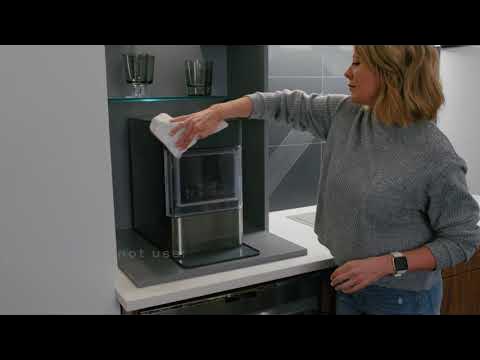
- Don’t forget to clean the exterior buttons and handles.
- Leave the ice bin out to air dry completely before reassembling to prevent mold.
Data: Cleaning Frequency Vs. Common Issues
Cleaning at the right intervals makes a big difference. Here’s how often you should clean for best results, and what problems you might see if you skip regular cleaning:
| Cleaning Interval | Expected Issues | Ice Quality |
|---|---|---|
| Every 3 months | Rare problems | Clear, fresh ice |
| Every 6 months | Possible odd taste or smell | Mostly good |
| Once per year | Cloudy ice, possible mold | Poor |
| Never | Mold, blockages, machine damage | Unsafe |
Signs Your Ice Maker Needs Cleaning
It’s not always obvious when your ice maker needs attention. Here are some signs beyond just strange-tasting ice:
- Reduced ice output: If your ice maker is making less ice than usual, minerals or mold could be blocking the system.
- Slow cycles: Dirty sensors or trays slow down production.
- Discolored ice: Ice that looks yellow or gray is often caused by buildup inside the machine.
- Unusual sounds: Grinding or squeaking noises can mean moving parts are dirty or stuck.
What Makes Ge Profile Ice Makers Different?
GE Profile ice makers are known for their quality and technology. Many models have features like:
- Advanced water filtration
- Smart sensors for ice thickness
- Optional Wi-Fi controls
Because of these features, cleaning is even more important. Sensors and filters can get blocked if not cleaned regularly. Here’s a quick look at how GE Profile models compare to standard ice makers:
| Feature | GE Profile | Standard Ice Maker |
|---|---|---|
| Smart Sensors | Yes | No |
| Wi-Fi Controls | Available | Rare |
| Easy Clean Design | Yes | Varies |
| Advanced Filtration | Yes | Basic |
Common Mistakes To Avoid
Many owners make simple errors that reduce cleaning effectiveness or damage the ice maker. Watch out for these:
- Skipping the rinse: Cleaning products left inside can make ice taste bad or even be unsafe.
- Using bleach or strong chemicals: These can corrode internal parts and void your warranty.
- Forgetting the water line: Mold and deposits can build up in the water supply line—flush it occasionally.
- Not drying parts: Moisture left inside encourages mold growth.
- Ignoring the exterior: Bacteria can transfer from dirty buttons and handles.
How To Descale Your Ge Profile Ice Maker
If you have hard water or see white, chalky buildup, descaling is needed. Here’s a quick process:
- Buy a GE-approved descaler or use white vinegar (never use lemon juice or anything acidic that might damage the machine).
- Mix and add the solution to the reservoir as directed.
- Run a cleaning cycle, then rinse thoroughly with clean water—repeat if buildup remains.
- Discard the first two batches of ice after descaling.
Insight: Even if you use filtered water, minerals can still build up over time. Descaling every six months keeps your ice maker efficient and extends its life.
Maintaining Your Ice Maker Between Cleanings
Regular cleaning is essential, but small habits keep your machine in top shape day to day:
- Wipe the exterior weekly to remove dust and fingerprints.
- Check the water filter and replace it as recommended (usually every 6 months).
- Use up ice regularly—old ice absorbs odors.
- Keep the area around the machine clean and dry.

Credit: www.walmart.com
When To Call A Professional
Sometimes, cleaning doesn’t fix the problem. Call a technician if:
- Ice tastes bad even after cleaning
- The machine leaks or won’t turn on
- You see rust, cracks, or damaged parts
Technicians can check inside areas you can’t reach, like the water pump or inner tubing. They can also replace filters or sensors if needed.
Comparing Popular Cleaning Solutions
Choosing the right cleaning solution matters. Here’s how common options compare:
| Cleaner | Effectiveness | Safe for GE Profile? | Cost |
|---|---|---|---|
| White Vinegar | Good for mild buildup | Yes | Low |
| GE Ice Machine Cleaner | Excellent for all types | Yes | Medium |
| Bleach | Too harsh, not recommended | No | Low |
| Lemon Juice | Mild, not for heavy scaling | No | Low |
Credit: www.youtube.com
Non-obvious Insights For Longer Ice Maker Life
- Let the machine air out: If you won’t use your ice maker for a few days, leave the lid or door open slightly. This prevents moisture buildup and mold.
- Check for firmware updates: Some smart GE Profile models receive software updates that can improve cleaning cycles or efficiency. Check the GE website or your app every few months.
Where To Find More Information
If you lose your user manual or need extra support, visit the official GE Appliances website for guides, troubleshooting, and contact details.
Frequently Asked Questions
How Do I Know If My Ge Profile Ice Maker Needs Cleaning?
If you notice cloudy ice, bad taste, low ice output, or see mold inside, it’s time to clean. Also, if you live in a hard water area, clean more often.
Can I Use Bleach To Clean My Ice Maker?
No, you should not use bleach or strong chemicals. They can damage your ice maker and leave unsafe residues. Stick to white vinegar or GE-approved cleaners.
Do I Need To Remove The Water Filter Before Cleaning?
Yes, remove the water filter if your model has one. Clean it according to the manual or replace it if it’s old or clogged.
How Long Does The Cleaning Process Take?
It usually takes 30–60 minutes, including soaking and drying time. Add extra time if you need to descale heavy mineral buildup.
What Should I Do If My Ice Still Tastes Bad After Cleaning?
If the taste issue continues, change the water filter, clean the water line, and check your water source. If the problem remains, call a technician.
Cleaning your GE Profile ice maker isn’t difficult, but it does require attention to detail. With regular care, you’ll have fresh, clean ice for years. Don’t wait for problems—make cleaning part of your kitchen routine and enjoy the best your machine can offer.