
A tripped circuit breaker or a blown fuse is the most common reason for a 2023 F150 120V Outlet Not Working, and you can usually resolve this by checking your vehicle’s power distribution box. If the outlet has no power, the system has likely shut down to protect the truck’s electrical architecture from an overload or a short circuit. Before you assume a major hardware failure, ensure the truck is running or in accessory mode, as the inverter requires specific engine status conditions to supply current to the bed or cabin outlets.
Reasons the outlet isn’t working
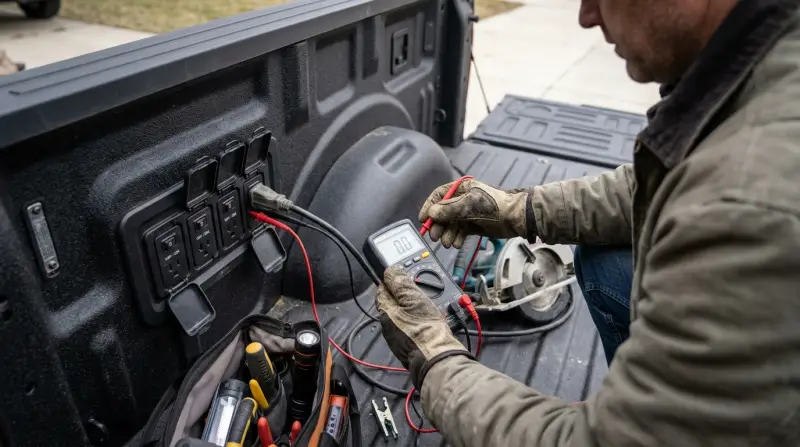
The power inverter in your truck is a complex piece of electronics. It converts your battery’s 12-volt direct current (DC) into the 120-volt alternating current (AC) used by household appliances. This system constantly monitors the load. If you plug in a device that draws more power than the inverter is rated for, the internal safety logic cuts the connection immediately. This isn’t a malfunction; it’s a feature designed to prevent wires from melting or the battery from draining completely.
Most standard truck inverters are capped at 400 watts. If you attempt to run a high-draw tool like a heat gun or a large coffee maker, the system will trip instantly. To avoid this, check the wattage sticker on your appliance. If the total exceeds 400 watts, you must use a separate portable power station instead.
Another cause is the state of the vehicle’s electrical health. The truck’s Battery Management System prioritizes starting the engine. If the battery charge drops too low, the system will disable the inverter to preserve starting power; the system will typically resume normal operation once the battery is sufficiently recharged.
Finally, moisture or debris inside the outlet can trigger a ground fault. If the internal sensors detect that electricity is leaking outside the intended path, the circuit opens for safety. This is common if you leave the flap open during rain or dusty conditions. Always inspect the physical port for corrosion or grit before assuming the inverter itself has failed. A quick blast of compressed air often restores the connection.
Safety: Inside a mains-powered machine, the parts behind the outer cover can hold a dangerous electrical charge even after it has been unplugged — that’s why they sit behind a cover. Opening the housing, or testing or replacing anything behind it, is a job for a qualified technician, never a home repair.
Check the power distribution box
This fix is for owners who want to rule out simple electrical interruptions. The F150 uses a series of fuses to protect the inverter circuit. You must locate the power distribution box, usually found under the hood on the passenger side. Open the cover and look for the diagram printed on the inside. Identify the fuse associated with the “Inverter” or “AC Outlet.”
If the metal strip inside the fuse is broken or burnt, the fuse has done its job and sacrificed itself to protect the system. You should replace it with a new fuse of the exact same amperage rating. Never substitute a higher-rated fuse, as this creates a fire hazard by allowing more current than the wiring can handle. If the new fuse blows immediately, don’t replace it again; this indicates a short circuit that requires a professional technician’s inspection.
If you’re unsure about which fuse corresponds to the inverter, refer to the official Ford Owner Manual for your specific trim level. This isn’t for people who lack experience with automotive electrical components. If you feel uncomfortable, go to a Ford service center. A mistake here can cost you a blown relay or damage to the inverter module itself.
Reset the inverter logic
This fix is for when the hardware is fine, but the software has locked the system. Sometimes the inverter enters a “soft lockout” mode after a power surge. To reset it, turn the truck completely off and open the driver’s door for at least thirty seconds. This allows the Body Control Module to cycle through its power-down sequence and clear temporary error codes.
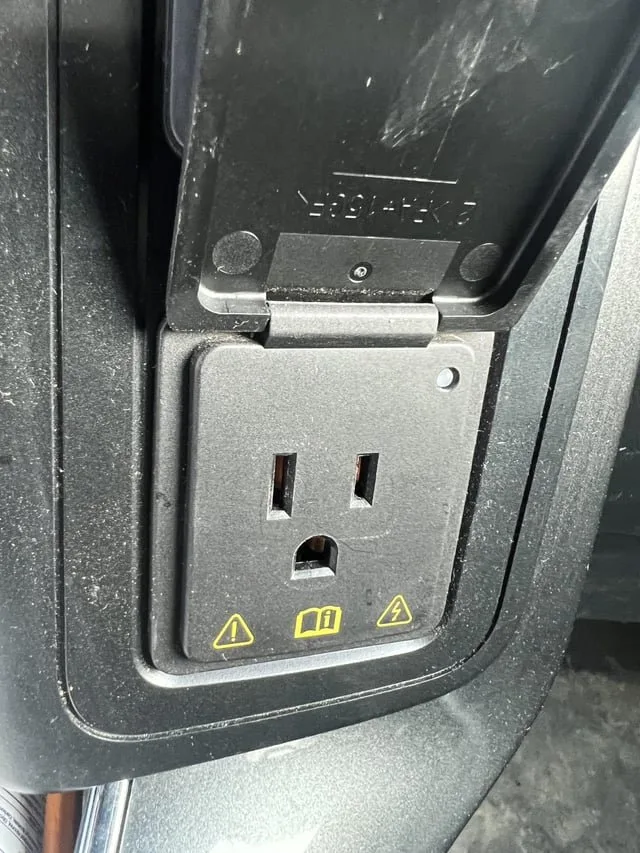
After thirty seconds, close the door and start the engine. Wait for the engine to reach a stable idle, then attempt to use the outlet with a low-draw device, like a phone charger, to see if the green light on the outlet illuminates. If it doesn’t turn on, look at the instrument cluster for any warning messages related to the power system.
If the outlet still fails to provide power, verify that you aren’t exceeding the wattage limit. The F150 Pro Power Onboard system has specific limits; if you exceed the limit, the system will cut power until the load is removed and the system is reset. This is a trade-off: you get high-wattage capability, but the system is sensitive to spikes. If you’re still having trouble after a reset, the issue is likely deeper in the inverter hardware. At this point, stop your own troubleshooting and contact a certified mechanic.
Verify the device load
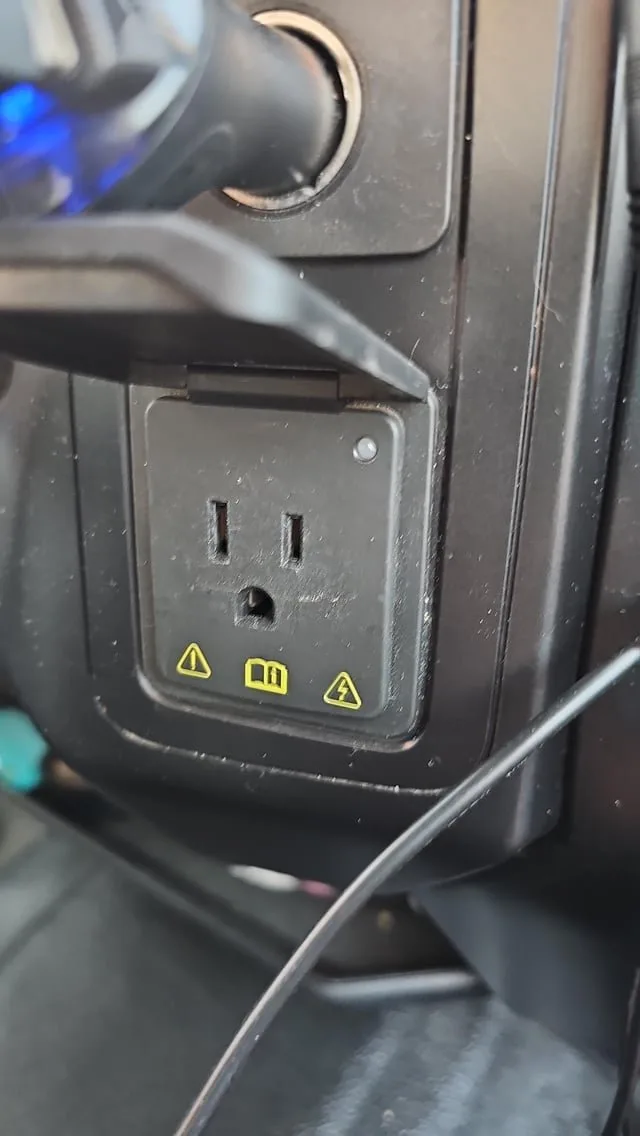
This fix is for when the outlet works, but keeps shutting off while you’re using it. Every appliance has a “starting wattage” and a “running wattage.” Even if a tool says it uses 400 watts, it might spike to 800 watts for a split second when the motor starts. If your device’s spike exceeds the inverter’s capacity, the truck will kill the power to protect itself.
Check the label on your device for the “peak” or “surge” wattage. If your device exceeds the truck’s rating, you must use a different power source. This isn’t for people who need to run heavy construction equipment; for that, you need a dedicated generator. This fix is for light-duty tools and electronics.
If you’re using an extension cord, ensure it’s in good condition. A damaged or frayed cord can cause resistance that the inverter interprets as a fault. Try plugging the device directly into the truck outlet without any adapter or extension cord. If the device works when plugged directly into the truck but not through the cord, the cord is the problem. If it fails in both scenarios, the inverter is likely at its limit or the device is pulling too much current.
What not to do
Never use a paperclip or wire to bridge a fuse. This bypasses the safety mechanism and can cause a vehicle fire. If a fuse blows repeatedly, don’t force a higher amperage replacement. That indicates a short circuit that will melt your wiring harness if ignored.
Don’t spray water or cleaner into the outlet. This creates an immediate short circuit and can damage the inverter electronics permanently. If you spill liquid nearby, ensure the area is completely dry before attempting to plug in any device.
Don’t leave the truck running in a closed garage to test the outlet. This is a carbon monoxide hazard that puts your life at risk.
Don’t attempt to open the inverter housing. A capacitor can hold a lethal charge even after the truck is turned off and the battery is disconnected. If the unit fails, replace the entire assembly rather than attempting internal repairs.
How to stop it happening again
Consistency is the best way to keep your power system healthy. Use this table to manage your gear and avoid future failures.
Most users fail by ignoring the “idle discharge” rate. These small devices can drain a battery to critical levels within a week.
The decision rule is simple: if the unit isn’t actively charging a device, disconnect it. If you notice the cooling fan cycling on while the system is idle, you have a short or a parasitic load. Address this immediately to prevent permanent cell degradation.
Frequently asked questions
Can I plug a microwave into my F150 outlet?
No, most residential microwaves pull more power than a standard truck inverter provides. While some high-output systems support small microwaves, you must check your truck’s wattage rating in the manual. Exceeding this rating will cause an immediate power cut.
Why does the outlet stop working when the engine turns off?
The truck’s power management system disables the 120V outlet to prevent the battery from dying. The inverter consumes significant electricity, so the computer prioritizes keeping enough charge to start the engine. You must keep the truck running or in accessory mode to maintain power.
How long can I run devices on the truck battery?
You should only run devices for a short time if the engine is off. The truck battery is designed for starting the engine, not for deep-cycle power usage. Using the inverter with the engine off can drain the battery in minutes.
Is it safe to use the outlet in the rain?
No, you should never use an electrical outlet in the rain. Water is a conductor that creates a path for electricity, causing short circuits or shock hazards. If the outlet is exposed to water, let it dry completely before use.
What happens if I use an extension cord?
Using a long or thin extension cord causes a voltage drop that triggers the inverter’s safety sensors. The inverter may detect this resistance as a fault and shut down. Always use the shortest, thickest extension cord possible to avoid this issue.
Final Thoughts
If these simple checks don’t restore your power, it’s best to visit a certified technician for a deeper diagnostic. They’ll have the right tools to inspect the inverter and wiring harness for hidden faults. Don’t hesitate to reach out to your local dealer if you’re still under warranty, as they’ll help you out.