
A Frigidaire refrigerator is a trusted appliance in many homes, keeping food cold and drinks refreshing. But when the ice maker in your Frigidaire refrigerator isn’t making enough ice, daily routines can be interrupted. Whether you’re hosting a gathering, packing a lunch, or just want a cold drink after a long day, running out of ice is frustrating. Thankfully, most ice maker problems can be fixed with a little guidance. This article will show you why your ice maker might not be producing enough ice, how to troubleshoot each cause, and what you can do to get it working like new.
How A Frigidaire Ice Maker Works
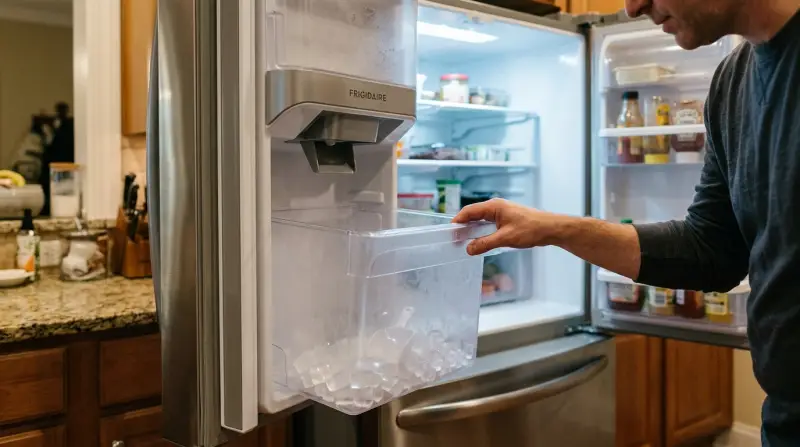
Understanding how your Frigidaire ice maker operates helps you spot problems faster. The typical ice maker in a Frigidaire refrigerator uses the following process:
- Water Fill: A water valve opens and fills a tray with water.
- Freezing: The freezer cools the tray, turning water into ice.
- Harvesting: A heater loosens the ice cubes, and a motor pushes them into the storage bin.
- Repeat Cycle: Once the bin is low, the process repeats.
If any step fails, you get less ice—or none at all. Knowing each part’s role helps you target the right fixes.
Common Reasons For Low Ice Production
Several things can cause your Frigidaire refrigerator’s ice maker to slow down or stop making enough ice. Here are the most common reasons and what to look for.
1. Freezer Temperature Is Too High
Optimal temperature: 0°F (-18°C)
If your freezer is warmer than this, ice forms slowly or not at all. Even a small increase in temperature can cut ice production in half.
Quick check: Place a thermometer inside your freezer. If it reads above 0°F, adjust the dial or digital control to make it colder. Allow 24 hours to see improvement.
2. Water Supply Issues
If the ice maker isn’t getting enough water, it can’t make a full batch of ice. Common water supply problems include:
- Kinked or frozen water line: Straighten any kinks. If frozen, unplug the fridge and gently warm the line.
- Low water pressure: You need at least 20 psi (pounds per square inch). If your home’s water pressure is low, the ice tray may fill only halfway.
- Clogged water filter: Replace every 6 months. A clogged filter restricts water flow.
3. Faulty Water Inlet Valve
The water inlet valve opens to let water into the ice tray. If it’s defective, you’ll get less ice or no ice.
Signs of a bad valve:
- Buzzing sound, but no water fills the tray
- Slow water flow to the ice maker and water dispenser
A multimeter can test for electrical continuity, but most people find it easier to call a technician for this repair.
4. Ice Maker Control Problems
Modern Frigidaire refrigerators use sensors and switches to manage ice production. If these fail, the ice maker may not get the signal to start a new batch.
- Faulty door switch: If the fridge thinks the door is open, it won’t make ice.
- Ice level sensor blocked: If ice cubes jam or block the sensor, the machine might think the bin is full.
5. Slow Ice Production Due To Usage
If you use a lot of ice quickly, the machine may not keep up. Most Frigidaire ice makers produce about 2-3 pounds of ice every 24 hours (roughly 100-130 cubes). If you need more, consider storing extra ice in the freezer.
6. Dirty Or Jammed Ice Maker
Ice can jam in the moving parts, or mineral deposits can build up over time. This slows or stops production.
- Remove the ice bin and check for stuck cubes.
- Clean the ice maker using warm water and a soft cloth.

Credit: www.youtube.com
Troubleshooting Steps For Low Ice Production
When your ice maker isn’t making enough ice, follow these steps to find and fix the problem.
Step 1: Check The Freezer Temperature
Use a fridge thermometer for accuracy. Adjust the freezer to 0°F and wait 24 hours. If you recently added a lot of food, it might take longer for the temperature to stabilize.
Step 2: Inspect The Water Line And Filter
- Look behind the fridge for kinks or bends in the water line.
- Remove the water filter and run the ice maker. If production improves, replace the filter with a new one.
- If you see water leaks, turn off the water supply and fix any connections.
Step 3: Test Water Pressure
Frigidaire recommends at least 20 psi for proper ice maker function. Here’s a simple way to check:
- Turn off the water supply to the fridge.
- Disconnect the water line.
- Hold the line over a bucket and turn on the supply. If water trickles out slowly, pressure is low.
Contact a plumber if your home’s water pressure is below 20 psi.
Step 4: Check For Ice Jams
Remove the ice bin and look for clumps of ice or cubes stuck in the ejector arm. Gently clear any blockages. Avoid using sharp objects, as these can damage the ice maker.
Step 5: Reset The Ice Maker
Some Frigidaire models have a reset button—check your manual. Hold the button for 10 seconds, then wait a few minutes to see if the cycle restarts.
Comparing Frigidaire Ice Maker Models
Not all Frigidaire refrigerators use the same ice maker. Here’s a quick comparison of common types:
| Model Type | Ice Production (per 24h) | Reset Button | Water Filter Location |
|---|---|---|---|
| Side-by-Side | 2-3 lbs | Yes | Upper right |
| French Door | 3-4 lbs | Varies | Lower left |
| Top Freezer | 2 lbs | No | Back wall |
Knowing your model helps you find the right parts and troubleshooting guides.
When To Call A Technician
Some problems need a professional’s help. If you’ve checked temperature, water, and cleaned the ice maker, but still have issues, it might be time to call for service.
Common signs you need expert help:
- No water fills the ice tray, even after filter and line checks
- Electronic display shows error codes
- Loud grinding or buzzing noises
A technician can test electrical parts and replace faulty valves or sensors.
How Water Quality Affects Ice Production
Many people forget that water quality can impact ice maker performance. Hard water causes mineral buildup in the water line and ice tray, slowing production and making ice taste odd.
Preventing Mineral Buildup
- Change water filters every 6 months, or sooner if you notice a taste change.
- Use a water softener if your area has hard water.
- Clean the ice bin and maker with warm water every few months.
Ice Quality Comparison
Here’s how water quality affects ice:
| Water Quality | Ice Appearance | Ice Taste | Ice Maker Longevity |
|---|---|---|---|
| Soft/Filtered | Clear | Neutral | Longer |
| Hard/Unfiltered | Cloudy | Mineral taste | Shorter |
Better water means better ice and a longer-lasting ice maker.

Energy Efficiency And Ice Production
Running your freezer too cold can waste energy. But keeping it too warm reduces ice production. The key is balance.
- Set freezer to 0°F for the best mix of energy efficiency and ice output.
- Keep the fridge full but not overcrowded. Air needs to circulate for even cooling.
According to the U.S. Department of Energy, a full freezer holds cold better than an empty one, which helps maintain steady ice production.
Non-obvious Ice Maker Insights
Many owners overlook these tips:
- Door Seals Matter: If your freezer door doesn’t seal tightly, warm air enters and melts the ice or slows production. Check for cracks or food debris in the gasket.
- Don’t Overload the Ice Bin: Storing large items against the ice bin can block the ejector arm or sensor, causing the ice maker to stop early.
These small details can make a big difference over time.
Credit: academy.fredsappliance.com
How To Increase Ice Production
If your Frigidaire refrigerator is making some ice but not enough, try these methods to boost output:
- Lower the freezer temperature slightly if it’s above 0°F.
- Use ice regularly. Frequent use triggers the ice maker to start a new cycle.
- Make sure the refrigerator isn’t set to “vacation mode” or “energy saver,” which can reduce ice production.
- Keep the freezer at least half full for better temperature stability.
If you need extra ice for an event, empty the ice bin into a bag and store it in the freezer, giving the machine room to make more.
Diy Vs. Professional Repair Costs
Thinking about fixing your ice maker yourself? Here’s a cost comparison:
| Repair Task | DIY Cost | Professional Cost | Difficulty Level |
|---|---|---|---|
| Replace water filter | $30-$50 | $100-$150 | Easy |
| Unclog water line | $0-$10 | $80-$120 | Moderate |
| Replace inlet valve | $40-$70 | $150-$250 | Hard |
Simple tasks like changing the filter are easy and save money. For electrical repairs, hiring a professional is safer.
Regular Maintenance Tips
Keeping your Frigidaire ice maker healthy is easier than you think:
- Change water filters every 6 months.
- Check the freezer temperature monthly.
- Clean the ice bin and check for jams regularly.
- Inspect door seals and clear away any debris.
Regular care keeps your ice maker running smoothly and avoids bigger, costlier problems later.
Frequently Asked Questions
Why Does My Frigidaire Ice Maker Make Some Ice But Not Enough?
Usually, the freezer temperature is too warm, the water filter is clogged, or water pressure is low. Check these first for quick fixes.
How Long Does It Take For A Frigidaire Ice Maker To Refill The Ice Bin?
Most models take 24-36 hours to fill the bin after you first turn them on or after the bin is emptied.
What Should I Do If My Water Filter Is Stuck?
Try turning the filter slightly harder, but don’t force it. If it still won’t move, check your manual or contact Frigidaire support for specific instructions.
Is Cloudy Ice From My Frigidaire Ice Maker Normal?
Cloudy ice usually means there are minerals in your water. It’s safe to use, but changing to a fresh filter or using filtered water may improve clarity.
Where Can I Find More Help If My Ice Maker Still Isn’t Working?
Visit the official Frigidaire FAQ page for extra troubleshooting steps or to schedule a service appointment.
A reliable ice maker keeps life cool and convenient. By understanding how your Frigidaire refrigerator’s ice maker works and following these simple steps, you can solve most ice production problems yourself. Regular maintenance, attention to water quality, and a few quick checks will keep your drinks cold and your kitchen running smoothly.
If you ever feel stuck, don’t hesitate to call a professional—sometimes, expert help is the fastest way back to full ice production.