
If you own or operate a John Deere loader, you know how important the joystick controls are for smooth, accurate work. These joysticks let you raise, lower, tilt, and move the loader bucket or attachments with just your hand. But when joystick problems start, even simple jobs can become stressful or unsafe. Whether your loader is used for farming, construction, landscaping, or grounds maintenance, joystick issues can slow you down or even stop work completely.
Many John Deere loader owners run into joystick problems sooner or later. Sometimes, the joystick feels stiff, loose, or unresponsive. Other times, the loader bucket moves in the wrong direction or not at all. These issues can be caused by worn parts, hydraulic leaks, electrical faults, or even something as simple as dirt in the control area.
While some problems are easy to fix, others may need professional attention.
Let’s take a closer look at the most common John Deere loader joystick problems, how to spot them early, and what you can do to get your loader back in top shape.
How The John Deere Loader Joystick Works
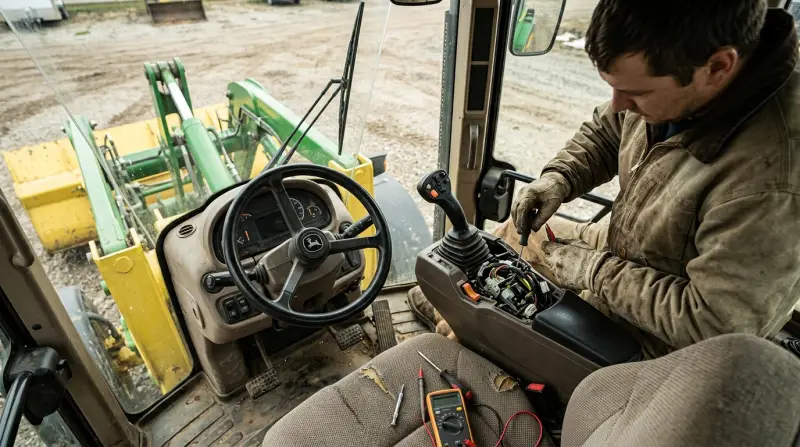
The loader joystick is a hydraulic or electronic lever that sends signals to control the loader arms and attachments. When you move the joystick, it opens and closes valves (hydraulic systems) or sends electronic commands (electro-hydraulic systems), which move the loader according to your input.
Older John Deere loaders often use cable-operated hydraulic joysticks. Newer models may have electro-hydraulic joysticks with sensors and wiring. Both types are designed for quick, accurate movement, but each has its own set of common problems.
Typical John Deere Loader Joystick Problems
John Deere loader joysticks can develop several issues over time. Here are the most common ones operators report:
1. Stiff Or Hard-to-move Joystick
When the joystick becomes stiff, it takes more force to move it. This is often caused by:
- Dry or dirty linkage: Dust and debris build up in the linkage or pivot points.
- Worn cables: Old cables may fray or rust, increasing resistance.
- Lack of lubrication: Moving parts may seize without regular oiling.
A stiff joystick makes fine control difficult and can increase operator fatigue.
2. Loose Or Sloppy Joystick
A joystick that feels loose or “floppy” may not give you precise control. Common reasons include:
- Worn bushings or pivots
- Loose mounting bolts
- Stretched cables
This can lead to poor response or unexpected loader movement.
3. Loader Not Responding To Joystick
Sometimes, you move the joystick and nothing happens. Possible causes:
- Hydraulic fluid is low or air-locked
- Broken cable or linkage
- Faulty solenoid or valve
- Electrical connection failure (for electronic joysticks)
This problem can bring your work to a halt until it’s fixed.
4. Loader Moves The Wrong Way
If pushing the joystick forward lowers the bucket instead of raising it, or left/right movements are swapped, it’s likely a:
- Reversed cable or hydraulic line
- Incorrect joystick installation
- Electrical wiring crossed
This is not just annoying—it can also be dangerous.
5. Jerky Or Unpredictable Movements
If the loader jumps, jerks, or moves unpredictably, it may be due to:
- Air in the hydraulic system
- Sticking valve
- Intermittent electrical fault
This makes the loader hard to control and can cause damage or accidents.

Credit: www.youtube.com
Quick Comparison: Cable Vs Electro-hydraulic Joystick Problems
Some joystick problems depend on the type of system your John Deere loader uses. Here’s how issues can differ:
| Problem | Cable-Operated Joystick | Electro-Hydraulic Joystick |
|---|---|---|
| Stiff movement | Common (cable wear, dirt) | Rare (unless mechanical parts jam) |
| Electrical faults | Unlikely | Common (wiring, sensor issues) |
| Simple repairs | Often possible | May need diagnostics tools |
| Cost of replacement | Lower | Higher |
Signs Your Loader Joystick Needs Attention
It’s easy to ignore small problems, but early signs of joystick trouble should never be overlooked. Here’s what to watch for:
- Increased effort when moving the joystick
- Delayed response from the loader
- Odd noises like grinding, squeaking, or clicking
- Joystick not returning to neutral position
- Loader movements that don’t match joystick direction
- Hydraulic fluid leaks under the joystick area
Catching these signs early can prevent bigger repairs later.
Diagnosing John Deere Loader Joystick Problems
Before you fix anything, you need to find the real cause of the problem. Here’s how experienced operators and technicians diagnose joystick issues:
Visual Inspection
Start by looking closely at the joystick assembly. Check for:
- Loose or damaged parts
- Frayed cables or broken connectors
- Oil leaks near hydraulic lines or valves
- Signs of rust, dust, or debris buildup
Function Test
With the engine off, move the joystick through all directions. Feel for:
- Sticking or rough spots
- Excessive looseness or play
- Clicking, grinding, or popping sounds
Start the engine, and test the loader’s response to joystick input. Note any delays, weak movement, or incorrect directions.
Hydraulic System Check
Check the hydraulic fluid level and look for bubbles (a sign of air in the system). Inspect hoses and fittings for leaks. On some models, a hydraulic pressure gauge can help check for weak or uneven pressure.
Electrical Diagnostics (for Electro-hydraulic Joysticks)
Use a multimeter to check for power at the joystick’s electrical connectors. Look for:
- Blown fuses
- Loose or corroded terminals
- Faulty sensors or solenoids
Some newer John Deere loaders have diagnostic displays or codes to help pinpoint problems.
Common Repairs And Fixes For Joystick Problems
Many joystick issues can be fixed with basic tools and a little know-how. Here are practical steps for the most common problems:
Cleaning And Lubricating
- Remove the joystick cover.
- Use compressed air to blow out dust and debris.
- Clean pivot points and linkage with a rag.
- Apply light machine oil or grease to moving parts.
This simple maintenance can solve stiffness and prevent wear.
Adjusting Or Replacing Cables
If your loader uses cables, inspect them for fraying or stretching. Replace if needed. Adjust cable tension according to your loader’s manual. Proper tension helps prevent both stiffness and sloppiness.
Tightening Bolts And Fasteners
Loose bolts on the joystick base can cause “sloppy” feel. Check all mounting hardware and tighten as needed.
Replacing Worn Bushings Or Pivots
If bushings or pivots are worn, the joystick will feel loose. Replacement kits are available for most models.
Bleeding Air From Hydraulic System
Air trapped in hydraulic lines can cause jerky movement or slow response. To bleed air:
- Top up hydraulic fluid to the correct level.
- Cycle the loader arms and bucket fully several times.
- Watch for bubbles in the reservoir and top off fluid as needed.
Fixing Electrical Issues
For electro-hydraulic joysticks:
- Replace blown fuses.
- Clean corroded connectors.
- Repair or replace damaged wires.
- Replace faulty sensors or solenoids if diagnostics show a problem.
If you’re unsure, consult a professional technician. Complex electrical issues can be tricky and may require special tools.
Preventing Joystick Problems
Regular maintenance is the best way to avoid joystick issues. Here are proven tips:
- Clean the joystick area every week, especially if working in dusty or muddy environments.
- Lubricate moving parts monthly or as recommended in your manual.
- Check hydraulic fluid level and quality regularly.
- Inspect cables, wires, and hoses for wear or leaks.
- Tighten all fasteners every few months.
Many experienced operators also recommend moving the joystick smoothly, rather than yanking or forcing it. This reduces long-term wear and tear.
Example: Loader Joystick Failure In The Field
A landscaping company using a John Deere 3046R loader experienced sudden loss of loader control. The operator noticed the joystick felt loose, and the bucket would not raise. On inspection, a cable had snapped due to rust and years of use.
The repair involved replacing the cable (about $60 in parts) and lubricating the linkage. The loader was back to work in less than an hour.
This example shows why early detection and simple maintenance can save time and money.
Credit: www.tractorbynet.com
Cost Of Joystick Repairs
Repair costs depend on the problem and the loader model. Here’s a quick breakdown:
| Repair Type | DIY Cost (USD) | Shop Cost (USD) | Time Needed |
|---|---|---|---|
| Clean & lube joystick | $0–$10 | $50–$100 | 30–60 min |
| Replace cable | $30–$100 | $120–$250 | 1–2 hrs |
| Replace bushings | $20–$60 | $80–$180 | 1 hr |
| Electrical repair | $10–$40 | $80–$300 | Varies |
| Replace joystick (complete) | $120–$600 | $200–$800 | 1–3 hrs |
Electro-hydraulic joystick repairs are typically more expensive, especially if parts must be ordered.
When To Call A Professional
While many joystick issues can be fixed at home, some signs mean it’s time to call a John Deere technician:
- Loader still won’t respond after basic checks
- Electrical problems with warning lights or error codes
- Hydraulic leaks you can’t stop or diagnose
- Joystick movements are unpredictable or unsafe
A professional will have access to specialized diagnostic tools and John Deere parts.
Non-obvious Insights For Loader Owners
- Weather can affect joystick performance. Freezing temperatures can cause cables and linkage to stiffen or stick. In hot climates, dust can build up faster, increasing wear. Protect your loader with a cover or store it indoors if possible.
- Upgrading to an improved joystick assembly is sometimes more cost-effective than repeated small repairs, especially for older models. Newer assemblies may have better sealing and smoother operation.
- Hydraulic fluid contamination (from using the wrong fluid or letting dirt enter during filling) can cause joystick and loader problems that seem unrelated. Always use recommended hydraulic oil and keep caps and fill areas clean.
Frequently Asked Questions
Why Is My John Deere Loader Joystick Hard To Move?
A hard-to-move joystick is usually caused by dirt buildup, lack of lubrication, or worn cables and linkage. Regular cleaning and oiling usually fix the problem. In some cases, you may need to replace worn parts.
Can I Use Any Hydraulic Oil In My Loader?
No. Using the wrong hydraulic oil can damage the hydraulic system and cause joystick or loader problems. Always use the oil type recommended in your loader’s manual or by John Deere.
How Do I Know If My Joystick Problem Is Electrical?
If your loader has an electro-hydraulic joystick and you notice no response, error codes, or warning lights, you may have an electrical issue. Check fuses, connectors, and wiring. If unsure, get help from a technician.
Is It Safe To Keep Using My Loader If The Joystick Is Acting Up?
No, it’s not safe. Joystick issues can lead to sudden, unpredictable loader movements. This can cause accidents or damage to your loader. Fix the problem before using the loader again.
Where Can I Find Official Repair Guides Or Parts For My John Deere Loader?
Official repair guides and parts can be found on the John Deere Parts & Service website. Always use genuine parts for best results.
A well-functioning joystick is essential for safe, efficient loader operation. By understanding common problems, how to spot them, and practical fixes, you can keep your John Deere loader running smoothly for years. Regular maintenance and early action are the keys to avoiding costly downtime.
If in doubt, don’t hesitate to consult a qualified technician—your safety and productivity depend on it.