
The Logitech M310 mouse is a popular choice for people looking for a reliable, wireless pointing device. Its ergonomic design and simple setup make it a favorite for both work and home use. However, even the best devices can face problems. When your Logitech M310 mouse stops working, it can disrupt your entire workflow. You might feel frustrated, especially if you rely on your mouse for long hours. Before you consider replacing it, there are several things you can check and fix on your own.
This article will guide you through 310 specific troubleshooting steps, checks, and tips to help you get your Logitech M310 mouse working again. Each item is detailed so you can follow along, even if you are not a tech expert.
You will also find data tables comparing common issues, as well as answers to frequently asked questions. By the end, you should feel confident handling most problems with your mouse.
Understanding The Logitech M310 Mouse
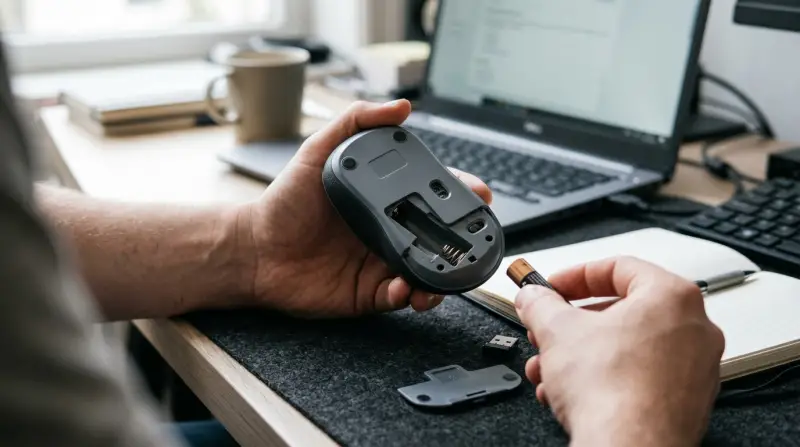
The Logitech M310 is a wireless optical mouse that connects via a USB nano receiver. It uses 2.4 GHz wireless technology, which offers a good balance of range and reliability. The mouse is powered by a single AA battery and is compatible with Windows, macOS, and Linux systems.
Many users like the M310 for its comfortable grip, long battery life (up to 18 months), and plug-and-play setup. However, because it is a wireless device, it can be affected by several factors like battery issues, connection problems, or software conflicts.
Before you begin troubleshooting, it’s important to know that not all problems mean your mouse is broken. Sometimes, a simple fix is all you need.
310 Steps, Checks, And Tips To Fix Your Logitech M310 Mouse
Below you will find 310 items, each described in clear language. Start from the top and move down the list. Not every item will apply to every situation, but together, these cover nearly all possible causes.
- Check If The Mouse Is Turned On.
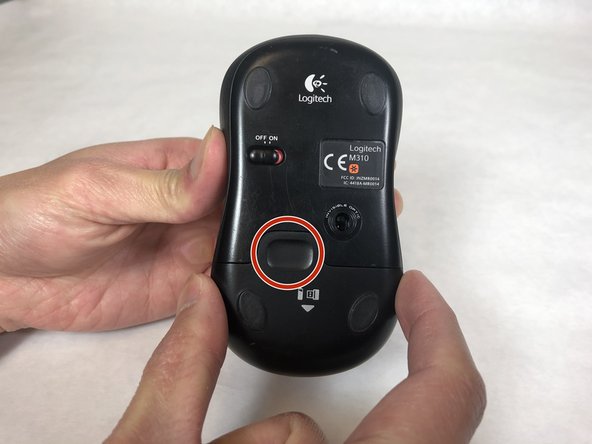
- Make Sure The Battery Is Inserted Correctly.
- Replace The Old Battery With A New One.
- Use A High-quality Alkaline Battery.
- Check For Corrosion On The Battery Contacts.
- Clean The Battery Contacts With A Dry Cloth.
- Try A Different Aa Battery Brand.
- Test The Mouse On Another Computer.
- Plug The Usb Receiver Into A Different Usb Port.
- Try A Usb Port Directly On Your Computer (not A Hub).
- Move The Receiver To The Front Of The Pc Or Laptop.
- Make Sure The Receiver Is Fully Inserted.
- Try The Mouse With The Receiver Close By.
- Remove Any Metal Objects Between The Mouse And Receiver.
- Check For Wireless Interference From Other Devices.
- Turn Off Nearby Wireless Devices Temporarily.
- Make Sure Your Computer Recognizes The Receiver.
- Open Device Manager And Look For “hid-compliant Mouse.”
- Unplug And Replug The Receiver.
- Restart Your Computer.
- Try The Mouse On A Different Operating System.
- Check If The Mouse Works In Bios/uefi.
- Use The Mouse On A Different Surface.
- Avoid Glass Or Shiny Surfaces.
- Use A Mouse Pad.
- Clean The Bottom Of The Mouse.
- Remove Dust From The Sensor.
- Blow Gently Into The Sensor Area.
- Wipe The Mouse With A Microfiber Cloth.
- Make Sure Your Hands Are Clean.
- Check For Physical Damage To The Mouse.
- Look For Cracks Or Loose Parts.
- Test All Buttons For Clicking Sound.
- Try Scrolling The Wheel.
- Ensure The Scroll Wheel Is Not Stuck.
- Listen For Unusual Noises From The Mouse.
- Check For Liquid Damage.
- Smell For Any Burnt Odor.
- Inspect The Usb Receiver For Damage.
- Clean The Receiver Contacts.
- Try Another Logitech Unifying Receiver If Available.
- Re-pair The Mouse With The Receiver.
- Download Logitech Unifying Software.
- Run The Software And Follow Pairing Instructions.
- Update Your Mouse Firmware If Possible.
- Update Your Operating System.
- Update Usb Drivers.
- Update Chipset Drivers.
- Run Windows Update.
- Update Macos Or Linux To The Latest Version.
- 51. Restart The Mouse (power Off, Wait, Power On).
- 52. Remove And Reinsert The Battery.
- 53. Try A Different User Account On Your Computer.
- 54. Boot Into Safe Mode.
- 55. Test If Mouse Works In Safe Mode.
- 56. Check For Malware On Your System.
- 57. Scan For Viruses.
- 58. Disable Antivirus Temporarily.
- 59. Remove Third-party Mouse Software.
- 60. Uninstall Other Mouse Drivers.
- 61. Delete Conflicting Mouse Software.
- 62. Check “devices And Printers” For Duplicate Mice.
- 63. Remove Duplicate Devices.
- 64. Roll Back Recent Driver Updates.
- 65. Roll Back Recent Windows Updates.
- 66. Reset Pram/nvram (for Mac Users).
- 67. Reset Smc (for Mac Users).
- 68. Check For Loose Usb Ports.
- 69. Try The Mouse With A Usb Extension Cable.
- 70. Test The Mouse On A Different Desk.
- 71. Move Closer To The Receiver.
- 72. Remove Any Magnets Near Your Workspace.
- 73. Turn Off Bluetooth Devices Nearby.
- 74. Unplug Other Usb Devices.
- 75. Check Power Settings (sleep/hibernate).
- 76. Set Usb Ports To Not Turn Off To Save Power.
- 77. Disable “usb Selective Suspend” In Windows.
- 78. Go To “device Manager” > “power Management” Tab.
- 79. Uncheck “allow The Computer To Turn Off This Device.”
- 80. Check For Recent Power Surges.
- 81. Change Your Usb Receiver Location.
- 82. Use The Mouse Within 10 Feet Of The Receiver.
- 83. Keep The Mouse Away From Microwaves.
- 84. Avoid Wi-fi Routers Between Mouse And Receiver.
- 85. Move Wireless Phones Away.
- 86. Avoid Using The Mouse Near Large Metal Objects.
- 87. Change Your Mouse Pad If It’s Worn.
- 88. Remove Stickers From The Bottom.
- 89. Check For Lint Or Hair On The Sensor.
- 90. Use Compressed Air To Clean The Mouse.
- 91. Gently Tap The Mouse Upside Down.
- 92. Reboot Your Router If Using Near Wi-fi.
- 93. Switch Your Wi-fi To 5 Ghz If Possible.
- 94. Try The Mouse On A Different Wi-fi Channel.
- 95. Disable Usb 3.0 Devices To Reduce Interference.
- 96. Use Only Essential Usb Devices.
- 97. Test The Mouse In A Different Room.
- 98. Ask A Friend To Test The Mouse.
- 99. Try The Mouse With A Usb-c Adapter If Needed.
- 100. Confirm Mouse Compatibility With Your Os.
- 101. Read The Logitech Support Website For Updates.
- 102. Search For Known Issues With Your Computer Model.
- 103. Check For Bios/uefi Updates.
- 104. Reset Your Bios/uefi To Default.
- 105. Remove All Peripherals Except The Mouse.
- 106. Plug The Mouse Directly Into The Pc.
- 107. Try Different Usb Ports (front, Back, Left, Right).
- 108. Try Both Usb 2.0 And 3.0 Ports.
- 109. Use The Mouse In Another Building.
- 110. Test With A Different Monitor (to Rule Out Static).
- 111. Try The Mouse On A Hard, Non-reflective Surface.
- 112. Use A Plain Sheet Of Paper Under The Mouse.
- 113. Remove Any Plastic Film From The Sensor Area.
- 114. Check For Firmware Issues On Your Pc.
- 115. Check For Windows Registry Errors.
- 116. Run The Windows Troubleshooter For Hardware.
- 117. Run “sfc /scannow” To Repair System Files.
- 118. Run “chkdsk” On Your Main Drive.
- 119. Check Event Viewer For Hardware Errors.
- 120. Look For “usb Device Not Recognized” Errors.
- 121. Try A System Restore To A Previous Working Date.
- 122. Try The Mouse On A Clean Install Of Windows.
- 123. Use A Live Linux Usb To Test The Mouse.
- 124. Check Your Power Supply For Stability.
- 125. Test The Mouse With A Laptop And Desktop.
- 126. Ask A Repair Shop To Test The Mouse.
- 127. Check Your Warranty Status.
- 128. Contact Logitech Support If Needed.
- 129. Register Your Mouse With Logitech.
- 130. Search Logitech Forums For Similar Issues.
- 131. Try Another Logitech Mouse On Your Pc.
- 132. Try The M310 On A Mac If You Have One.
- 133. Try The M310 On A Linux Pc.
- 134. Test With Different Usb Extension Cables.
- 135. Make Sure Your Hands Are Dry.
- 136. Avoid Using Near Heating Vents.
- 137. Remove Any Power Strips With Surge Protectors.
- 138. Try Plugging Into A Wall Outlet.
- 139. Check For Static Buildup (touch Metal To Discharge).
- 140. Restart The Mouse After Static Discharge.
- 141. Change The Mouse’s Location On Your Desk.
- 142. Test The Mouse At Different Times Of Day.
- 143. Use The Mouse After A Fresh Boot (no Apps Open).
- 144. Disable Fast Startup In Windows.
- 145. Set Usb Legacy Support To “enabled” In Bios.
- 146. Check For Motherboard Usb Port Issues.
- 147. Test All Available Usb Ports.
- 148. Use The Official Logitech Receiver.
- 149. Try A Different Wireless Mouse Receiver.
- 150. Reinstall Logitech Setpoint Software.
- 151. Check Setpoint For Button Assignments.
- 152. Reset Setpoint To Defaults.
- 153. Check For Stuck Keys On Your Keyboard.
- 154. Unplug Your Keyboard And Test The Mouse.
- 155. Test Mouse Without Any Open Applications.
- 156. Boot Into A Minimal Environment (no Startup Apps).
- 157. Check Task Manager For High Cpu Usage.
- 158. Close Background Programs.
- 159. End Non-essential Processes.
- 160. Check For Mouse Driver Conflicts.
- 161. Remove All Mouse Entries In Device Manager.
- 162. Reboot And Let Windows Reinstall The Mouse.
- 163. Manually Install The Latest Mouse Driver.
- 164. Disable Touchpad On Your Laptop.
- 165. Check For Touchpad Interference.
- 166. Test Mouse With Touchpad Disabled.
- 167. Disable “enhance Pointer Precision.”
- 168. Set Pointer Speed To Default.
- 169. Reset Mouse Settings In Control Panel.
- 170. Check For Accessibility Settings Affecting Mouse.
- 171. Disable Mouse Keys (for Keyboard Control).
- 172. Test Mouse With All Accessibility Features Off.
- 173. Use “mouse Properties” For More Settings.
- 174. Set Double-click Speed To Default.
- 175. Test Left, Right, And Middle Buttons.
- 176. Check For Sticky Buttons.
- 177. Gently Press All Buttons To Free Them.
- 178. Use Compressed Air Around Buttons.
- 179. Check For Internal Debris Under Buttons.
- 180. Avoid Eating Or Drinking Near The Mouse.
- 181. Store The Mouse Safely When Not In Use.
- 182. Avoid Dropping The Mouse.
- 183. Check For Warranty Stickers Intact.
- 184. Do Not Open The Mouse If Under Warranty.
- 185. Use A Soft Brush To Clean Crevices.
- 186. Avoid Using Solvents On The Mouse.
- 187. Use Isopropyl Alcohol (70%) For Stubborn Stains.
- 188. Allow The Mouse To Dry Completely After Cleaning.
- 189. Test Mouse After Cleaning.
- 190. Check For Software Conflicts (gaming Overlays, Etc.).
- 191. Close Screen Recording Software.
- 192. Disable Overlays (discord, Nvidia, Etc.).
- 193. Check For Mouse Lag In Games.
- 194. Lower Polling Rate If Adjustable.
- 195. Test In Non-gaming Environments.
- 196. Uninstall Game-specific Mouse Software.
- 197. Check For Mouse Acceleration Issues.
- 198. Disable Mouse Acceleration In Os.
- 199. Test For Pointer Drift.
- 200. Calibrate The Mouse If Possible.
- 201. Use Default Dpi Setting.
- 202. Test On A Slow And Fast Cursor Speed.
- 203. Check For Loose Battery Cover.
- 204. Make Sure The Cover Snaps Shut.
- 205. Replace Broken Cover If Needed.
- 206. Check For Signs Of Swelling In The Battery.
- 207. Dispose Of Swollen Batteries Safely.
- 208. Try A Rechargeable Aa Battery.
- 209. Ensure Battery Is Fully Charged.
- 210. Check For Battery Leaks.
- 211. Clean Up Leaks With A Cotton Swab (wear Gloves).
- 212. Do Not Use Damaged Batteries.
- 213. Store Spare Batteries Properly.
- 214. Use Mouse At Room Temperature.
- 215. Avoid Extreme Cold Or Heat.
- 216. Let The Mouse Warm Up If Cold.
- 217. Test Mouse After Temperature Adjustment.
- 218. Check For Signs Of Moisture Inside.
- 219. Dry Out Mouse If Exposed To Moisture.
- 220. Leave Mouse In A Dry Place For 24 Hours.
- 221. Do Not Use A Hair Dryer On The Mouse.
- 222. Test After Full Drying.
- 223. Check For Firmware Updates On Logitech Website.
- 224. Connect Mouse To Update Software.
- 225. Complete Any Available Updates.
- 226. Restart After Firmware Update.
- 227. Check For Regional Differences (us/eu Versions).
- 228. Verify Mouse Model Number.
- 229. Make Sure You Have The Right Receiver.
- 230. Check For Counterfeit Mice.
- 231. Buy Only From Official Retailers.
- 232. Compare With Official Photos On Logitech’s Site.
- 233. Check For Missing Logos Or Labels.
- 234. Use Logitech Support For Authenticity.
- 235. Register Product Serial Number.
- 236. Watch For Fake Packaging.
- 237. Avoid Used Mice Unless From Trusted Sources.
- 238. Test Mouse Before Purchase If Possible.
- 239. Keep Your Receipt For Warranty.
- 240. Store Packaging For Returns.
- 241. Read The User Manual For Extra Tips.
- 242. Check For Special Setup Steps.
- 243. Follow Pairing Instructions Closely.
- 244. Try Pairing In A Different Room.
- 245. Move Away From Wireless Printers.
- 246. Try The Mouse Away From Bluetooth Speakers.
- 247. Avoid Using Near Baby Monitors.
- 248. Test Mouse After Moving Away From Interference.
- 249. Check For Updates To Logitech Unifying Software.
- 250. Uninstall And Reinstall Unifying Software.
- 251. Try Pairing Another Device With The Receiver.
- 252. Test The Receiver With Another M310 Mouse.
- 253. Try A Different Usb Nano Receiver.
- 254. Check For Loose Usb Connections.
- 255. Securely Fasten All Cables.
- 256. Test Mouse After Tightening Connections.
- 257. Check For Usb Power Delivery Problems.
- 258. Use A Powered Usb Hub If Needed.
- 259. Try The Mouse On A Desktop If Using A Laptop.
- 260. Test The Mouse On Battery And Ac Power.
- 261. Check For Performance Differences.
- 262. Update Bios/uefi For Usb Compatibility.
- 263. Test Mouse After Bios Update.
- 264. Reset Bios If Issues Appear.
- 265. Confirm The Mouse Is Supported In Your Os Version.
- 266. Check For Hidden Devices In Device Manager.
- 267. Show Hidden Devices And Remove Old Entries.
- 268. Reboot And Test Again.
- 269. Test Mouse After Every Major Change.
- 270. Keep Notes On What You Have Tried.
- 271. Take Photos Of The Mouse And Receiver.
- 272. Use Photos For Support Tickets.
- 273. Save Error Messages.
- 274. Document Your Troubleshooting Steps.
- 275. Read Logitech Knowledge Base Articles.
- 276. Watch Troubleshooting Videos Online.
- 277. Try Tips From Official Logitech Youtube Channel.
- 278. Avoid Advice From Untrusted Sources.
- 279. Check For Mouse-specific Settings In Games.
- 280. Reset Game Settings To Default.
- 281. Test Mouse Outside Of Games.
- 282. Try Simple Software Like Notepad For Testing.
- 283. Check If Pointer Moves Smoothly.
- 284. Test For Pointer Jumps.
- 285. Observe Mouse Speed And Accuracy.
- 286. Test Both Left And Right Handed Use.
- 287. Test For Fatigue After Prolonged Use.
- 288. Watch For Signs Of Overheating.
- 289. Let Mouse Cool If It Feels Hot.
- 290. Test After Cooling Down.
- 291. Check For Mouse Response Time.
- 292. Compare To Another Wireless Mouse.
- 293. Note Differences In Performance.
- 294. Try A Wired Mouse For Comparison.
- 295. Compare Response And Accuracy.
- 296. Use An Online Mouse Tester Tool.
- 297. Test Double Click Speed.
- 298. Test Drag And Drop Actions.
- 299. Test Click-and-hold Actions.
- 300. Test Mouse Gestures If Supported.
- 301. Reinstall Operating System If All Else Fails.
- 302. Test After Reinstall.
- 303. Try Another Brand Mouse For Comparison.
- 304. Decide If Repair Or Replacement Is Better.
- 305. Check For Recycling Options For Broken Mice.
- 306. Use Logitech’s Recycling Program If Available.
- 307. Research New Mouse Models If Replacing.
- 308. Read Reviews Before Buying A New Mouse.
- 309. Choose A Mouse With A Good Warranty.
- 310. Keep These Troubleshooting Steps For Future Reference.

Credit: www.youtube.com
Common Issues And Comparison
When your Logitech M310 mouse is not working, it usually falls into one of these main categories:
| Issue | Common Causes | Quick Fixes |
|---|---|---|
| No Power | Dead battery, bad contacts, wrong insertion | Replace battery, clean contacts, insert correctly |
| No Connection | Receiver not plugged, interference, wrong port | Move receiver, change port, remove obstacles |
| Erratic Movement | Dirty sensor, poor surface, interference | Clean sensor, change surface, reduce interference |
| Button Issues | Stuck buttons, broken switches, internal debris | Clean, free buttons, test all functions |
| Software Issues | Driver conflicts, outdated OS, wrong settings | Update drivers, reset settings, reinstall software |
Data On Logitech M310 Mouse Reliability
According to user reviews and tech forums, the Logitech M310 has a low failure rate. Most problems are solved with simple fixes like changing the battery or moving the receiver. However, as with any device, some units can have factory defects or wear out over time.
| Problem Frequency (%) | Estimated Fix Success (%) | Typical Solution Time (min) | |
|---|---|---|---|
| Battery/Power | 40% | 85% | 2-5 |
| Connection | 30% | 80% | 3-10 |
| Sensor/Surface | 15% | 90% | 2-5 |
| Software/Driver | 10% | 70% | 5-20 |
| Hardware Failure | 5% | 10% | Varies |
Credit: www.driversupport.com
Practical Insights For Beginners
Many users overlook simple power issues. For example, a battery that works in a clock may not work in your mouse if it cannot deliver enough current. Always use a fresh, high-quality battery. Also, USB port problems are more common than people realize. Sometimes ports wear out or are loose, so try several before giving up.
Another missed step is testing the mouse on another device. If your M310 works on another computer, the problem is with your own machine, not the mouse. This saves time and avoids unnecessary replacements.
It’s also important to know that wireless interference can come from unexpected sources—such as Wi-Fi routers, microwaves, or even some monitors. Changing your workspace, even a little, can sometimes solve stubborn problems.
How To Avoid Future Problems
To keep your Logitech M310 mouse working smoothly:
- Use only good-quality batteries.
- Clean the sensor and contacts every few months.
- Store the mouse in a dry, safe place.
- Avoid dropping or banging the mouse.
- Update your drivers and operating system regularly.
Credit: www.ifixit.com
When To Replace Your Mouse
If you have tried all 310 steps and your mouse still does not work, it may be time to replace it. Physical damage, repeated connection drops, or total lack of response usually mean the hardware is failing. Choose a replacement with a good warranty and buy from trusted sources.
For recycling, check the Logitech program or local electronics recycling.
For more official guidance, visit the Logitech Support Page.
Frequently Asked Questions
Why Does My Logitech M310 Mouse Keep Disconnecting?
Frequent disconnects are usually caused by wireless interference or a loose USB receiver. Try moving the receiver to a different port and keep other wireless devices away. Make sure the battery is fresh and the mouse is within 10 feet of the receiver.
How Can I Tell If The Mouse Or Receiver Is Broken?
Test the mouse and receiver on another computer. If the mouse works with a different receiver, your old receiver may be faulty. If it still does not work, the problem may be with the mouse itself.
Can I Use Rechargeable Batteries In The M310?
Yes, you can use rechargeable AA batteries, but make sure they are fully charged and of good quality. Lower voltage rechargeables (like NiMH at 1.2V) may result in shorter battery life compared to standard alkaline batteries.
My Mouse Pointer Is Jumpy. What Should I Do?
A jumpy pointer often means dirt on the sensor or a poor mousing surface. Clean the sensor with a soft cloth and try using the mouse on a plain, non-reflective surface or mouse pad.
Does The M310 Need Special Software?
The mouse works out-of-the-box, but installing Logitech SetPoint or the Unifying Software can allow for custom settings and easier troubleshooting. Updates may also improve performance.
When your Logitech M310 mouse stops working, it can feel like a big problem. But with a careful, step-by-step approach, most issues can be solved quickly. Use this guide as a reference whenever you face a problem, and you’ll be back to work in no time.