
A washing machine is one of the most useful appliances in any home. It saves time, energy, and keeps clothes looking clean and fresh. But when something goes wrong, like the agitator not working, laundry becomes a real challenge. The agitator is the central piece inside many top-loading washing machines. It moves clothes around, helping detergent reach every fiber. When it stops spinning or moving, your machine cannot clean clothes properly.
If your washing machine agitator is not working, you may notice clothes come out still dirty, tangled, or not rinsed well. You might hear the motor running, but the agitator stays still. This is a common problem, but fixing it can be simple if you know what to look for.
In this article, you will learn what causes an agitator to fail, how to diagnose the issue, and practical steps to fix it. We will cover both mechanical and electronic problems, offer easy-to-follow advice, and help you avoid costly repairs.
Whether you are a beginner or have some experience with appliances, you will find clear guidance to get your washer back in action.
What Is A Washing Machine Agitator?
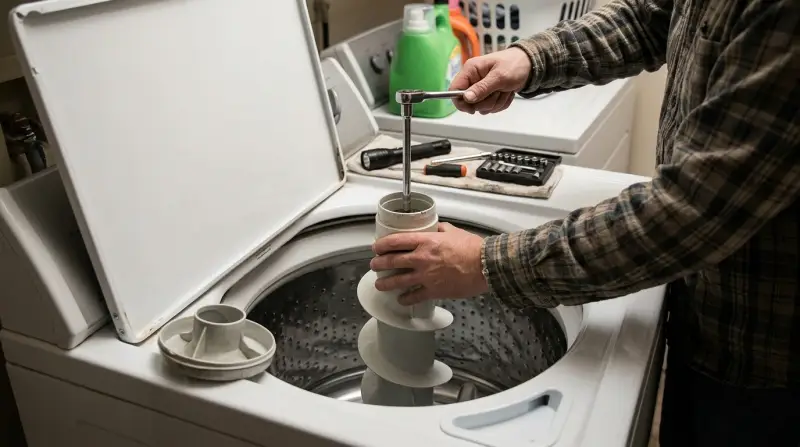
The agitator is a tall spindle with fins or vanes located in the center of many top-loading washing machines. Its main purpose is to twist and move clothes during the wash cycle. This action helps remove dirt, stains, and distributes detergent evenly. Without a working agitator, washing performance drops sharply.
Some newer washing machines use impellers instead of agitators. Impellers are low-profile disks that create motion by spinning water. However, most traditional machines still use agitators because they are effective for heavy loads and deep cleaning.
Key Functions Of The Agitator
- Moves clothes to prevent tangling and ensure all items are cleaned.
- Mixes water and detergent for even distribution.
- Helps remove tough stains by rubbing clothes together.
If the agitator stops working, your washer may sound normal but fail to clean clothes. This is a sign you need to check for underlying problems.
Common Causes Of Agitator Failure
Understanding why your washing machine agitator is not working helps you fix the issue faster. Here are the most frequent causes:
Worn Or Broken Agitator Dogs
Agitator dogs are small plastic parts that allow the agitator to move in one direction. When these wear out, the agitator will not spin correctly.
Loose Or Damaged Drive Belt
The drive belt connects the motor to the agitator. If it slips, breaks, or stretches, the agitator will not move.
Faulty Motor Coupling
This part links the motor to the transmission. If it cracks or breaks, the agitator will stop working.
Malfunctioning Lid Switch
The lid switch signals the machine to start the cycle. If the switch fails, the machine may run, but the agitator will not move.
Broken Transmission Or Gear Case
The transmission sends power to the agitator. If it fails, you may hear noise but see no movement.
Electrical Or Control Board Issues
Modern washers use electronic controls. If the board malfunctions, it can stop the agitator from working.
Obstructed Agitator
Sometimes, small items like coins or socks get stuck under the agitator, blocking its movement.
Example: Agitator Dog Failure
A 2022 survey by appliance repair experts showed that agitator dog failure is the most common reason for agitator issues, making up about 38% of service calls for top-loading washers.
Diagnosing The Problem
Before fixing your washer, you need to know exactly what is wrong. Here are steps to diagnose a washing machine agitator not working:
- Listen For Noises: If you hear the motor running but the agitator does not move, likely the problem is mechanical.
- Check For Spinning: Open the lid and see if the agitator spins during the wash cycle. If not, proceed to check parts.
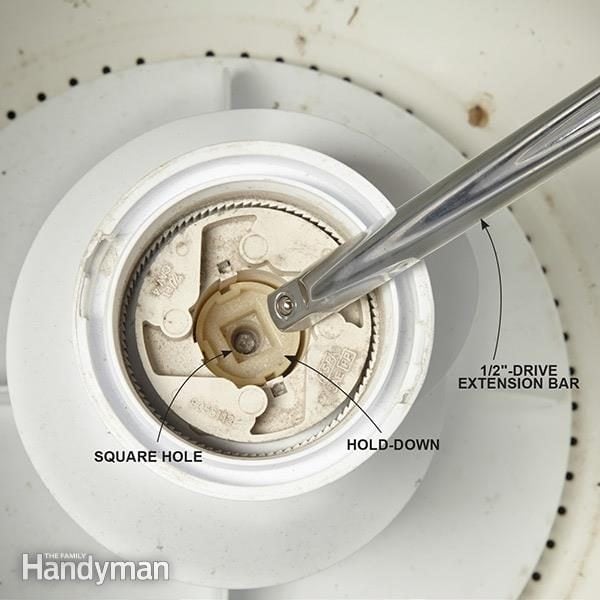
- Inspect The Agitator Dogs: Remove the fabric softener dispenser and the agitator cap. Check if the dogs are worn or broken.
- Check The Drive Belt: Unplug the washer and remove the back panel. Look for a loose, broken, or worn belt.
- Test The Lid Switch: Press the lid switch manually while running a cycle. If nothing happens, the switch may be faulty.
- Look For Obstructions: Remove the agitator and check for foreign objects underneath.
- Check The Motor Coupling: If the washer fills and drains but does not agitate, inspect the coupling between the motor and transmission.
Diagnostic Data Table
Here is a comparison of symptoms and possible causes:
| Symptom | Possible Cause | Repair Difficulty |
|---|---|---|
| Agitator does not move | Agitator dogs, drive belt, motor coupling | Easy to Moderate |
| Agitator moves slowly | Worn belt, partial obstruction | Easy |
| No noise, no movement | Electrical issue, lid switch | Moderate |
| Loud banging | Transmission, gear case | Difficult |
How To Fix A Washing Machine Agitator
Once you know the cause, you can fix the problem yourself or call a technician. Here are step-by-step instructions for common repairs.
Replacing Agitator Dogs
- Unplug the washer for safety.
- Remove the agitator cap and fabric softener dispenser.
- Unscrew the agitator bolt and pull out the agitator.
- Separate the agitator parts to access the dogs.
- Replace worn dogs with new ones (available online or at stores).
- Reassemble the agitator and screw it back in.
- Test the washer on a short cycle.
Fixing A Drive Belt
- Disconnect power and move the washer away from the wall.
- Remove the back panel to access the belt.
- Inspect the belt for damage or wear.
- Replace the belt if needed, following the manufacturer’s instructions.
- Reattach the panel and plug the washer back in.
- Run a test cycle to check if the agitator works.
Repairing The Lid Switch
- Open the top panel or control console to reach the lid switch.
- Test the switch using a multimeter for continuity.
- Replace the switch if it is faulty.
- Reconnect wires and close the panel.
- Try a wash cycle with the lid closed.
Clearing Obstructions
- Remove the agitator as described above.
- Check for objects like coins, buttons, or socks.
- Clean underneath and around the agitator.
- Reinstall the agitator and test the machine.
When To Call A Professional
If the issue is with the transmission, gear case, or control board, fixing it can be complex and expensive. These repairs usually require professional tools and skills. In such cases, call an appliance technician to avoid further damage.

Cost Comparison: Diy Vs. Professional Repair
Understanding the cost can help you decide whether to fix the washer yourself or hire someone.
| Repair Type | DIY Cost | Professional Cost | Time Required |
|---|---|---|---|
| Agitator dogs | $10-$20 | $75-$150 | 30-60 minutes |
| Drive belt | $15-$30 | $100-$180 | 45-90 minutes |
| Lid switch | $20-$40 | $120-$200 | 30-60 minutes |
| Transmission/gear case | N/A | $250-$400 | 2-4 hours |
Repairing small parts is affordable and quick. But major repairs can cost almost as much as buying a new washer.
Preventing Agitator Problems
Regular maintenance keeps your washer running smoothly and reduces the risk of agitator failure.
- Clean the agitator every few months to remove lint and debris.
- Avoid overloading the washer. Too many clothes strain the agitator.
- Use the right detergent. High-efficiency detergents prevent buildup.
- Check for foreign objects before each wash.
- Inspect parts like belts and switches during cleaning.
Non-obvious Insight: Overloading Is A Major Cause
Many users think washers can handle any load size. In reality, overloading is one of the main reasons agitator dogs and belts wear out quickly. Keeping loads within the recommended size helps the agitator last longer.
Non-obvious Insight: Detergent Build-up
Using too much detergent creates a sticky layer on the agitator and other parts. This not only reduces cleaning power but can also cause the agitator to seize up. Always follow the detergent instructions for your machine.
When To Replace Your Washing Machine
Sometimes, fixing the agitator is not enough. If your washer is over 10 years old, breaks often, or needs expensive repairs, it may be time to replace it. Newer machines are more energy-efficient and have fewer mechanical parts that can fail.
Data Table: Washer Lifespan
| Washer Type | Average Lifespan | Common Issues |
|---|---|---|
| Top-loading (agitator) | 10-12 years | Agitator dogs, belt, lid switch |
| Top-loading (impeller) | 12-15 years | Motor, control board |
| Front-loading | 11-14 years | Door seal, drain pump |
If your washer is near the end of its lifespan, replacing it can save money and reduce hassle in the long run.

Frequently Asked Questions
Why Is My Washing Machine Agitator Not Moving But The Drum Spins?
The agitator moves clothes during the wash cycle, while the drum spins during the spin cycle. If the agitator does not move but the drum spins, likely the agitator dogs, drive belt, or motor coupling are worn out. Check these parts first.
Can I Use My Washer If The Agitator Is Not Working?
You can use the washer, but clothes will not be cleaned properly. The agitator is essential for removing stains and dirt. Running the machine without fixing the agitator can also cause more damage.
How Do I Know If My Agitator Dogs Are Broken?
If you notice the agitator spinning freely or not moving at all during the wash, agitator dogs may be broken. Remove the agitator cap and inspect the small plastic pieces for wear or damage.
Is It Expensive To Fix A Washing Machine Agitator?
Fixing agitator dogs or belts is affordable, usually under $30 if you do it yourself. Professional repairs cost more, often $100-$200. Major repairs like transmission replacement are expensive and may not be worth it.
Should I Replace My Washer Or Repair The Agitator?
If your washer is less than 10 years old and the problem is minor, repair is usually best. If the machine is old or needs costly repairs, replacement may be smarter. New washers are more efficient and reliable.
When your washing machine agitator is not working, diagnosing and fixing the problem is often simple and affordable. Regular maintenance, correct use, and quick repairs can keep your washer running for years. If the issue is too complex, don’t hesitate to call a professional or consider a replacement. For more detailed appliance repair information, visit Consumer Reports. With the right steps, you can restore your washer’s cleaning power and enjoy fresh, clean laundry again.
1 thought on “Washing Machine Agitator Not Working? Quick Fixes and Tips”