
If you’ve ever used a Whirlpool dryer and seen the F1 code suddenly flash on the control panel, you know how frustrating it can be. Your dryer stops working, laundry piles up, and you’re left wondering what went wrong. The F1 code is more than just an error message—it’s a signal that your dryer needs attention, and sometimes, quick action. Understanding what causes this code and how to fix it can save you money, time, and a lot of stress.
This article explains the F1 code, why it happens, and what you can do about it. Whether you’re a DIY enthusiast or just want to know if you need a professional, you’ll find clear steps and expert guidance here. We’ll also cover common mistakes, practical tips, and answer the questions most people ask when faced with the F1 code on their Whirlpool dryer.
What Does The F1 Code Mean On A Whirlpool Dryer?
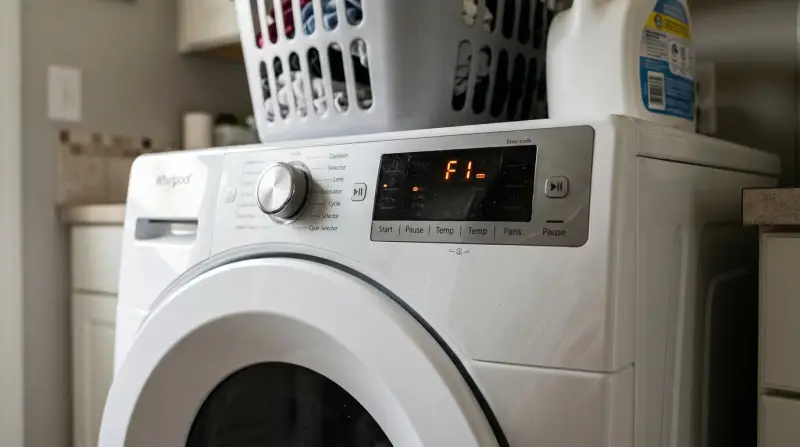
The F1 code on a Whirlpool dryer usually points to a problem with the machine’s main control board. This electronic part acts like the dryer’s brain, controlling the cycles, temperature, and safety features. When the control board fails or detects a serious electrical problem, it tells you by showing F1.
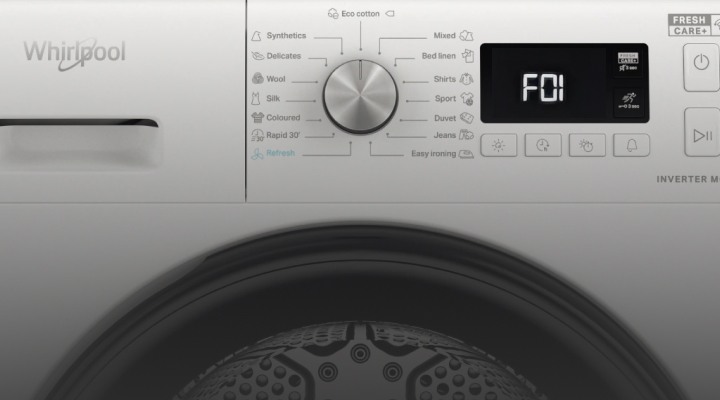
However, not all F1 codes mean the same thing. Some models of Whirlpool dryers use F1 for different faults, but the most common reason is control board failure or a related wiring issue. This is why simply resetting the dryer rarely solves the problem for long.
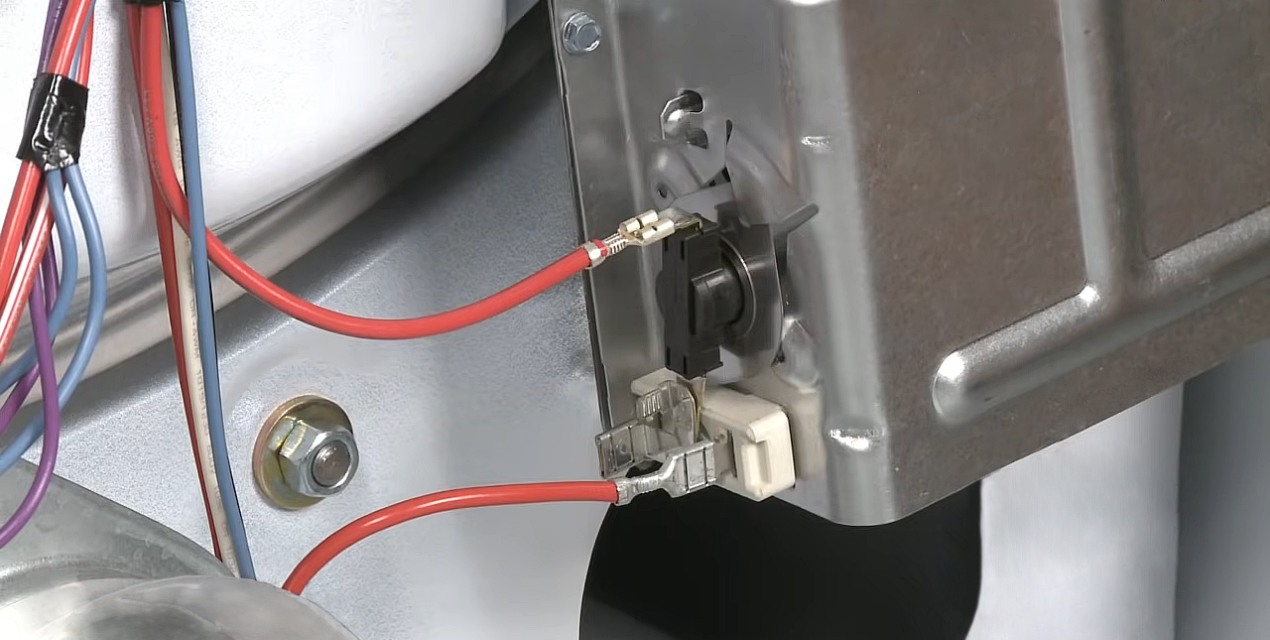
A less common cause is a short or fault in the wiring between the control board and other parts, like the thermistor or the heating element.
Why Control Board Problems Are So Serious
When the control board fails, it can cause:
- Sudden stops during a cycle
- Dryer not starting at all
- Unpredictable heat or timer issues
If left unfixed, other dryer parts can also get damaged. That’s why it’s important to address the F1 code quickly, not just keep restarting the machine.
Main Causes Of The Whirlpool Dryer F1 Code
Several issues can trigger the F1 code. Understanding these helps you diagnose the problem and avoid wasting money on unnecessary repairs.
| Main Cause | How it Triggers F1 | How Common? |
|---|---|---|
| Control Board Failure | Electrical failure or burned-out component | Very common |
| Loose or Damaged Wiring | Poor connections send wrong signals to the board | Common |
| Sensor Failure (e.g., Thermistor) | Sensor sends out-of-range values | Less common |
| Power Surges | Sudden spikes damage the board | Occasional |
Non-obvious Insight: Small Power Surges Add Up
Many people don’t realize that even small, repeated power surges (not just big lightning strikes) can damage the control board over time. Using a surge protector for your dryer can help prevent future F1 errors.
Non-obvious Insight: Moisture Can Cause Hidden Faults
If your laundry area is damp or the dryer vent is leaking, moisture can get into the control board or wiring, leading to intermittent F1 errors. Always check for signs of water or condensation.
How To Troubleshoot And Fix The Whirlpool Dryer F1 Code
You don’t always need to call a technician immediately. With some basic tools and safety steps, you can often find out what’s wrong.
Step 1: Unplug And Wait
First, unplug the dryer from the wall. Wait at least five minutes, then plug it back in. Sometimes, the F1 code is a temporary glitch in the board’s memory. If the code returns, continue troubleshooting.
Step 2: Check For Obvious Wiring Problems
Open the back panel (always unplug the dryer first). Look for:
- Burned wires
- Loose connectors
- Signs of moisture or corrosion
If you find a loose connector, gently push it back into place. Clean off any corrosion with a dry cloth—never use water inside the dryer.
Step 3: Test The Thermistor
A faulty thermistor (a small sensor that checks air temperature) can sometimes cause an F1 code. It’s usually located near the blower housing.
To test:
- Disconnect the thermistor.
- Use a multimeter to check resistance (should be 10,000 ohms at room temperature).
- If the reading is far off, replace the thermistor.
Step 4: Inspect The Main Control Board
The control board is usually behind the top or rear panel. Look for:
- Burn marks
- Swollen or leaking capacitors
- Broken traces on the circuit board
If you see any of these, the board probably needs replacing.
Step 5: Replace The Control Board (if Needed)
If you confirm the control board is bad, order the correct part using your dryer’s model number. Replacing the board is a medium-level DIY job:
- Unplug the dryer.
- Remove the old board by unscrewing it and disconnecting the wires.
- Install the new board, matching wire colors and connectors.
- Reassemble and test.
If you’re not comfortable, call a professional. Incorrect installation can cause further damage.
Step 6: Check For Power Problems
If the control board fails again soon after replacement, your home’s electrical supply could be unstable. Have an electrician check for:
- Voltage spikes
- Poor grounding
- Shared circuits with high-power appliances
Solving these issues prevents another F1 code in the future.
Repair Costs: Diy Vs Professional
The cost to fix an F1 code depends on the exact cause and whether you do it yourself or hire a pro.
| Repair Type | Estimated Cost (Parts) | Estimated Cost (Labor) | Typical Total |
|---|---|---|---|
| Replace Thermistor | $15–$40 | $60–$100 | $75–$140 |
| Replace Control Board | $120–$300 | $100–$200 | $220–$500 |
| Fix Wiring | $0–$20 | $60–$120 | $60–$140 |
DIY repairs can save money, but always consider your skill level. A mistake with wiring or control boards can lead to more expensive problems.
Credit: appliancerepairexpert.ca
When To Call A Professional
Some F1 code repairs are simple, but others are best left to an expert. Call a technician if:
- You see or smell burning near the control board
- You’re not sure how to safely use a multimeter
- The F1 code returns after a new control board
- The dryer is still under warranty
A professional can often diagnose the problem faster and spot hidden faults. They also know how to safely handle electrical repairs.
Preventing The F1 Code In The Future
Prevention is often easier and cheaper than repair. Here are practical ways to reduce the risk of seeing the F1 code again:
- Use a surge protector: Even small surges can damage sensitive electronics.
- Keep the dryer area dry: Fix leaks and check for condensation.
- Have the dryer serviced regularly: A technician can spot early signs of board or wiring problems.
- Don’t overload the dryer: Too-heavy loads can stress sensors and circuits.
- Check and clean vents: Clogged vents make the dryer overheat, increasing risk of faults.
Real-world Example
One family in Florida saw repeated F1 codes after heavy storms. After installing a surge protector and fixing a leaking vent, the problem disappeared. Small changes can make a big difference.
Credit: appliancerepairexpert.ca
Whirlpool Dryer Models Most Affected By F1 Code
Some Whirlpool dryer models are more likely to show the F1 code due to the type of control board used. If you own one of these, be extra watchful.
| Model Series | Years Produced | Notes |
|---|---|---|
| Duet (GHW, WED) | 2005–2015 | Known for sensitive boards |
| Cabrio | 2008–2016 | Frequent F1/F01 errors |
| Sport | 2006–2012 | Less common, but possible |
If your dryer is from one of these series and is over 8 years old, consider preventive replacement of the control board or extra surge protection.
Common Mistakes When Dealing With The F1 Code
Some users accidentally make things worse. Avoid these errors:
- Ignoring the code: Running the dryer with an F1 code can damage other parts.
- Resetting without fixing: Resetting the power rarely solves the real problem.
- Using wrong parts: Always use parts that match your model and serial number.
- Skipping safety steps: Always unplug the dryer before opening panels or touching wiring.
Is It Worth Repairing Or Should You Replace The Dryer?
For dryers under 10 years old, fixing the F1 error is usually worth it. Control board replacement is cheaper than buying a new dryer. However, if your machine is older, or has other problems (like a failing motor or drum), replacement might make more sense.
If the repair cost is more than half the price of a new dryer, consider replacing.
Where To Find Parts And Support
Genuine Whirlpool parts can be found through:
- Whirlpool’s official website
- Authorized appliance parts stores
- Large online retailers
Always check the model and serial number before ordering. For detailed instructions and support, Whirlpool’s own support pages and community forums can be helpful.
For official documentation, visit the Whirlpool Manuals and Literature page.

Credit: www.youtube.com
Frequently Asked Questions
Why Does My Whirlpool Dryer Keep Showing The F1 Code After I Reset It?
The F1 code usually returns because the underlying problem, often a bad control board or sensor, hasn’t been fixed. Resetting may clear the code for a short time, but unless you repair or replace the faulty part, the error will come back.
Can I Still Use My Dryer With The F1 Code Showing?
It’s not safe to keep using the dryer with the F1 code. The machine may start but can stop suddenly, or heat incorrectly, which is a fire risk. Always fix the problem before using the dryer again.
Is Replacing The Control Board Difficult?
Replacing the control board is a moderate DIY job. If you’re comfortable using basic tools and following instructions, you can do it. But if you’re unsure, it’s safer to hire a professional.
Will A Surge Protector Really Prevent The F1 Code?
Yes, a surge protector can help. It protects the sensitive control board from power spikes that often cause F1 errors. Choose a surge protector rated for appliances.
How Do I Know Which Part Is Causing The F1 Code?
Start by checking wiring and sensors like the thermistor. If these test fine, the control board is likely the problem. If you’re not confident, a technician can test each part and pinpoint the fault.
A Whirlpool dryer’s F1 code can be annoying, but it’s not the end of your machine. With some basic checks and careful steps, you can often diagnose and fix the problem yourself. If you choose to call a professional, knowing what causes the F1 code helps you understand the repair process and avoid unnecessary costs.
Regular maintenance and surge protection keep your dryer running smoothly and prevent future headaches. Taking action now means less downtime, lower repair bills, and peace of mind every laundry day.