
When you open your refrigerator and find your food is warm, but the compressor is still humming, it can be confusing and stressful. Many people think if the fridge compressor is running, the appliance should work fine. However, this is not always true. Understanding why a fridge compressor runs but the refrigerator is not cooling is important for quick troubleshooting and preventing food spoilage. If you act early, you can sometimes avoid expensive repairs or replacements.
How A Fridge Compressor Works
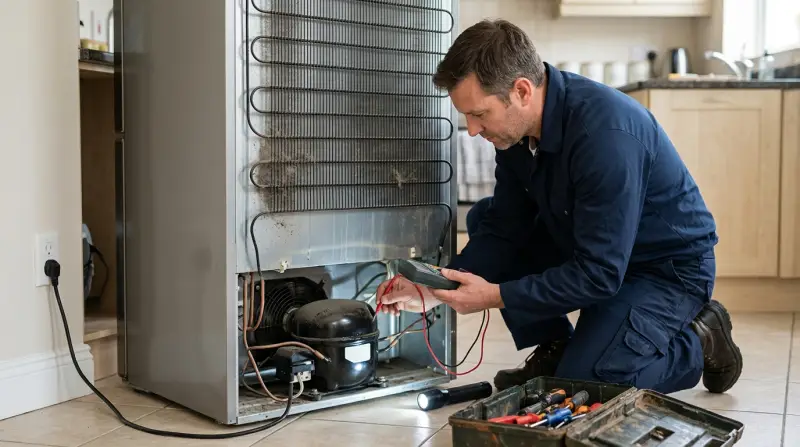
A refrigerator compressor is like the heart of your fridge. Its main job is to pump refrigerant through the system, which absorbs heat from inside the fridge and releases it outside. When the compressor runs, it creates the pressure and flow needed for the cooling process to work.
Here’s a simplified step-by-step of how cooling usually happens:
- Compressor compresses the refrigerant gas, making it hot and high-pressure.
- Condenser coils (outside the fridge) let the hot refrigerant cool and become liquid.
- Expansion valve releases the pressure, cooling the refrigerant even more.
- Evaporator coils (inside the fridge) let the cold refrigerant absorb heat from inside the fridge, making the air cool.
- The refrigerant returns to the compressor, and the cycle repeats.
If the compressor is running but the fridge is not cooling, something in this process is not working correctly.
Common Reasons Why The Compressor Runs But Fridge Does Not Cool
Several issues can cause this problem. Some are easy to fix, while others need a professional.
1. Dirty Condenser Coils
Condenser coils are usually at the back or underneath the fridge. They release heat absorbed from inside the fridge. If these coils are covered with dust or pet hair, they can’t release heat properly. The compressor keeps running, but the fridge stays warm.
How to check:
- Unplug the fridge.
- Look for coils and check for dust buildup.
- Clean them gently with a brush or vacuum.
2. Faulty Evaporator Fan Motor
The evaporator fan moves cold air from the coils into the fridge and freezer. If this fan stops working, the compressor can run all day, but no cold air reaches your food.
Signs of a bad fan:
- Fridge is warm, freezer may be cold.
- You hear a noisy or silent fan in the freezer.
3. Defrost System Problems
Modern fridges have a defrost system to melt any ice that builds up on the evaporator coils. If the defrost timer, heater, or thermostat fails, ice can cover the coils. This blocks air flow, so the compressor runs but cooling stops.
Clues:
- Frost or ice buildup inside the freezer.
- Water pooling at the bottom of the fridge.
4. Low Or Leaking Refrigerant
Refrigerant is the fluid that absorbs and releases heat. If there’s a leak, the system loses pressure and can’t cool, but the compressor keeps running.
Warning signs:
- Hissing noise.
- Oily residue under or behind fridge.
- Cooling gets worse over time.
5. Damaged Door Gaskets
The gasket is the rubber seal around the fridge door. If it’s cracked or dirty, warm air enters, and the compressor runs constantly to try to cool the inside.
What to look for:
- Moisture or mold on the gasket.
- Door doesn’t close tightly.
6. Thermostat Or Temperature Control Faults
The thermostat tells the compressor when to turn on or off. If it’s broken, it might keep the compressor running even if the fridge is not cold.
Test:
- Set temperature to the coldest setting and listen for changes.
- If there’s no difference, the thermostat may be faulty.
7. Blocked Or Broken Air Ducts
Air ducts let cold air move between the freezer and fridge sections. If they are blocked by ice or food, or the damper is stuck, the compressor works but cooling is uneven.
Symptoms:
- Freezer is cold, fridge is warm.
- Air not blowing from vents.
8. Start Relay Or Capacitor Issues
The start relay and capacitor help the compressor start and run smoothly. If the relay is faulty, the compressor may hum but not pump refrigerant efficiently.
Clue:
- Clicking sound every few minutes.
- Compressor is hot to the touch.
9. Internal Mechanical Failure
Sometimes, the compressor itself is failing internally. It may run but not create enough pressure, so cooling is weak.
Diagnosis:
- Requires a technician.
- Usually not worth repairing in old fridges.

Credit: www.ifixit.com
Quick Troubleshooting Steps
Before calling a professional, try these steps. They help identify simple issues you can fix yourself.
- Check power supply. Make sure the fridge is plugged in and the outlet works.
- Listen for fans. Open the freezer and fridge. Can you hear the fan running?
- Feel for air flow. Is cold air blowing from vents inside?
- Inspect door seals. Look for cracks or dirt on the gaskets.
- Clean condenser coils. Unplug and clean coils if dirty.
- Look for frost. Excess ice in freezer may mean a defrost problem.
- Check temperature settings. Make sure the dials are set to recommended levels.
- Move the fridge away from the wall. Give at least 2-3 inches of space for airflow.
If these steps don’t solve the issue, the problem is likely more serious.
When To Call A Professional
Some fridge problems are dangerous or require special tools. If you notice:
- Refrigerant leaks
- Electrical issues
- Compressor stays hot
- Burnt smell
- No improvement after basic checks
It’s time to call a qualified appliance technician. Trying to fix refrigerant lines, electrical parts, or the compressor yourself can be risky and may void your warranty.

Credit: www.youtube.com
Comparing Common Causes: Diy Vs. Professional Repair
Understanding which issues you can fix yourself saves time and money. Here’s a comparison to help decide:
| Problem | DIY Possible? | Tools Needed | Typical Cost (USD) |
|---|---|---|---|
| Dirty Condenser Coils | Yes | Brush, Vacuum | Free–$10 |
| Faulty Evaporator Fan | Sometimes | Screwdriver, Multimeter | $30–$150 |
| Defrost System Issues | No | – | $100–$300 |
| Low Refrigerant | No | – | $200–$400 |
| Door Gasket Damage | Yes | None (replacement) | $20–$80 |
How To Prevent Fridge Cooling Problems
Most fridge issues can be avoided with regular care. Here are some simple habits:
- Clean condenser coils every 6-12 months.
- Don’t overload the fridge. Good airflow keeps things cold.
- Check and clean door gaskets often.
- Keep fridge away from heat sources like ovens or direct sunlight.
- Defrost manually if your fridge is not frost-free.
- Set correct temperature: 37–40°F (3–4°C) for the fridge, 0°F (-18°C) for the freezer.
Credit: www.youtube.com
Example: Diagnosing A Non-cooling Fridge
Imagine you notice your fridge is running but food feels warm. Here’s how you might diagnose it:
- You check the condenser coils and see they are covered in dust. You clean them, plug the fridge back in, and wait a few hours. The fridge cools down.
- If cleaning coils didn’t work, you listen for the evaporator fan. It’s silent, even with the door open. You find the fan is stuck with ice. After defrosting the freezer, the fan starts working and cooling returns.
- If both steps don’t help, you notice ice is building up inside and water pools at the bottom. This suggests a defrost system problem, which needs a technician.
This step-by-step process helps avoid unnecessary repairs and finds the real cause faster.
Statistics: How Common Is This Problem?
According to appliance repair studies, around 30-40% of fridge service calls are for cooling problems with the compressor running. The most common causes are:
| Cause | % of Cases |
|---|---|
| Dirty Condenser Coils | 27% |
| Evaporator Fan Issues | 19% |
| Defrost System Failures | 16% |
| Refrigerant Leaks | 11% |
| Door Seal Problems | 9% |
| Other (thermostat, relays, etc.) | 18% |
These numbers show that simple fixes like cleaning the coils or replacing seals solve many problems.
Non-obvious Insights Most Beginners Miss
Many people overlook the importance of airflow inside the fridge. Blocking air vents with food or containers can prevent cold air from spreading, even if the compressor and fans work well. Always leave some space around vents and avoid packing the fridge too full.
Another missed point: Room temperature affects fridge performance. If the room is too hot (over 90°F/32°C), many fridges struggle to keep cool, especially older models. Consider moving the fridge or improving ventilation if your kitchen is very warm.
When Is It Time To Replace The Fridge?
Sometimes, the cost to repair an old fridge is higher than buying a new one. If your fridge is over 10-12 years old, has a broken compressor, or needs several expensive repairs, replacing it may be the best choice. Newer models are more energy-efficient and come with better warranties.
For more tips on choosing a new refrigerator, visit the ENERGY STAR Refrigerator Guide.
A fridge compressor running but not cooling is a common issue, but often you can solve it with simple maintenance. Understanding how your fridge works and following the troubleshooting steps above can save time, money, and prevent food waste. Regular cleaning, smart use, and quick action when problems appear will keep your appliance running smoothly for years.
Frequently Asked Questions
Why Is My Fridge Compressor Hot But Not Cooling?
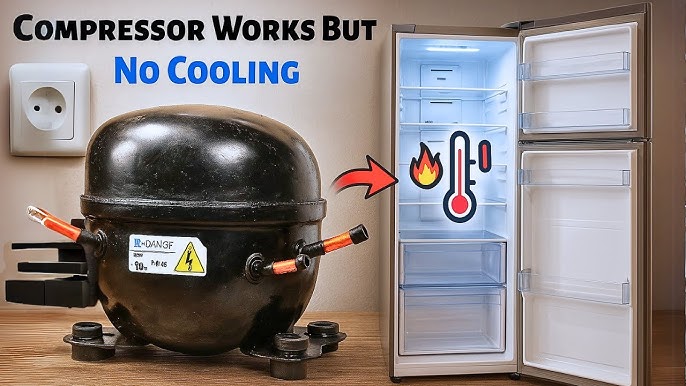
A hot compressor may signal it is overworked. Common causes include dirty condenser coils, blocked airflow, or a failing compressor. If coils are clean and airflow is good, call a technician.
Can A Fridge Run Out Of Refrigerant?
Yes, but it’s rare unless there is a leak. Refrigerant does not get “used up.” If there’s a leak, the fridge will stop cooling and may need professional repair.
How Often Should I Clean Fridge Coils?
You should clean condenser coils every 6-12 months. If you have pets or a dusty home, clean more often to prevent overheating.
Will Unplugging And Replugging The Fridge Fix Cooling Problems?
Sometimes, a reset can fix electronic glitches. But if there is a mechanical or physical issue, unplugging will not solve it. Try basic troubleshooting first.
Is It Safe To Keep Using A Fridge That Is Not Cooling?
It is not safe. Food can spoil quickly, leading to waste and possible health risks. Move perishable items to another fridge or cooler and fix the problem as soon as possible.
1 thought on “Why is Fridge Compressor Running But Not Cooling? Expert Fixes”