
If you own a Greenworks pressure washer, you probably expect it to deliver high cleaning power with just the pull of a trigger. But sometimes, things don’t go as planned. You squeeze the handle, and nothing happens. Or maybe it turns on, but water just trickles out. This can be frustrating, especially when dirt and grime are waiting. Before you panic or call for repairs, it’s smart to understand why your machine isn’t working. Many problems are simple to solve, and you can fix them yourself with a little guidance.
In this article, you’ll learn the most common reasons a Greenworks pressure washer stops working, how to diagnose the issue, and what steps to take next. You’ll also find practical tips, expert insights, and clear explanations—so you can get your pressure washer running again, even if you’re not a technical expert.
How Greenworks Pressure Washers Work
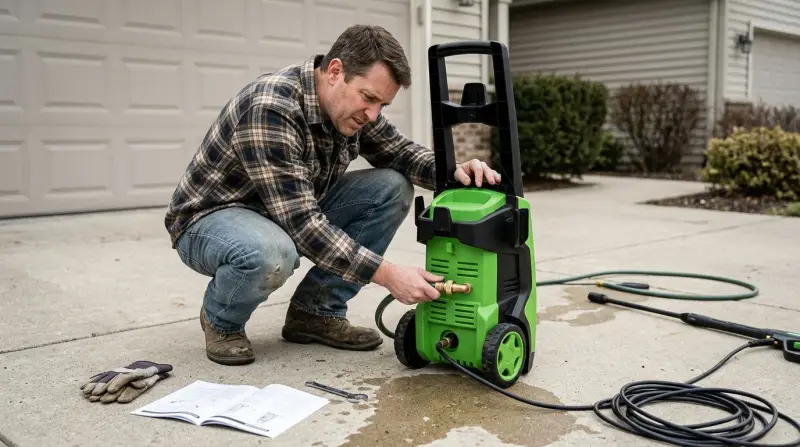
To solve a problem, it helps to know how the machine operates. Greenworks pressure washers use an electric motor to drive a water pump. When you connect the washer to a water source and power it on, the pump increases the water pressure, sending it out through a hose and spray wand. The high-pressure water stream removes dirt from surfaces much better than a regular hose.
There are two main types:
- Light-duty models: For cleaning cars, bikes, and patio furniture.
- Heavy-duty models: For driveways, decks, and tougher jobs.
Both types have similar components: power cord, on/off switch, water inlet, high-pressure hose, spray gun, nozzle attachments, and sometimes a built-in detergent tank. Understanding this system will help you troubleshoot problems step by step.
Common Reasons Your Greenworks Pressure Washer Won’t Work
When your pressure washer isn’t working, the cause usually falls into one of these categories:
- Power supply issues
- Water supply problems
- Internal clogs or leaks
- Faulty components
- Incorrect assembly or setup
Let’s look at each in detail.

Credit: www.youtube.com
Power Supply Issues
Without power, your pressure washer can’t run. Electrical problems are a top reason for failure, especially with electric models.
Check The Power Source
- Plug and outlet: Make sure the power cord is plugged in firmly and the outlet is working. Try another outlet if needed.
- Circuit breaker: Pressure washers can trip breakers, especially if other devices use the same circuit. Reset the breaker and try again.
- Extension cords: Using the wrong type can cause voltage drop, making the washer underpowered or unable to start. Only use heavy-duty, outdoor-rated cords no longer than 25 feet.
Test The Power Switch And Cord
- On/off switch: If the switch feels loose or doesn’t click, it might be broken.
- Power cord: Check for cuts, fraying, or burn marks. Damaged cords are a safety risk and can stop the washer from working.
Non-obvious insight: Some Greenworks models have a reset button on the plug (GFCI plug). If this has tripped, the washer won’t turn on until you press reset.
Internal Electrical Issues
If the basics are fine, the problem might be inside the machine:
- Blown fuse: Some models use an internal fuse to protect from overloads. If blown, the washer won’t power up.
- Motor failure: Overheating, water leaks, or old age can cause the electric motor to fail. Replacing the motor is usually a job for a technician.
Water Supply Problems
A pressure washer needs enough water to build pressure. If the flow is too low, the pump may shut off or run weakly.
Inspect The Water Source
- Faucet fully on: Make sure the tap is open all the way.
- Hose not kinked: Any bends or kinks can block water flow.
- Hose diameter: Use a garden hose at least 5/8 inch wide. Narrow hoses restrict water and lower pressure.
Remove Blockages
- Inlet filter: Greenworks washers have a mesh filter where the garden hose connects. If it’s clogged with dirt, water can’t enter.
- Debris in hose: Sometimes sand or grit gets trapped. Disconnect and flush the hose with clean water.
Test Water Pressure
- Minimum pressure needed: Most Greenworks models need 20–40 psi from the tap. If your home’s water pressure is lower, the washer won’t work well.
Practical tip: If you hear the pump running but little or no water comes out, check for a blocked filter or a hose that isn’t supplying enough water.
Internal Clogs Or Leaks
Clogs and leaks inside the machine are common, especially if the washer hasn’t been used for a while.
Spray Nozzle Blockages
Nozzles are small and easy to block. If water sprays in odd directions or not at all, try these steps:
- Turn off the machine.
- Remove the nozzle from the spray wand.
- Use a nozzle cleaning tool or a straightened paper clip to poke out debris.
- Rinse with water before reattaching.
Non-obvious insight: Hard water deposits (calcium) can build up inside the nozzle over time. Soak the nozzle in white vinegar for an hour to dissolve the deposits.
Clogged High-pressure Hose Or Wand
- Detach the hose and wand. Look for visible blockages.
- Flush both with clean water.
- If still blocked, replace the part—internal clogs are hard to remove completely.
Internal Pump Problems
If water leaks under the washer or you hear a grinding noise:
- Pump seals may be worn out, causing leaks.
- Valves inside the pump can get stuck with debris.
- These parts can sometimes be cleaned, but often need replacement by a technician.
Faulty Components
Sometimes, a single broken part can stop the whole washer from working.
Trigger Gun Failure
If the washer powers on but nothing happens when you pull the trigger, the trigger gun may be faulty.
- Test by swapping with a known good gun (if you have one).
- Replacement guns are available for Greenworks models.
Leaking Or Burst O-rings
O-rings seal connections between hoses, guns, and the pump. If they crack or split, pressure drops and leaks appear.
- Inspect all O-rings.
- Replace any that look worn, flat, or broken.
Damaged Pump
If you hear loud noises, see water leaking from the bottom, or notice the motor runs but no pressure builds, the pump assembly may be damaged. This often happens if the washer was stored with water inside (freezing can crack parts).
Experience-based tip: Running the washer without water, even for a short time, can damage the pump. Always connect the water supply before turning on the machine.

Incorrect Assembly Or Setup
Sometimes, the washer isn’t actually broken—just assembled wrong.
Loose Connections
- Double-check all hose and wand connections. Even a small air leak can cause loss of pressure.
- Make sure all attachments are clicked or screwed in tightly.
Wrong Nozzle
Using the wrong nozzle can reduce pressure or stop water flow. Greenworks washers often come with several color-coded nozzles:
- Red (0°): Very high pressure, small stream
- Yellow (15°): Medium pressure, good for tough dirt
- Green (25°): Normal cleaning, most common
- White (40°): Low pressure, for rinsing
- Black (Soap): For detergent only, very low pressure
If you accidentally use the soap nozzle for normal cleaning, you’ll get almost no pressure.
Incorrect Detergent Use
Some Greenworks models have a separate tank for soap. Make sure you’re using the right nozzle and following the instructions—otherwise, the detergent system can block and reduce water flow.
Troubleshooting Steps: How To Find The Problem
If your Greenworks pressure washer won’t work, follow these steps in order. This will help you find the cause faster.
- Check the power: Is the plug in? Is the outlet working? Try another device.
- Inspect the cord and switch: Look for damage, loose parts, or a tripped reset button.
- Confirm water supply: Is the tap on? Is the hose connected and straight? Is the filter clean?
- Test with no nozzle: Remove the nozzle and squeeze the trigger. If water comes out, the nozzle is blocked.
- Check for leaks: Look under the machine and at all connections.
- Listen for sounds: Does the motor hum, click, or stay silent? Each sound gives clues.
- Swap accessories: If possible, try a different hose, wand, or trigger gun.
If you complete these steps and still have trouble, the problem may be deeper inside the machine.
Data Table: Common Problems And Likely Causes
To help you quickly match symptoms to causes, here’s a useful overview.
| Symptom | Possible Cause | Quick Solution |
|---|---|---|
| No power at all | Outlet, cord, switch, or fuse issue | Check/reset power, inspect cord, try another outlet |
| Motor hums but doesn’t start | Low voltage, extension cord, motor issue | Use proper cord, check outlet, contact support |
| Low pressure | Clogged nozzle, blocked filter, leaks | Clean nozzle/filter, check O-rings |
| Pulsing spray | Air in hose, water supply problem | Bleed hose, check for kinks |
| Water leaking | Damaged seals or O-rings | Replace seals/O-rings |
How To Fix The Most Common Greenworks Pressure Washer Issues
Let’s look at specific fixes for the problems above. These steps cover what most users can do safely at home.
Fixing Power Issues
- Replace blown fuse: Unplug the washer, open the fuse compartment (check the manual), and swap with a new fuse of the same rating.
- Replace damaged cord: If you see any damage, do not try to fix it with tape. Get a new cord or have an electrician repair it.
- Reset GFCI plug: Press the reset button (usually red or black) on the plug itself.
Solving Water Flow Problems
- Clean inlet filter: Unscrew the hose, pull out the filter, and rinse under running water.
- Unblock hose: Disconnect and flush both garden and high-pressure hoses.
- Increase water pressure: Make sure no other taps are open in the house while using the washer.
Clearing Nozzle And Spray Gun Issues
- Soak nozzle: If cleaning with a pin doesn’t help, soak in vinegar to remove mineral build-up.
- Replace spray gun: If it leaks or stays stuck, order a new one from Greenworks or a compatible supplier.
Stopping Leaks
- Replace O-rings: Remove old rings with a small screwdriver. Lubricate new O-rings with a little water before installing.
- Tighten connections: Hand-tighten all hose and wand connections.
Dealing With Pump Problems
If you suspect an internal pump issue (like a grinding sound, constant leaks, or zero pressure despite all else being fine):
- Stop using the washer.
- Contact Greenworks support or a service center.
- Avoid DIY repairs unless you have technical experience—the pump contains moving parts under high pressure.
Most Greenworks pumps are not designed for user repairs. Opening the pump may void the warranty.
When To Call For Professional Repair
Many issues can be fixed at home, but some require an expert. Call for help if:
- You see sparks, smoke, or a burning smell.
- The pump is leaking oil or making loud noises.
- The motor runs but nothing else happens, even after basic checks.
- You’re unsure about electrical repairs.
Greenworks offers a warranty on new machines. Check if yours is still covered—repairs may be free or discounted.
Preventing Future Problems
A little care goes a long way. Follow these tips to keep your Greenworks pressure washer running smoothly.
Always
- Use the correct power supply and extension cord.
- Connect water before switching on the machine.
- Flush the system with clean water after using detergent.
Never
- Store with water inside the pump—drain it after every use.
- Leave the washer out in freezing weather (ice can crack internal parts).
- Run the washer dry (without water).
Seasonal Maintenance
Once a year:
- Inspect hoses, nozzles, and O-rings.
- Clean or replace the inlet filter.
- Test the machine before heavy use.
Table: Greenworks Model Comparison
Different Greenworks models have slightly different features and maintenance needs. Here’s a quick comparison of three popular models.
| Model | Pressure (PSI) | Flow Rate (GPM) | Best For | Common Issues |
|---|---|---|---|---|
| GPW1501 | 1500 | 1.2 | Cars, bikes, patios | Low pressure, nozzle clogs |
| GPW1702 | 1700 | 1.2 | Driveways, decks | Water supply, leaks |
| GPW2000 | 2000 | 1.2 | Heavy-duty cleaning | Trigger gun, pump wear |
Insight: Higher PSI models are more sensitive to water supply issues. Always check for proper flow before starting.
Table: Troubleshooting Steps Checklist
For quick reference, use this checklist when your washer isn’t working.
| Step | What to Check | What to Do |
|---|---|---|
| 1 | Power source | Test with another device/outlet |
| 2 | Extension cord | Use heavy-duty, short cord |
| 3 | Water supply | Open tap, straighten hose |
| 4 | Inlet filter | Clean or replace |
| 5 | Nozzle | Clean or swap nozzles |
| 6 | Leaks | Check seals/O-rings |
| 7 | Pump/motor | Listen, look for damage, call support if needed |
Real-world Example: Fixing A Stubborn Greenworks Washer
Sarah, a homeowner in Texas, noticed her Greenworks GPW1702 stopped producing pressure after winter. She checked the power and water supply—both were fine. The machine turned on, but the spray was weak.
She followed these steps:
- Removed and cleaned the inlet filter—found it full of grit.
- Checked and cleaned the nozzle—found mineral build-up.
- Flushed the hose and wand.
After this, her washer worked as good as new. She now cleans the filter monthly and always drains the machine before storing it for winter.
Lesson: Most problems are simple. Regular cleaning and proper storage prevent many issues.
What If My Greenworks Pressure Washer Still Won’t Work?
If you’ve tried all the steps above and your washer still won’t run or produce pressure, it’s time for expert help. Greenworks customer service can guide you further, and there are authorized service centers in most areas.
You can also find official troubleshooting guides and manuals on the Greenworks support website.
Frequently Asked Questions
Why Does My Greenworks Pressure Washer Keep Shutting Off?
This usually happens if the water supply is too low, the inlet filter is blocked, or the pump is overheating. Make sure the tap is fully open, clean the filter, and avoid running the machine for long periods without breaks.
Can I Use Hot Water In My Greenworks Pressure Washer?
No. Most Greenworks models are designed for cold water only. Using hot water can damage seals and internal parts.
What Should I Do If My Pressure Washer Is Leaking Water?
First, check all hose and wand connections. If they are tight, inspect the O-rings for cracks or wear. Replace any damaged seals. If the leak is from the bottom of the machine, the pump may be damaged and need professional repair.
Why Is My Pressure Washer Making A Loud Noise?
Loud noises can mean air is trapped in the pump, water supply is blocked, or internal parts are worn out. Bleed the hose to remove air, check for blockages, and if the noise continues, contact support.
How Often Should I Clean The Inlet Filter?
Clean the inlet filter every 5–10 uses, or more often if you use the washer with dirty or hard water. A blocked filter is a very common cause of poor performance.
Getting your Greenworks pressure washer working again is often easier than it seems. Start with the basics—power, water, and blockages—and work through the steps in this guide. With careful troubleshooting and a bit of maintenance, you’ll keep your washer running strong and extend its life for years to come.
If you ever get stuck, don’t hesitate to reach out to Greenworks support or visit their official help center for advice.