
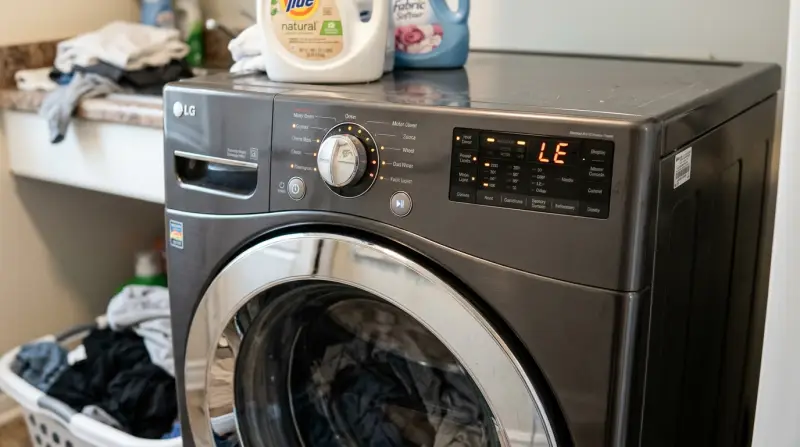
An Lg Washer Le Code typically appears because the control board detects an issue with the water level sensor or the internal communication line. It’s generally safe to keep using the machine, provided you can finish a cycle manually or the error clears after a reset. To confirm the cause, unplug the washer from the wall outlet for exactly sixty seconds, then plug it back in to see if the error light disappears. This quick power-cycle clears the machine’s temporary memory and often resolves software glitches that trigger false sensor readings.
Troubleshooting the LG Washer LE Code
| What you notice | What it usually means | What to do first |
|---|---|---|
| LE code during spin | Motor is drawing too much | Check for heavy load |
| Code shows at start | Water level sensor error | Unplug for one minute |
| Drum doesn’t move | Motor or hall sensor | Check for small items |
| Code flashes intermittently | Loose internal wire harness | Inspect door boot seal |
| Washer stops mid-cycle | Overloaded drum weight | Remove extra wet clothes |
| Burning smell present | Motor assembly failure | Turn off at breaker |
When the LE code appears, verify the load balance before assuming a mechanical failure. If the drum contains a single heavy item like a wet rug, the motor struggles to reach spin speed. You must redistribute the weight or remove the item entirely to clear the error.
For intermittent flashing, the culprit is often a vibration-induced loose connection. Check the wiring harness near the door boot seal first. If the wires look frayed, stop the machine immediately to prevent a short circuit.
If the washer stops mid-cycle, don’t simply restart it. If the drum feels hot to the touch, the motor is likely overheating. In this case, wait for the motor to cool down before attempting another load; if the issue persists, the motor or control board may be failing. If the cycle fails again, the motor assembly requires professional replacement. Ignoring this warning often leads to a blown control board, which costs three times more than replacing the motor itself.
Motor load and mechanical blockage
The most common reason for this code is that the motor is struggling to move the drum because the load is too heavy or unbalanced. When the washer detects that the motor is working harder than its rated capacity, it halts to prevent permanent damage to the inverter board.
A simple way to check this is to open the door and try to rotate the drum by hand. If it feels stuck or doesn’t turn smoothly, there’s likely a small object—like a loose coin or a bra wire—lodged between the inner and outer tubs.
If the drum spins freely, the issue is likely an uneven load. If you’re washing heavy items like blankets or rugs, the weight distribution shifts during the high-speed spin, forcing the motor to compensate.
A common mistake is overloading the machine by volume rather than weight. While the drum may appear to have space, wet textiles can easily exceed the motor’s torque threshold.
You should always redistribute the clothes evenly and remove a few items if the drum is packed too tightly. This assumes you’re using a standard residential washer; for commercial models, the capacity limits are higher, so adjust your load size based on the specific drum volume listed in your manual.
The decision rule is simple: if the drum rotates freely by hand but fails under load, reduce the weight of your laundry by 20 percent. If the drum remains resistant to manual rotation, you must disassemble the tub seal to clear the mechanical obstruction. Once adjusted, restart the cycle. If the machine begins the spin sequence without showing the code, you have successfully cleared the error.
Communication between sensor and board
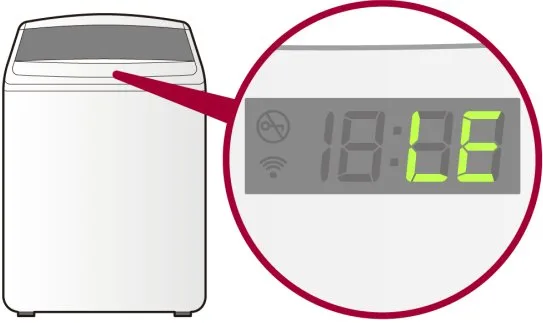
A faulty hall sensor often causes this code by failing to report the motor’s speed back to the main control board. The hall sensor is a small magnetic component attached to the motor that tracks rotation. If the sensor is loose or has a damaged connection, the control board can’t tell if the motor is turning or stalled, so it stops the process to stay safe.
You can check for this by listening to the machine during the start of a cycle. If you hear a series of clicks followed by the code, the board is trying to signal the motor but receiving no response. A healthy sensor typically sends a 5V signal back to the board; if your multimeter reads zero volts at the harness, the sensor has failed.
This is a specific hardware issue that differs from a simple overload because it persists even when the drum is empty. If the drum is empty and the code appears immediately upon starting, the sensor or the wiring harness is likely the culprit. Beginners often mistake this for a belt issue, but a broken belt allows the motor to spin freely without the code appearing instantly.
This isn’t for someone without basic repair experience, as it requires accessing the back panel of the unit. If you aren’t comfortable working with electrical components, you should call a professional. This varies by model — check the label on the back of your washer to identify the exact motor assembly before ordering any replacement parts. Always disconnect the power supply for at least five minutes before touching the harness to discharge the capacitors.
Wiring and control board faults
Damaged wiring or a failing inverter board is the third potential cause. If the wires connecting the motor to the control board are frayed or disconnected, the signal path is broken. You can identify this if you see signs of physical damage to the wire harness, such as pinch marks or exposed copper, after removing the rear access panel. This differs from the first two causes because the error is constant and doesn’t change regardless of the load size or the power-reset status.
When the inverter board itself fails, it can no longer send the correct voltage to the motor. This is a trade-off: you can attempt to reconnect loose wires yourself, but replacing a control board requires specialized knowledge to ensure the new unit is programmed for your specific machine. If you notice a burnt smell or hear a buzzing sound coming from the control board area, stop immediately.
Never attempt to touch internal capacitors or boards while the unit is plugged in, as a capacitor can hold a lethal charge even when unplugged. Before testing, use a multimeter to verify zero voltage across the terminals. If the wiring appears intact but the code remains, the issue is likely internal to the electronic control system. A common mistake is assuming the board is dead when the issue is actually a poor connection at the harness plug. Check the pins for oxidation or black soot. If you see discoloration, clean the contacts with electronic contact cleaner before ordering an expensive replacement part. If the board shows no physical signs of failure, check the board’s LED status light for specific blink codes.
When to stop and get help
You smell burning plastic or hear a loud, grinding metallic noise coming from the motor housing.
The error code persists after you have verified the drum is empty and the load is balanced. If the display shows the same fault after a ten-minute power reset, the issue is likely a failed sensor or a fried control board rather than a simple user error.
You see exposed or charred wires inside the back panel of the machine. Don’t touch these, as residual current can remain in capacitors even when the unit is unplugged.
The machine trips your home’s circuit breaker every time you attempt a new cycle. This indicates a dead short to the chassis. If the breaker trips instantly, stop immediately to avoid a fire.
These symptoms indicate a high risk of fire or electrical short. Because these machines involve high-voltage components, internal repairs should only be performed by a certified technician. Attempting to repair a damaged inverter board or replacing internal motor components without proper training can result in a voided warranty or severe electric shock. Contact the manufacturer’s support line or a local appliance repair service to handle the electrical work safely.
Frequently asked questions
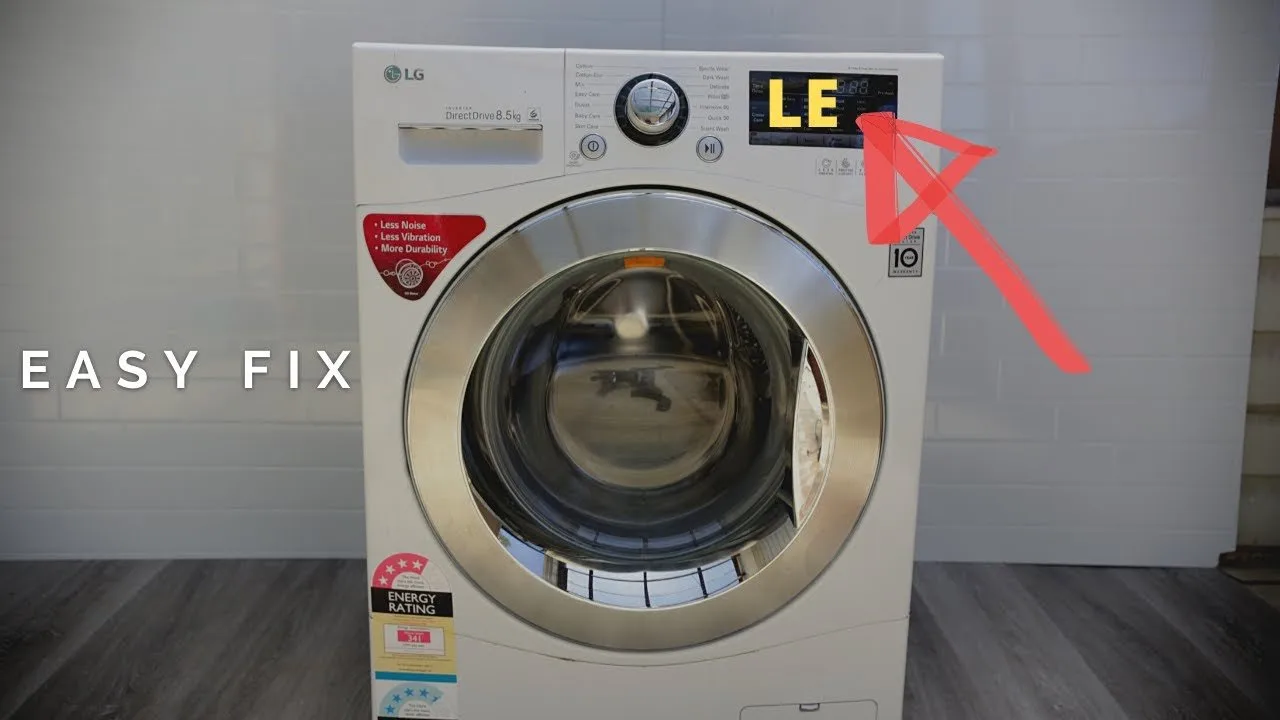
Can I keep using my washer with the LE code?
No, you shouldn’t continue to use the machine while the code is active. The code indicates the motor is experiencing a fault, and forcing the machine to run can cause further damage to the inverter board or the motor windings. If the code doesn’t clear after a power reset, you must address the underlying mechanical or electrical fault before attempting another wash cycle.
Why does my washer show LE only during the spin cycle?
This usually happens because the load is too heavy or unbalanced, causing the motor to draw too much current. During the spin, the motor works harder to reach high speeds. If the weight is uneven, the resistance triggers the safety sensor. You should stop the machine, open the door, and redistribute the wet clothes to balance the weight before trying to resume the cycle.
Is it safe to replace the hall sensor myself?
It’s safe only if you’re comfortable working with tools and have verified that the machine is unplugged. The hall sensor is a small, accessible part on the back of the motor. However, if you aren’t experienced with appliance repair, you should avoid this task. A mistake in reassembling the motor or wiring can lead to more expensive repairs or safety hazards.
How long should I leave the washer unplugged?
You should leave the washer unplugged for at least ten minutes to allow the capacitors to discharge. This allows the main control board to reset its internal memory and clear any temporary error flags. If the code returns immediately after you plug it back in and start a cycle, the problem is likely a permanent hardware failure rather than a temporary software glitch.
Does the LE code mean my motor is dead?
Not necessarily, as the code often points to a sensor or wiring issue rather than total motor failure. While a damaged motor is a possibility, many users find that a simple fix, like removing a jammed object or reconnecting a loose wire, resolves the problem. You should perform the basic checks listed in this article before assuming the motor needs a full replacement.
What happens if I ignore the LE code?
If you ignore the code, you risk damaging the inverter board or causing a fire if the motor continues to overheat. Continuous operation under a fault condition can also cause the drum to lock up completely, making it much harder to repair later. It’s much cheaper to address the sensor or load issue now than to replace the entire motor assembly later.
Final Thoughts
If the warning light remains on after you have tried these basic steps, it’s time to reach out to a professional technician. They’ll be able to inspect the internal wiring for any loose connections. Don’t worry, as a quick repair should get your laundry routine back on track soon.