
The most common reason for an Lg Refrigerator Water Dispenser Won’T Stop is a faulty water inlet valve that fails to close properly. If your fridge continues to dispense water after you remove your glass, the first thing to check is the physical dispenser lever for debris or mechanical jams. When the lever is clean and moves freely, the issue is almost certainly an internal component failure. This is a common mechanical issue that homeowners face, and it requires specific steps to diagnose before you seek professional help.
Why the water dispenser won’t stop
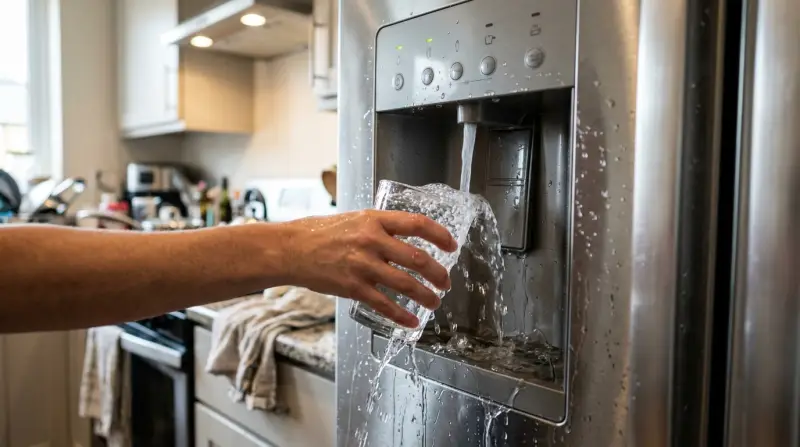
The primary cause of a running water dispenser is a mechanical failure in the water inlet valve. This valve acts like a gatekeeper; it opens when the control board sends an electrical signal and closes when the signal stops. If the internal rubber seals inside this valve become worn or clogged with mineral deposits from your water supply, the valve can’t create a watertight seal. Consequently, water continues to flow even after the electrical circuit has been cut.
Another frequent cause involves the electronic control board. If the board experiences a short circuit or a software glitch, it may send a continuous “open” signal to the valve, keeping the water flowing indefinitely. This is often linked to power surges or moisture buildup inside the control panel.
Lastly, check for a stuck dispenser switch. The switch behind the paddle or lever can become physically wedged due to ice buildup or debris. If the switch remains in the closed position, the fridge thinks you’re still requesting water. Always contact a certified technician if basic external checks don’t resolve the flow.
Safety: Inside a mains-powered machine, the parts behind the outer cover can hold a dangerous electrical charge even after it has been unplugged — that’s why they sit behind a cover. Opening the housing, or testing or replacing anything behind it, is a job for a qualified technician, never a home repair.
Reset the refrigerator power
If you suspect a minor electronic glitch, a power reset is the first step. Unplug your refrigerator from the wall outlet or turn off the circuit breaker for at least five minutes. This allows the capacitors on the control board to discharge fully and may clear a temporary software error. After five minutes, plug the unit back in and observe if the water flow has ceased.
This fix is ideal if the dispenser stopped working correctly immediately after a power flicker or storm. It isn’t for cases where you can hear a constant physical grinding noise or see water leaking from the bottom of the fridge, as those point to a broken valve. If the issue remains after the reset, the control board or the valve itself has likely suffered a permanent hardware failure. If you’re uncertain about the state of your electrical components, refer to the LG official support center for specific diagnostic steps for your model. Remember that this varies by model — check the label inside your fridge for the serial number before calling for service. If you aren’t comfortable working with electrical breakers, ask a qualified electrician to assist you.
Clear the dispenser paddle area
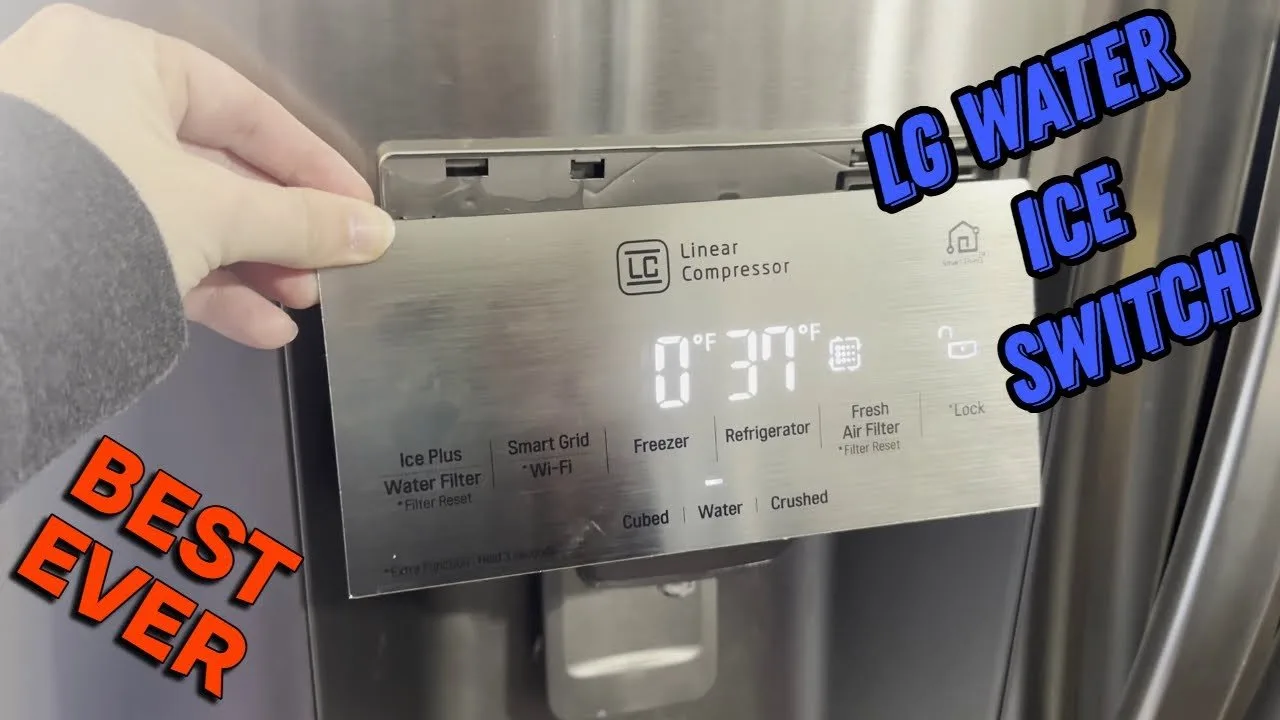
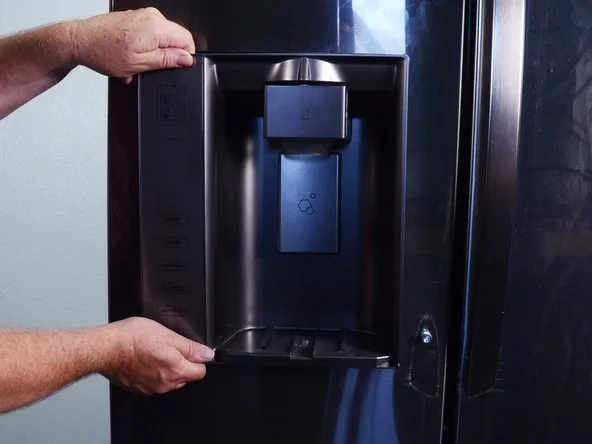
A physical obstruction in the dispenser paddle often mimics a mechanical failure. Over time, ice chips or mineral buildup can lodge behind the plastic paddle, preventing it from springing back into the “off” position. To check this, gently push and release the paddle multiple times to see if it feels “mushy” or stuck. If you see visible debris, use a clean, dry cloth or a soft-bristled brush to gently remove the obstruction. Never use metal tools like knives or screwdrivers to pry the paddle, as this can easily crack the plastic housing or damage the internal microswitch.
This fix is for you if the paddle feels stiff or doesn’t snap back quickly when released. If the paddle moves perfectly fine but water still flows, the problem is internal and you should stop attempting DIY repairs immediately. If you have to apply significant force to move the paddle, it’s a sign that the hinge mechanism is failing. This is a common trade-off: you can clean the surface, but if the internal spring is broken, cleaning won’t restore the function. This isn’t for anyone who expects to fix a broken internal switch by simply wiping the front of the unit.
Inspect the water supply line
Sometimes, the water line behind the fridge is kinked or pressurized incorrectly, causing the valve to struggle to shut off. Pull the refrigerator away from the wall carefully and inspect the plastic tubing for sharp bends or pinches. If the line is coiled too tightly, it can put stress on the connection point, potentially preventing the valve from seating correctly. Ensure the line has a gentle, wide loop rather than a tight, forced bend.
This fix is for you if you recently moved the fridge or had work done in the kitchen. If the tubing looks perfectly straight and the issue persists, don’t attempt to disconnect or replace the water line yourself. A bad connection can lead to significant water damage in your home, which is a major financial risk.
If you find a kink, straighten it gently without pulling the tubing taut. If the tubing is damaged or brittle, you must call a professional. This isn’t for those who don’t have the physical space to move the fridge safely without damaging floor tiles or nearby cabinets.
To test your work, place a dry paper towel under the connection point for one hour. If the towel remains bone-dry, the line is secure. If you see even a small damp spot, the compression fitting has likely failed. In that case, shut off the main water supply immediately to prevent flooding. Don’t try to tighten the nut further if it’s already snug, as this often cracks the plastic fitting.
What not to do
Don’t attempt to open the rear panel or the dispenser housing to reach the valve or control board.
Don’t use tools to force the dispenser paddle open or closed. You’ll likely snap the plastic mounting clips or crush the delicate microswitch. Replacing these components requires a complete disassembly of the door assembly, which turns a simple DIY fix into a multi-hour project.
Don’t leave the water supply valve turned on if the leak is severe. If the dispenser won’t stop, turn off the water supply line at the wall immediately to prevent flooding your kitchen floor. Water damage to subflooring often costs thousands in repairs.
Don’t try to “fix” a stuck valve by hitting or banging on the refrigerator door. This vibration can damage the internal foam insulation or crack the sensitive electronic display board. If the display goes dark, you have traded a faulty valve for a failed control module, which often costs as much as a new appliance.
How to stop it happening again
Regular maintenance prevents the mineral buildup that leads to valve failure. You must treat the water supply as the primary variable.
| If you’re doing this | Do this instead | Why |
|---|---|---|
| Ignoring slow water flow | Replace the water filter | Old filters trap minerals that clog valves |
| Using hard tap water | Install a water softener | Minerals cause rubber seals to harden |
| Leaving the paddle dirty | Wipe it weekly | Debris prevents the switch from resetting |
| Pulling the fridge hard | Move it with a dolly | Kinks in the line cause pressure spikes |
Most owners make the mistake of waiting for a total leak before acting. This costs an average of $300 in floor repairs. If the flow remains sluggish after a change, the valve solenoid is likely already obstructed.
Frequently asked questions
Can I fix an Lg Refrigerator Water Dispenser Won’T Stop by myself?
No, most internal causes for this issue require professional repair. While you can clear debris, the valve and control board are internal components that should be serviced by a professional. If simple steps don’t stop the water, you must call a certified technician to avoid damage.
Why is my dispenser leaking water onto the floor?
Your dispenser is likely leaking because the water inlet valve has failed to close, causing the internal collection tray to overflow. This usually happens when internal rubber seals are worn or blocked by mineral deposits. Turn off the water supply immediately to prevent damage until a professional replaces the valve.
How long does it take to repair a water dispenser?
A professional technician can typically diagnose and repair a faulty water inlet valve in about one hour. This assumes they have the correct replacement part for your specific model in stock. Always have your refrigerator’s model and serial number ready when you call to ensure they bring the right parts.
Is it safe to keep using the fridge if the water keeps running?
No, it isn’t safe to continue using the refrigerator if the dispenser doesn’t stop. You risk flooding your kitchen and creating electrical hazards by allowing water to reach internal components. Turn off the water supply immediately and stop using the dispenser until a qualified technician verifies it’s safe.
What happens if I ignore a dripping water dispenser?
Ignoring a dripping dispenser leads to mineral buildup, mold growth, and eventually a total valve failure that causes a constant flood. The dripping is a sign that the seal is already compromised. It’s much cheaper to have a technician inspect a minor drip than to deal with extensive water damage.
Final Thoughts
If you aren’t comfortable handling electrical parts or plumbing, don’t hesitate to reach out to a certified technician. They’ll have the right tools to fix the valve quickly so you won’t have to worry about leaks anymore. It’s better to get it sorted now to keep your kitchen floor dry and safe.
Related guides
- Samsung Refrigerator Leaking Water: Easy Fixes and Prevention Tips
- Ge Microwave Fan Won’T Turn off
- Bosch Refrigerator Not Dispensing Water: Top Fixes and Tips