
When your Roper washer suddenly stops spinning, it can bring your laundry routine to a halt. Wet clothes sit at the bottom, and you’re left wondering what went wrong. This issue is common with both older and newer models, but the good news is, many causes can be fixed at home. Understanding why your washer isn’t spinning can save you time, money, and stress.
This article will walk you through the main reasons a Roper washer won’t spin, how to troubleshoot the problem, and what you can do to fix it. You’ll also learn how to prevent future issues and when it’s time to call a professional.
If you’re not an expert, don’t worry—clear explanations and simple steps will guide you.
How A Roper Washer Spin Cycle Works
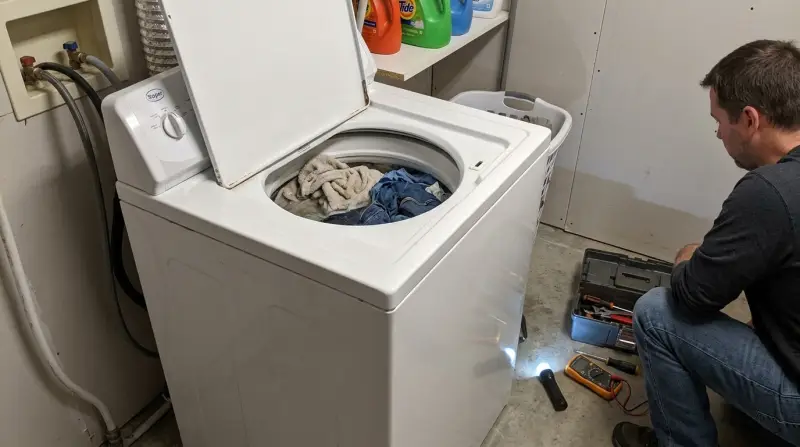
Before fixing a washer that won’t spin, it helps to know what happens during the spin cycle. When you start a wash, the washer fills with water, agitates to clean the clothes, drains the dirty water, and then spins the drum to remove extra water from the laundry.
The spin cycle uses a motor, a belt or direct drive, and a switch that tells the washer when to start spinning. If any part of this process breaks down, the washer may stop spinning. Sometimes, a safety feature stops the spin if the lid is open or if the load is unbalanced.
Main Causes Of A Roper Washer Not Spinning
Let’s look at the most common reasons your Roper washer refuses to spin and what you can do about each one.
1. Lid Switch Failure
If the washer thinks the lid is open, it won’t spin for safety reasons. The lid switch is a small part under the lid that senses if the lid is closed. If it’s broken, the washer will not spin.
Signs:
- Washer fills and agitates but won’t spin
- Clicking sound when you close the lid is missing
Solution: Press down on the lid where the switch is located. If the washer starts spinning, the switch is likely faulty and needs replacement.
2. Broken Or Worn Drive Belt
A drive belt connects the washer’s motor to the drum. If the belt is broken, loose, or worn, the drum won’t turn.
Signs:
- Motor runs, but the drum does not move
- Squeaking or burning rubber smell
Solution: Unplug the washer, remove the back panel, and inspect the belt. If it’s damaged, replace it with the correct size for your model.
3. Faulty Motor Coupling
Many Roper washers use a motor coupling instead of a belt. This plastic/rubber part links the motor to the transmission. It can wear out, especially with heavy loads or age.
Signs:
- Washer fills and drains but won’t agitate or spin
- Grinding or rattling noises
Solution: Access the coupling by removing the cabinet and motor. Replace if you see cracks or broken pieces.
4. Clogged Or Faulty Drain Pump
If the washer can’t drain water, it won’t spin. The drain pump can get clogged with lint, coins, or small clothing items.
Signs:
- Water remains in the drum after the cycle
- Gurgling or buzzing noise during drain
Solution: Remove the pump and check for blockages. If the pump is damaged, install a new one.
5. Unbalanced Or Overloaded Washer
A large or uneven load can cause the washer to stop spinning. The machine senses the imbalance and stops to prevent damage.
Signs:
- Washer vibrates or bangs loudly
- Drum stops spinning mid-cycle
Solution: Open the lid, redistribute the clothes, and try a smaller load.
6. Defective Timer Or Control Board
The timer or control board tells the washer when to switch cycles. If it fails, the machine may not reach the spin cycle.
Signs:
- Cycle gets stuck before spinning
- Other functions (like filling or draining) work
Solution: Replace the timer or control board if tests show no other faults.
7. Bad Door Lock (front-load Models)
Some newer Roper front-load washers have a door lock sensor. If it fails, the spin cycle will not start.
Signs:
- Door won’t lock or unlock
- Error codes on display
Solution: Replace the door lock assembly.
8. Worn Clutch Or Transmission (top-load Models)
The clutch or transmission helps turn the drum at the right speed. If it’s worn out, the washer may not spin or will spin weakly.
Signs:
- Drum turns slowly or not at all during spin
- Burning smell or grinding noises
Solution: These are complex parts. Consider calling a professional if you suspect a clutch or transmission problem.
Quick Troubleshooting Steps
Start with simple checks before opening the washer or buying parts. Here’s a step-by-step approach:
- Check Power and Settings
- Make sure the washer is plugged in.
- Confirm the cycle is set to spin.
- Examine the Load
- Open the lid and rearrange the clothes.
- Remove heavy items that may cause imbalance.
- Test the Lid Switch
- Press the lid down with your hand.
- Listen for a click or try running a spin cycle with the lid closed tightly.
- Listen for Unusual Sounds
- Squeaking, grinding, or buzzing can point to the belt, pump, or motor issues.
- Inspect for Water Drainage
- If water is still in the drum, check the drain hose and pump for clogs.
Roper Washer Not Spinning: Common Parts Compared
Here’s a comparison of three key parts that often cause spin problems.
| Part | Top Symptom | DIY Friendly? | Cost Estimate |
|---|---|---|---|
| Lid Switch | No spinning, but fills and agitates | Yes | $10–$40 |
| Drive Belt | Motor runs, drum doesn’t move | Yes | $10–$30 |
| Drain Pump | Water stays in drum | Yes (if accessible) | $20–$60 |
How To Fix A Roper Washer That Won’t Spin
If you’ve narrowed down the cause, use these general steps to fix the problem. Always unplug the washer before repairs.
Replacing The Lid Switch
- Unplug the washer.
- Open the control panel (usually two screws at the back).
- Find the lid switch near the lid hinge.
- Disconnect wires and remove the switch.
- Install the new switch, reconnect wires, and reassemble.
Changing The Drive Belt
- Lay the washer on its back.
- Remove the back panel.
- Slide off the old belt from the motor and drum pulleys.
- Fit the new belt tightly over both pulleys.
- Reattach the panel and test.
Cleaning Or Replacing The Drain Pump
- Unplug the washer and disconnect hoses.
- Locate the drain pump at the bottom.
- Remove the pump and check for clogs.
- Replace if damaged and reconnect everything.
Resetting The Control Board
Some newer models may need a reset after repairs:
- Unplug the washer for one minute.
- Plug back in and open/close the lid six times within 12 seconds.
- Start a new cycle.
This simple reset can sometimes fix software-related spin issues.
How To Prevent Spin Problems In The Future
Taking good care of your Roper washer can help avoid spin cycle issues. Here are a few practical tips:
- Don’t overload the washer. Heavy loads strain the motor and other parts.
- Use the right type and amount of detergent to prevent build-up.
- Check pockets for coins, hairpins, or small objects before washing.
- Clean the drain pump filter every few months.
- Level the washer using the adjustable feet to prevent imbalance.
- Schedule regular inspections, especially if your washer is over five years old.

Credit: www.reddit.com
When To Call A Professional
While many problems can be fixed at home, some require expert help. If you notice burning smells, electrical issues, or if repairs involve opening the transmission or main motor, it’s safer to hire a technician.
A professional can quickly diagnose advanced faults, use special tools, and offer a warranty on repairs. If you’re unsure, it’s better to ask for help than risk making things worse.
Cost Of Repair Vs. Replacement
How much should you spend on repairs before buying a new washer? Here’s a simple comparison of common repair costs versus the price of a new machine.
| Repair | Average Cost | When to Replace |
|---|---|---|
| Lid Switch/Drive Belt | $15–$60 | Rarely—repair is best |
| Drain Pump | $50–$120 | If washer is very old |
| Transmission/Motor | $200–$400 | If repair is over half the price of a new washer |
| New Roper Washer | $400–$600 | When repairs are too expensive or frequent |
Non-obvious tip: If your washer is over 8 years old and repair costs are more than half the price of a new one, replacing may be the smarter long-term choice. Also, newer washers use less water and energy, saving money over time.

Credit: www.youtube.com
Signs You Might Be Missing
Many users overlook these warning signs:
- A slow or weak spin may mean the belt is slipping, not broken. Replacing it early prevents bigger issues.
- A washer that skips the spin cycle only with large loads may have a suspension or leveling issue, not a motor fault.
- Electronic display codes (like “F7” or “E3”) can point directly to sensor or control board problems. Check your manual for code meanings.
Roper Washer Maintenance Schedule
A simple maintenance routine can keep your washer spinning smoothly.
| Task | Frequency | Why It Matters |
|---|---|---|
| Clean drum and gasket | Monthly | Prevents odor, build-up |
| Check and clean drain pump | Every 3 months | Avoids clogs and water issues |
| Inspect drive belt | Twice a year | Prevents slipping and breaks |
| Level washer | As needed | Reduces vibration and noise |

External Resources For Further Help
For more step-by-step guides, diagrams, and parts, the official Whirlpool website provides manuals and videos for Roper washers. You can visit their support page here: Whirlpool Manuals & Guides.
Frequently Asked Questions
Why Does My Roper Washer Start But Not Spin?
If your washer starts but doesn’t spin, it could be a lid switch, drive belt, or motor coupling problem. These parts are responsible for starting and supporting the spin cycle. Check each one for damage or wear.
Can I Fix A Roper Washer Not Spinning By Myself?
Yes, you can fix many spin problems yourself, especially if it’s a simple part like the lid switch or drive belt. However, if the problem involves the transmission or control board, professional help is recommended.
How Do I Reset A Roper Washer That Won’t Spin?
Unplug the washer for one minute, plug it back in, and open and close the lid six times within 12 seconds. This may reset the control board on some models.
Is It Worth Repairing An Old Roper Washer?
If repairs cost less than half the price of a new washer and your machine is under 8 years old, it’s usually worth fixing. For older machines or expensive repairs, consider replacing.
What Causes The Roper Washer To Stop Mid-cycle?
Common causes include a faulty lid switch, unbalanced load, timer issues, or a blocked drain pump. Check these areas first if your washer stops before the spin cycle.
A non-spinning Roper washer is frustrating, but most problems have clear solutions. With the right steps, you can often get your washer running again without calling a repair service. Start with basic checks, use careful troubleshooting, and don’t hesitate to seek help if needed.
Regular maintenance helps avoid future headaches—keeping your laundry routine smooth and stress-free.