
If you own a Keurig coffee maker, you probably know the importance of regular descaling. Descaling removes mineral buildup inside the machine, helping it work properly and last longer. But what happens if your Keurig stops working right after you descale it? Many coffee lovers face this frustrating situation. You expect your machine to work better, but instead, it won’t brew, turns off, or shows strange lights. This guide explains why this happens, how to fix it, and how to prevent problems in the future. With clear steps, practical advice, and easy explanations, you’ll get your Keurig running again—even if you’re not a tech expert.
Why Descaling Can Cause Problems
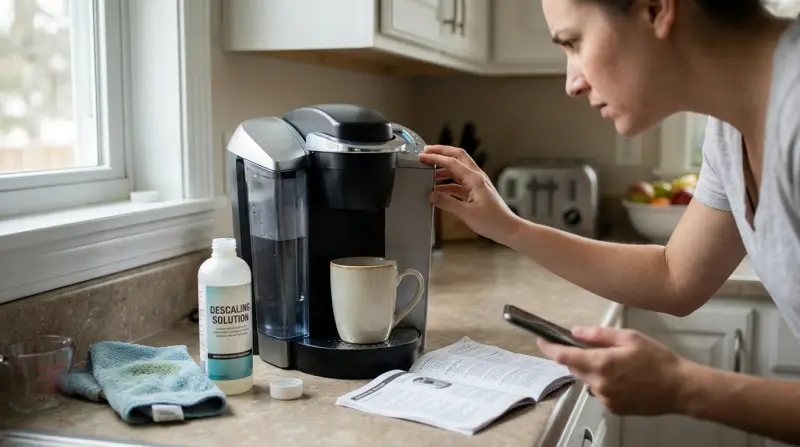
Descaling is supposed to help your Keurig, not break it. So why does it sometimes stop working after cleaning? The answer is usually not a broken machine, but a minor issue caused by the descaling process.
Descaling is a deep cleaning process that uses a special solution or vinegar to remove hard water minerals from inside your coffee maker. These minerals, mainly calcium and magnesium, slowly build up and can block water flow, change brewing temperature, or affect taste.
When you descale, you flush these minerals out, but sometimes, the process itself can trigger unexpected issues.
Common Causes After Descaling
- Residual Solution: Descaling solution or vinegar left inside can confuse sensors or leave a taste. Sometimes, leftover solution triggers the descale light or makes coffee taste sour.
- Clogged Parts: Descaling can loosen mineral debris, which may clog the needles or water lines. The debris sometimes moves but doesn’t fully exit the system, blocking water flow.
- Sensors Reset: Some Keurigs need to be reset after descaling, especially if the descale light stays on. If the machine doesn’t recognize that cleaning is finished, it might refuse to brew.
- Electrical Issues: Unplugging or pressing buttons quickly during descaling may cause a temporary error. Keurigs are sensitive to power interruptions, which can make them freeze or enter an error mode.
- Water Reservoir Problems: Misplaced reservoir or air bubbles can prevent water flow. If the reservoir isn’t attached correctly, the pump can’t pull water, or air bubbles can block the intake.
Example: Sensor Confusion
After descaling, many users see the descale light stay on, even after rinsing. This is usually because the machine did not get a clear signal that descaling is finished, or it needs a manual reset. Some models require a certain number of brew cycles or a specific button sequence to clear the light. If this step is skipped, the machine may refuse to brew.
Step-by-step Troubleshooting
When your Keurig doesn’t work after descaling, follow these steps. Most problems can be fixed without professional help. Even if you don’t feel comfortable with repairs, these steps are simple and safe.
1. Check For Residual Solution
If you taste vinegar or descaling solution, or your Keurig won’t brew, the solution may still be inside.
- Remove the water reservoir.
- Fill it with fresh water.
- Run several brew cycles (no coffee pod) until the smell is gone.
- If the taste remains after 4–5 cycles, try leaving the reservoir filled overnight and running more cycles in the morning.
2. Inspect Needles And Water Lines
Mineral debris can block the needles or water lines.
- Unplug the machine.
- Use a paperclip to clean the entrance and exit needles (refer to your model’s manual).
- Check for white flakes or residue—remove them gently.
- Look for slow water flow or drips instead of a normal stream; this is a sign of partial blockage.
3. Reset The Machine
Some models require a reset to clear error lights.
- Unplug Keurig for 5–10 minutes.
- Plug it back in.
- Hold down the brew button for 10 seconds if your model supports this.
- For machines with touch screens, sometimes holding the power button or following a specific menu sequence is needed.
4. Check Water Reservoir Placement
Air bubbles or improper placement can stop water flow.
- Remove and reattach the reservoir firmly.
- Tap the reservoir gently to release any air bubbles.
- Make sure the reservoir is filled above the minimum line.
- If your model has a filter, ensure it is seated properly and not blocking water intake.
5. Run Additional Rinse Cycles
Sometimes, two or three rinses are not enough.
- Run at least 3–4 full tanks of water through the machine.
- Do not use coffee pods during rinsing.
- If you still notice taste or smell, try using filtered water for extra rinse cycles.
6. Examine Power Supply
If your machine doesn’t turn on, check the outlet and cord.
- Try a different outlet.
- Inspect the cord for damage.
- Avoid plugging into a power strip.
- Look for signs of loose connections or sparks when plugging in.
7. Review Error Lights
Each Keurig model has different error lights. Check your user manual for specific meanings.
- If you don’t have your manual, look up your model online for error light explanations.
- Sometimes, blinking or colored lights indicate specific problems like low water or clogged parts.
8. Contact Support If Needed
If nothing works, contact Keurig support or visit their website for help. They may guide you through advanced troubleshooting or check warranty status.
- Before calling, write down any error messages or what steps you’ve already tried.
- Support can often help with hidden reset functions or deeper cleaning advice.
How Descaling Works Inside Keurig
Understanding how descaling affects your machine helps you avoid mistakes. When you run descaling solution, it flows through the boiler, water lines, and needles, dissolving calcium and minerals.
The process is like cleaning out pipes in a house. The solution breaks up stubborn deposits and pushes them through, but sometimes those deposits get stuck or block a narrow passage. That’s why rinsing is so important.
Effects On Parts
- Boiler: Cleaner, more efficient heating. Coffee brews faster and hotter.
- Needles: Clear passage, better extraction. Blocked needles make weak coffee.
- Sensors: Sometimes need manual reset. Sensors can get confused by leftover solution or air bubbles.
- Water Pump: Can flush out debris—sometimes clogs if buildup is heavy. Pumps may sound louder or softer after descaling, which is normal unless flow is blocked.
Data: Descaling Frequency
According to Keurig, descaling should be done every 3–6 months depending on water hardness.
| Water Hardness | Descale Frequency | Risk of Clogs |
|---|---|---|
| Soft | Every 6 months | Low |
| Medium | Every 4 months | Moderate |
| Hard | Every 3 months | High |
If your area has hard water, you may need to descale more often than the manual suggests. A simple water test strip can help you check water hardness if you’re not sure.
Key Differences: Descaling Solution Vs. Vinegar
People often ask if vinegar is as effective as Keurig’s official descaling solution. There are important differences.
| Descaling Solution | Vinegar |
|---|---|
| Special formula for appliances | Acidic, natural, cheap |
| No strong smell | Strong vinegar odor |
| Less risk of residue | May leave taste, requires more rinses |
| Recommended by Keurig | Not recommended for all models |
Some older Keurig models tolerate vinegar well, but newer machines use advanced sensors and plastics that may react poorly to vinegar. If you notice a lingering smell or flavor after using vinegar, switch to the official solution next time. One non-obvious tip: Mixing a small amount of baking soda with water for the final rinse can help neutralize vinegar smell.

Credit: www.samarthyaclasses.com
Preventing Problems After Descaling
You can avoid most issues by following a few simple habits. Prevention is easier than repair.
1. Follow Instructions Exactly
Read the manual for your Keurig model. Each machine may have small differences. For example, some require a button sequence during descaling, others do not.
2. Use Correct Solution
Official descaling solution reduces risk of clogs and residue. If you use vinegar, rinse more thoroughly. For hard water, consider using filtered water in your reservoir.
3. Clean Needles Regularly
Mineral buildup often starts in the needles. Clean them every month, not just during descaling. This helps prevent sudden blockages after cleaning.
4. Avoid Quick Button Presses
Pressing buttons too quickly during descaling can confuse the machine, especially on newer models. Wait for each cycle to finish before pressing again.
5. Let The Machine Rest
After descaling, let your Keurig sit unplugged for 10 minutes before first use. This allows sensors to reset and air bubbles to clear.
6. Watch For Common Mistakes
- Not rinsing enough
- Using dirty water reservoir
- Forgetting to clean needles
- Not resetting machine
Another mistake: Using cold water for rinsing. Warm or room temperature water helps dissolve any leftover solution faster.
Real-world Example: Troubleshooting Success
Sarah, a coffee lover from Ohio, descaled her Keurig, but it wouldn’t brew after. She ran three rinse cycles, but the descale light stayed on. After searching online, she found advice to unplug her machine and hold the brew button for 10 seconds.
The light turned off, and her Keurig worked perfectly. This simple reset is often missed by beginners.
Another example: Mike from Florida noticed his Keurig sounded louder after descaling, then stopped brewing. He discovered loose mineral flakes had blocked the needle. Cleaning the needle restored water flow and fixed the noise.
Credit: angelinos.com
Data: Most Common Post-descale Issues
A survey of Keurig owners in 2023 reported these top problems after descaling:
| Issue | Percentage | Time to Fix |
|---|---|---|
| Descale light stays on | 38% | 5–15 minutes |
| Keurig won’t brew | 29% | 10–30 minutes |
| Strange taste/smell | 21% | 10–20 minutes |
| Machine won’t turn on | 12% | 30+ minutes (sometimes needs repair) |
What beginners often miss: Most fixes are quick, but patience is important. Rushing or skipping steps often leads to longer problems.
When To Seek Professional Help
Most Keurig problems after descaling are minor and can be fixed at home. But sometimes, you need expert help.
Signs You Need Repair
- Machine still won’t turn on after checking power supply
- Water leaks from the base
- Error lights won’t clear after multiple resets
- Brewed coffee is cold
If your machine is under warranty, contact Keurig support. You can find help and warranty details on their official site: Keurig Customer Service.
Professional help is also useful if you notice strange noises, burning smells, or repeated blockages after descaling. These signs may mean a deeper issue inside the machine.

Credit: www.fondation-enovos.lu
Frequently Asked Questions
Why Does My Keurig Not Brew After Descaling?
This usually means mineral debris or descaling solution is still inside. Try running several rinse cycles with fresh water, and clean the needles.
How Do I Reset My Keurig After Descaling?
Unplug your Keurig for 5–10 minutes. Plug it back in, and hold the brew button for 10 seconds if your model supports manual reset.
Is It Safe To Use Vinegar For Descaling?
Yes, but vinegar can leave a strong smell and taste. Always rinse your Keurig thoroughly after using vinegar, and check your manual for compatibility.
How Do I Know If The Descaling Solution Is Completely Removed?
If you no longer taste or smell the solution and the descale light is off, it’s likely removed. Run at least 3–4 rinse cycles to be sure.
Can Descaling Damage My Keurig?
Descaling does not damage the machine if done correctly. Problems usually come from improper rinsing, cleaning, or using the wrong solution.
Getting your Keurig working again after descaling is possible with the right approach. Follow these steps, understand the common issues, and don’t panic if your machine acts up. Most fixes are simple and take only a few minutes. With regular care, your Keurig will stay reliable and brew great coffee for years.
If problems persist, expert help is always available. Enjoy your coffee with confidence—now you know how to keep your Keurig healthy after every descale.
2 thoughts on “After Descaling Keurig Not Working? Troubleshooting Tips That Work”