
Not all clothes dryers require an external duct because ventless technology exists for specific machine types. Do all dryers need a vent is a common question, and the answer is no, provided you choose a condenser or heat pump model. These units collect moisture in a tank or drain it through a hose instead of pushing hot, damp air outside. If you use a standard vented dryer, however, you must connect it to an outside vent to prevent indoor mold and fire risks.
Do All Dryers Need a Vent? Essential Facts
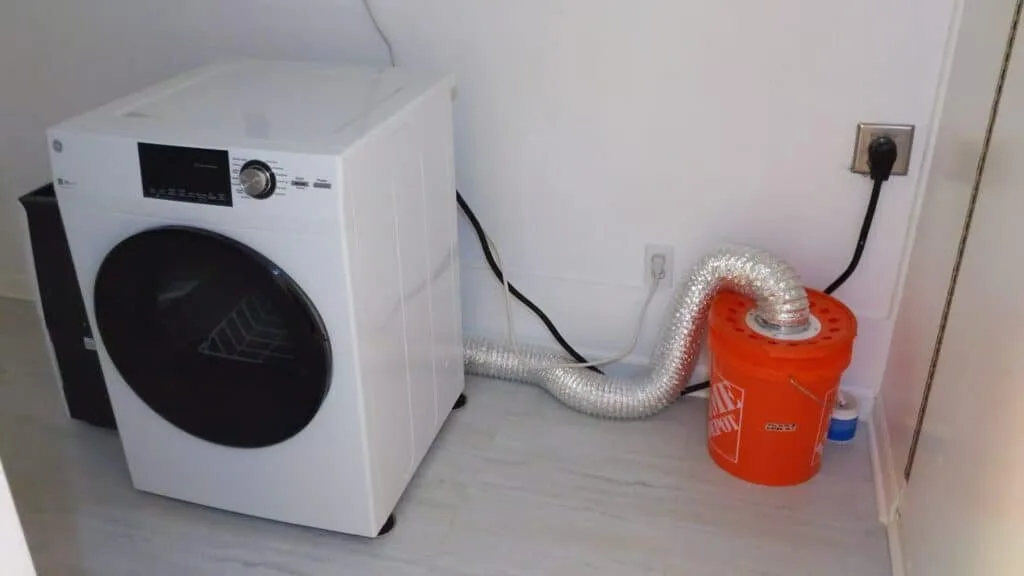
Vented dryers require a rigid or semi-rigid metal duct to exhaust moist air outdoors safely. Avoid flexible plastic or foil hoses, as these trap lint and pose a significant fire risk. If your duct run exceeds 25 feet, you must add five feet for every 90-degree elbow to calculate the effective length.
Condenser dryers don’t need external venting and can be installed in closets or rooms without windows. These units collect moisture in a removable tank or drain it through a hose.
Heat pump dryers are the most energy-efficient ventless option, as they reuse heat rather than exhausting it. However, they operate at lower temperatures, which often results in longer cycle times.
Ventless dryers require regular cleaning of the heat exchanger or filter to maintain efficiency and drying speed. Neglecting this maintenance causes the machine to run indefinitely without drying clothes. Building codes in many regions mandate that vented dryers must exhaust to the exterior of the building.
Why moisture management matters
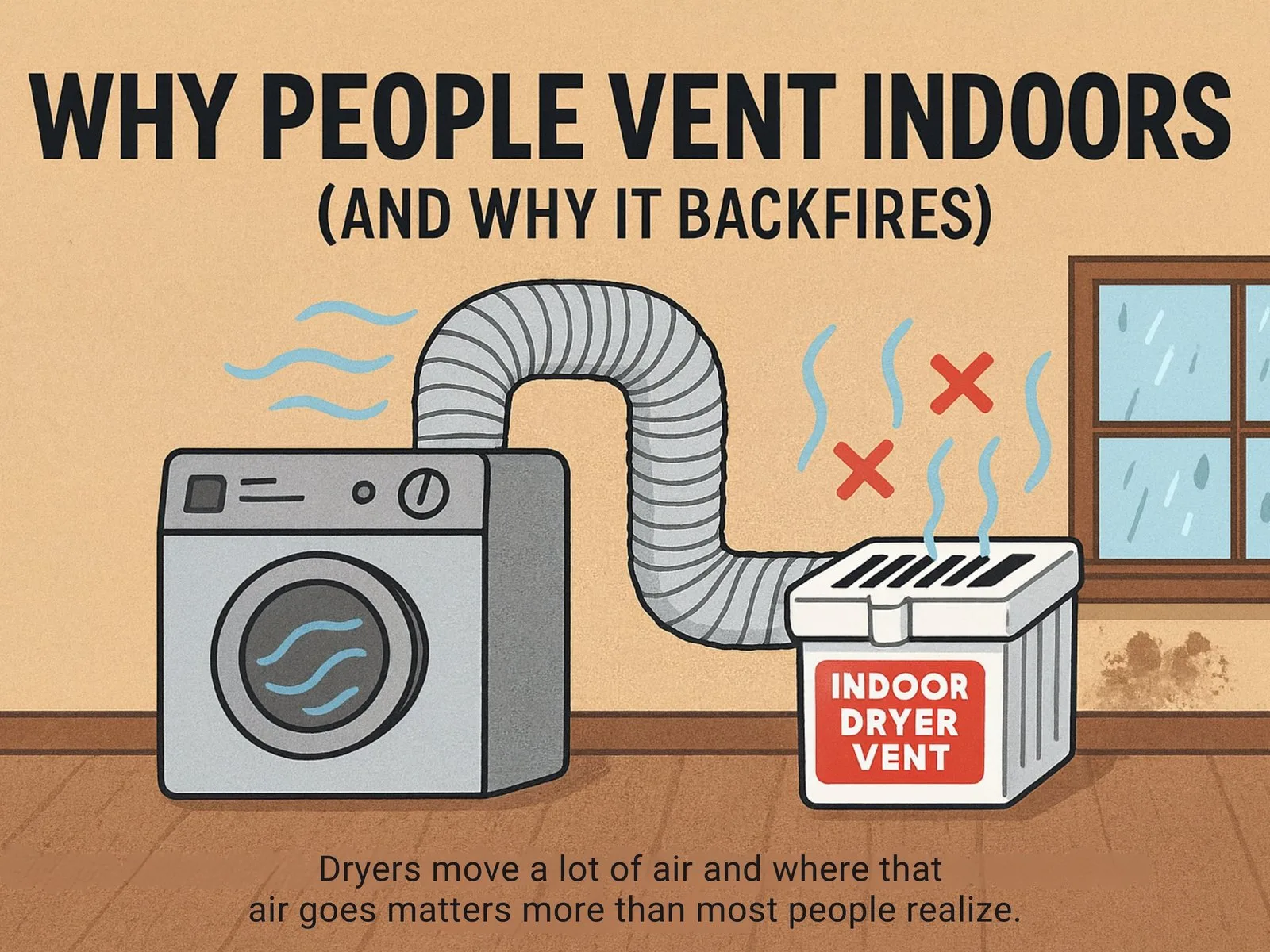
The primary reason some dryers need a vent is the sheer volume of water they remove from wet clothing. A standard load of laundry can contain several pounds of water, which must go somewhere once it turns into steam. In a vented dryer, the machine pulls in air, heats it, passes it through the tumbling clothes, and pushes the resulting humid air through a duct and out of your home.
If you were to disconnect this duct or block it, that moisture would have nowhere to go but into your living space. This leads to high indoor humidity, which encourages mold growth and can damage drywall, paint, and furniture over time. A simple rule of thumb: if your windows fog up during a cycle, your vent is likely obstructed or disconnected.
Beyond the moisture, vented dryers carry lint particles that escape the internal trap. If this lint accumulates inside your walls or attic, it becomes a significant fire hazard. According to the U.S. Consumer Product Safety Commission, you should clean the lint filter before or after every load and check the ductwork periodically to ensure it isn’t clogged or damaged.
Ventless models solve this by changing the physics of the drying process. A condenser dryer cools the humid air inside the machine, turning the steam back into liquid water. This water then gathers in a removable reservoir that you empty after cycles, or it flows directly into a drain pipe. Because the air stays within a closed loop, you don’t need to cut holes in your exterior walls.
This makes ventless units the only practical choice for apartments or internal laundry rooms where reaching an outside wall is physically impossible. However, these machines often take longer to complete a cycle than traditional vented models because they rely on cooling processes rather than rapid air exchange. If you have a large family and require back-to-back loads, the extra time required for a condenser cycle may cause a bottleneck in your household chores.
When the answer is different
| Situation | What changes | What to do instead |
|---|---|---|
| Apartment living | No exterior walls | Use a condenser model |
| High humidity area | Drying time increases | Empty the water tank |
| Tight spaces | No room for ducts | Choose a ventless unit |
| Large laundry loads | Speed is essential | Use a vented dryer |
Condenser models rely on a closed-loop system that captures moisture in a removable tray rather than venting it outside. If you live in an apartment, check your building codes before choosing a vented unit, as many prohibit cutting holes in exterior walls.
In high-humidity climates, ventless dryers often struggle to pull moisture from the air. If your clothes remain damp after a full cycle, check the water reservoir immediately. A full tank triggers an automatic shutoff, which wastes energy and extends your drying time by hours.
For large households, the decision rule is simple: if you wash more than five loads per week, choose a vented dryer. These units move hot air through the drum much faster than ventless alternatives. Skipping this choice often leads to “laundry pileup,” where your machine can’t keep pace with daily demand.
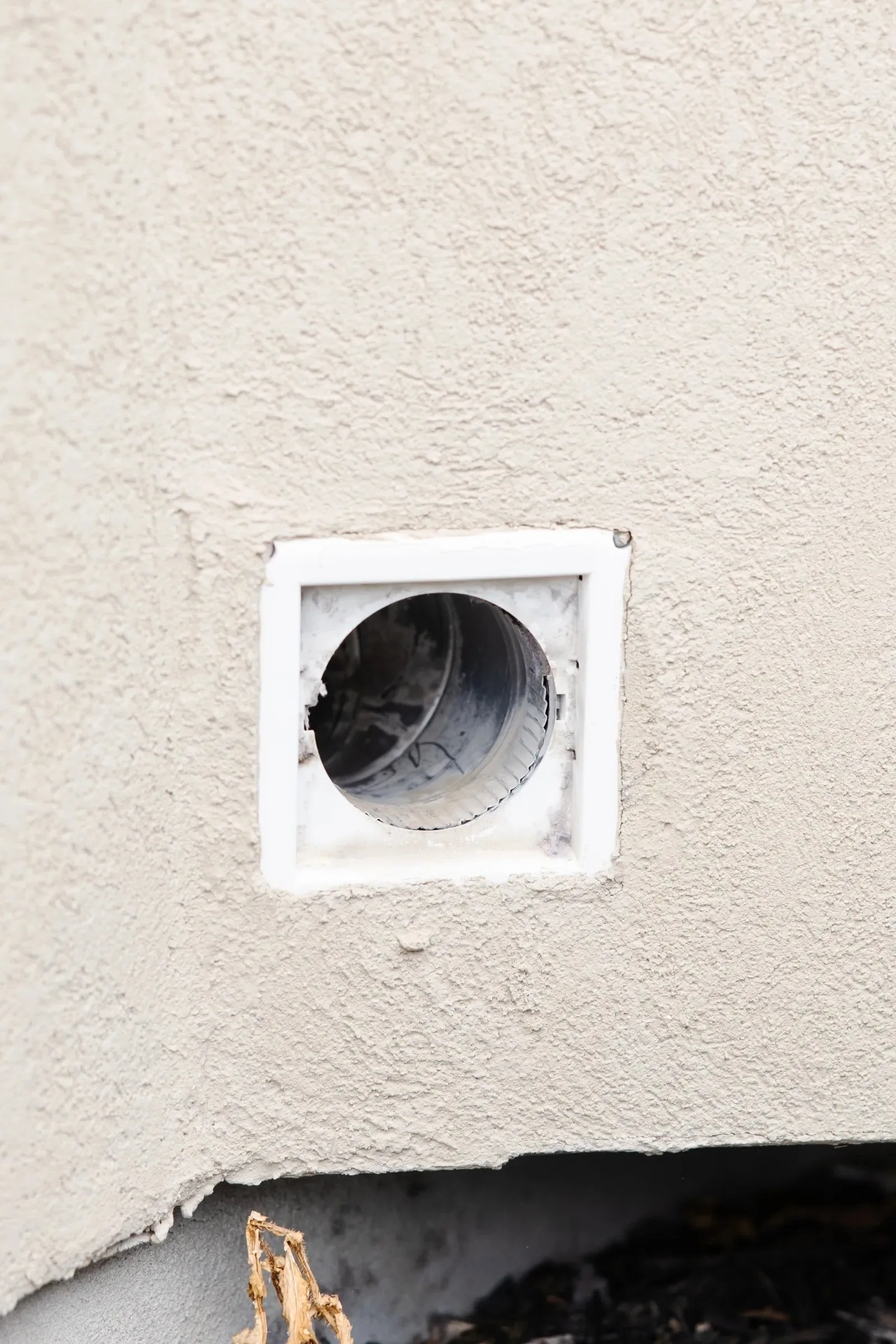
Finally, if you have a vented system, inspect your exterior vent hood quarterly. If the flap stays stuck open, you’re losing significant climate-controlled air, which can increase your monthly utility bill by up to 10 percent.
How to do it properly
Check your dryer’s manual to identify if it’s a vented or ventless model, as this dictates your installation path.
For vented dryers, use a 4-inch diameter rigid metal duct. Plastic or foil ducts are prone to sagging, which creates pockets where lint accumulates and increases fire risk significantly.
Keep the duct run under 25 feet in total length. You must subtract 5 feet for every 90-degree elbow installed. If your total calculated length, including the equivalent length of elbows, exceeds the manufacturer’s maximum allowed distance, the dryer will struggle to exhaust moisture.
If you have a ventless condenser dryer, place it in a room with good air circulation. These units rely on ambient air to cool the condenser; a small, unventilated closet will cause the unit to overheat and cycle off.
Empty the water collection tank on ventless dryers after every cycle. If you skip this, the machine will stop mid-cycle when the sensor detects a full tank.
Test the airflow of a vented dryer by running it empty for 5 minutes. Go outside and check that air exits the exterior hood strongly. If the flow feels weak, check the exterior flap for debris or a clogged bird guard, which are the most common culprits for poor performance.
The mistakes that ruin it
Using a flexible plastic duct creates a hidden fire hazard. The accordion-style ridges trap lint that becomes highly flammable when heated. Replace these immediately with rigid metal venting to allow proper airflow and prevent combustion.
Venting a dryer into an attic or crawlspace instead of outdoors is a common, costly error. This forces humid air into your wall cavities, which promotes structural rot and mold growth. If you lack an exterior wall, you must use a ventless condensation model.
Neglecting the secondary lint filter on a ventless unit is a mistake that ruins the heat exchanger. Without regular cleaning, the machine consumes double the electricity and suffers from premature motor failure. You should clear this filter after every cycle to maintain efficiency.
Finally, overloading the drum beyond the manufacturer’s weight limit prevents air from tumbling the clothes. Overloading leaves clothes damp and forces the heating element to run twice as long.
Frequently asked questions
Can I vent a dryer into my attic?
No, you should never vent a dryer into your attic or any enclosed crawl space. Doing so releases high amounts of moisture and lint into an area that isn’t designed to handle it, leading to rapid wood rot and mold development. The heat and lint also create a severe fire risk. Always route the exhaust duct through the roof or an exterior wall to the open air outside.
Is it safe to use a ventless dryer in a small closet?
Yes, it’s safe, but you must ensure the closet has enough space for air to move around the unit. Ventless dryers, particularly condenser types, need to dissipate heat to function properly. If the closet is sealed perfectly tight, the room will become very hot, and the dryer will struggle to condense the moisture. Leave the door slightly ajar or ensure there’s a louvered vent in the door for airflow.
How long does a ventless dryer take to dry?
Ventless dryers typically take longer than vented ones, often ranging from 90 to 180 minutes per load depending on the model and fabric type. Because they don’t use high-heat, high-airflow exhaust, they rely on slower, more controlled temperature cycles. If your drying time is consistently exceeding 3 hours, check the condenser unit for lint buildup, as this is the most common cause of slow performance.
Does it matter if my dryer duct has too many bends?
Yes, it matters greatly because every bend creates air resistance that slows down the drying process and traps lint. If your duct has more than three 90-degree turns, the dryer can’t push air out efficiently. This causes the machine to overheat, ruins clothes, and increases the time required for a full cycle. If your home layout requires many bends, consider switching to a ventless model to avoid these airflow issues entirely.
Can I convert a vented dryer to ventless?
No, you can’t convert a vented dryer to a ventless model. These machines use fundamentally different mechanical systems, with vented units relying on high-power exhaust blowers and ventless units utilizing heat exchangers to manage moisture. Attempting to block a standard dryer’s vent will cause it to overheat and creates a significant fire hazard.
Final Thoughts
Before you buy your next machine, check your laundry room’s layout to see if you have access to an exterior wall. If you don’t, a ventless model is a smart choice that’ll save you from expensive renovations. You’ll be glad you planned ahead once your clothes are dry and your home stays dry.