
A dishwasher door latch is stuck closed because the strike plate has shifted or the internal spring mechanism has lost its tension. You can usually clear this by applying firm, steady pressure to the door while pulling the handle, or by using a thin, blunt tool to trigger the latch release from the outside. If the door remains jammed, you must stop pulling immediately to avoid breaking the plastic handle or warping the door seal. Check the door frame for debris or a misaligned rack that might be preventing the latch from moving freely.
Initial steps to open the stuck latch
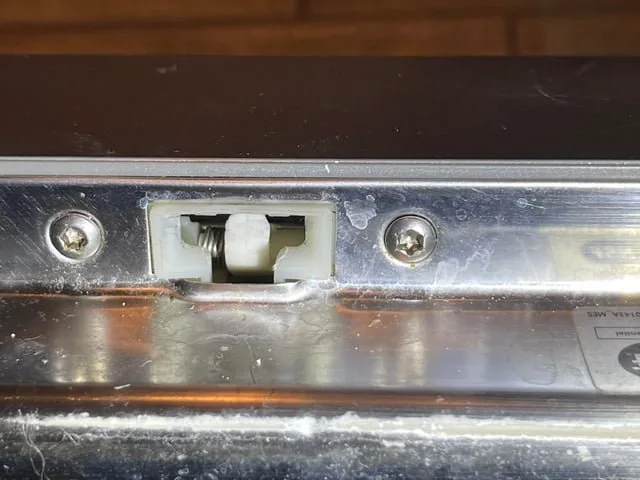
-
Press the dishwasher door firmly against the frame with both hands while pulling the handle to see if the latch releases. This pressure often relieves tension on a stuck strike plate, allowing the mechanism to disengage.
-
Check if a dish or a utensil rack is pushing against the door from the inside, which often jams the lock. If you feel resistance that feels springy rather than solid, a protruding handle or plate is likely the culprit.
-
Use a plastic putty knife or a butter knife to gently push down on the latch lever if it’s visible. Don’t force it. If the lever doesn’t move with light pressure, stop immediately to avoid snapping the plastic housing.
-
Verify that the power is off at the breaker to ensure no cycle starts while you work on the door. Never skip this step.
What is actually happening
The latching mechanism acts as a mechanical bridge between the door and the control board. Most modern dishwashers use a strike plate attached to the frame and a spring-loaded hook located inside the door. When you close the door, the hook catches the strike plate, creating a seal and triggering an electrical switch that tells the machine it’s safe to start.
If the dishwasher door latch is stuck closed, it’s usually because the hook has caught on the strike plate but can’t retract because the spring has snapped, or the plastic housing around the latch has expanded due to heat. A common mistake is forcing the door open with a screwdriver, which often shatters the plastic housing and turns a simple spring replacement into a full door assembly repair.
A less common but serious cause is a faulty thermal fuse or a control board error that prevents the solenoid from firing the release. In some models, the door has a secondary safety interlock that engages if the system detects a leak or a pressure imbalance.
If the problem is purely mechanical, the hook is physically bound. If the problem is electrical, the latch might be locked by the software to prevent opening while the basin is full of hot, soapy water. Always remember that a mechanical latch failure is a common wear-and-tear issue, whereas an electrical lock is a built-in safety feature.
Use this decision rule: if you hear a distinct click but the door won’t budge, the issue is likely the strike plate alignment. If you hear nothing at all, the solenoid or the power supply to the latch is the culprit. If the machine is mid-cycle, wait ten minutes for the water to cool; the system may be intentionally holding the door shut to prevent a scalding hazard.
Check these, cheapest first
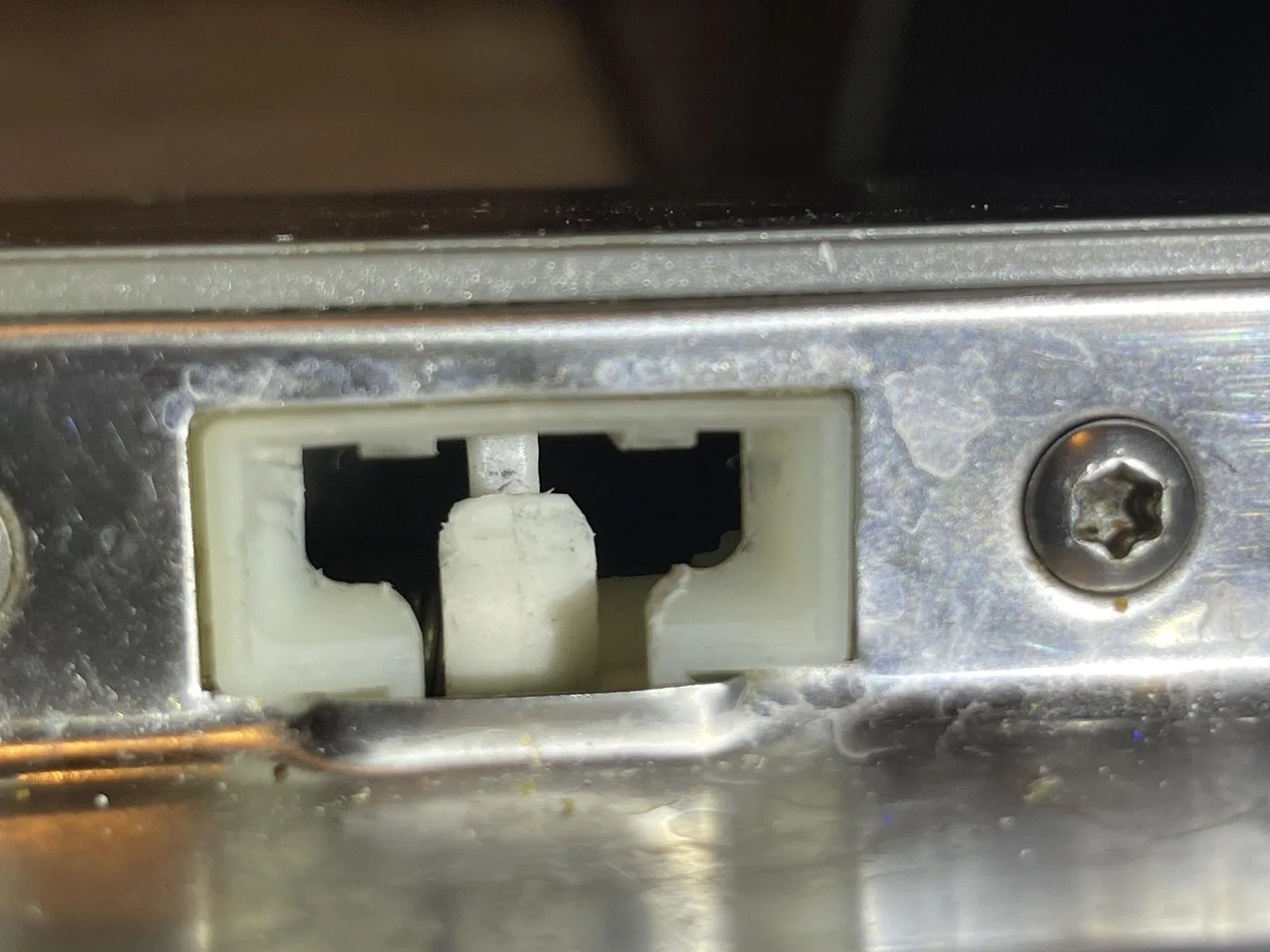
Inspect the strike plate
Look at the metal or plastic piece on the top of the dishwasher frame. If it looks bent or loose, it’s stopping the latch hook from releasing. Use a screwdriver to tighten the screws if they have wiggled out over time.
Check the rack position
Ensure no plates or tall items are pressing against the door. If a bowl is wedged against the seal, the pressure prevents the latch from disengaging. Try to wiggle the door to create space.
Clean the door seal
Gunk and food buildup can act like glue around the door frame. Wipe the edges with a hot, damp cloth to remove sticky residue. If the seal is dirty, it creates enough friction to make the door feel locked.
Test the handle movement
If the handle feels loose or floppy, the internal plastic linkage has likely snapped. A handle that offers no resistance means the cable or rod connecting it to the latch is disconnected.
Inspect the latch hook
Use a flashlight to look into the gap between the door and the frame. If the hook is stuck in the “up” position, it’s caught on the strike plate. You may need to jiggle the door to release the tension.
The fix
To fix a mechanical jam, you must relieve the tension on the latch hook. First, ensure the dishwasher is empty of water; if it’s full, use a manual pump to remove the water, as the door lock is designed to stay shut when water is present to prevent flooding.
Once empty, use a thin, stiff piece of plastic, like a credit card, to slide into the gap near the latch area. Push the card upward or downward while simultaneously pulling the door handle. This often forces the spring-loaded hook to retract manually.
If the latch is held by a solenoid that won’t fire, you must ensure the unit is unplugged or the breaker is off before attempting to reach the internal components. For many models, the latch assembly is held by two screws under the top control panel. Once you remove these screws, you can lift the panel slightly to access the latch housing.
Check the tension spring inside the assembly. If the spring is stretched or missing, the latch can’t reset itself. If the plastic spring is broken, the entire latch assembly must be replaced with a new part matching your model number.
A common mistake is forcing the door open with a screwdriver, which often cracks the internal plastic housing. This error usually costs an extra amount for a new door frame kit. The fix is successful if the door clicks firmly into place and releases smoothly.
Where this stops being a DIY job
You should stop if you need to remove the inner door panel or handle any electrical wiring connected to the control board. These components operate on household current and pose a significant risk of shock if handled incorrectly.
Most homeowners make the mistake of assuming the power cord is the only source of danger. This oversight can lead to severe injury or permanent damage to the control board’s delicate circuitry.
If you can’t release the door using the external method described, contact a certified appliance technician. They will start by checking the door interlock switch and the thermal fuse for continuity using a multimeter.
The decision rule is simple: if the latch mechanism is purely mechanical, you can proceed. If the failure involves a sensor, a board, or a sealed electrical housing, stop immediately. If these parts have failed, a professional replacement restores the safety interlock and prevents pressurized water leaks during operation.
Frequently asked questions
Can I force the door open with a crowbar?
No, you should never use a crowbar or heavy metal tools on a dishwasher door. The door is made of thin plastic and metal that will bend or crack under pressure. If you force the door, you’ll likely destroy the door seal and the latch housing, which makes the repair much more expensive than a simple latch replacement.
Is it safe to use the dishwasher if the latch is broken?
No, you shouldn’t use the dishwasher if the door latch isn’t working correctly. The latch ensures the door seal is tight, and if it fails, the machine can leak hot water onto your floor. Furthermore, the dishwasher won’t start a cycle if the interlock switch doesn’t detect that the door is securely closed.
Why does my dishwasher door lock during the cycle?
It’s normal for the door to lock during a cycle to prevent hot water from spraying out. The electronic solenoid engages the lock as soon as the cycle begins and releases it only after the cycle finishes and the water drains. If it stays locked after the cycle, it’s usually a sign of a failed drain pump or a faulty latch solenoid.
How long does a dishwasher latch typically last?
Most latches last for the duration of the machine’s life, but they can fail sooner if the door is slammed or the racks are overloaded. There’s no specific expiration date, as it varies by model — check the label or the manufacturer’s site for your specific part maintenance. If you notice the handle feels loose, inspect the latch before it fails completely.
Does it matter if I replace the latch with a generic part?
Yes, it matters because most generic latches don’t fit the specific mounting points or electrical connectors of your model. Using the wrong part can lead to leaks or electrical shorts that damage the control board. Always use the manufacturer-specified replacement part to ensure the door seals correctly and the safety interlock functions as intended.
What happens if I keep pulling on a stuck door?
If you pull too hard on a stuck door, you risk breaking the handle and the plastic paneling around the latch. This turns a simple, inexpensive repair into a major structural fix that might require replacing the entire door assembly. If the door doesn’t open with gentle pressure, stop and call a professional.
Final Thoughts
If you still can’t get the unit open, it’s best to call a professional before you force the mechanism and cause more damage. They’ll quickly spot if a part’s worn out and needs replacing. You shouldn’t worry too much, as most latch issues are simple fixes that won’t break the bank.