
Most problems are caused by a simple sensor misread or a blocked drain, which you can often fix without a technician. Samsung Washer Error Codes act as a diagnostic language for your machine, and you should stop using the appliance immediately if you hear loud grinding noises or smell burning plastic. To confirm the cause, check your manual or the official Samsung support page for the specific code displayed on your control panel. A quick reset by unplugging the unit for one minute often resolves temporary electronic glitches that trigger these alerts.
Understanding Samsung washer error codes
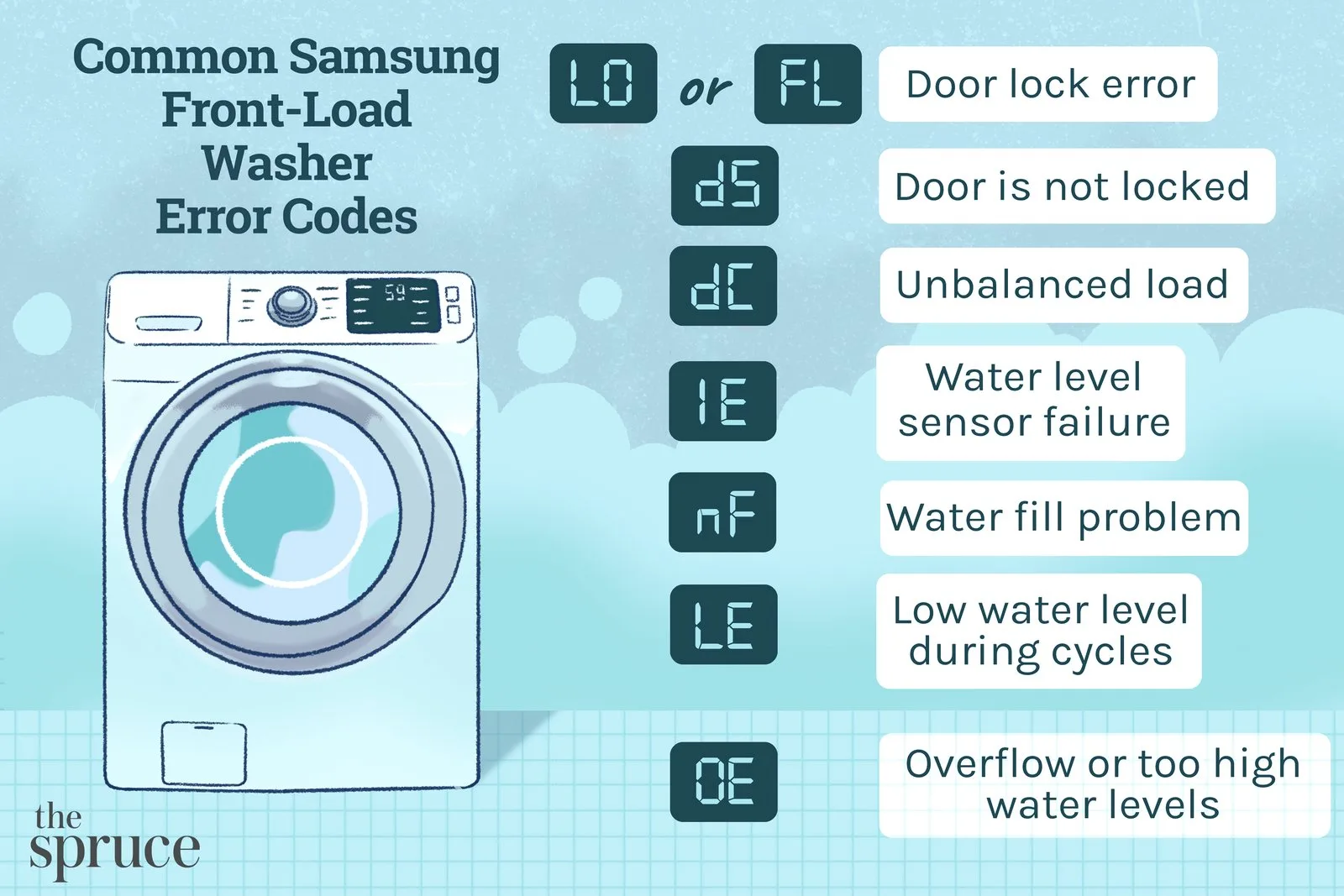
| What you notice | What it usually means | What to do first |
|---|---|---|
| 4E or 4C code | Water supply issue | Check faucet and hoses |
| 5E or 5C code | Drainage blockage | Clean the drain filter |
| dE or dC code | Door not locked | Close door firmly |
| UE or E4 code | Unbalanced load | Rearrange heavy laundry |
| LE or LC code | Water leak detected | Inspect floor for water |
| HE or H1 code | Heating element error | Check temperature settings |
| OE or OC code | Water overflow | Turn off water supply |
Most users mistake the 4E code for a mechanical failure. In reality, it signals that the machine isn’t receiving enough water within the allotted time, often due to restricted flow or a faulty inlet valve. If your hoses are kinked, the machine can’t draw water fast enough to meet the cycle timer.
When you see the 5E code, don’t simply restart the cycle. First, check the drain hose to ensure it isn’t inserted too far into the standpipe, which can create a siphon effect if the hose end is lower than the water level in the drum.
The UE code is the most common error. If you’re washing a single heavy item like a bath mat, the machine can’t balance the weight. If the load is unbalanced, remove the item or redistribute it; don’t add more items.
If an LE code appears, immediately check the base of the machine. If you see moisture, the internal leak sensor has tripped. Stop the machine and unplug it to prevent a short circuit. Don’t attempt to bypass the sensor, as this can lead to permanent motor damage.
Drainage and filter blockages
A drainage error happens when the washer can’t push water out fast enough, usually because the debris filter is clogged with lint, coins, or small objects. You can confirm this by opening the small access door at the bottom front of the machine. Expect some water to spill out when you open the filter; this is normal.
To fix this, place a shallow pan under the filter cover to catch the water that will spill out. Slowly unscrew the filter cap counter-clockwise. Pull the filter out and remove any hair, coins, or buttons stuck inside the housing. Rinse the filter under a sink faucet until it’s clear of grime. Check the drain hose behind the machine to ensure it isn’t kinked or crushed against the wall. Once the filter is clean and screwed back in tightly, run a spin-only cycle to see if the machine drains properly. If the error code disappears, you have solved the problem.
This varies by model — check the label on your specific machine, as some units have a small emergency drain tube next to the filter that you must empty first to prevent a flood. If you find the filter is clear but the washer still shows the code, the drain pump itself may be failing. This is a mechanical failure that requires a professional repair service.
Door lock and sensor errors
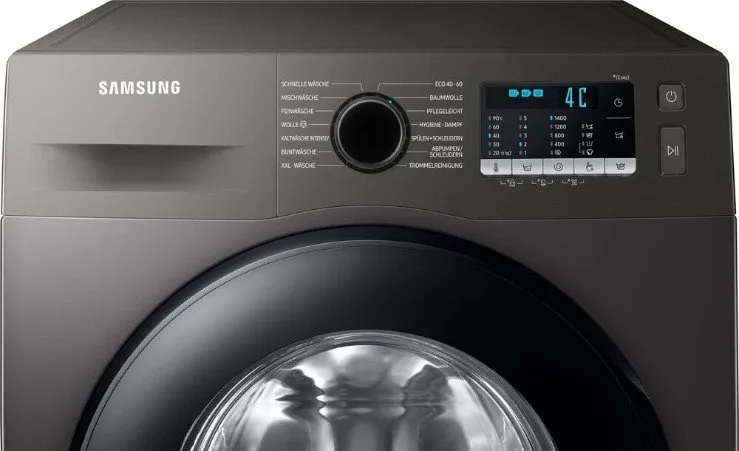
The washer won’t start if the door sensor can’t confirm that the lid is locked, which prevents water from filling. This often happens because a small piece of clothing is caught in the rubber gasket, or the latch assembly has shifted slightly.
To check this, open the door and inspect the rubber seal for any trapped socks or fabric. Ensure the door clicks audibly when you push it shut. If it clicks but the code remains, try pressing firmly against the door while hitting the start button. If the washer starts, the latch is likely loose and needs a mechanical adjustment. A common mistake is slamming the door too hard, which can damage the plastic housing of the latch, leading to a permanent error.
If the door is physically closed but the machine still shows a lock error, the sensor might be faulty. A trade-off exists here: you can attempt to clean the sensor area with a dry cloth, but if the internal switch is broken, you can’t fix it without replacing the locking mechanism. This is a task for a qualified technician, as it involves removing the front panel. If the code clears and the machine begins a cycle, the issue was simply a physical obstruction or a momentary sensor miscommunication.
Unbalanced load and vibration warnings
An unbalanced load error occurs when the laundry is bunched to one side of the drum, causing the machine to vibrate excessively or stop the spin cycle to protect the motor. This usually happens when washing a single heavy item, like a rug or a thick blanket, which absorbs a large amount of water and shifts the center of gravity.
You can confirm this by opening the door and feeling if the wet clothes are all clumped on one side. The fix is straightforward: redistribute the items evenly around the drum. If you’re washing a bulky item, add a few smaller towels to help balance the weight distribution. If the machine is on an uneven floor, it will continue to show this error regardless of how you load it. Use a bubble level on top of the washer to ensure all four leveling legs are touching the ground firmly.
If the washer is level and the clothes are balanced, but the error persists, the suspension springs or shock absorbers inside the unit might be worn out. This isn’t for a beginner. If you have been using the machine for many years, the suspension components naturally lose their tension. If the error code stops appearing after you redistribute the load, the issue was simply the weight distribution of the laundry.
When to stop and get help
- Burning smell: If you detect the odor of hot plastic or ozone, stop immediately to prevent a fire hazard.
- Water leakage: If water is pooling on the floor, turn off the water supply valves to prevent property damage.
- Loud grinding: A loud, metallic scraping sound during the spin cycle indicates a failing drum bearing or motor.
- Electrical sparks: If you see any light or smoke coming from the control panel, disconnect the power at the breaker.
Never attempt to open the rear or top housing of your washer, as a capacitor can hold a lethal charge even when the power cord is unplugged. If the error codes persist after you have cleaned the filter and balanced the load, the issue is likely a faulty control board or a failed internal sensor. These components require specialized diagnostic tools and training to replace safely. Please contact a licensed service technician or the manufacturer’s authorized repair department to handle these complex mechanical and electrical failures.
Frequently asked questions
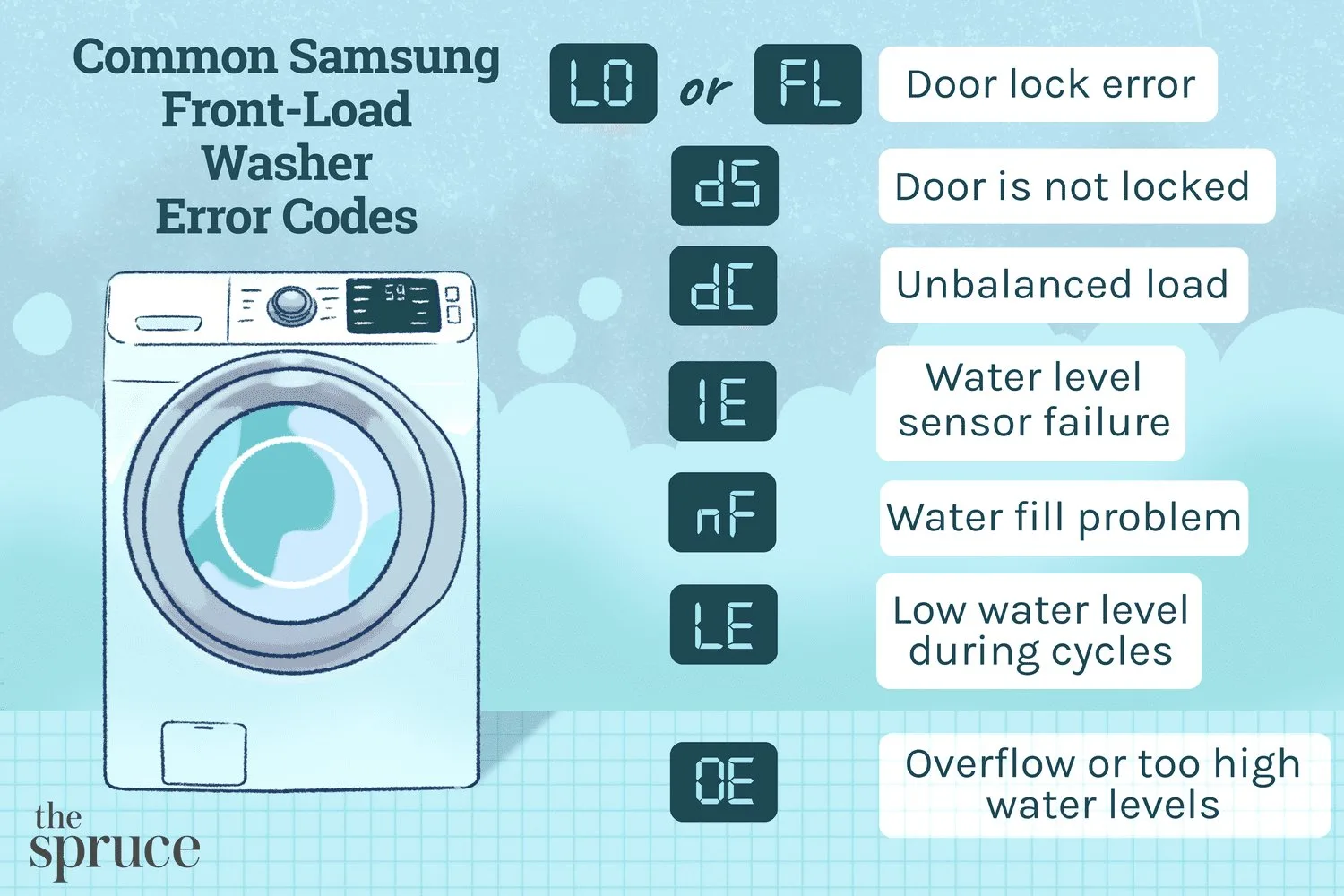
Can I clear the error code by unplugging the washer?
Yes, unplugging the washer for one minute can clear many temporary electronic glitches. This process forces the control board to reboot and re-scan the sensors. If the error code returns immediately after plugging it back in, the problem is physical or mechanical rather than a simple software hiccup, and you’ll need to address the underlying issue, such as a clogged filter or a faulty door latch.
Is it safe to keep using the washer with an error code?
No, you shouldn’t continue using the washer if an error code is present. Running the machine while it’s struggling—such as when it can’t drain or is unbalanced—can lead to severe damage to the motor, the pump, or the floor of your home. Always address the specific error code before you attempt to run another laundry cycle to avoid costly repairs.
What happens if I ignore the 5E drain error?
Ignoring a drainage error will lead to standing water inside your machine, which can cause mold growth and unpleasant odors. Over time, the drain pump may burn out because it’s struggling to operate against a blockage. If you notice water sitting in the drum after a cycle, stop using the unit and clean the debris filter immediately to prevent further damage to the pump.
How long does it take to fix a door lock error?
About 10 to 15 minutes is usually enough to inspect the door seal and latch area for obstructions. Most of the time, removing a small piece of clothing caught in the gasket resolves the issue instantly. If the latch is broken, you can’t fix it yourself, so you should stop and call a professional rather than forcing the door, which can break the plastic handle.
Does it matter if the washer isn’t perfectly level?
Yes, an unlevel washer will cause constant vibrations and frequent unbalanced load errors. The machine relies on a stable base to spin safely at high speeds. If the legs aren’t adjusted to touch the floor evenly, the internal sensors will detect the movement and stop the cycle to prevent the machine from “walking” or damaging its internal suspension system.
Why does my washer show an error code only during the spin cycle?
The spin cycle is when the machine is under the most stress, which is why sensor issues often appear then. If the drum is off-balance or the water can’t drain fast enough at high speeds, the electronics will trigger an error to protect the motor. Check your leveling legs and your drain filter first, as these are the most common culprits during high-speed operation.
Final Thoughts
If these simple fixes don’t get your laundry moving again, it’s time to reach out to a professional. Don’t hesitate to schedule a service visit if you’re still seeing an alert, as it’s better to be safe than sorry. You’ll have your machine running smoothly and reliably in no time.