
Brown Water After Shocking Well occurs because the high concentration of chlorine breaks loose iron and manganese deposits from your pipes and well casing, which then flow into your home. This is a common reaction when you use a strong oxidizing agent on aging plumbing infrastructure. The discoloration is usually temporary and often clears up with heavy flushing of the system. If the water remains colored after extensive use, you may need to check your well’s specific mineral content or the condition of your pipes.
Why You Have Brown Water After Shocking Well
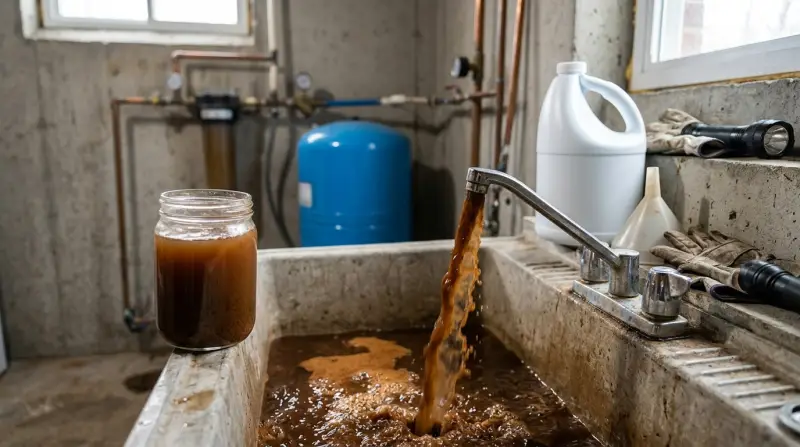
The primary cause of the brown tint is the oxidation of minerals that were already present in your well or on the inner walls of your plumbing. When you add a large amount of bleach or another chlorinating agent, the chemical reaction quickly pulls iron and manganese out of the pipes. These minerals were sitting there, dormant, until the shock treatment changed the water chemistry.
Another cause is the disturbance of sediment at the bottom of the well. As the chlorine solution sinks or circulates, it can stir up fine particles of silt or clay. This happens more often if your pump is set close to the bottom of the well where material has settled over many years.
Finally, older steel or iron pipes are prone to internal corrosion. The shock treatment acts like a chemical scrub, stripping away layers of rust that have built up over time. If your home has galvanized piping, the shock process is almost guaranteed to release some of this rust into your lines. If you have plastic (PVC) piping, you’re less likely to see rust, but you may still see manganese staining which looks dark brown or black.
Flush the pipes thoroughly
This fix is for anyone who has just completed a shock treatment and sees discolored water coming from the taps. To start, connect a garden hose to the outdoor spigot nearest your well pump. Turn the water on full blast and let it run onto the ground, away from the wellhead, until the water turns clear. Once the outside water is clear, move inside your home and open every cold water faucet, starting with the one closest to the pressure tank and working your way to the furthest point in the house.
Run each tap for several minutes while monitoring the water color. Don’t run dark water through your water heater, as this pushes iron sediment into the tank and causes long-term damage. If you have a low-yield well, run the water for 15 minutes, then stop for 30 minutes to allow the well to recover.
Use a sediment filter
If flushing doesn’t clear the water after two days, you likely have a high level of suspended iron or manganese that needs mechanical removal. A sediment filter acts as a physical barrier to catch these particles before they enter your home’s internal plumbing. For most homes, a five-micron spun polypropylene filter is the standard starting point.
Install the filter housing on the main cold water line after the pressure tank but before the water enters your water heater or softener. If your water is extremely brown, you may need to start with a twenty-micron filter to catch the large chunks, then move to a five-micron filter once the water clears up. If you notice a sudden drop in water pressure throughout your house, it’s a sign that the filter is full and needs replacement. This is a DIY job for most, but if you aren’t comfortable cutting into your main water line, call a licensed plumber to avoid leaks or pipe damage.
Test for mineral levels

If the water stays brown for more than a week, you likely have high concentrations of dissolved minerals that require professional testing. Contact a certified laboratory to measure iron, manganese, and hydrogen sulfide levels. These results will determine if you need a specialized treatment system, such as an iron filter or aeration.
Testing is worth the time and money if you have tried flushing and filtering but still can’t get clear water. It isn’t worth the expense if the water was perfectly clear before the shock treatment, as that suggests the issue is temporary and will resolve on its own.
The primary mistake is waiting too long to sample. Always collect the sample in a sterile, laboratory-provided vial rather than a household container.
In this case, you must install a dedicated iron oxidation system.
Contact your local university extension office or a state-certified lab for the correct containers. Don’t use home test strips; they lack the precision to distinguish between dissolved and particulate metals, which is the difference between needing a filter and needing a chemical injection system.
What not to do
Don’t turn on your hot water taps while the brown water is present. This draws sediment directly into your water heater tank, where it settles at the bottom. Over time, this buildup insulates the heating element, forcing the unit to work harder and significantly shortening its lifespan.
Avoid using your clothes washer or dishwasher during this time. The high concentration of iron and manganese will permanently stain fabrics and potentially clog the delicate solenoid valves in your appliances. If you accidentally run a load, don’t dry the clothes; the heat will set the metallic stains, making them nearly impossible to remove.
Don’t drink the water until it’s clear and you have verified the residual chlorine levels. High concentrations of shock chemicals used to treat the system aren’t safe for consumption. Use the decision rule: if the water remains cloudy after ten minutes of flushing, wait another hour before testing again.
Don’t keep running the pump if you hear it struggling or making a grinding noise. This indicates the pump is drawing air or heavy sediment, which leads to catastrophic motor failure. Turn the breaker off immediately to prevent a costly pump replacement.
How to stop it happening again
Regular maintenance of your well and plumbing system is the only way to avoid these surges of brown water after future shock treatments.
| If you’re doing this | Do this instead | Why |
|---|---|---|
| Ignoring sediment buildup | Install a whole-house filter | Catches minerals before they enter |
| Running all taps at once | Flush one faucet at a time | Prevents overwhelming the pump |
The most common mistake is assuming that a “routine” shock is harmless. In reality, chlorine strips the protective biofilm inside aging iron pipes, which immediately releases years of accumulated rust into your water supply.
Use this decision rule: if your annual water test shows zero coliform bacteria, skip the shock entirely. If you must shock, keep the chlorine concentration below 200 parts per million.
If you notice a metallic taste or faint yellow tint, stop flushing immediately. You’re pulling sediment from the bottom of the well. Wait four hours for the particles to settle, then resume flushing at a trickle. This prevents a minor clouding from becoming a week-long plumbing nightmare.
Frequently asked questions

Can I drink the water while it’s brown?
Don’t drink brown water because it contains high levels of oxidized iron, manganese, and excess chlorine from the shock treatment. You must flush the lines completely until the chlorine smell disappears. If you have any doubt about safety, use bottled water until you receive a negative result from a state-certified laboratory.
Why is my water brown only in the morning?
Brown water in the morning occurs because minerals settle in your pipes while the water is stagnant overnight. Running the cold tap for a few minutes usually clears this sediment. This is a common sign that your pipes contain significant loose rust or mineral buildup.
How long does it take for the brown water to clear?
It typically takes 24 to 48 hours of intermittent flushing for water to clear after a shock treatment. The exact duration depends on your well pump model and pipe material. If the water remains brown after a week, you may need to install a permanent filtration system.
Is it safe to shower in brown water?
Avoid showering in brown water because the iron and manganese can stain your skin, hair, and clothing. The water may also contain harsh chlorine levels that cause skin irritation. Wait until the water runs completely clear before bathing to prevent these issues.
What happens if I don’t flush the pipes?
Failing to flush your pipes after shocking a well allows concentrated minerals and chlorine to cause long-term damage. Iron can permanently stain fixtures, while sediment clogs aerators and appliance components. This buildup leads to reduced water pressure and potentially expensive repairs for your home’s plumbing systems.
Final Thoughts
If the water doesn’t run clear after a few hours of steady flushing, you shouldn’t worry too much. It’s a good idea to have your water tested by a local professional to ensure everything is balanced. They’ll help you decide if you need a filter to keep your pipes clean long-term.
Related guides
- Tankless Water Heater Goes Cold After a Few Minutes? Fix It Fast
- Lg Refrigerator Water Not Cold
- Add Water Light on Keurig Not Working