
Chest freezer buzzing noises are usually normal, but you must check the unit for signs of electrical failure. If the noise is a sharp, metallic grinding or if you smell burning plastic, unplug the device immediately to prevent a fire.
If the appliance feels hot to the touch or the internal temperature rises above 40°F, move your food to a backup freezer or cooler right away. A common mistake is assuming the compressor is simply cycling; if the unit stays hot for more than two hours, the cooling system has likely failed.
According to FoodSafety.gov’s cold food storage charts, keeping your food at safe temperatures is critical to prevent the growth of harmful bacteria. If the freezer is in a damp basement, check the power cord for fraying or corrosion. If you see exposed copper, replace the cord entirely rather than using electrical tape. Don’t attempt to open the motor housing or touch internal wires, as capacitors can hold a lethal charge even when unplugged.
Do this first
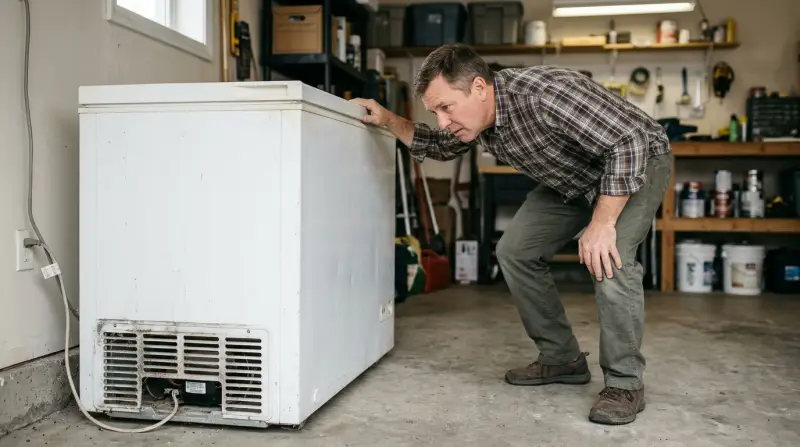
Check your owner’s manual for required clearance, as most chest freezers only require a few inches of space at the back or sides for ventilation. Without this gap, heat traps against the casing, forcing the compressor to cycle continuously. This shortens the lifespan of the motor by years.
Verify the floor is level by placing a bubble level on the lid. If it’s tilted, adjust the leveling feet until the unit sits flat to prevent vibration noises. A freezer that rocks even slightly will eventually stress the internal refrigerant lines, leading to slow, invisible leaks.
Clean the condenser coils with a soft brush or vacuum attachment if they’re covered in dust. Thick buildup acts as insulation, forcing the compressor to work harder and louder to maintain temperature. Aim to clear these coils regularly to keep energy costs stable.
Ensure the freezer is plugged into a dedicated wall outlet rather than an extension cord. Extension cords often cause voltage drops, which trigger strange humming sounds or premature motor failure. If the unit trips a breaker, you must install a dedicated circuit immediately to prevent spoilage.
What is actually happening
The most common cause of noise in a chest freezer is the compressor cycle. When the internal thermostat detects that the temperature has risen, it signals the compressor to start pumping refrigerant through the cooling system. This process creates a low-frequency hum or buzz that’s perfectly normal for most modern appliances. If the buzzing is accompanied by a rattling sound, it’s often caused by loose tubing or a vibration against a nearby wall or floor surface.
Another frequent cause is the condenser fan, which circulates air over the coils to dissipate heat. If the fan blades become obstructed by debris or if the motor bearings are worn, you’ll hear a repetitive buzzing or clicking sound. In some cases, the noise comes from the start relay, a small component that helps the compressor kick into gear. If the relay is failing, it may produce a sharp buzzing or clicking noise as it repeatedly tries and fails to start the motor.
Be aware that internal ice buildup can also cause noise if the fan blades strike a patch of frost. This is more common in manual-defrost models that have been left running for too long without cleaning. If you’re uncertain about the source of the noise, consult your owner’s manual for a diagram of your specific model. The manual will identify where the compressor and fan are located, allowing you to listen more closely to each part. If the noise persists after clearing debris and leveling the unit, the issue is likely a mechanical component within the sealed cooling system that requires professional inspection.
Check these, cheapest first

Check for loose items
Look around the base and sides of the freezer for any objects touching the metal casing. If a box or broom is leaning against the unit, it will amplify the vibrations into a loud buzz. Simply moving these items away often solves the problem instantly.
Inspect the leveling feet
Use a level to ensure all four corners of the freezer are touching the floor firmly. If one foot is hanging in the air, the entire frame will wobble during the compressor cycle. Adjust the threaded feet until the unit is stable and no longer rocks when you push it.
Clean the condenser coils
Unplug the unit and use a vacuum to remove dust from the coils, usually located behind a grille at the bottom. If the coils are dirty, the compressor runs longer and louder to maintain temperature. This takes about 10 minutes and requires only a vacuum hose or a long-handled brush.
Examine the fan blades
If your model has an external fan, look through the back grille to see if anything is touching the blades. A small piece of plastic or thick dust can cause a loud buzzing as the fan spins. If you see an obstruction, remove it carefully with a non-conductive tool while the unit is unplugged.
The fix
If the freezer is level, clean, and has enough airflow but still buzzes, the issue may be a loose compressor mount. The compressor sits on rubber grommets designed to absorb vibration. Over time, these can harden or crack, causing the metal housing of the motor to vibrate against the frame.
You can often stop this by tightening the bolts holding the compressor base, but don’t overtighten them. Overtightening compresses the rubber further, which often amplifies the vibration into the chassis. If the bolts are already snug, slide a small piece of rubber or a thick washer between the mount and the frame to create a buffer.
If the sound is a high-pitched electrical buzz, the issue might be the start relay. This small box attached to the side of the compressor is easy to replace if you have the correct part number from your manufacturer’s label. A common mistake is buying a universal relay; these rarely provide the exact resistance needed for specific hermetic compressors and can lead to premature motor burnout.
If the buzzing is coming from the fan motor, check if the blades spin freely by hand while the unit is unplugged. If the blades feel stiff or grind, the motor bearings are shot and the fan assembly must be replaced. This varies by model; check the label for the exact part number before ordering a replacement.
If the fix has worked, the freezer should return to its normal, quiet hum within an hour of being plugged back in. If the noise returns within a week, the compressor itself may be failing. This is a sign that the cooling system is nearing the end of its functional life, and a professional technician should evaluate the refrigerant pressure before you invest in further repairs.
Where this stops being a DIY job
You must stop all self-repairs if the noise is coming from inside the sealed compressor unit or if you suspect an electrical short. A capacitor can hold a lethal charge even when the freezer is unplugged, and tampering with the sealed refrigerant lines is illegal in many regions due to environmental regulations.
If the compressor is the source of the noise, you need a certified refrigeration technician. They have the specialized tools to safely discharge electrical components and test the refrigerant pressure.
A common mistake is assuming a loud hum is always a failing compressor. If the noise stops when you open the door, it’s likely the evaporator fan motor, which is a manageable DIY fix.
Before calling a pro, write down your freezer’s model and serial number, usually found on a sticker inside the lid or on the back panel. Tell the technician that you have already leveled the unit and cleaned the coils. This allows them to skip the basics and focus immediately on compressor or relay diagnostics.
Frequently asked questions
Can I leave a buzzing freezer running?
Yes, you can leave it running if the noise is a steady, low hum and the freezer is still keeping food frozen at 0°F. If the buzzing is loud, metallic, or accompanied by a burning smell, it isn’t safe. Turn it off immediately to prevent an electrical fire and check your internal temperature with a thermometer.
Why is my freezer buzzing louder than before?
It’s likely that the condenser coils are clogged with dust, forcing the compressor to run longer and harder. This creates more heat and noise as the system tries to reach the set temperature. Clean the coils thoroughly and ensure there’s at least 4 inches of clearance around the unit to improve airflow and reduce the strain on the motor.
Is a buzzing sound a sign the freezer is dying?
Not always, as it could just be a loose part or a dirty fan. However, if the buzzing is constant and the freezer is struggling to maintain temperature, it may indicate a failing compressor. If the noise started suddenly and the freezer is no longer cooling, the compressor or the start relay is likely at the end of its life.
Does a buzzing sound mean the refrigerant is leaking?
No, refrigerant leaks usually sound like a soft hissing or bubbling, not a loud buzz. A buzz is almost always mechanical or electrical in nature. If you hear hissing, leave the area and contact a professional, as some refrigerants are flammable and pose a health risk if inhaled in a closed room.
How long should a chest freezer hum?
The compressor should cycle on and off throughout the day depending on how often you open the lid and the ambient room temperature. It’s normal for the hum to last for 20 to 40 minutes per cycle. If it runs constantly without stopping, the thermostat may be faulty or the door seal is leaking cold air.
Does the floor surface affect the noise?
Yes, placing a heavy chest freezer on a hollow or uneven floor will amplify every small vibration. If you have a wooden floor, the gaps between boards can turn a normal motor hum into a loud, buzzing rattle. Placing a thick rubber mat under the freezer can help absorb these vibrations and keep the noise level down.
Final Thoughts
If the humming persists and you’re still worried, don’t hesitate to reach out to a professional technician. It’s better to be safe than sorry when it comes to your appliances. They’ll be able to inspect the compressor and make sure everything’s running smoothly so you won’t have to worry anymore.