
A Dyson vacuum is known for powerful cleaning and sleek design. But sometimes, users notice a bad smell coming from their Dyson. This can turn a great cleaning session into an unpleasant experience. You might wonder why your Dyson vacuum smells bad and how to fix it. In this guide, you’ll learn why this happens, how to solve it, and how to prevent it next time. Whether your vacuum smells like rotten eggs, mold, or pet odor, you’ll find clear answers and practical steps.
Why Does A Dyson Vacuum Smell Bad?
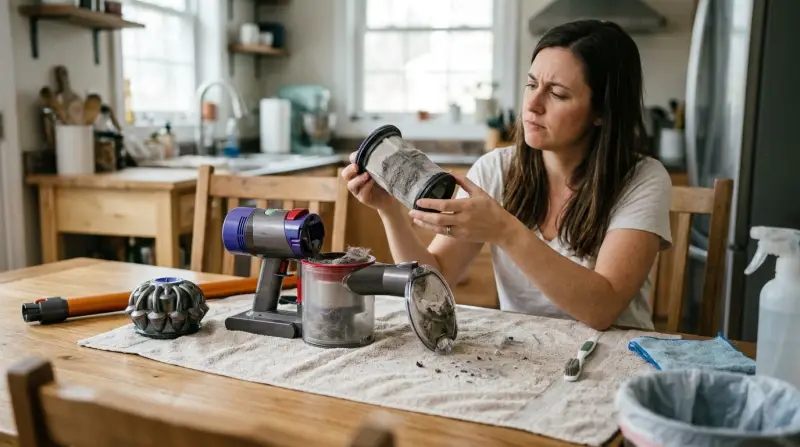
Vacuum cleaners deal with dirt, dust, and debris every day. Over time, these materials can cause odors. A Dyson vacuum may develop a bad smell for several reasons:
- Dirty Filters: Filters trap dust and allergens. If not cleaned, they collect bacteria and odors.
- Clogged Brush Bar: Hair and debris can wrap around the brush, causing smells.
- Full Dust Bin: When the bin is too full, dirt starts to decompose and smell.
- Wet Debris: Moisture from spills or wet dirt can lead to mold and bad smells.
- Pet Hair: Pet dander and hair often carry strong odors, especially when stuck in filters.
- Blocked Air Pathways: Dust build-up in airways can trap smelly particles.
Common Smell Types
Not all odors are the same. Here are the most frequent:
- Burnt smell: Often means the motor is overheating or the brush bar is blocked.
- Musty smell: Usually signals mold or mildew, often from wet debris.
- Rotten smell: Can come from decomposing food or organic matter sucked up by accident.
- Pet odor: Stuck pet hair or dander can make the vacuum smell like animals.
Knowing the type of smell helps you find the right fix.
How To Fix A Smelly Dyson Vacuum
You don’t need to buy a new vacuum. There are effective ways to clean and remove odors. Let’s go step by step.
Step 1: Empty And Clean The Dust Bin
A full or dirty dust bin is a common cause. Follow these steps:
- Remove the bin from your Dyson.
- Empty all contents into the trash.
- Wash the bin with warm, soapy water.
- Dry completely before reattaching.
Most Dyson bins are made from plastic, so you can clean them with dish soap. Make sure no moisture is left—wet bins encourage mold.
Step 2: Wash Or Replace Filters
Filters need regular care. Depending on your Dyson model, you may have one or more filters.
- Remove filters as shown in your Dyson manual.
- Rinse under running water until water runs clear.
- Let filters air dry for at least 24 hours.
Never put a wet filter back in the vacuum. Some filters need replacing every 6–12 months. Check your model for exact guidelines.
Step 3: Clean The Brush Bar
Hair, threads, and dust build up fast. To clean:
- Unplug your Dyson.
- Remove the brush bar (check your manual).
- Cut away hair and threads with scissors.
- Wipe the bar with a damp cloth.
- Dry fully before reinstalling.
If you have pets, check the brush bar weekly.
Step 4: Check For Blockages
A blocked airway can trap smells. Dyson vacuums are designed with clear tubes and pathways.
- Look for stuck debris in the hose, wand, and tubes.
- Use a long stick or compressed air to clear blockages.
- Wipe inside the hose with a damp cloth.
Avoid using strong chemicals; they can damage the vacuum’s parts.
Step 5: Deodorize Safely
If the vacuum still smells, try these:
- Place a small amount of baking soda in the dust bin (never in filters).
- Use a cotton ball with a drop of essential oil in the bin.
- Run the vacuum for a few minutes to spread the scent.
Never use air fresheners or sprays inside the vacuum, as they can harm internal parts.

Credit: www.youtube.com
Preventing Bad Smells In Your Dyson Vacuum
Regular maintenance is the best way to avoid odors. Here’s how to keep your Dyson smelling fresh:
- Empty the dust bin after every use: Don’t wait until it’s full.
- Clean filters monthly: More often if you have pets or allergies.
- Check for blockages weekly: Especially if you vacuum larger debris.
- Dry everything completely: Wet parts lead to mold.
- Avoid vacuuming wet messes: Use a mop for spills first.
Dyson Model Comparison: Filter Types And Maintenance
Some Dyson vacuums have washable filters, others require replacements. Here’s a quick comparison:
| Dyson Model | Filter Type | Maintenance Frequency |
|---|---|---|
| Dyson V8 | Washable HEPA | Every 1–2 months |
| Dyson Ball Animal 2 | Washable HEPA | Monthly |
| Dyson V15 Detect | Washable HEPA | Every 1–2 months |
| Dyson DC40 | Replaceable HEPA | Every 6–12 months |
Always check your user manual for the correct filter care.
When To Replace Parts
Sometimes cleaning is not enough. You may need to replace parts if:
- Filters are damaged or won’t lose the smell.
- The brush bar is worn out or melted.
- Rubber seals are cracked, letting odors escape.
Replacement parts are available from Dyson or authorized sellers. Using non-Dyson parts can void your warranty.
Signs You Need A Replacement
Look for these signs:
- Persistent smell after cleaning.
- Reduced suction power.
- Unusual noises or vibrations.
If these occur, check which part needs replacing.
Common Mistakes To Avoid
Many users make mistakes that worsen smells or damage vacuums.
- Ignoring regular filter cleaning: Filters collect the most odor.
- Vacuuming wet messes: Moisture leads to mildew.
- Using harsh chemicals: Can damage plastic parts and seals.
- Reassembling parts while wet: Always dry completely.
- Overfilling the dust bin: This speeds up decomposition.
Avoiding these mistakes keeps your Dyson working and smelling fresh.
Comparing Dyson To Other Brands: Odor Control
Dyson vacuums have strong odor control compared to many brands, but they are not perfect. Here’s a quick look:
| Brand | Odor Control Features | Maintenance Needs |
|---|---|---|
| Dyson | Washable HEPA, sealed system | Monthly cleaning |
| Shark | Washable filters, anti-odor brush | Monthly cleaning |
| Hoover | Replaceable filters | Quarterly cleaning |
| Bissell | Febreze filter option | Monthly cleaning |
Dyson’s sealed system helps trap odors, but without proper maintenance, smells will develop.

Non-obvious Insights And Practical Tips
Many beginners miss these important points:
- Filter drying is crucial: Even slightly wet filters support bacteria and mold. Always air dry for at least 24 hours, even if they seem dry.
- Vacuum location matters: Storing your Dyson in a damp area (like a basement or bathroom) increases odor risk. Keep it in a dry, airy place.
- Odors from pets can be stronger: If you have multiple pets, clean filters and brush bars more often. Pet dander is sticky and quickly builds up.
Another tip: If you vacuum up food or organic matter by accident, empty and clean your Dyson immediately. Decomposition starts fast and odors can linger.
When To Call Dyson Support
If you’ve tried all the steps and your vacuum still smells bad, contact Dyson support. Some issues (like motor damage or deep mold) need expert help. You can also check the official Dyson website for guidance and warranty information. For more information on vacuum odor problems, visit Dyson Support.

Credit: www.wikihow.com
Frequently Asked Questions
Why Does My Dyson Vacuum Smell Like Burning?
A burning smell usually means the motor is overheating or the brush bar is blocked. Stop using the vacuum, unplug it, and check for blockages or tangled hair in the brush bar. If the smell continues after cleaning, the motor may be damaged.
How Often Should I Clean Dyson Filters?
Clean washable filters at least once a month. If you have pets, allergies, or vacuum often, clean them every two weeks. Replace filters every 6–12 months if your model uses non-washable types.
Can I Use Air Fresheners In My Dyson Vacuum?
Do not use air fresheners or sprays inside the vacuum. They can damage filters and internal parts. Instead, use a small amount of baking soda in the dust bin or a cotton ball with essential oil, but never add anything to the filter.
What Is The Best Way To Remove Pet Odor From My Dyson?
To remove pet odor, clean the dust bin, filter, and brush bar thoroughly. Wash all parts and let them dry completely. Clean filters more often if you have several pets, and avoid vacuuming wet pet messes.
Should I Replace Or Wash The Filter If My Dyson Smells Bad?
If washing the filter does not remove the smell, you may need to replace the filter. Some odors, especially from mold or burnt debris, stay even after cleaning. Check your user manual for replacement instructions.
Keeping your Dyson vacuum odor-free is not difficult, but it takes regular care. Empty the bin after each use, clean filters monthly, and check for blockages. Avoid vacuuming wet debris and store your vacuum in a dry place. If you follow these steps, your Dyson will stay fresh and effective.
Taking action now will save you from bigger problems later and keep your home clean and comfortable.