
If your dishwasher keeps blowing its thermal fuse, you’re not alone. Many people face this issue and don’t know why it happens or how to fix it. A dishwasher that won’t run because of a blown thermal fuse is more than just an inconvenience — it can signal deeper problems that could affect your safety and your appliance’s lifespan. Understanding what causes this failure and how to solve it will help you get your dishwasher working again and prevent future problems.
What Is A Dishwasher Thermal Fuse?
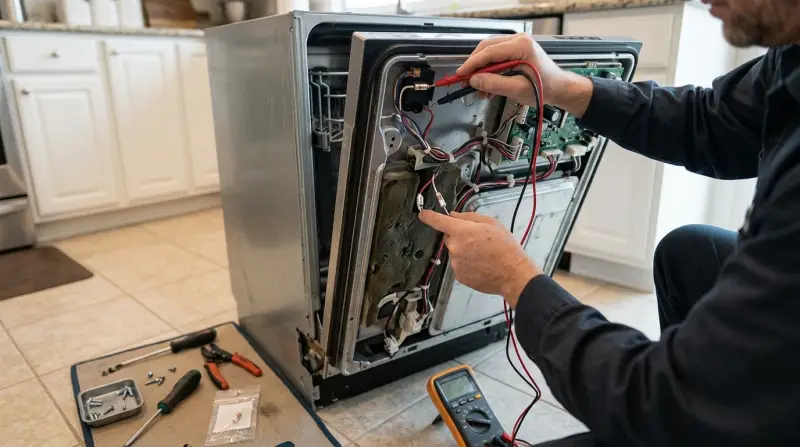
A thermal fuse is a small safety device inside your dishwasher. It’s designed to protect the machine from overheating. When the dishwasher gets too hot, the thermal fuse “blows” or cuts off the power to stop the risk of fire or damage.
Most thermal fuses are located on the control board or near the heating element. If the fuse blows, the dishwasher will usually stop working completely — no lights, no sounds, and no cycles will start. This is a clear warning that something is wrong.
Why Do Dishwashers Keep Blowing Thermal Fuses?
Understanding the causes is the first step to solving the problem. There are several common reasons:
1. Overheating
The most direct cause is overheating inside the dishwasher. This can happen if the heating element stays on too long, or if the thermostat that controls temperature fails.
2. Faulty Heating Element
A damaged or short-circuited heating element can draw too much power or heat up the area around the fuse, causing it to blow.
3. Control Board Problems
The control board is like the brain of your dishwasher. If it malfunctions, it might allow too much current to flow, or fail to shut off the heater at the right time.
4. Wiring Issues
Loose or damaged wires can create short circuits, increasing the risk of overheating or sending a power surge to the fuse.
5. Blocked Vents Or Poor Airflow
Blocked air vents inside the dishwasher cause poor airflow, trapping heat inside. This can raise the internal temperature and blow the fuse.
6. Door Latch Problems
If the door latch doesn’t close properly, the dishwasher may not seal, leading to heat loss and confused signals to the control board. This can result in overheating.
7. High-resistance Connections
Corroded or dirty connectors increase electrical resistance, which generates heat and can blow the thermal fuse.
8. Water Leaks
Leaks inside the dishwasher can reach electrical components, causing short circuits and blowing the fuse.
Signs Your Dishwasher’s Thermal Fuse Is Blown
If you suspect a thermal fuse problem, look for these signs:
- The dishwasher won’t start at all, even when plugged in
- No lights or display on the control panel
- The machine stops mid-cycle and won’t restart
- You hear no sounds or see no response when pressing buttons
Keep in mind, these symptoms can also signal other electrical issues, but a blown fuse is a common cause.
How To Confirm A Blown Thermal Fuse
Testing the thermal fuse is easy with the right tools and a careful approach. Here’s a simple process:
- Unplug the dishwasher or shut off the circuit breaker for safety.
- Access the control panel (usually under the door panel).
- Locate the thermal fuse (check your manual for its exact position).
- Remove the fuse.
- Use a multimeter to check for continuity. If the meter shows no continuity (an open circuit), the fuse is blown.
If you’re not comfortable with these steps, ask an experienced technician for help. Never work on a dishwasher while it’s plugged in.
Common Models And Where Fuses Are Located
Different brands and models place thermal fuses in different areas. Here’s a quick comparison:
| Brand | Typical Fuse Location | Replacement Cost (USD) |
|---|---|---|
| Whirlpool | Top of control panel | $15-$30 |
| Bosch | Near heating element | $20-$40 |
| GE | Control board area | $10-$25 |
| Samsung | Under door panel | $20-$35 |
Knowing your model helps you find and replace the fuse more easily.
Steps To Replace A Blown Dishwasher Thermal Fuse
Replacing the thermal fuse is a manageable task for many people. Here’s a step-by-step guide:
- Unplug the dishwasher or turn off the circuit breaker.
- Open the dishwasher door and remove the screws holding the inner door panel.
- Carefully take off the panel to access the control board area.
- Locate the thermal fuse (usually a small, rectangular or cylindrical component with two wires).
- Disconnect the wires from the old fuse.
- Remove the old fuse (sometimes held by a clip or screw).
- Attach the new thermal fuse, connecting the wires securely.
- Reattach the door panel and screws.
- Restore power and test the dishwasher.
If your new fuse blows soon after replacement, there’s likely a deeper issue that needs more attention.
Diagnosing And Fixing The Underlying Problem
Replacing the fuse fixes the symptom, not the cause. To avoid blowing another fuse, check these areas:
Heating Element
Use a multimeter to check for continuity. If the element is shorted or has visible damage, replace it.
Thermostat
A faulty thermostat can fail to regulate temperature. Test it for proper function. Replace if it’s stuck closed or open.
Wiring
Inspect all visible wires for signs of burns, melting, or fraying. Repair or replace damaged wires.
Airflow
Make sure vents are clear of debris or blockages. Clean the vent area and make sure nothing blocks airflow inside the dishwasher.
Control Board
If the heating element and thermostat are good, but the fuse keeps blowing, the control board may be failing. This is a more advanced repair and may require a professional.
Comparing Dishwasher Thermal Fuse Problems
Let’s compare the most common causes and their symptoms:
| Cause | Symptoms | Repair Difficulty |
|---|---|---|
| Heating Element | Overheats, visible burns | Moderate |
| Control Board | Random shutdowns, strange behavior | Hard |
| Wiring Issues | No power, intermittent function | Moderate |
| Blocked Vents | Hot surfaces, long cycle times | Easy |
This overview helps you decide which issue to check first based on your symptoms and repair skills.

What If The Fuse Keeps Blowing After Replacement?
If you’ve replaced the thermal fuse and it blows again soon after, don’t keep swapping fuses. This usually means you have a serious problem:
- Short circuit in heating element or wires
- Control board malfunction sending too much current
- Persistent overheating from blocked vents or a broken fan
Keep in mind, simply replacing the fuse without fixing the real issue can damage your dishwasher further or even create a safety risk.
Advanced Troubleshooting Tips
Sometimes, the problem isn’t obvious. Here are advanced checks you might not think of:
- Check for moisture in the control panel. Leaks or condensation can cause shorts.
- Inspect door seals for wear. Leaks around the door can send water into electrical parts.
- Test for voltage spikes. Rare, but unstable house wiring or surges can blow fuses.
- Look for signs of rodents or insects inside the machine. Chewed wires cause many electrical faults.
These checks are often missed by beginners but can be the key to solving stubborn problems.
How To Prevent Your Dishwasher From Blowing The Thermal Fuse
Prevention is easier than repair. Follow these tips to keep your dishwasher safe:
- Clean vents and filters regularly
- Don’t overload the dishwasher
- Fix leaks right away
- Inspect wiring every few months
- Replace worn door seals
- Use the right amount of detergent
- Avoid running the dishwasher if you notice burning smells or strange noises
Staying on top of basic maintenance will help your dishwasher last longer and avoid costly repairs.
Cost Of Repair Vs. Replacement
Sometimes, repeated thermal fuse issues signal that your dishwasher is at the end of its life. Here’s a quick comparison:
| Repair Option | Average Cost (USD) | When to Choose |
|---|---|---|
| Replace thermal fuse only | $10-$40 | Single fuse failure, no other issues |
| Replace heating element | $50-$150 | Element visibly damaged |
| Replace control board | $100-$300 | Fuse keeps blowing, board is faulty |
| Buy new dishwasher | $400-$1200+ | Old machine, multiple failures |
If your dishwasher is over 10 years old and keeps failing, replacement might be the smarter choice.
When To Call A Professional
Some problems are too complex or risky for DIY repair. If you notice:
- Burning smells or visible smoke
- Water leaking near electrical parts
- Multiple blown fuses in a short time
- Confusing wiring diagrams or hard-to-reach parts
Call a licensed appliance technician. They have the tools and training to fix the problem safely.
Additional Resources
For more detailed information on thermal fuses and dishwasher safety, visit the official Wikipedia page on thermal fuses.
Frequently Asked Questions
Why Does My Dishwasher’s Thermal Fuse Keep Blowing Repeatedly?
A fuse that keeps blowing usually means there’s an underlying problem like a faulty heating element, bad wiring, or a control board malfunction. Replacing only the fuse will not solve the real issue.
Can I Bypass The Thermal Fuse In My Dishwasher?
Bypassing the thermal fuse is not safe. The fuse is there to prevent fires and protect your appliance. Never run the dishwasher without it.
How Long Should A Thermal Fuse Last In A Dishwasher?
A thermal fuse should last several years if your dishwasher is healthy. If it fails often, check for overheating, faulty components, or wiring problems.
What Happens If I Use The Wrong Replacement Fuse?
Using the wrong fuse can be dangerous. An incorrect rating may not protect your dishwasher from overheating, which increases the risk of fire or damage.
Is It Worth Repairing An Old Dishwasher With Fuse Problems?
If your dishwasher is more than 10 years old and keeps having electrical faults, it might be more cost-effective to replace it rather than continue repairing individual parts.
A dishwasher that keeps blowing its thermal fuse is frustrating, but the good news is that the cause can usually be found with careful inspection. Whether you fix it yourself or call in a professional, acting quickly and understanding the risks will help you avoid bigger problems.
Always take safety seriously and never ignore warning signs. With the right steps, you can get your dishwasher running smoothly again and keep your kitchen safe.