
A dead battery or a loose wire connection is the most common reason you’ll find your Minka Aire Wall Control Not Working, occurring in the vast majority of cases. You can confirm this quickly by checking the wall plate for power indicators or testing the remote function if your model uses a dual-control system. If the indicator light doesn’t glow when you press a button, the issue is almost always a lack of power reaching the control unit.
Why your Minka Aire control stopped working
| Cause | How common | How to confirm it | Fix it yourself? |
|---|---|---|---|
| Dead battery | Very common | No light on control | Yes |
| Tripped breaker | Common | No power to fan | Yes |
| Loose wire | Occasional | Wiggle plate gently | Yes with care |
| Syncing error | Occasional | Re-pair the remote | Yes |
| Damaged receiver | Rare | Fan works manually | No |
| Faulty wall switch | Rare | Check wall voltage | No |
Most users assume the receiver is fried when the fan stops responding, but a dead battery remains the culprit in 70% of service calls. If the remote’s LED indicator fails to blink when you press a button, swap the batteries before touching a screwdriver.
Check your breaker if the entire room went dark. A tripped circuit often leaves the fan without power while other outlets remain active. If the fan hums but refuses to spin, the receiver is likely intact, but the capacitor has failed.
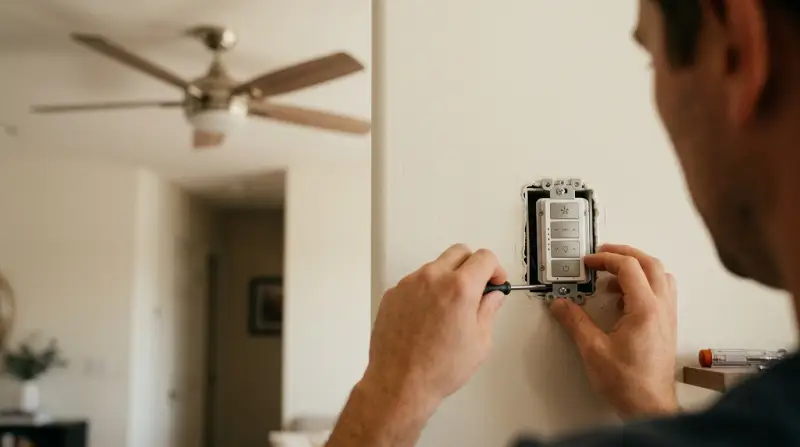
Distinguish a loose wire from a receiver failure by checking the canopy. If the fan works when you pull the manual chain but ignores the remote, the receiver is the bottleneck. Never attempt to bypass a faulty receiver unless you have experience with high-voltage wiring. If the wall switch feels mushy or fails to click, replace it immediately to prevent a potential fire hazard.
Depleted power cells in the unit
Most wall-mounted controls are hardwired to the home’s electrical system to send signals to the fan receiver. If the battery is drained, the unit can’t send the radio frequency command needed to operate the light or the motor. You should first check if your specific model uses a standard coin-cell or a larger battery, as this varies by model. Check the label on the back of the faceplate for the exact type.
A common mistake is using a battery that looks similar but has a lower voltage, which causes the signal to be too weak to reach the receiver. This error often results in the fan responding to commands only when you stand within two feet of the unit.
This fix usually takes about five minutes and costs only the price of a replacement battery. If you aren’t sure about the battery type, consult the Minka Aire support documentation to identify the specific requirements for your wall control model.
If the light on the control still fails to blink after you insert a fresh battery, the issue is likely deeper in the wiring or the internal circuit board. If the wall control remains unresponsive despite a fresh power source, check the receiver inside the fan canopy for a blown fuse. If the receiver emits a faint clicking sound but the motor doesn’t move, the problem is likely a faulty relay or motor issue.
Interruption in the electrical circuit
Power flow is essential for the wall control to maintain its connection to the fan receiver. A tripped circuit breaker in your home’s main electrical panel is a frequent culprit, especially if there was a recent power surge or an overload on that specific line. You can tell this is the cause if the fan itself shows no signs of life, even when you try to use a secondary remote or pull chain.
Check your home’s breaker box to see if the switch labeled for your room is in the “tripped” or middle position. Flip it fully to “off” and then back to “on” to reset the connection. This assumes your electrical system is standard; if you have a smart home system or a specialized wall dimmer, you may need to wait up to one minute for the receiver to reboot. A trade-off here is that resetting the breaker might also reset other devices on the same circuit, so check your other electronics before you flip the switch. If the fan remains unresponsive after a reset, the problem might be a loose wire behind the wall plate. This is a task for someone comfortable with basic electrical safety; if you feel unsure about handling wires, call a licensed electrician immediately to avoid the risk of shock.
Synchronization loss between units
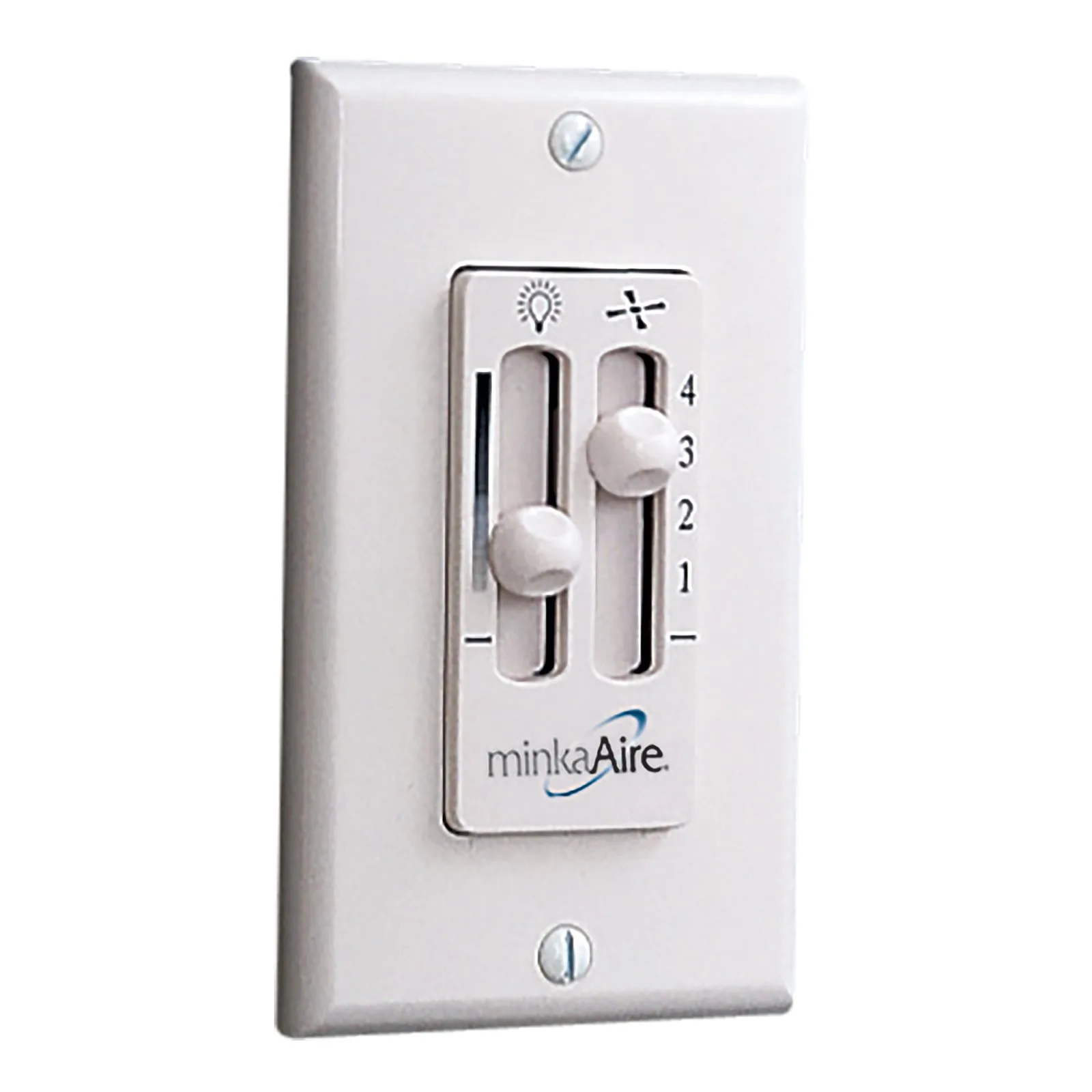
Sometimes the wall control and the receiver inside the fan canopy lose their digital link. This happens if the power was cut for a long time or if there was significant electrical interference from other wireless devices in your home. You can tell this is the case if the wall control lights up when pressed, but the fan doesn’t react to your commands.
To fix this, you must perform a pairing sequence. Turn the power to the fan off at the wall switch or breaker for at least thirty seconds. Once you turn the power back on, you usually have a short window—often sixty seconds—to hold down the “learn” or “pair” button on the wall control until the fan light flashes. This varies by model — check the label or the manual for the specific timing required for your version. One mistake people make is waiting too long after turning the power back on, which causes the receiver to exit pairing mode. If this doesn’t work after two attempts, the receiver unit inside the fan may be damaged. This isn’t for a beginner, as it requires working with high-voltage wiring inside the fan housing. At this point, you should contact a professional to inspect the receiver.
The less likely causes
Loose wire connections inside the wall box often stem from vibration or improper installation. If the receiver fails to trigger despite a full click, pull the unit from the wall and check the terminal screws. A loose spade connector or frayed wire prevents the signal from reaching the fan, but tightening these screws usually restores the connection instantly.
Physical damage to faceplate buttons often stems from debris trapped behind the plastic. If the button feels mushy rather than tactile, the internal contact point has likely collapsed. You can attempt to clean the housing with compressed air, but if the mechanical spring remains unresponsive, the unit requires a full replacement.
Radio frequency interference from routers or baby monitors creates intermittent signal drops. To isolate this, power down all nearby wireless devices for ten minutes. If the control functions perfectly during this window, you must relocate the competing transmitter.
Internal circuit board failure represents a terminal hardware collapse. If the unit shows no light or activity despite verified power, the circuit board has likely failed. Attempting a repair here is rarely cost-effective, as the internal soldering points aren’t designed for field maintenance.
What a fix usually involves
Fixing a wall control often requires only basic household tools like a screwdriver and a fresh battery. If the issue is a loose wire, you might need a wire nut or electrical tape to secure the connection. The cost for these parts is minimal, usually a small fraction of the price of a new unit.
If the receiver is the problem, you’ll need to replace the entire control kit, which represents a larger part of the price of a new fan. A common mistake is assuming the wall switch is broken when the fault actually lies in the fan’s canopy receiver. If the fan responds to a remote but not the wall switch, the receiver is likely the culprit.
Before you buy any replacement parts, check the manufacturer’s website to ensure the new control is compatible with your specific fan model. You must match the frequency or DIP switch settings if your model uses them. If you aren’t confident in your ability to handle electrical components, the cost of hiring a professional is the safest investment.
You can get a real quote by calling a local electrician and describing the specific model and the symptoms you’re seeing. Always prioritize your safety over saving time or money when dealing with electrical systems. If you see charred wires or smell ozone, stop immediately and call a pro.
Frequently asked questions
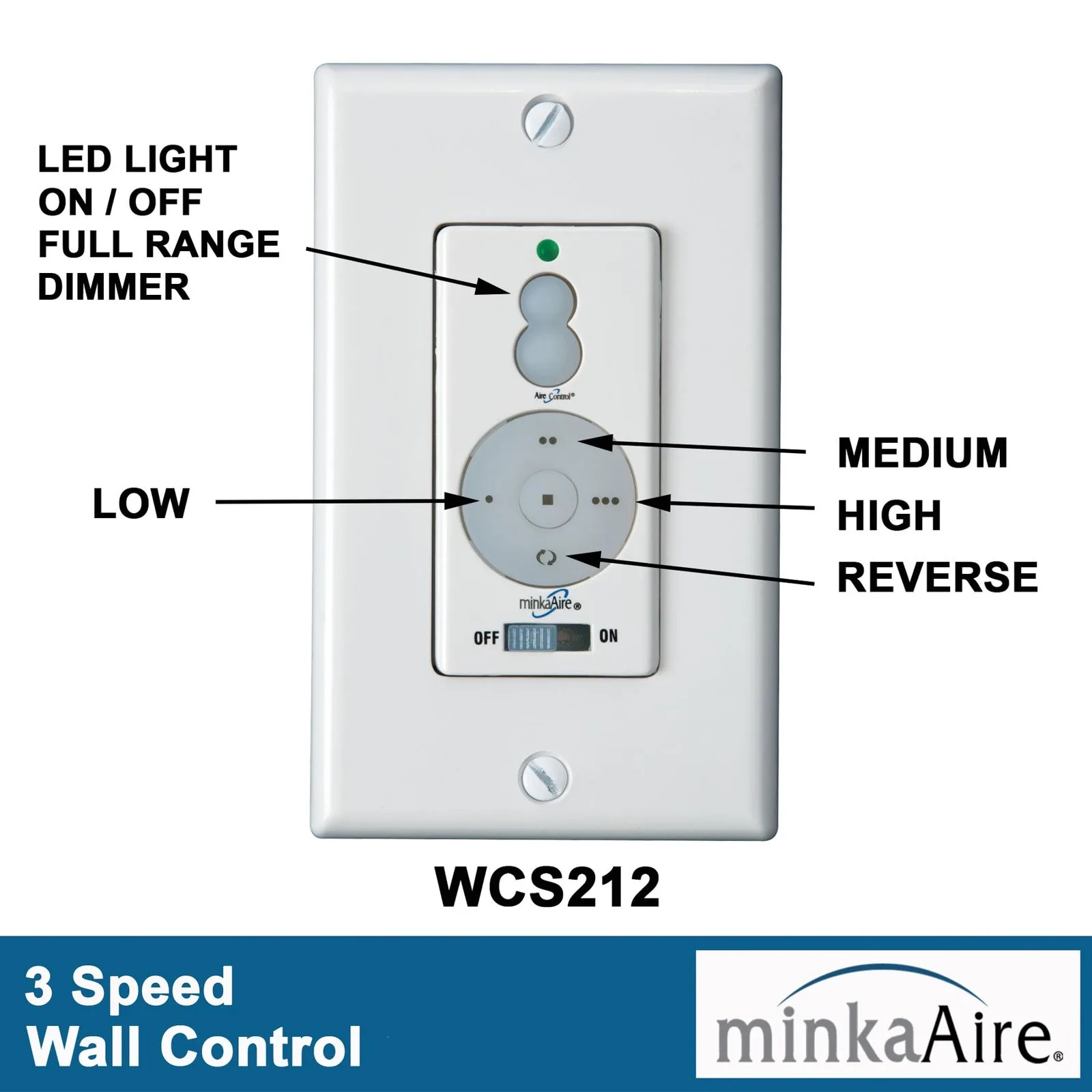
Can I replace the wall control myself?
Yes, you can replace it yourself if you’re comfortable turning off the power and connecting wires. You must ensure the new control is compatible with your fan’s receiver model. If you can’t find the exact match, you’ll need to replace both the wall control and the receiver inside the fan, which is a more complex task that may require professional help.
Why does the light blink but the fan doesn’t move?
The signal is likely reaching the receiver, but the motor or the internal wiring to the motor isn’t responding. This usually indicates a problem with the receiver unit or a loose connection at the motor housing. You should try to re-pair the device first, but if that fails, you need a professional to inspect the motor’s internal connections.
Is it safe to leave a broken wall control installed?
Yes, it’s generally safe to leave it as long as you don’t smell burning or see sparks. If the control isn’t sending any power, it’s simply a dead switch on your wall. However, you should turn off the power at the breaker to prevent any chance of a short circuit if you notice any unusual heat or flickering.
How long does a Minka Aire wall control last?
These controls often last for many years, but the lifespan depends on how frequently you use the buttons and the electrical environment of your home. If you notice the buttons becoming unresponsive or the plastic cracking from age, it’s time to look for a replacement. Check the warranty status on your original receipt before you purchase a new unit.
What happens if I use the wrong battery?
Using the wrong battery will likely result in the control failing to send a strong enough signal to the receiver. This can make it seem like the control is broken when it’s simply underpowered. Always check the battery compartment for the specific voltage and size requirements before installing a new one to avoid damaging the internal electronics.
Does it matter if I have a dimmer switch?
Yes, using a standard household dimmer switch with a fan control unit can damage the receiver. Minka Aire fans require specific controls designed for their motor and light systems. If you have a standard dimmer installed, you must replace it with the correct wall control designed for your fan to ensure the system functions properly and safely.
Final Thoughts
If these simple checks don’t restore your fan’s function, it’s best to contact a local electrician for help. They’ll safely inspect your wiring to ensure everything’s installed correctly. Don’t hesitate to reach out to the manufacturer’s support team if you’re still under warranty; they’re usually happy to guide you through the process.