
Most of the time, a Kitchenaid Dishwasher Won’T Start because the control panel is locked or the door latch isn’t fully engaged. These issues happen frequently because modern units have sensitive safety sensors that stop the cycle if they detect any gap or active setting. You can confirm this by checking the display for a “Control Lock” icon or by pressing firmly on the door to see if the cycle begins. If the lights are off, check your home breaker box first.
Why your KitchenAid dishwasher won’t start

| Cause | How common | How to confirm it | Fix it yourself? |
|---|---|---|---|
| Child lock active | Very common | Look for lock icon | Yes |
| Door not latched | Very common | Push door firmly shut | Yes |
| Tripped circuit breaker | Common | Check electrical panel | Yes |
| Delayed start set | Common | Check display timer | Yes |
| Blown thermal fuse | Rare | Unit has no power | No |
| Faulty door sensor | Rare | Door clicks but starts | No |
Most users mistake a tripped GFCI outlet for a blown fuse. Check the reset button on your wall outlet before assuming the machine is broken. If the button clicks, your power is restored.
If the door sensor fails, the machine won’t recognize the latch position. You can confirm this by listening for a distinct mechanical click when you close the door. If you hear the click but the cycle fails to trigger, the internal switch is likely misaligned.
Use this decision rule: if the display remains dark, check the breaker panel first. If the display is lit but the machine refuses to start, focus on the door latch or the child lock settings.
Avoid the mistake of forcing the door handle. If it feels stuck, the latch mechanism is likely jammed rather than broken. A gentle nudge usually clears the obstruction without requiring a technician. If the unit still shows no power after checking the breaker, don’t attempt to bypass the thermal fuse yourself.
Safety: Inside a mains-powered machine, the parts behind the outer cover can hold a dangerous electrical charge even after it has been unplugged — that’s why they sit behind a cover. Opening the housing, or testing or replacing anything behind it, is a job for a qualified technician, never a home repair.
The control lock status
The child lock feature is a safety setting that prevents the buttons from working to stop accidental changes during a cycle. When this mode is active, the machine ignores all button presses, making it seem like the unit is broken. You can identify this by looking at your control panel for a small light or a padlock icon near the “Control Lock” button. If that light is on, the dishwasher won’t respond to any start commands until you disable the feature.
To turn off the lock, find the button labeled “Control Lock” or “Cancel.” On many models, you must press and hold this button for three to five seconds. Once the light turns off, you should hear a beep, and the buttons will work again. This fix takes only a few seconds and requires no tools. If you find the lock turns on by itself, this is a sign of a failing control board, which is a job for a qualified service technician. Don’t attempt to take the panel apart, as the electronic components are fragile and easily damaged.
A loose door latch
The door latch is a physical switch that tells the computer the unit is sealed and safe to run. If the latch doesn’t click, the dishwasher assumes the door is open and stops the cycle from starting to prevent water from leaking onto your floor. You can tell this is the cause if the lights on the panel are on, but the machine makes no sound when you press start.
To confirm this, open the door and inspect the latch mechanism for food debris or stuck plastic. If you see buildup, wipe it away with a damp cloth. Close the door firmly until you hear a solid click. If the door feels loose or doesn’t stay shut, you might have a bent hinge or a broken latch spring. This varies by model — check the label inside the door edge for your specific serial number to see if your unit has a known latch recall or common alignment issue. If the latch is broken, you must call a technician. Never use force to jam the door shut if it doesn’t click easily, as this can break the plastic housing. The cost to replace a latch is usually a small part of the total machine value, but the labor adds up quickly if you hire a pro.
Tripped power breakers

A tripped circuit breaker stops all electricity from reaching your dishwasher, making it look completely dead. This happens if there was a power surge or if another high-wattage appliance on the same circuit was running at the same time. Check your kitchen labels; if your dishwasher shares a 15-amp circuit with a toaster or coffee maker, the combined draw often exceeds the limit. You can confirm this by going to your home’s main electrical panel and looking for a switch that’s in the middle position or flipped to “Off.”
If you find a tripped breaker, flip it all the way to “Off” and then back to “On.” If the power returns, the dishwasher display should light up immediately. If the breaker trips again right away, you have a short circuit that needs a professional electrician.
Who this is NOT for: never try to replace the breaker yourself if you aren’t comfortable working with your home’s main electrical panel. This is a trade-off; while it’s tempting to save money, a mistake here can lead to a fire or a dangerous shock.
If the lights don’t come on after resetting the breaker, the issue is likely internal wiring, which is definitely not a DIY task. Stop here and call a pro. Before calling, check if any nearby GFCI outlets have tripped, as these can also cut power to the unit. If the breaker holds but the machine remains dark, the thermal fuse inside the dishwasher door has likely blown and requires a technician to confirm the failure.
The less likely causes
-
Delayed start: The machine is waiting for a timer, which you can see if the “Delay” light is blinking on the display. Press and hold the “Start” or “Reset” button for three seconds to override this setting and force an immediate cycle.
-
Water supply issues: If the unit starts but stops after a minute, check that the water valve under the sink is fully open. A common mistake is assuming the valve is open because the handle is horizontal; if the handle is perpendicular to the pipe, it’s closed.
-
Blown thermal fuse: If the unit has no lights at all and the breaker is fine, the internal fuse has failed. This part is a safety device that trips when the unit overheats. It requires a technician to replace.
-
Control board failure: If the buttons are responsive but nothing happens, the computer is likely dead. This requires professional repair.
What a fix usually involves
Fixing a dishwasher depends on whether the problem is a setting or a broken part. If the fix is a setting, like the child lock or a delayed start, it costs you zero dollars and just a moment of your time.
If the issue is a physical part, such as a latch or a control board, you’ll need to buy a replacement component. The price of these parts varies, but a latch is usually a small fraction of the price of a new unit, whereas a control board can be a significant investment.
When you need a part, check your model number on the sticker inside the door frame to ensure you get the right match. A common mistake is buying parts based on visual similarity alone; this often leads to incompatible components that can’t be returned once the package is opened.
If you must call a professional, expect to pay for a service call fee plus the cost of parts and labor. You can get a fair quote by calling a local appliance repair shop and giving them your model number over the phone.
Use this decision rule: if the repair cost exceeds 50 percent of the price of a new machine, replacement is usually the better financial choice. Never pay for expensive repairs without seeing a written estimate first to confirm exactly what is being replaced.
Frequently asked questions
Can I reset my dishwasher by unplugging it?
Yes, you can reset the electronic control board by unplugging the unit or turning off the breaker for one minute. This clears minor software errors that prevent the cycle from starting. If the dishwasher doesn’t start after you restore power, the problem is likely a physical component like the door latch or a fuse rather than a simple computer glitch.
Why does my dishwasher have no lights?
No lights usually mean the dishwasher isn’t getting power from your home electrical system. Check your home breaker box to see if the circuit for the kitchen has tripped. If the breaker is fine, the issue could be a blown thermal fuse inside the unit. This is a safety component that requires a professional technician to test and replace safely.
Is it safe to open the dishwasher while it’s running?
It’s safe to open the door, but you should do so slowly to avoid hot steam. Most modern dishwashers have a sensor that pauses the cycle as soon as the door latch releases. Be careful of the water level inside; if the unit was in the middle of a fill, water may spill out when you pull the door open.
How long does a dishwasher repair usually take?
A simple repair like replacing a door latch often takes about 30 minutes for a skilled technician. If the issue requires ordering a specific part or replacing the main control board, the process can take several days. Always ask the technician for an estimated timeline before you agree to the repair, especially if they need to order parts from the manufacturer.
Does it matter if I use the wrong detergent?
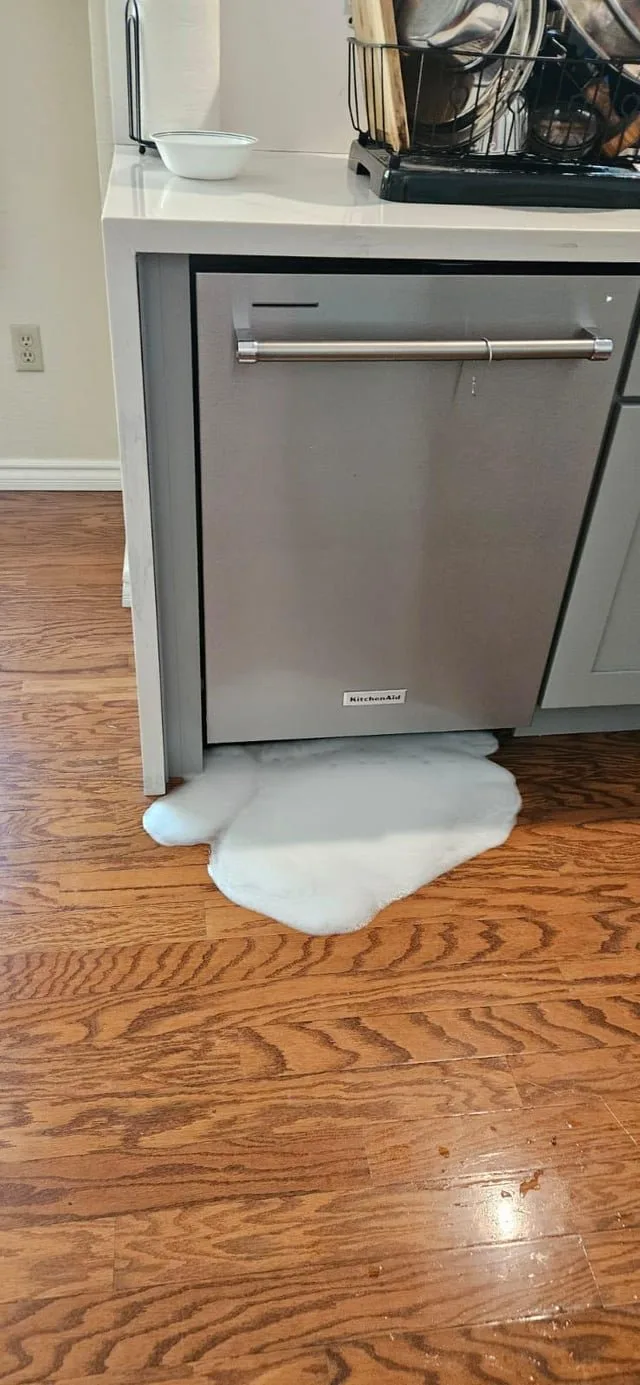
No, using the wrong detergent won’t stop the dishwasher from starting, but it will cause excessive suds that can trigger a sensor to stop the wash cycle. If you used the wrong soap, you must drain the unit and rinse the tub thoroughly. This is a messy job that often requires running multiple manual rinse cycles to clear the excess foam.
What happens if the door latch is broken?
If the door latch is broken, the dishwasher won’t start because the safety switch can’t confirm that the door is locked. This prevents the unit from operating while the door is open, which protects you from water leaks and heat. You’ll need to contact a professional service technician to install a new, compatible latch for your specific model.
Final Thoughts
If these quick checks don’t get your machine running again, don’t worry. Sometimes a thermal fuse or a faulty control board is the culprit behind the silence. It’s a good idea to reach out to a local technician who can take a closer look before you decide to replace the unit.
Related guides
- Maytag Washer Won’T Start Just Beeps
- Kitchenaid Dishwasher Not Filling With Water
- Ge Dishwasher Lights Flashing And Beeping: Quick Fix Guide
1 thought on “Kitchenaid Dishwasher Won’T Start”