
Most Kia Soul transmission problems stem from software glitches in the dual-clutch transmission or wear on the internal shift actuators, which affect the car’s ability to engage gears smoothly. You’ll find that Kia Soul transmission problems occur most often in models equipped with the seven-speed dual-clutch system, particularly during stop-and-go city driving.
Common reasons for Soul transmission problems
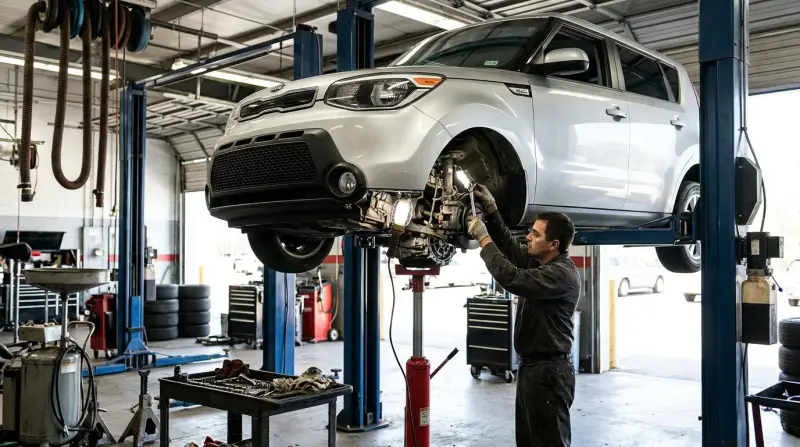
| Cause | How common | How to confirm it | Fix it yourself? |
|---|---|---|---|
| Software calibration | Very common | Hesitation during acceleration | No |
| Clutch actuator wear | Common | Grinding or shaking | No |
| Low transmission fluid | Occasional | Leaks under the car | Yes with care |
| Worn shift solenoids | Occasional | Delayed gear engagement | No |
| TCM communication failure | Rare | Warning lights on dash | No |
| Overheated fluid | Rare | Burning smell while driving | No |
Software calibration issues often stem from outdated firmware. If your car feels sluggish only when cold, the engine control unit likely needs a dealer-authorized flash update. Don’t attempt to bypass this with generic OBDII scanners.
Clutch actuator wear is a mechanical failure. If you feel a rhythmic shuddering at low speeds, the actuator motor is likely failing. Ignoring this costs you a full transmission rebuild.
Low fluid is the only DIY fix. Check your driveway for red or brown spots. If the level is low, top it off with the specific manufacturer-certified fluid.
Solenoid failure causes a distinct “clunk” when shifting into reverse. Don’t ignore this; it leads to total gear loss.
Transmission control module software errors
Software errors in the transmission control module often cause the vehicle to hesitate or surge when you press the gas pedal. This happens because the computer struggles to calculate the correct gear ratio for the current speed. If the software is outdated, the clutches may engage too aggressively or too slowly. This creates a jerky feeling that many drivers mistake for a mechanical failure.
To confirm this, pay attention to the timing of the shift. If the hesitation happens at the same speed—such as when moving from second to third gear—it’s likely a software issue. You can’t fix this with basic tools because it requires a proprietary diagnostic computer to flash the latest firmware onto the module. Check your owner’s manual for the specific maintenance schedule, as Kia occasionally releases service campaigns to update these modules during routine visits.
The cost in time is usually one hour of labor at a service center. The financial cost varies, but many of these updates are covered under the original powertrain warranty if the vehicle is still within the mileage limit. If the software is current, the problem may be hardware-related, such as a failing sensor sending bad data to the computer. You should never ignore these symptoms, as driving with a slipping transmission can cause internal heat damage that turns a simple software update into a total unit replacement. This varies by model — check the label on your driver-side door jamb for the specific production date to see if your car is part of a known service update.
Physical wear on clutch actuators
Physical wear on the clutch actuators often results in a grinding sound or a shudder when the car starts moving from a dead stop. These actuators push the clutch plates together to change gears. Over time, the internal motors become weak or the mechanical arms lose their precision. This makes the transmission “search” for a gear, leading to the shuddering sensation you feel through the floorboards.
You can tell this is the cause rather than a software issue if the shuddering occurs only when the transmission is hot, such as after thirty minutes of heavy traffic. A mechanic will need to perform an actuator test using a scan tool to measure the voltage response of the motors. If the response is outside the factory range, the actuator must be replaced.
This fix isn’t a do-it-yourself job. It requires removing parts of the engine bay to reach the transmission housing. If you attempt this without professional equipment, you risk voiding your warranty or causing permanent damage to the transmission casing. The cost is high because it involves both the replacement part and several hours of labor. If you notice a metallic grinding sound, stop driving immediately. Continuing to operate the vehicle with failing actuators can send metal shavings through the transmission fluid, which destroys the internal gears and forces a complete replacement of the unit.
Low or degraded transmission fluid

Low or degraded transmission fluid prevents the system from maintaining the hydraulic pressure needed to shift gears. Transmission fluid acts as both a lubricant and a coolant for the internal components. As the fluid ages, it loses its ability to handle heat. If the level is too low, the transmission will struggle to build the pressure required to hold the gear, leading to a “neutral drop” feeling where the engine revs but the car doesn’t move.
Check the fluid level by looking for signs of leaks on your driveway, as the system is sealed and shouldn’t lose fluid under normal conditions. You can inspect the fluid color if your model has a dipstick; healthy fluid is typically clear red, while burnt or oxidized fluid looks dark brown or black and smells acidic. If you find a leak, you must locate the source before simply adding more fluid. The National Highway Traffic Safety Administration maintains a list of official safety recalls where you can verify if your specific vehicle has a known defect related to fluid leaks or transmission cooling lines.
If the fluid is just old, a professional flush can restore smooth operation. This takes about two hours at a shop. If you find a leak, the cost depends on whether a simple gasket or a more expensive cooling line is the culprit. This is a trade-off: replace the fluid early to prevent long-term damage, or wait and risk a complete system failure that costs significantly more to repair.
The less likely causes
-
Worn shift solenoids: These electrical valves control fluid flow. A failure here triggers a “check engine” light and prevents the car from entering specific gears. If your transmission skips second or fourth gear consistently but shifts fine otherwise, a faulty solenoid is the likely culprit.
-
Sensor failure: An input speed sensor may fail, causing the transmission to stay in a lower gear because it cannot “see” how fast the wheels are turning.
-
Wiring harness corrosion: If the car has been in a flood or high-humidity area, the electrical pins connecting the transmission to the engine computer may corrode. This creates intermittent signal loss. Always inspect the harness connectors for green or white crusty buildup before authorizing expensive mechanical repairs.
-
Internal gear damage: This is the most severe cause. It usually results from long-term neglect and requires a total rebuild by a transmission specialist.
What a fix usually involves
Fixing these issues almost always requires a professional technician with access to specialized diagnostic software. You should expect to pay for a diagnostic fee first, which covers the time a mechanic spends scanning the computer and performing a road test.
If the issue is software, the fix is a small labor charge or a free update under warranty. If the issue is mechanical, such as a failed actuator or solenoid, the cost involves the price of the replacement part plus the labor hours needed to disassemble the transmission housing.
The total price depends on whether the technician must remove the transmission from the car. A simple external sensor replacement is a minor cost, while an internal rebuild is a major expense. If you see a “limp mode” warning but the fluid levels are normal, the problem is likely electronic rather than mechanical.
You can get a real quote by taking your car to a certified shop and asking for a written estimate based on their diagnostic findings. Avoid shops that suggest a full transmission replacement without first checking the computer codes, as they might be charging you for work you don’t need. A reputable shop will always provide the specific error code, such as a P0700 or P0750, before suggesting any teardown. If they can’t name the code, take your keys and leave.
Frequently asked questions

Can I drive with a shuddering transmission?
No, you shouldn’t continue driving if the transmission is shuddering. Shuddering indicates that the clutches are slipping or failing to engage, which creates excessive heat and friction. This metal-on-metal contact will quickly destroy the internal components of the transmission. You should have the vehicle towed to a professional shop to prevent a minor repair from turning into a total unit failure.
Is it safe to ignore a check engine light?
No, it’s never safe to ignore a check engine light. The light often indicates that the transmission control module has detected a fault in the shifting sequence or fluid pressure. Driving in this state can cause the computer to enter a “limp mode,” which limits your speed and power. You should have the codes read immediately to determine if the car is safe to operate.
How long does a transmission repair take?
A simple software update usually takes about one hour, while mechanical repairs can take two to three days. The time depends on the availability of parts and the complexity of the internal work. If the shop needs to open the transmission casing to replace internal actuators or solenoids, the repair time will increase significantly. Always ask the service manager for an estimated timeline before authorizing the work.
Does the transmission fluid need to be changed?
Yes, the transmission fluid needs to be changed according to the schedule in your owner’s manual. While some manufacturers claim the fluid is “lifetime,” heat and friction eventually break down the chemical properties of the oil. Changing the fluid at the recommended mileage—often every sixty thousand miles—helps prevent the buildup of sludge that causes solenoid and actuator failures. Check your manual for the exact interval.
What happens if I use the wrong transmission fluid?
Using the wrong fluid will cause the transmission to overheat and fail quickly. Modern transmissions are designed to work with specific friction modifiers and viscosity levels. If you use a generic fluid that doesn’t meet the manufacturer’s specification, the clutches will slip, and the hydraulic valves will stick. Always verify the fluid type against your manual or the information printed on the transmission dipstick.
Final Thoughts
If you notice your vehicle hesitating or shifting roughly, don’t wait for the issue to worsen. It’s best to visit a trusted mechanic for a diagnostic scan as soon as you can. They’ll help you determine if a simple software update is all you need to get back on the road.
Related guides