
A refrigerator is one of the most important appliances in any home. It keeps food safe, fresh, and cold. But sometimes, a refrigerator can develop problems that are not easy to see or fix. One of the most serious problems is a leaking freon. Freon is the refrigerant that helps cool the inside of your fridge. If it leaks, it can cause health risks, damage your appliance, and waste energy. Many people don’t realize the signs or dangers of this issue. Understanding freon leaks can help you act quickly and avoid bigger problems.
What Is Freon And Why Does It Matter?
Freon is a brand name for a group of chemicals called chlorofluorocarbons (CFCs) and hydrofluorocarbons (HFCs). These chemicals are used in refrigerators, air conditioners, and some freezers. Freon absorbs heat from inside the fridge and releases it outside. This process keeps your food cold.
Most modern refrigerators use a safer refrigerant called R-134a or R-600a. Older models may still use traditional freon (R-12). No matter the type, all refrigerants are dangerous if they leak. They can cause breathing problems, headaches, and even environmental harm. Freon leaks also make your fridge work less efficiently, which raises your energy bills.
Signs Your Refrigerator Is Leaking Freon
Freon leaks are not easy to spot. They don’t leave obvious puddles or stains. However, you can look for these signs:
- Warm fridge or freezer: If the inside is not cold enough, the refrigerant may be low.
- Unusual smells: Freon has a faint, sweet chemical odor. If you notice this, do not ignore it.
- Noisy compressor: The compressor may run longer or make strange sounds as it struggles.
- Oily residue: Sometimes, freon leaks leave behind oil near coils or under the fridge.
- High electric bills: A leaking fridge uses more power because it can’t cool properly.
- Food spoiling quickly: If food goes bad faster than usual, check your fridge for leaks.
People often miss the signs because freon is invisible and does not always cause dramatic changes right away.
Causes Of Refrigerator Freon Leaks
Understanding why freon leaks happen can help prevent them. The most common causes include:
- Physical damage: Moving the fridge or hitting the coils can crack or break them.
- Age and wear: Older refrigerators are more likely to develop leaks as parts weaken.
- Corrosion: Moisture and air can cause metal parts to rust, leading to holes.
- Manufacturing faults: Rarely, a fridge might have a defect that causes a leak.
- Poor maintenance: Dirty coils or blocked vents put extra pressure on the cooling system.
Not all leaks happen suddenly. Some start as tiny cracks and grow over time.
Health And Safety Risks Of Freon Leaks
Freon is not safe to breathe. If it leaks, it can cause health problems such as:
- Headaches
- Dizziness
- Nausea
- Shortness of breath
In large amounts, freon can even lead to unconsciousness or heart problems. Children and pets are at higher risk because they are smaller and closer to the floor, where freon can settle.
Freon is also bad for the environment. It can destroy the ozone layer and contribute to global warming. Because of these risks, you should never ignore a suspected leak.
Credit: sparkservice.ca
How To Confirm A Freon Leak
If you suspect a leak, you need to confirm it before fixing. Here are steps you can take:
Visual Inspection
Check for oily spots near the compressor or coils. Freon often escapes with oil.
Listen For Noises
A hissing or bubbling sound can mean gas is escaping from a small hole.
Smell Test
Freon smells slightly sweet and chemical. If you notice this, open windows and keep away from the fridge.
Use A Leak Detector
Many professionals use electronic leak detectors. Some home kits are available, but they can be tricky for beginners.
Soap Solution
Mix water and soap, and apply it to suspected areas. Bubbles mean gas is escaping.
Comparing Freon Leak Symptoms Vs. Other Refrigerator Problems
Sometimes, other issues can look like a freon leak. For clarity, see the differences below:
| Problem | Common Signs | Unique to Freon Leak? |
|---|---|---|
| Freon Leak | Warm fridge, sweet smell, oily residue, compressor noise | Yes |
| Dirty Coils | Warm fridge, high bills | No |
| Broken Thermostat | Warm fridge, not cooling | No |
| Door Seal Problem | Warm fridge, moisture, mold | No |
If you see multiple signs unique to freon leaks, act quickly.
What To Do If Your Refrigerator Is Leaking Freon
A freon leak is not something you can fix yourself. Here’s what to do:
- Turn off the fridge: This stops more freon from escaping.
- Open windows: Let fresh air in to reduce health risks.
- Keep children and pets away: Freon is heavier than air and stays low.
- Call a professional: Only certified technicians can handle refrigerants safely.
- Don’t use the fridge: Avoid storing food until the problem is fixed.
Many people make the mistake of trying to refill freon themselves. This is dangerous and often illegal in the US.
How Professionals Repair Freon Leaks
Certified technicians follow strict steps:
Finding The Leak
They use electronic detectors, UV dyes, or pressure tests to locate the exact spot.
Repairing The Damage
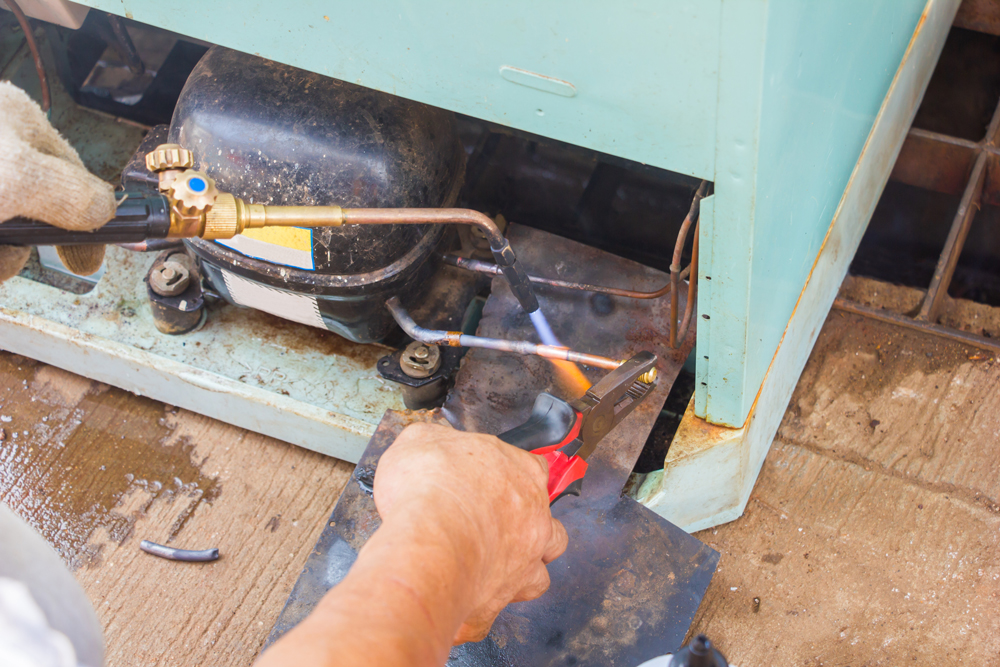
Most leaks are fixed by soldering or replacing damaged coils. Sometimes, the entire cooling system must be replaced.
Refilling Freon
After fixing, technicians refill the correct type and amount of refrigerant.
Testing
They check for leaks again and test the fridge to make sure it cools properly.
Professional repairs can cost between $150 and $400 depending on the leak and model.
Comparing Repair Costs: Freon Leak Vs. Other Refrigerator Repairs
Here’s a look at typical repair costs:
| Repair Type | Average Cost (USD) | DIY Possible? |
|---|---|---|
| Freon Leak | $150–$400 | No |
| Thermostat Replacement | $100–$250 | Yes |
| Door Seal Replacement | $50–$150 | Yes |
| Compressor Replacement | $300–$700 | No |
Freon leaks are more expensive and require professional help, unlike some other repairs.
How To Prevent Freon Leaks
Prevention is better than repair. Here are tips to keep your fridge safe:
- Clean coils regularly: Dust and dirt can cause overheating and stress.
- Avoid moving the fridge: If you must, do it gently and avoid hitting the back.
- Check for rust: Look for signs of corrosion and fix them early.
- Schedule maintenance: Have a technician check your fridge every year.
- Buy quality brands: Cheaper models may use weaker materials.
A common mistake is ignoring small problems, like strange noises or warm spots. These can be early signs of leaks.

Credit: www.youtube.com
Environmental Impact Of Freon Leaks
Freon leaks do not only affect your home. They have a larger effect:
- Ozone layer damage: CFCs like R-12 destroy ozone, which protects us from UV rays.
- Global warming: HFCs like R-134a trap heat and make climate change worse.
In the US, laws require safe handling and disposal of refrigerants. Many new fridges use safer chemicals, but leaks from old models still harm the environment. For more on environmental risks, visit EPA Ozone Layer Protection.
Comparing Refrigerants: Freon Vs. Modern Alternatives
Here’s how common refrigerants compare:
| Refrigerant | Environmental Impact | Common in | Leak Risk |
|---|---|---|---|
| R-12 (Freon) | High ozone depletion, global warming | Older fridges | High |
| R-134a | No ozone damage, still global warming | Modern fridges | Medium |
| R-600a (Isobutane) | Low environmental impact | Newer fridges | Low |
Switching to newer models can lower risk and protect the environment.

Credit: www.youtube.com
Non-obvious Insights For Homeowners
Many people think freon leaks are rare, but they happen more often in older appliances. Even small leaks can affect cooling and safety. A smart tip is to keep track of your fridge’s age and performance. If your refrigerator is over 10 years old, start watching for signs of leaks and consider replacement. Another overlooked factor is humidity: high moisture can speed up corrosion, so use a dehumidifier if your kitchen is damp.
Frequently Asked Questions
What Does A Freon Leak Smell Like?
A freon leak usually has a sweet, chemical odor. Some people describe it as faint, but noticeable. If you notice this smell, ventilate the room and call a professional.
Is It Safe To Stay In A House With A Leaking Refrigerator?
No, it is not safe. Freon can cause breathing problems and is dangerous for pets and children. Open windows and keep away from the appliance until it’s fixed.
Can I Repair A Freon Leak Myself?
You cannot repair a freon leak yourself. Handling refrigerants requires special tools and certification. Trying to fix it can harm you and break the law.
How Long Does It Take To Fix A Freon Leak?
Most repairs take 2–4 hours for a professional, depending on the damage. Sometimes, parts must be ordered, which can delay the process.
Will A Freon Leak Damage My Refrigerator Permanently?
If caught early, a leak may not cause lasting damage. But ignoring a leak can ruin the compressor and coils, making the fridge impossible to fix.
A refrigerator leaking freon is serious, but not hopeless. By recognizing the signs, acting quickly, and calling experts, you can protect your health, your appliance, and the environment. Regular maintenance and smart prevention will help your fridge last longer and run safely.
If you suspect a leak, trust professionals and never risk DIY fixes. With careful attention, you can keep your home safe and your food fresh.