
You can resolve Iwebtv Not Working by clearing your browser cache or checking your internet connection, as these are the most common reasons for playback failures. If the page fails to load, it’s usually because your network has blocked the streaming server or your browser is stuck on old data. Always start by refreshing the browser tab or restarting your internet router, as these steps fix most temporary software glitches.
Why iwebtv isn’t working
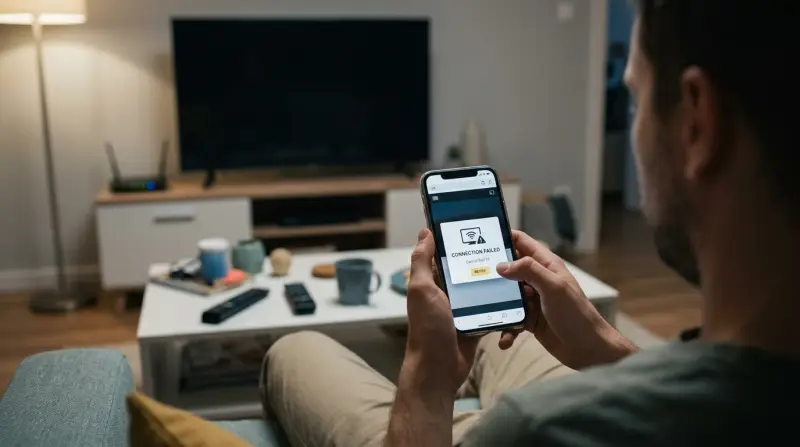
Most playback issues start with a simple conflict between your browser and the website’s data. When you visit a site, your browser saves small files to speed up future visits. If these files become corrupted or outdated, the site will fail to load correctly. You’ll notice this when the page stays white or the video player refuses to start.
Clear your browser cache to resolve this. If the site loads in an “Incognito” or “Private” window but not your main browser, you have a cache conflict. If it still fails in private mode, the issue lies elsewhere.
Another frequent cause is your network security. Many routers or internet service providers block specific streaming ports to manage traffic. If your connection is too slow or if your provider restricts certain types of media traffic, the video player will time out. You need at least 5 Mbps for standard definition and 25 Mbps for 4K streaming.
Finally, your browser extensions might be the culprit. Ad-blockers and privacy tools often mistake video players for unwanted advertisements. These tools stop the script from running, which leaves you with a frozen screen.
A common mistake is disabling all extensions at once. Instead, toggle them off one by one while refreshing the page. This identifies the specific tool causing the conflict. If the site worked yesterday but fails today, an automatic update to your browser or an extension is likely the reason. Check your browser’s “about” page to see if an update recently installed.
Clear your browser data
This fix is for users who see a loading icon that never goes away. Clearing your cache forces the browser to fetch a fresh, clean copy of the website from the server. It doesn’t delete your bookmarks or passwords, but it will sign you out of most websites.
In your browser settings, look for “Privacy and Security.” Select the option to clear browsing data. You only need to clear the “Cached images and files.” Once you have done this, close the browser completely and reopen it.
If the site still doesn’t load, try opening it in an “Incognito” or “Private” window. If it works there, one of your installed extensions is blocking the site. You’ll need to turn off your extensions one by one to find the one causing the conflict. Most people mistakenly delete their entire history, which is unnecessary and loses your search suggestions. Only target the cache to fix loading errors.
This process is safe for your computer and doesn’t change any system-level settings. However, if you’re on a restricted work or school computer, your administrator may have locked these settings. In that case, don’t try to bypass the restrictions. Contact your IT department to ask if they can whitelist the site for you. This is a common requirement for managed devices where security policies are strict.
If you’re using a VPN or a corporate proxy, these can also cache old site data. If clearing your browser cache fails, toggle your VPN off and try the site again. If it loads, your VPN is likely caching an outdated version of the page.
Update your connection settings
If the site loads but the video stays black, your network might be blocking the stream. This fix is for people who have already tried clearing their cache but still face issues. You can try switching from a Wi-Fi connection to a mobile hotspot to see if the problem is specific to your home internet.
If the site works on your mobile data, your home router is likely the barrier. Check if your router has a “Firewall” or “Parental Controls” setting enabled. These settings are often too aggressive and block legitimate media servers. If you aren’t comfortable changing these settings, don’t force it. You can call your internet service provider to ask if they have active filters on your account.
A major mistake people make is trying to reset the router to factory settings without knowing their login credentials. This can disconnect all your other devices and force you to reconfigure your entire home network. If you don’t have your ISP-provided password, don’t touch the hardware. Simply restarting the router by unplugging it for 30 seconds is enough to clear minor bugs without risking your configuration.
The decision rule is simple: if the video plays on mobile data, the issue is your local network. If it fails on both, the issue is likely a browser extension or a VPN. If you use a VPN, toggle it off before calling your ISP. Most providers won’t troubleshoot third-party software, so verify your connection status on a clean device first to save time.
Use a different device

Sometimes the issue isn’t the website or the internet, but the browser version itself. This fix is for users who have tried every other step with no luck. Using a different device, such as a smartphone or a tablet, helps you confirm if the problem is limited to your computer.
If the site plays perfectly on a different device using the same Wi-Fi, you know the issue is your computer’s software. If it fails on all devices, the website itself is likely down for maintenance. In this case, there’s nothing you can do but wait. Trying to force a connection when the server is down is a waste of time and can sometimes lead to your IP address being temporarily flagged for too many requests.
This fix isn’t for people who need to use a specific computer for work. If your work computer has strict security, you can’t easily install new browsers or remove security software. For these cases, you should accept that the site might not be accessible on that specific machine. Never try to install “patch” software or unofficial browser plugins that claim to fix streaming issues, as these often contain malware that will compromise your device’s security.
What not to do
Don’t download “video repair” software from random websites. These programs are almost always scams designed to install malware. If a file is truly corrupted, no third-party tool can magically reconstruct missing data packets.
Avoid changing your DNS settings to “free” public servers unless you have a written backup of your original configuration. If you lose your connection, you’ll need to manually reset your gateway address to restore local network traffic.
Don’t try to “force” a page to load by clicking refresh repeatedly. Most modern servers view this as a denial-of-service attack.
Never disable your firewall or antivirus software to troubleshoot a site. If a site requires you to lower your security posture, it’s likely hosting malicious scripts. If you must test a site, use a sandboxed browser or a virtual machine instead.
How to stop it happening again
Regular maintenance ensures your browser stays fast and compatible with modern streaming sites. By keeping your software updated and managing your extensions, you prevent these conflicts from starting in the first place.
| If you’re doing this | Do this instead | Why |
|---|---|---|
| Using outdated browsers | Enable automatic updates | Newer versions support current video formats |
| Keeping too many extensions | Remove unused ones | Fewer extensions mean fewer site conflicts |
| Blocking all cookies | Allow cookies for trusted sites | Video players need cookies to track session state |
| Ignoring router errors | Restart the device weekly | Clears memory and refreshes network paths |
Most users make the mistake of clearing their entire cache daily, which forces every site to reload assets from scratch. This actually slows down your connection and triggers anti-bot security checks that block video playback. Instead, clear your cache only when a specific site fails to load correctly.
If your stream stutters after an update, check your hardware acceleration setting. If it’s on, toggle it off to shift the rendering load from your GPU to your CPU. If the video stabilizes, your graphics driver may need to be updated to the latest version from the manufacturer.
Frequently asked questions
Can I fix this by reinstalling my browser?
Yes, reinstalling your browser can fix deep-seated file corruption, but it’s rarely necessary. Most of the time, clearing your cache or disabling a broken extension is enough. If you decide to reinstall, make sure you back up your bookmarks first. You should only take this step if you have tried clearing your cache and testing in a private window, and the problem still persists on every website you visit.
Why is the video player showing a black screen?
A black screen typically indicates that a script required for the video player is being blocked. This is usually caused by an active ad-blocker or privacy extension preventing the stream from starting. You can resolve this by disabling your blocker for that specific site or adding it to your whitelist.
How long should I wait for a page to load?
Wait 30 seconds for a page to load before attempting to refresh. If the page remains blank, your connection may be stalled or the server could be down. If the page remains blank, your connection may be stalled or the server could be down.
Is it safe to use a VPN to fix this?
No, using a VPN isn’t a reliable way to fix streaming issues and can often make them worse. While a VPN hides your location, it also slows down your connection and can trigger security warnings on the website. Many streaming servers are programmed to block known VPN exit nodes. If you’re having trouble, a VPN is usually the wrong tool to use for troubleshooting.
What happens if the site is down for everyone?
If the site is down for everyone, you have to wait for the site owners to fix their servers. You can check sites like “Down For Everyone Or Just Me” to see if others are reporting the same issue. There’s no setting on your computer that can fix a broken server on the other side of the world, so save your energy and try again in an hour.
Final Thoughts
If these simple adjustments don’t get your video playing, you shouldn’t hesitate to reach out to their official support team. They’re usually quick to respond and can help you figure out if there’s a deeper issue with your account. You’ll be back to enjoying your favorite shows in no time.