
A dishwasher is one of those modern helpers that saves time and keeps your kitchen tidy. But when your Miele dishwasher is not draining, it can quickly become a headache. Dirty water collects at the bottom, dishes stay greasy, and a bad smell fills the air. Many people worry that this means a big repair bill, but often, the problem is simple to fix. In this guide, you’ll learn why your Miele dishwasher is not draining, how to diagnose the issue, and what steps you can take to solve it. Whether you are a beginner or have some experience, you’ll find clear answers and practical advice here.
Common Reasons Why A Miele Dishwasher Won’t Drain
A dishwasher relies on several parts to move water in and out. If one part fails, draining can stop. Understanding these common causes helps you find the issue faster and avoid unnecessary costs.
- Clogged Filter: The filter catches food bits and debris. If it’s full, water can’t flow out.
- Blocked Drain Hose: The hose carries dirty water to your sink drain. Kinks or blockages stop water movement.
- Faulty Drain Pump: The pump pushes water out. If it’s broken, water stays inside.
- Air Gap Blockage: Some kitchens have an air gap on the sink. If blocked, it prevents proper draining.
- Garbage Disposal Issues: If the dishwasher connects to a garbage disposal and it’s blocked, draining stops.
- Incorrect Installation: New dishwashers sometimes have drain plugs or improper hose setups.
- Control Board Problems: Electronics control the pump and cycles. If faulty, draining won’t start.
Many beginners miss the filter and hose as the most likely causes. Also, some forget to check the garbage disposal after installing a new dishwasher.
How To Diagnose A Miele Dishwasher Not Draining
It’s important to find the exact cause before buying parts or calling for service. Here’s how to check step by step:
Check For Standing Water
Open your dishwasher after a wash cycle. Is there standing water at the bottom? If so, draining did not happen.
Inspect The Filter
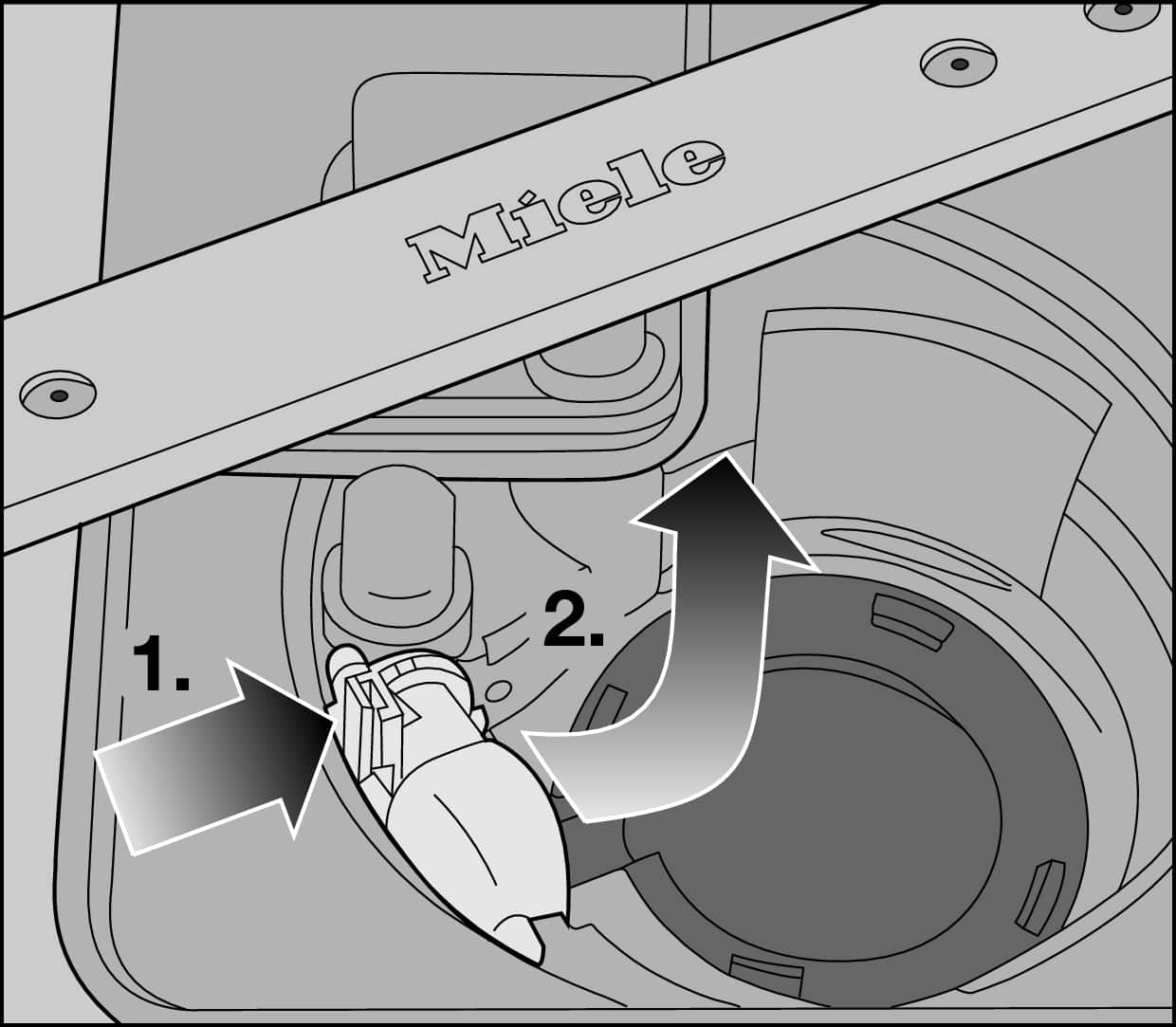
Remove the bottom rack. Look for the round or rectangular filter at the base. Twist and lift it out.
- Rinse the filter under running water.
- Scrub off grease and debris.
- Put it back firmly.
Examine The Drain Hose
The drain hose is usually under your sink, connecting the dishwasher to the drain or garbage disposal.
- Look for kinks, bends, or pinches.
- Disconnect and flush water through to see if it flows freely.
- Check for clogs inside the hose.
Test The Drain Pump
If the filter and hose are clear, the drain pump could be the issue.
- Listen for pump noise during draining. If silent or weak, it may be faulty.
- Some models have an access panel to see the pump and impeller.
- Look for broken or jammed impellers.
Check The Air Gap (if Present)
A small cylinder by the sink faucet is the air gap. Twist off the cap and clean out any debris.
Inspect Garbage Disposal Connection
If your dishwasher hose connects to the garbage disposal, make sure the plug is removed (especially after new installation). Run the disposal to clear any blockages.

Step-by-step Solutions For Fixing Drain Problems
Once you know the cause, you can try these solutions. Many users can fix the issue without a technician.
Cleaning The Filter
- Remove the bottom rack.
- Twist and lift out the filter.
- Wash with hot water and soap.
- Scrub gently with a soft brush.
- Rinse and replace.
Clearing The Drain Hose
- Turn off power to the dishwasher.
- Locate the drain hose under the sink.
- Disconnect the hose.
- Flush with water or use a flexible brush.
- Reconnect and secure tightly.
Fixing A Faulty Drain Pump
If you suspect the drain pump:
- Turn off electricity and water.
- Remove the access panel (check your model’s manual).
- Look for blockages inside the pump.
- Spin the impeller gently; it should move freely.
- Replace the pump if broken.
Cleaning The Air Gap
- Remove the air gap cover.
- Pull out any debris with tweezers.
- Rinse under water.
- Replace the cover.
Unclogging The Garbage Disposal
- Run the disposal with water flowing.
- If newly installed, check that the knockout plug is removed.
- Use a disposal cleaner if needed.
Resetting The Dishwasher
Sometimes, a simple reset solves draining issues caused by software glitches.
- Turn off the dishwasher at the circuit breaker for 5 minutes.
- Switch back on and run a short cycle.
Miele Dishwasher Drain Performance Compared To Other Brands
How does Miele draining compare with other brands? Here’s a quick data table:
| Brand | Drain Pump Power (Watts) | Filter Size (sq. inches) | Avg. Drain Time (min) |
|---|---|---|---|
| Miele | 55 | 12 | 3 |
| Bosch | 50 | 10 | 3 |
| Whirlpool | 48 | 8 | 4 |
| LG | 54 | 11 | 3 |
Miele uses a strong pump and large filter, which helps prevent clogs and ensures fast draining. However, any brand can fail if filters are not cleaned regularly.
Signs Your Miele Dishwasher Needs Professional Repair
Some problems are easy to fix, but others need a technician. Here’s how to know:
- Repeated draining failure: If cleaning filters and hoses does not help.
- Electrical faults: If the dishwasher does not start or stops mid-cycle.
- Water leaks: If you see water under the unit or around the door.
- Pump replacement: Many models require special tools.
If you notice burning smells, error codes, or loud grinding noises, stop using the dishwasher and call a professional.
Preventing Drain Problems In The Future
The best way to keep your Miele dishwasher draining well is to follow simple maintenance steps:
- Clean the filter every week.
- Check the drain hose monthly for bends or clogs.
- Run hot water in the sink before starting the dishwasher. This helps dissolve grease.
- Scrape plates before loading. Large food particles can block the filter.
- Use dishwasher-safe cleaners once a month.
Here’s a comparison of maintenance frequency:
| Task | Frequency | Estimated Time |
|---|---|---|
| Filter cleaning | Weekly | 5 min |
| Drain hose check | Monthly | 10 min |
| Air gap cleaning | Monthly | 3 min |
| Run hot water | Each cycle | 1 min |
Many beginners skip regular filter cleaning, which is the most important step.
Miele Dishwasher Error Codes Related To Draining
Modern Miele dishwashers show error codes when something goes wrong. Here are some codes related to draining:
- F11: Drain fault – water not draining.
- F12: Water intake fault.
- F13: Water intake – flow meter issue.
If you see F11, try cleaning the filter and hose. If it persists, check the pump. Use your manual to find the meaning of other codes.
Useful Tools And Products For Dishwasher Drain Maintenance
Some tools make cleaning and fixing easier:
- Flexible drain brush: Helps clean hoses.
- Dishwasher cleaner tablets: Remove grease and limescale.
- Tweezers: Useful for air gap cleaning.
- Screwdriver: Needed for pump access.
- Bucket and towels: For catching water during repairs.
A flexible brush is especially useful for beginners, as it can reach inside hoses where clogs often hide.
When To Replace Parts Vs. Repair
Sometimes, repair is not enough. Here’s a quick guide:
| Problem | Repair | Replace |
|---|---|---|
| Clogged filter | Clean | Rarely needed |
| Blocked hose | Flush | If torn or cracked |
| Drain pump | Clear debris | If motor fails |
| Control board | Reset | If error codes persist |
If your dishwasher is old and repairs cost more than half a new unit, consider replacement.
Non-obvious Insights For Miele Dishwasher Owners
- Rinse Aid Helps Drainage: Many owners don’t realize that using rinse aid reduces water spots and helps water flow out, lowering the chance of clogs.
- Short Cycles Can Cause Problems: Using only quick cycles may not heat water enough to dissolve grease, leading to slow draining over time. Use a full cycle once a week.
- Check for Hidden Blockages: Sometimes, small pieces of broken glass or plastic hide under the filter or inside the pump area. Always look closely.
Additional Resources
If you need more help, visit the official Miele support page or read detailed guides at Consumer Reports.
Frequently Asked Questions
Why Does My Miele Dishwasher Still Have Water At The Bottom After A Cycle?
This is often caused by a clogged filter or blocked drain hose. Clean the filter, flush the hose, and check the garbage disposal connection.
Can I Use Vinegar To Clean My Dishwasher Drain?
Yes, vinegar can help remove grease and odors. Pour one cup into the bottom and run a hot cycle. Don’t use vinegar too often, as it can damage rubber parts.
How Often Should I Clean The Filter In My Miele Dishwasher?
Clean the filter every week if you use your dishwasher daily. If you use it less often, clean it once a month.
What Does Error Code F11 Mean On A Miele Dishwasher?
F11 means the dishwasher cannot drain water. Check the filter, drain hose, and pump. If the error continues, contact a technician.
Is It Safe To Fix My Miele Dishwasher Drain Pump Myself?
If you have basic tools and follow safety steps (turn off power and water), you can try. But if unsure or if the pump needs replacement, call a professional.
A Miele dishwasher not draining can seem difficult, but with the right steps, most problems are easy to solve. Remember to check the filter, hose, and pump first. Regular cleaning and using full cycles help keep your dishwasher working well. If you need help, don’t hesitate to contact a professional or use trusted resources. Your kitchen will be clean and fresh again in no time.