
You may be asking, “Where is Kenmore Freezer Reset Button?” but most modern units lack a physical switch. If your freezer isn’t cooling, the fix involves power cycling the unit or checking the control board settings. Consult your manual to confirm if your model includes a diagnostic feature.
The short version
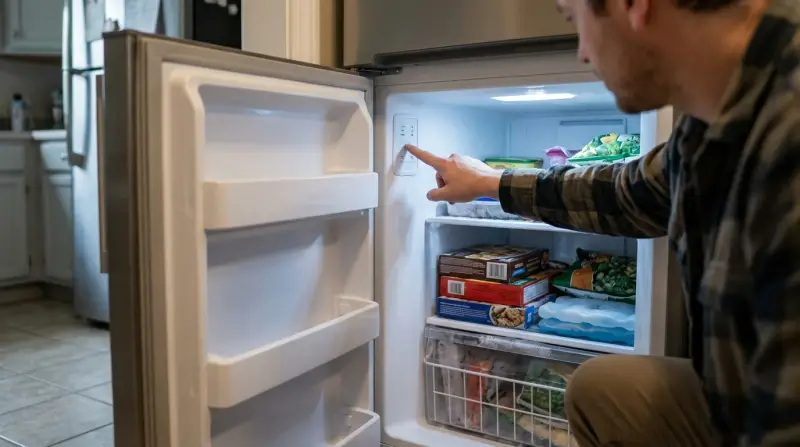
Unplug the freezer from the wall outlet for 10 minutes to reset the control board. This clears transient electronic errors that often mimic mechanical failure.
Check your home’s circuit breaker panel. If the switch is in the middle position, flip it all the way off before resetting it to on. A partially tripped breaker often provides enough power for lights but not for the compressor.
Verify the temperature dial is at the manufacturer’s mid-point. Setting it to the coldest level can actually cause ice to block the evaporator coils, restricting airflow.
Inspect the door seal by closing the door on a dollar bill. If you can pull the bill out without resistance, the seal is compromised. Warm air leaks force the compressor to run constantly, leading to premature burnout.
Clear any ice buildup around the evaporator fan. If you hear no hum when the door opens, the fan is likely frozen solid.
If the unit remains unresponsive after 30 minutes, call a technician.
Why your freezer lacks a reset button
Manufacturers design Kenmore freezers to operate as self-regulating systems that don’t require manual intervention for daily performance. The internal logic of the control board is programmed to handle temperature fluctuations, defrost cycles, and compressor timing automatically. When a freezer stops working, it’s almost always due to a mechanical failure, a power supply issue, or a blocked airflow path rather than a software glitch that a button could fix.
If you’re experiencing cooling issues, the most common culprit is a buildup of frost on the evaporator coils. This frost acts as an insulator and prevents the cold air from circulating through the cabinet. On many models, the defrost timer or the defrost thermostat may fail, preventing the unit from melting this ice away. You can find specific troubleshooting steps for your appliance by visiting the official Kenmore support portal.
Another frequent cause for a silent freezer is a tripped thermal overload protector. This safety device shuts off power if the compressor motor gets too hot. You can prevent this by vacuuming the condenser coils located at the back or bottom of the freezer as part of your usual clean.
If you hear the compressor clicking but the fan isn’t spinning, the start relay might be faulty. This component helps the compressor motor get up to speed. If it fails, the motor will stall and eventually trigger the thermal overload protector. This is a mechanical part that must be tested with a multimeter by a professional. Never attempt to open the electrical housing or touch internal components like the capacitor yourself, as these parts can hold a lethal electrical charge even when the unit is unplugged.
When the answer is different
| Situation | What changes | What to do instead |
|---|---|---|
| Smart models | Software controls | Use the app to re-sync |
| Digital displays | Error codes | Look up code in manual |
| Power surges | Control logic | Perform a hard power cycle |
| Blown fuse | Electrical path | Check main home breaker |
| Ice buildup | Airflow | Manual defrost for 24 hours |
The primary mistake users make is assuming every failure is mechanical. If the unit hums but doesn’t cool, check the condenser coils first. A layer of dust thicker than a nickel acts as an insulator, forcing the compressor to overheat.
If the unit is a smart model, the software may simply be stuck in a loop. A hard power cycle requires unplugging the unit for a few minutes to allow the control board to reset.
If you see an error code, don’t guess. A code like “E1” might mean a sensor failure in one model and a door seal issue in another. Always consult the specific manual for your serial number.
If the unit remains silent after a power surge, check your home breaker before calling a technician. If the breaker hasn’t tripped, the issue is likely a component failure that requires professional diagnosis.
How to do it properly
Locate the power cord at the back of the freezer and pull it firmly from the wall outlet to cut all electricity to the unit. Don’t rely on the internal power switch, as it often leaves the control board energized.
Leave the freezer unplugged for a few minutes to allow the control board to reset. If you rush this step, the unit may retain an error code that prevents the compressor from restarting.
Inspect the wall outlet to ensure the plug isn’t loose or damaged. A poor connection causes intermittent voltage drops that eventually burn out the compressor motor. If the plug feels warm to the touch, replace the outlet immediately to prevent a fire hazard.
Check your home electrical panel for a tripped breaker. If the breaker trips again within an hour, the issue is likely a failing start relay rather than a simple power glitch.
Plug the freezer back into the outlet and listen for the faint hum of the compressor. You should also hear the fan start to spin. If you hear a clicking sound but no hum, the compressor is struggling to start and requires professional repair.
Wait 24 hours for the internal temperature to stabilize before adding any food. Confirm the thermometer reading stays at 0°F. Loading the unit before this window forces the compressor to run continuously, which can lead to premature mechanical failure.
The mistakes that ruin it
Trying to force a reset by holding down buttons on the display can accidentally trigger “Showroom Mode,” which turns off the cooling system entirely. If your display remains lit but the interior temperature rises rapidly, check the manual to disable this mode immediately.
Using a hair dryer to melt ice inside the freezer can melt the plastic lining or damage internal sensors, leading to costly permanent repairs. If you must clear ice, use a bowl of hot water placed on a towel instead. This avoids the structural warping caused by direct, concentrated heat.
Overstuffing the freezer blocks the air vents, which creates a false impression that the unit is broken because the air can’t circulate. Always maintain a two-inch gap between your food and the back wall. If the airflow feels restricted, your compressor will overwork, shortening its lifespan by years.
Ignoring a noisy fan often leads to total motor failure, which is significantly more expensive to replace than a simple fan blade. If you hear a rhythmic clicking or grinding, the fan motor is likely failing and should be inspected or replaced.
Frequently asked questions
Can I reset my Kenmore freezer by holding the power button?
Holding the power button on most Kenmore models doesn’t trigger a factory reset. These buttons are meant for toggling the display or entering specific settings. Holding them down too long may accidentally lock the control panel or trigger demo mode.
Why is my Kenmore freezer beeping after a power outage?
Beeping alerts you that the internal temperature has risen above the safe threshold. This safety feature warns that food may be at risk of spoiling. Press the “Alarm Reset” button once the door is closed to silence the alert.
Is it safe to leave my freezer unplugged to defrost?
It’s safe to leave the freezer unplugged for a manual defrost if you remove all perishable food first. Place towels around the base to catch melting water and keep the door open. Never use sharp tools to chip away ice, as you may puncture refrigerant lines.
How long does it take for a freezer to cool after a reset?
It typically takes 24 hours for a freezer to reach a stable temperature of 0°F after being unplugged. The compressor may run continuously during this time to bring the internal temperature down from room temperature. Avoid opening the door frequently during this period, as every time you open it, warm air enters and forces the system to work longer to recover the lost cold air.
What happens if I keep the freezer door open too long?
Keeping the door open for more than a minute causes the internal temperature to rise rapidly and triggers the high-temperature alarm. The compressor will then work overtime to bring the temperature back down, which puts extra strain on the motor and increases your electricity usage. If the door is left open for an extended period, the frost buildup on the coils will increase, which may eventually require a manual defrost.
Does it matter if I use an extension cord for my freezer?
Using an extension cord is a significant fire hazard and is strongly discouraged by manufacturers. Freezers draw high power when the compressor starts, which can cause standard cords to overheat or melt. Always plug your freezer directly into a dedicated, grounded wall outlet.
Final Thoughts
If these simple adjustments don’t get your appliance running smoothly again, it’s time to contact a professional technician. Don’t hesitate to reach out for help if the cooling issues persist. Getting an expert’s opinion will ensure your food stays frozen and you won’t have to worry about any more unexpected repairs.